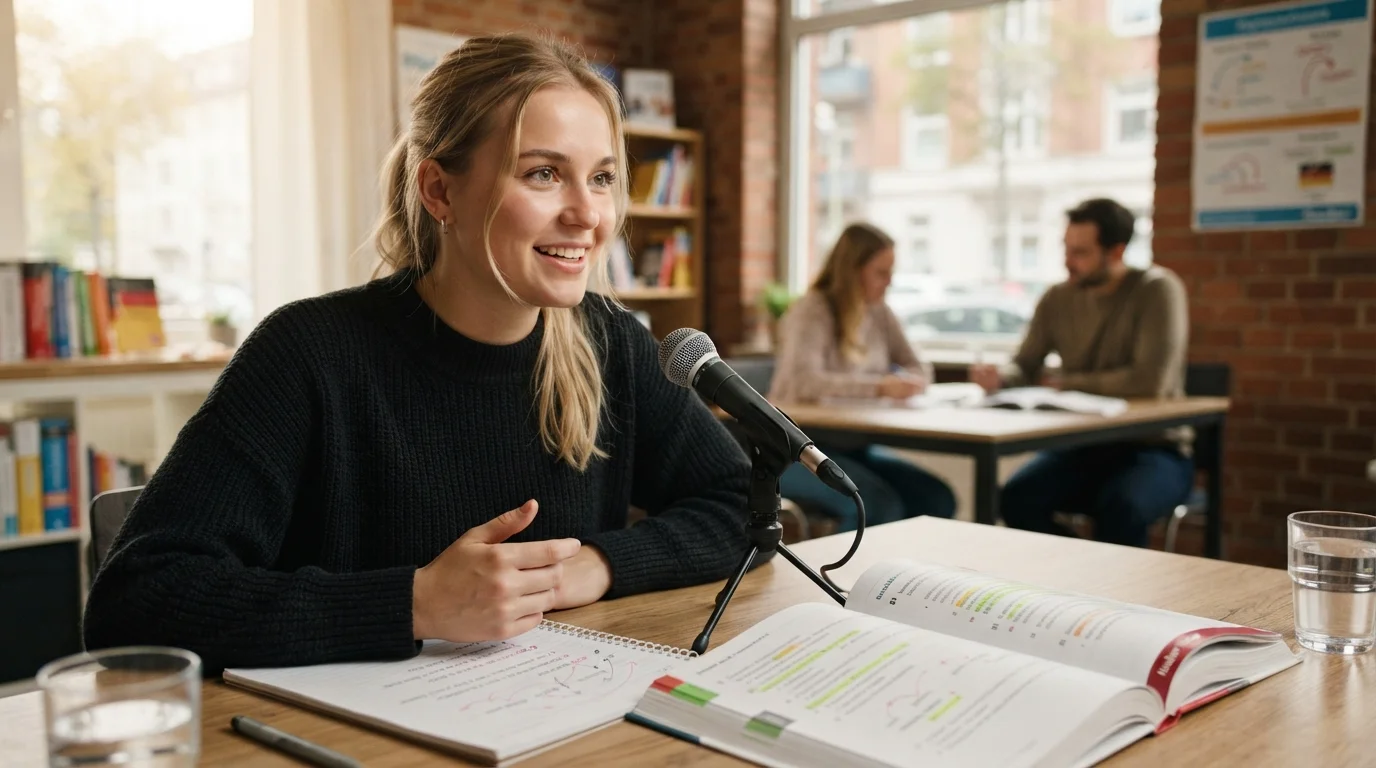
Mastering German Sentence Rhythm and Intonation for B1 Oral Exams
When preparing for the B1 German speaking exam—whether it is the Goethe-Zertifikat B1, telc Deutsch B1, or the Deutsch-Test für Zuwanderer...
Read moreTelling time is a fundamental skill that instantly makes you feel more confident navigating daily life in a German-speaking country. Whether you are booking appointments, catching public transport, or making plans with friends, knowing how to tell time in German is essential. In this guide, you will learn both official (24-hour) and conversational (12-hour) formats, plus practical tips, common pitfalls, and exercises to help you practice with confidence.
Germany, Austria, and Switzerland often use different conventions depending on context. Trains, official schedules, and formal writing usually use the 24-hour clock. In casual speech Germans frequently use the 12-hour clock and idiomatic expressions like halb acht or Viertel nach. Mastering both formats keeps you prepared for integration exams, daily life, and real-world conversations.
24-hour clock (offizielle Zeitangabe): Used on timetables, official documents, and formal communication. Examples: 08:15 is "08:15" or spoken as acht Uhr fünfzehn; 17:30 is "17:30" or siebzehn Uhr dreißig.
12-hour clock and conversational German: In daily speech, many Germans use a 12-hour format, though they omit AM/PM markers, relying on context instead. You will hear expressions like halb acht (half eight, meaning 7:30) and Viertel vor neun (a quarter to nine). Understanding these is crucial for social interactions and spoken comprehension.
Be aware of regional differences. In parts of southern Germany and Austria, people sometimes say dreiviertel neun to mean 08:45 (three quarters of nine). This can be confusing for learners, as northern and western Germany typically prefer the Viertel vor neun construction. Learn the local habit where you live or travel.
Active practice accelerates mastery. Try these daily exercises:
If you want guided, practical practice, an app like Bretzi can help by offering AI-powered personalized learning plans and real-life German conversation practice with AI. Use pronunciation training with instant feedback and interactive dialogue games that simulate asking for and giving the time in realistic scenarios. Bretzi's vocabulary spaced repetition and grammar lessons make mastering both official and conversational formats faster and more enjoyable.
Integration exams often test practical language skills. For time questions, examiners expect clear comprehension of both 24-hour and conversational forms. Study these steps:
You can also review grammar points that intersect with time expressions, such as noun declension when mentioning days and dates. For more grammar support try related articles like Complete Guide to German Nominalization for B2 Learners when you need to form time-related nouns, or explore German Two-Way Prepositions Made Simple for prepositions used with time expressions.
Develop both listening and speaking skills with these drills:
For official guidelines on time formats, check language references and public transport pages. Deutsche Bahn and government resources use 24-hour time consistently. For general reference on the German language see the Wikipedia entry on time expression in German: Time in Germany - Wikipedia. For official integration and immigration procedures that reference appointment scheduling, consult sites like the German Federal Office or local authorities for up-to-date guidance.
Keep a small cheat sheet on your phone with these conversions:
Mastering how to tell time in German is a high-value skill that pays off immediately in your daily interactions, exams, and social life. By balancing the precision of the 24-hour clock with the fluidity of conversational expressions, you'll navigate schedules and social plans with ease. Tools like Bretzi can accelerate your learning through personalized AI lessons, pronunciation feedback, and conversation simulations. Start practicing today: try converting five times you see in a day into German and say them aloud.
Ready to level up? Practice telling time with short daily drills and use interactive apps to reinforce what you learn. For grammar deep dives, explore related posts like Understanding German Weak Nouns (N-Deklination) to solidify other common patterns and Master German 'zu' Infinitive Clauses for smoother sentence building.
Share this article:
When preparing for the B1 German speaking exam—whether it is the Goethe-Zertifikat B1, telc Deutsch B1, or the Deutsch-Test für Zuwanderer...
Read moreYou sit down at a German bakery, smile warmly at the server, and confidently declare: "Ich bin voll!" Instead of a polite nod acknowledging your...
Read moreWhen you start learning German, you quickly realize that translating every word literally leads to utter confusion. A German colleague might suddenly...
Read more