BAMF Financial Hardship Exemption for Integration Exams
Can you get a BAMF financial hardship exemption? The cost of an integration course and its final exams can feel difficult to manage, especially when...
Read more
This article was written by AI and published by Bretzi.
AI can get things wrong. For anything official, check the source it points to.
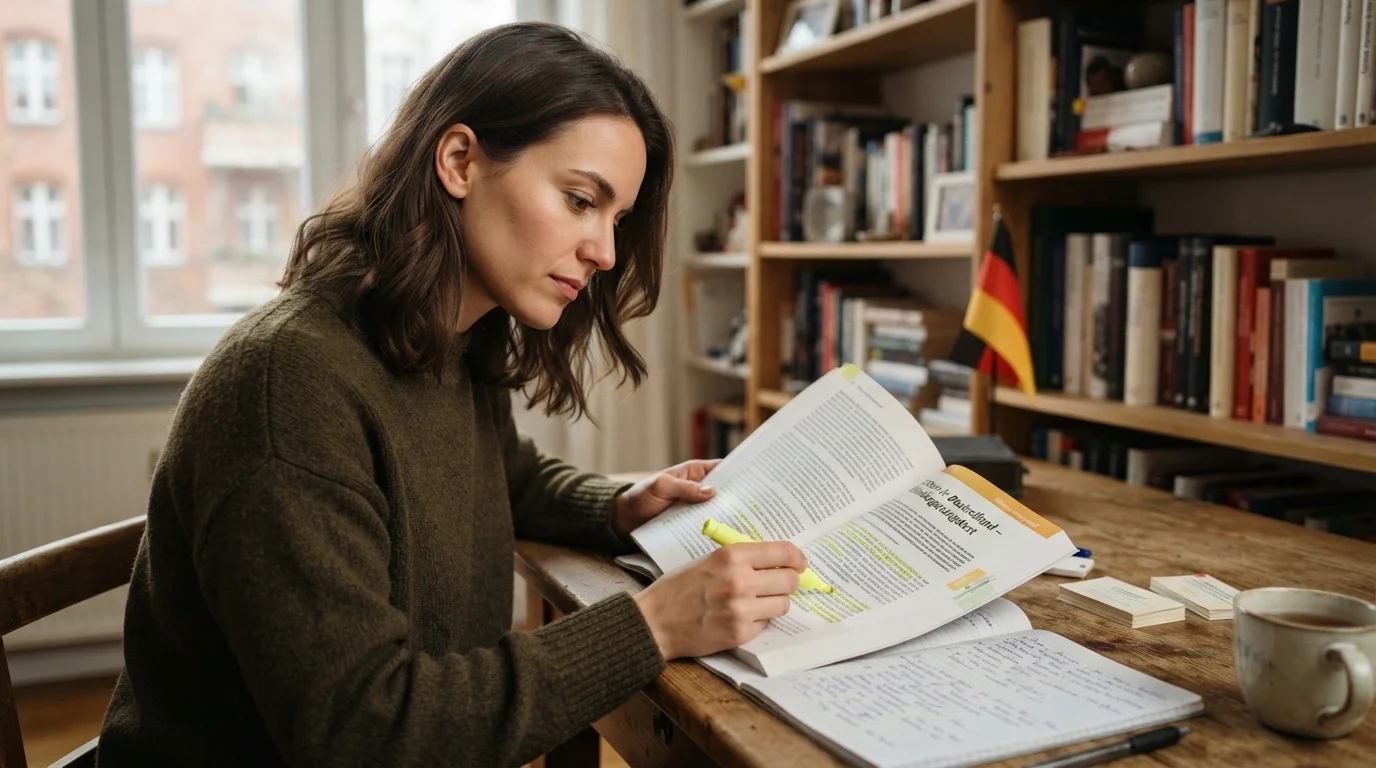
AI-generated image

You can understand German in a quiet classroom and still feel lost when a recording begins. In the Deutsch-Test für Zuwanderer (DTZ), people speak at a natural pace, important information may appear only once, and incorrect answer options can sound very similar to the recording. That combination makes Hörverstehen, or listening comprehension, one of the most stressful parts of the B1 exam.
The good news is that DTZ listening is not a test of understanding every single word. It tests whether you can identify the main idea, find specific information, recognise a speaker's intention and connect what you hear with the correct answer. With a clear method and regular practice, you can make your preparation more focused and less frustrating.
This guide explains how the DTZ listening section works, what to do before and during the exam, which mistakes to avoid and how to build an effective listening routine for German at B1 level.
The DTZ is the German language exam at the end of an integration course. It assesses language skills at A2 or B1, rather than testing citizenship knowledge. The listening section is one part of the written language exam, alongside reading and writing. You can find a broader overview in this guide to DTZ exam preparation.
In the listening paper, you hear short recordings from everyday situations. Depending on the task, you may listen to announcements, conversations, telephone messages, interviews or brief statements. Typical topics include appointments, public transport, shopping, work, school, health, housing and family life.
The questions may ask you to choose the correct answer, match information or decide whether a statement is true or false. The exact task instructions matter, so read them carefully before the audio starts. In many listening exercises, you hear a recording twice, but you should always follow the instructions given in your examination.
The exam does not require you to translate the audio into English. Your aim is to understand enough German to answer the question. A speaker may add extra details, change their mind or use a synonym instead of repeating the words in the question. Learning to listen for meaning, not isolated vocabulary, is therefore central to DTZ B1 listening practice.
Use the preparation time to read the questions and answer options. Do not spend the whole time translating them word for word. Instead, identify the key information: who, where, when, why, how much and what problem is being discussed.
For example, if a question contains Wann beginnt der Kurs?, focus on dates, times and phrases such as ab Montag, um neun Uhr or erst nächste Woche. If the question asks why someone is calling, listen for the purpose rather than every detail about the conversation.
Before listening, look at the topic and options and predict useful words. A question about a doctor's appointment may involve Termin, verschieben, krank, Praxis and Rezept. A question about a train may involve Verspätung, Gleis, Umstieg and ausfallen.
This prediction activates vocabulary you already know and helps you notice paraphrases. The recording may say Der Zug kommt zehn Minuten später, while the answer says Der Zug hat Verspätung. The wording is different, but the meaning is the same.
Many wrong answers contain words from the recording. Compare the options and mark what changes: a time, place, person, reason or number. If the choices are Montag, Dienstag and Donnerstag, you know you mainly need to listen for the day. If the choices are mit dem Bus, mit dem Zug and mit dem Auto, focus on transport.
This simple technique prevents you from trying to remember the entire recording. It also makes the listening task more manageable when you are nervous.
Speakers often mention one detail and then correct it. Listen for words such as nein, doch, aber, nicht am Montag, sondern am Dienstag, ich meinte and genauer gesagt. The final information is often the detail you need.
For instance: Der Termin ist am Donnerstag. Entschuldigung, ich sehe gerade: Er ist doch am Freitag. Choosing Thursday because you heard it first would be a typical mistake.
Some small words change the relationship between ideas. Pay special attention to:
These expressions help you understand whether the speaker is giving a fact, a reason, an exception or a possibility. At B1, that meaning is often more important than difficult individual nouns.
The answer may not repeat the recording. Der Laden macht um sechs Uhr zu means the same as Das Geschäft ist ab 18 Uhr geschlossen. Sie möchte die Wohnung wechseln may be expressed as Sie sucht eine andere Wohnung.
Build a personal list of common B1 paraphrases. Include everyday pairs such as beginnen/anfangen, bekommen/erhalten, kaputt/defekt, billig/günstig, Job/Arbeitsstelle and Termin verlegen/verschieben. Review them in short groups rather than memorising long vocabulary lists without context.
During the first listening, concentrate on the general situation. Identify the speakers, location, topic and purpose. Ask yourself: Is this a complaint, an invitation, a request, an announcement or a plan? Try to answer the easiest questions, but do not panic if you miss one detail.
Keep moving. If you do not understand a sentence, leave a small mark and continue listening. One unknown phrase should not make you lose the next three answers.
Use the second listening to verify uncertain answers. Focus on the differences between the remaining options. Check numbers, times, names, addresses, prices and negative expressions such as kein, nie, noch nicht and nicht mehr.
Do not change an answer simply because you feel nervous. Change it when you hear clear evidence that another option is correct. If you are unsure, choose the answer that best matches the complete meaning of the recording, not one familiar word.
If there is no penalty for a wrong answer, leaving a question blank gives you no chance of gaining the point. Use the final checking time to make sure every answer is marked clearly and in the correct place. Follow the examination instructions for how answers must be recorded.
Listening improves through frequent contact with German. A practical routine is 15 to 25 minutes on most days. Begin with an audio clip that is short enough to repeat several times. First listen for the general meaning, then listen again for details and finally check the transcript if one is available.
Do not use subtitles in English during every practice session. They can help you understand a difficult topic, but they also encourage you to read instead of listening. German subtitles or a German transcript are more useful for noticing the connection between spoken and written language.
Background German can familiarise you with rhythm, but active practice gives you more progress. Pause after a sentence and repeat the main idea in German. Write down a few keywords, predict what the speaker will say next or answer a question about the recording. These activities train the skills that the DTZ listening section actually requires.
Dictation is especially useful. Listen to one short sentence, write what you hear and compare it with the transcript. Pay attention to endings, articles, contractions and connected speech. You may know the vocabulary but fail to recognise it when haben Sie sounds like a quick, connected phrase.
Numbers cause many avoidable errors. Practise dates, times, prices, telephone numbers, room numbers and percentages. Listen for the difference between vierzehn and vierzig, or between fünfzehn and fünfzig. Also practise how Germans say times in daily life, including Viertel nach, halb and zehn vor.
Create mini exercises using realistic information: an appointment at 8:30, a train from platform 4, a rent of 780 euros or a meeting moved from Wednesday to Thursday. The more familiar these patterns become, the less mental energy you need to spend on them in the exam.
After each practice paper, do not only count your correct answers. Record why you missed each question. Useful categories include unknown vocabulary, missed negation, confused numbers, misunderstood paraphrase, lost concentration and selected an option too quickly.
Then choose one category for your next session. If you repeatedly miss corrections, practise sentences with nicht ..., sondern .... If you miss the main idea, listen once without looking at the questions and summarise the situation in one sentence.
Bretzi can support a listening routine with German lessons from A0 to C1, including listening exercises and dictation. Its short activities let you practise hearing everyday German, type what you hear and review mistakes later. Podcasts include a transcript that follows the audio, and you can tap words for meanings, save them and adjust the playback speed.
For a broader study plan, combine listening work with speaking, writing and reading practice. Bretzi also includes B1 practice for the Einbürgerungstest, but that is a separate knowledge test from the DTZ language exam. For official information about integration courses and the DTZ, consult the Federal Office for Migration and Refugees.
If your exam is approaching, use this simple weekly cycle and repeat it with new material:
During the final days, practise with headphones or speakers similar to those you expect to use, if possible. The goal is not to make every recording easy. It is to become comfortable staying focused when you do not understand everything.
Before the exam, make sure you can:
The DTZ B1 listening section rewards calm, selective listening. You do not need to understand every sound or every unfamiliar word. Read strategically, listen for the purpose and decisive details, review your mistakes and practise real-life German regularly. For more preparation ideas across the complete exam, explore this practical DTZ preparation guide.
Start today with one short audio exercise: read the questions, predict the vocabulary, listen twice and write down exactly why each answer is correct or incorrect. That small routine can turn Hörverstehen from a guessing exercise into a skill you can practise deliberately.
Rules, fees and dates change. Check the current version on the official pages before you act.
Share this article:
Can you get a BAMF financial hardship exemption? The cost of an integration course and its final exams can feel difficult to manage, especially when...
Read moreThe first moments of the DTZ B1 speaking exam can feel more stressful than they really are. You sit opposite the examiner, hear a simple question...
Read morePreparing for the Leben in Deutschland (LiD) test or the German citizenship test (Einbürgerungstest) can feel overwhelming. While the full BAMF...
Read more