How to Practice German Pronunciation: Best App Features and Voice Recognition Tools
When you start learning German, the grammar often gets the lion's share of the attention. You wrestle with cases, memorize noun genders, and...
Read more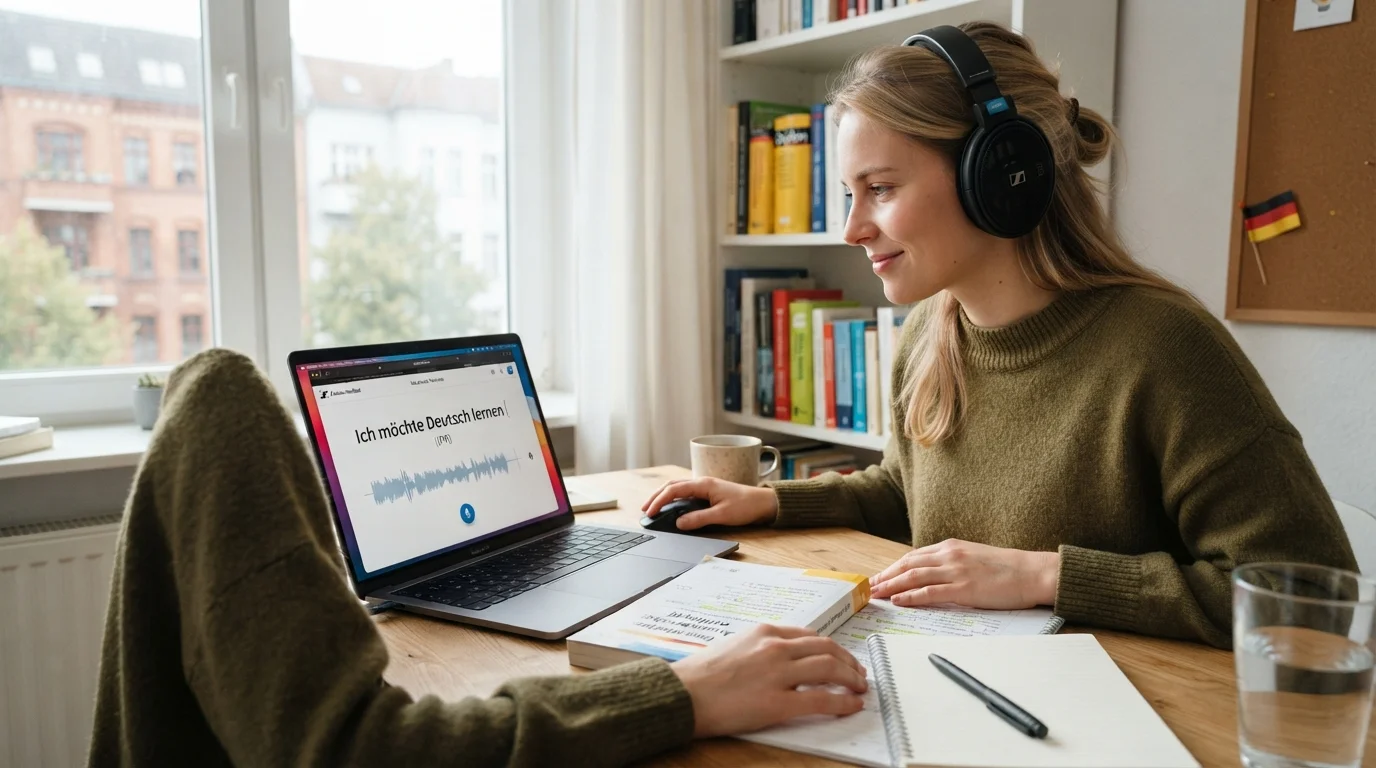
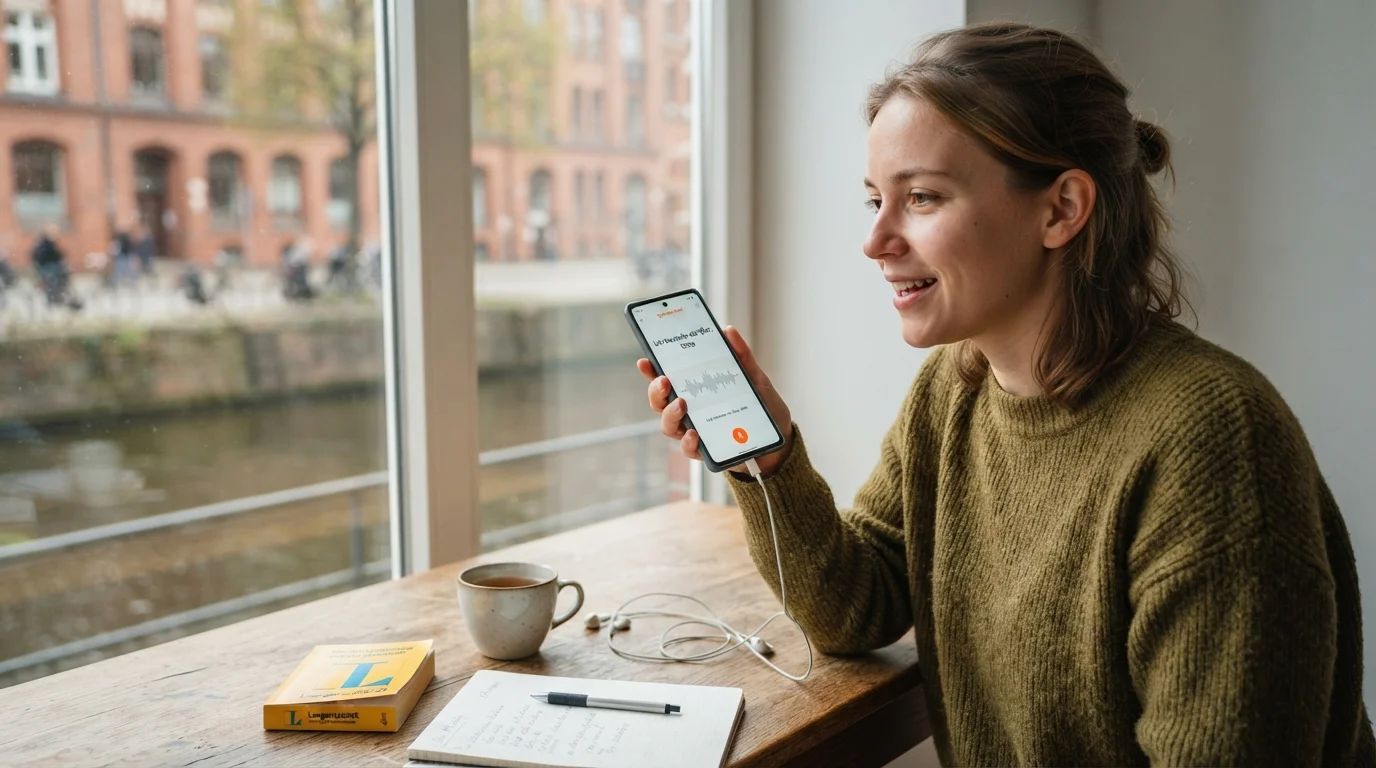
Have you ever tried to pronounce the German word for squirrel—Eichhörnchen—and felt like your tongue was tying itself into a pretzel? You are not alone. For many expats, students, and language lovers, mastering German pronunciation is one of the most intimidating hurdles on the journey to fluency. From the throat-clearing 'ch' sound to the mysterious umlauts (ä, ö, ü), German phonology requires muscle movements that English speakers rarely use.
In the past, perfecting your accent required hiring an expensive private tutor or moving to Germany to immerse yourself completely. But today, technology has changed the game. You can now achieve a near-native accent right from your living room. By leveraging the power of Artificial Intelligence, you can get instant, objective feedback on your speech patterns, allowing you to practice safely and confidently without any fear of judgment.
In this comprehensive guide, we will break down the mechanics of German pronunciation, explore how modern speech technology works, and provide a step-by-step framework to perfect your accent at home using the best AI-powered German learning apps in 2026.
To fix a pronunciation error, you first need to understand what your mouth is doing wrong. Standard German (known as Hochdeutsch) has several unique phonetic features that do not exist in English. According to the comprehensive guide on Standard German phonology on Wikipedia, German is a highly consonant-heavy language with specific rules for vowel length and breath control. Here are the main culprits behind a non-native accent:
Traditionally, practicing pronunciation at home meant listening to an audio track, repeating the phrase, and hoping you sounded correct. The problem? Human brains are notoriously bad at hearing their own accent mistakes. We often hear what we think we said, rather than what actually came out of our mouths.
AI-powered speech recognition solves this problem by analyzing your voice in real-time. Modern AI algorithms do not just listen to the words you say; they break down your speech into individual phonemes (the smallest units of sound). The AI compares your pitch, stress, duration, and pronunciation against databases of native German speakers, pinpointing exactly where your pronunciation falters.
This creates an instant feedback loop. Instead of guessing if your ü sound was correct, an AI app can tell you, "Your tongue was too far back; push it forward to match the native standard." This makes learning German in short daily sessions incredibly effective, as you can target and correct errors immediately before they become hardwired habits.
Ready to start training your vocal cords? Follow this structured, daily approach to build muscle memory and sound more like a native speaker.
You cannot produce a sound if you cannot hear it. Start by listening to high-quality German audio. Pay close attention to the rhythm, intonation, and stress of the sentences. German is a stress-timed language, meaning certain syllables are heavily emphasized while others are shortened. Resources like the Goethe-Institut exam preparation materials offer excellent audio samples of standard German spoken at various speeds.
To pronounce the umlauts correctly, you have to train your facial muscles like an athlete. Use these physical tricks:
Shadowing is an advanced language learning technique where you listen to a native speaker and repeat what they say with as little delay as possible. You are essentially "shadowing" their voice, mimicking their speed, pauses, and pitch changes. This helps you move away from word-by-word reading and helps you adopt the natural flow and musicality of the German language.
Once you can pronounce individual words, it is time to put them into context. Using AI-driven dialogue games allows you to engage in realistic conversations. Because you are speaking to an AI, there is zero performance anxiety. You can stutter, mispronounce, and try again until you get it perfect. The AI will guide you through practical scenarios—like ordering a coffee or registering your address at the Bürgeramt—while subtly correcting your pronunciation along the way.
If you are looking for a streamlined, highly engaging way to practice your German pronunciation, Bretzi is the ultimate companion. Bretzi is an AI-powered German language learning app specifically designed to help you speak confidently from day one.
With Bretzi’s state-of-the-art pronunciation training with instant feedback, you do not have to wonder if your accent is correct. The app scores the word or sentence you say and tells you what to improve. Whether you are practicing basic vocabulary or preparing for German integration exams, Bretzi tailors its feedback to your current level.
Additionally, Bretzi features interactive dialogue games that simulate real-life German conversations. You can practice ordering food, asking for directions, or chatting with colleagues in a stress-free environment. Combined with personalized learning plans and gamified daily streaks, Bretzi helps you stay motivated and keep working on your pronunciation every day.
Mastering German pronunciation is not about eliminating your native accent overnight; it is about building clear, confident communication skills. By understanding the mechanics of German phonology, practicing shadowing, and leveraging AI tools like Bretzi, you can make rapid progress from the comfort of your home.
Set aside just 10 to 15 minutes a day for focused pronunciation training. Focus on the physical sensations of the sounds, listen to the feedback from your AI coach, and do not be afraid to make mistakes. Over time, those complex German syllables will start to roll off your tongue naturally.
Ready to transform your German accent? Download Bretzi today and start your personalized pronunciation journey!
Share this article:
When you start learning German, the grammar often gets the lion's share of the attention. You wrestle with cases, memorize noun genders, and...
Read moreAnyone who has attempted to learn German knows the infamous 'motivation cliff.' You start with immense enthusiasm, eager to master words like...
Read moreMoving to Germany, Austria, or Switzerland is an exciting milestone, but for many expats, the initial excitement quickly collides with linguistic...
Read more