How Bretzi App Teaches German Preposition Combinations
Few grammatical topics in the German language cause as much hesitation for language learners as preposition combinations. Whether you are ordering...
Read more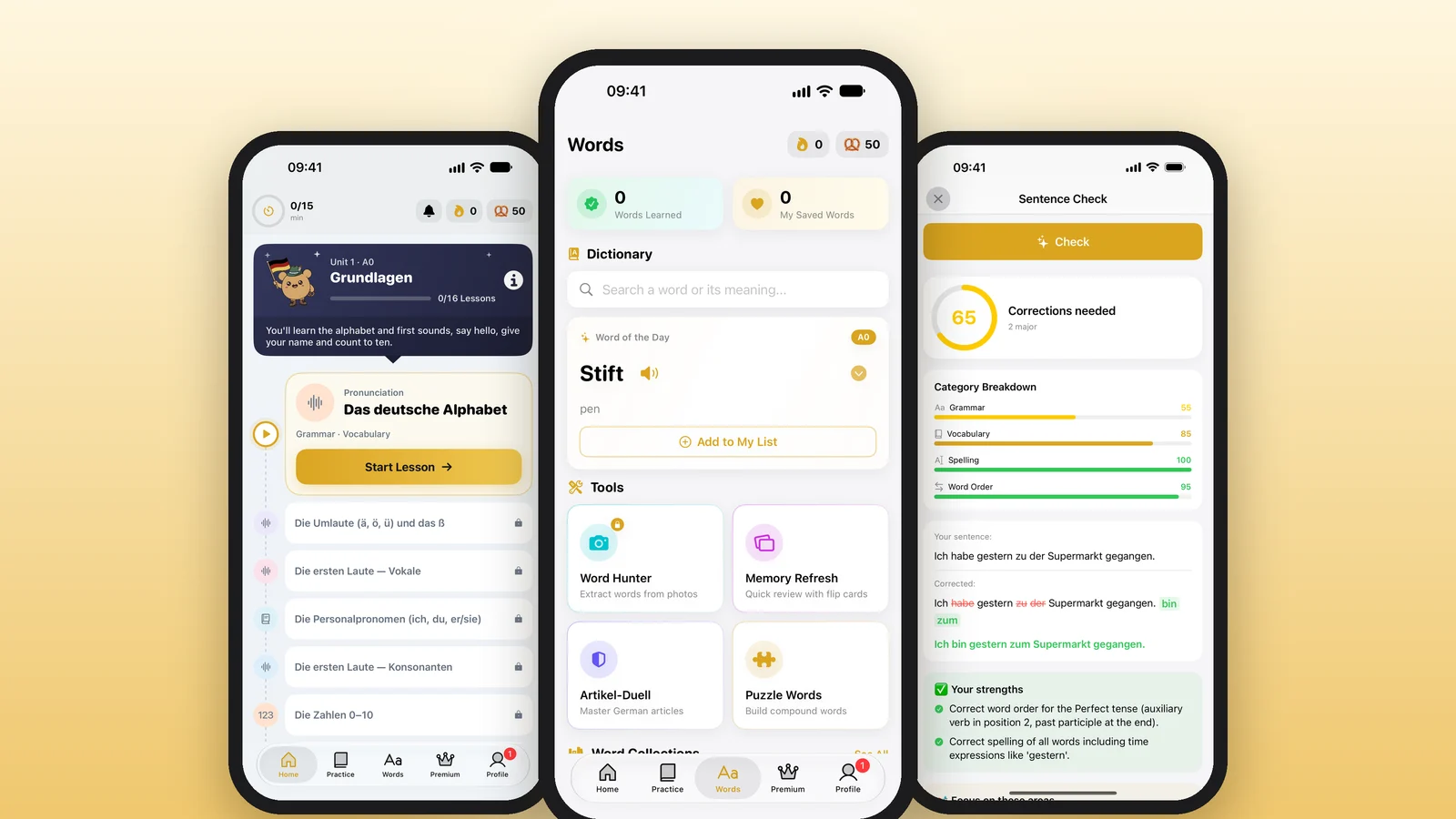
Reaching the B1 threshold is widely considered the most decisive milestone in your German learning journey. At this intermediate stage, you transition from memorizing basic survival phrases to constructing nuanced arguments, managing official paperwork, and communicating spontaneously at work. However, the vocabulary demand also spikes dramatically: an effective B1 speaker needs active command of approximately 2,500 to 3,500 words.
To retain this sheer volume of vocabulary without spending hours reviewing notes in vain, learners rely heavily on Spaced Repetition Systems (SRS). By scheduling reviews at scientifically timed intervals right before a memory decays, SRS allows your brain to transition fragile terms into durable long-term memory. Two major names frequently surface among German learners debating the best tool for the job: Anki, the open-source flashcard giant, and Bretzi, a modern, structured German learning app built around real-world German contexts and integrated spaced repetition.
In this detailed guide, we evaluate how Anki and Bretzi compare specifically for the demands of German B1, exploring setup time, grammar contextualization, active usage, and integration exam readiness.
At A1 and A2, you can often scrape by with simple word association. At B1, however, German vocabulary stops behaving like isolated building blocks. Words carry grammatical baggage: noun genders (der, die, das), plural stems, specific prepositional cases (such as warten auf + accusative or sich beschäftigen mit + dative), and subtle register differences.
Rote memorization simply fails when facing complex sentence structures and declensions. A robust spaced repetition vocabulary system ensures that you do not just encounter a term once in a textbook, but review it repeatedly right as it starts to fade. The key question for intermediate learners is whether your SRS system presents words as abstract flashcards or as living, contextualized German.
Anki has been a cornerstone of language acquisition for well over a decade. Built on adaptive spacing algorithms (historically SM-2 and more recently FSRS), Anki offers unmatched customization for learners who want absolute control over their flashcards.
Bretzi approaches spaced repetition from a fundamentally different angle. Instead of treating SRS as an isolated flashcard stack, Bretzi integrates spaced repetition directly into a structured Common European Framework of Reference (CEFR) curriculum spanning from complete beginner (A0) all the way to C1. The lessons, vocabulary, and situations mirror genuine everyday life, administration, and work in Germany.
Unlike standalone flashcard programs, Bretzi embeds vocabulary retention into interactive skill-building exercises:
| Feature / Need | Anki | Bretzi |
|---|---|---|
| Spaced Repetition Algorithm | SM-2 / FSRS (fully manual control over intervals) | Automated, built-in SRS for vocabulary and past mistakes |
| Setup Time | High (requires deck sourcing, template design, configuration) | Zero (structured paths and integrated review system ready immediately) |
| Grammar & Context | Passive notes on cards; no automated checking | Integrated grammar tips, conjugation tables, and immediate answer explanations |
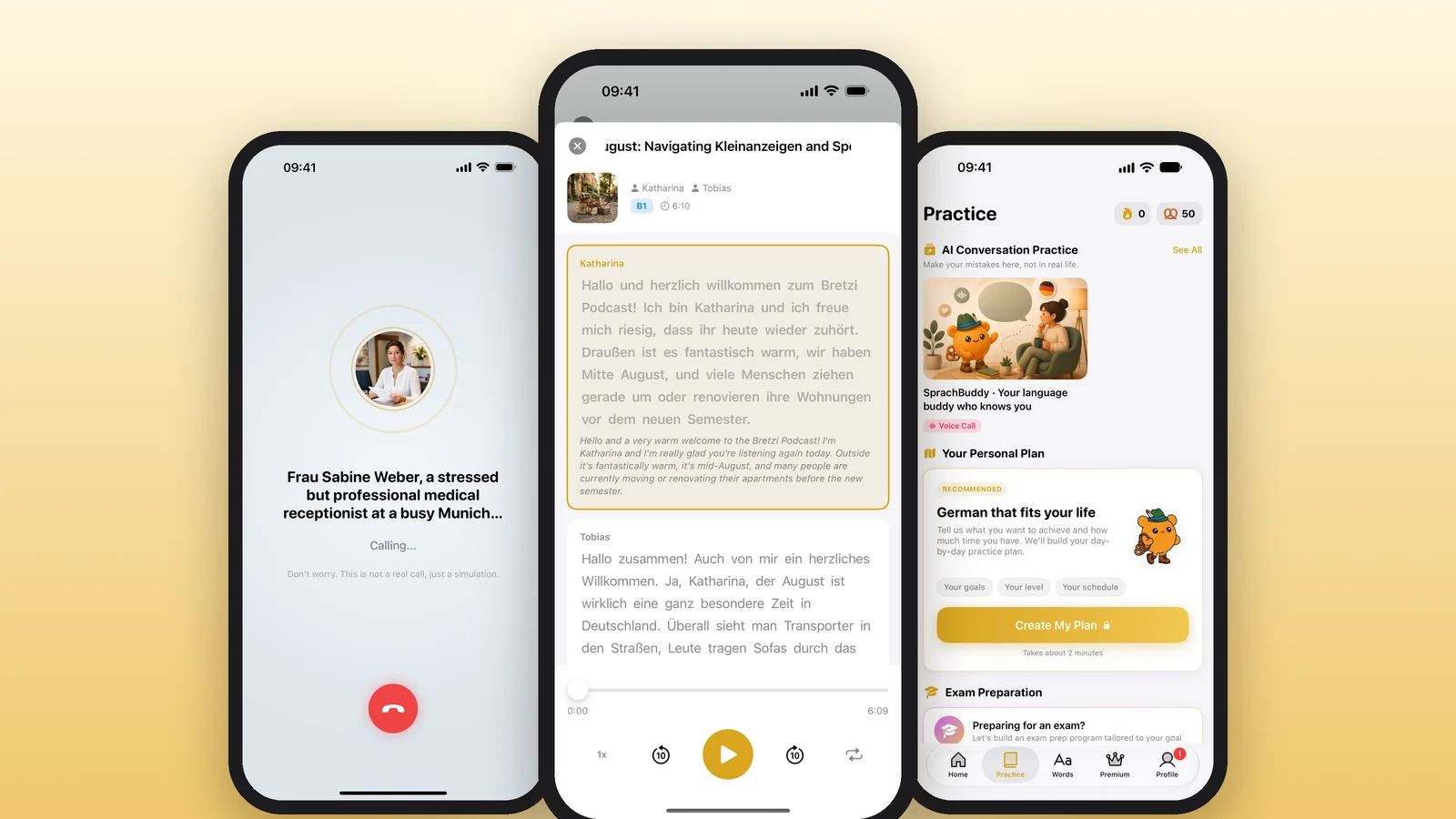
| Speaking & Audio | Requires manual audio files or third-party TTS plugins | Native-like audio, podcast transcripts, and SprachBuddy AI voice conversations |
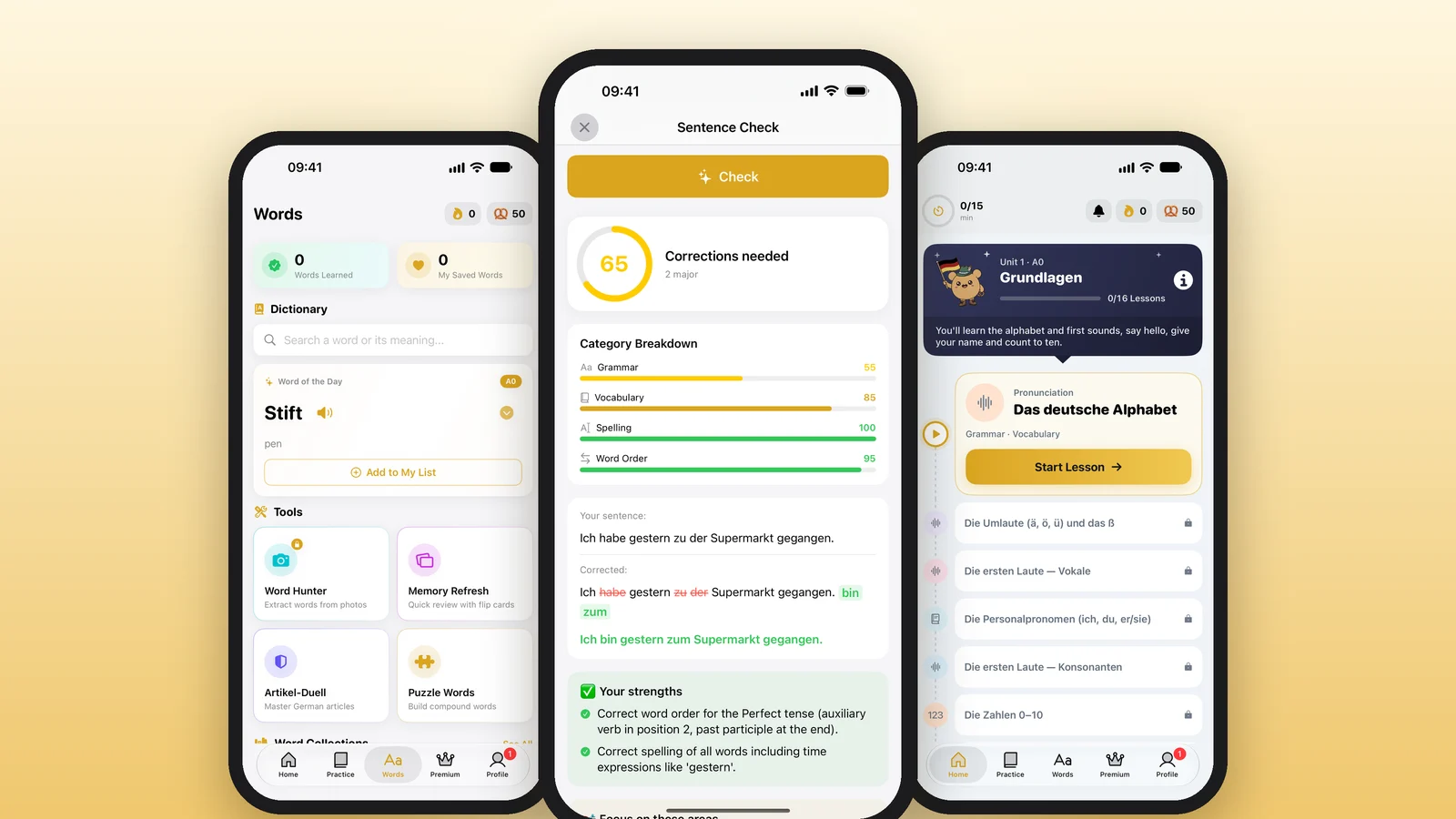
| Writing Practice | Self-graded text input fields | Interactive dictation, sentence ordering, and AI Sentence Check |
| Platforms Supported | Windows, Mac, Linux, iOS, Android (offline capability) | iOS (18+) & Android (8.0+) phones/tablets, Apple Watch widget (internet connection required) |
For thousands of immigrants living in Germany, reaching B1 is not merely an intellectual pursuit—it is a legal requirement. Passing a recognized B1 exam, such as the Deutsch-Test für Zuwanderer (DTZ), is required for naturalization under the nationality framework governed by the Federal Office for Migration and Refugees (BAMF) and the German Nationality Act (StAG). Naturalization requires German at B1, lawful residence of at least five years (since 27 June 2024), and passing the naturalization test.
How do the two tools assist with exam readiness?
Anki is effective for drilling standard official exam wordlists (such as the Goethe-Zertifikat B1 Wortliste). If you have the discipline to review 50 to 100 cards every day, your passive recognition of test vocabulary will be solid. However, the DTZ consists of a 100-minute written component and a 15-minute paired oral exam. Anki cannot simulate the timed pressure of reading a formal letter, drafting an email response to a landlord, or answering questions in a live oral examination.
If you are looking to prepare for the DTZ exam, Bretzi offers direct support tailored to the testing environment. The app includes dedicated exam practice for the Einbürgerungstest at B1, covering reading, writing, listening, speaking, and questions on life in Germany (Leben in Deutschland), as well as TestDaF practice at B2 and C1 for academic pursuits.
In Bretzi, you practice individual sections of the test with an integrated timer. The app evaluates your written and spoken responses with AI, tracks your historic performance, and generates a readiness score for each exam section. While this is targeted modular practice rather than an official mock exam, it bridges the gap between raw vocabulary knowledge and functional exam execution. You can explore how it compares with other prep resources in our review of B1 exam preparation tools.
Choosing between Bretzi and Anki comes down to your personal learning style, available study time, and immediate goals in Germany.
Regardless of whether you choose Anki, Bretzi, or a hybrid approach, implement these proven study rules to conquer B1 German:
Rules, fees and dates change. Check the current version on the official pages before you act.
Share this article:
Few grammatical topics in the German language cause as much hesitation for language learners as preposition combinations. Whether you are ordering...
Read moreFew grammar hurdles cause as much frustration for German learners as prepositions. At first glance, a word like an, auf, or in seems deceptively...
Read moreThe Acoustic Hurdle: Why Reading German Is Not Enough Many German learners experience an unsettling shock when stepping out of their study room and...
Read more