How to Book Specialist Doctors in Germany Using Doctolib and 116117
Finding an appointment with a specialist doctor (Facharzt) in Germany can feel like an intimidating bureaucratic puzzle. Whether you need to see a...
Read more
This article was written by AI and published by Bretzi.
AI can get things wrong. For anything official, check the source it points to.
AI-generated image
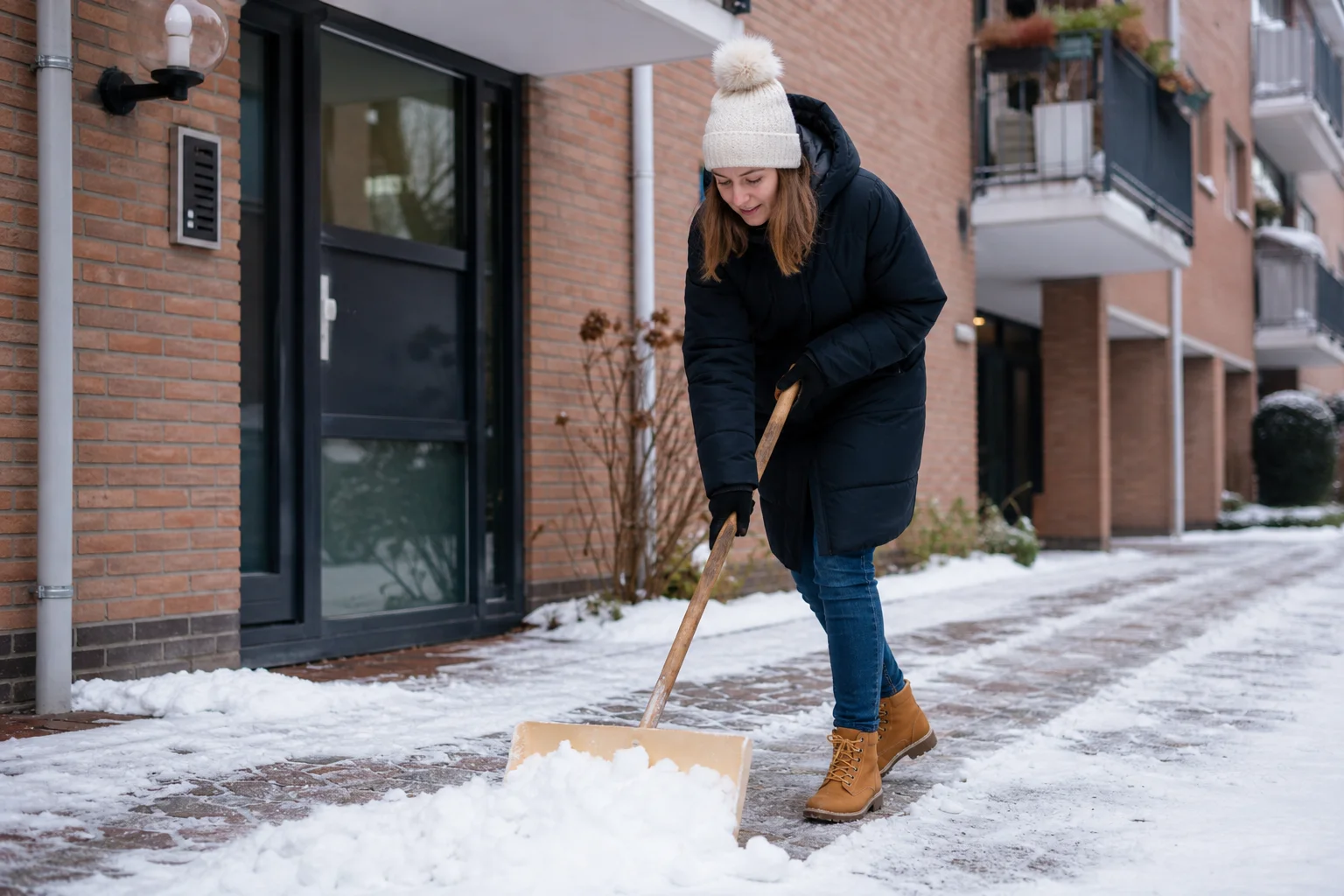
When winter blankets Germany in thick white snow, neighborhoods transform into postcard-perfect scenes. But for residents, fresh snowfall also triggers one of the country's most strictly enforced civic obligations: die Räum- und Streupflicht (the duty to clear snow and grit sidewalks). If you rent an apartment or a house in Germany, you cannot simply sip hot tea and wait for the snow to melt. In many cases, the legal responsibility to clear frozen sidewalks falls directly on your shoulders.
Failing to clear ice and snow can lead to heated disputes with neighbors, municipal fines, or severe legal liability if a pedestrian slips and suffers an injury outside your building. Understanding your exact obligations under German tenancy law and municipal statutes is essential for every renter. This comprehensive guide covers how snow clearing duties work, whether your lease delegates this duty to you, the permissible clearing materials, and the practical steps to protect yourself during the freezing winter months.
In Germany, the concept of public safety is anchored in the legal principle of Verkehrssicherungspflicht (duty to ensure public safety). Under tort law outlined in § 823 BGB on gesetze-im-internet.de, anyone who creates or maintains a potential hazard on property accessible to the public must take reasonable measures to prevent harm to others.
Sidewalks and building entryways naturally become treacherous when covered with ice, packed snow, or freezing rain. Municipalities across Germany require that public walkways bordering properties remain safe and passable for pedestrians throughout the winter season. This obligation consists of two distinct actions:
By default under German law, the primary responsibility for maintaining safe sidewalks lies with the municipality, which delegates it to the property owner (Hauseigentümer or landlord). However, German tenancy law allows landlords to transfer this physical duty directly to their tenants—and many landlords do so.
Whether you personally must pick up a snow shovel depends entirely on the wording of your rental agreement and the building regulations:
A landlord can legally transfer the snow-clearing obligation to a tenant only if it is explicitly stated in the primary rental agreement. A clear clause stating that tenants must take turns clearing snow binds you to the schedule. Similar to how tenants must adhere to proper apartment ventilation and mold prevention rules, maintaining the exterior access routes forms part of your residential maintenance duties when contracted.
If the duty is only mentioned in the house rules (Hausordnung), its legal validity depends on whether the house rules form an integral, signed part of your primary lease. If the landlord simply puts up a notice in the hallway or slips a new house rules sheet into your mailbox without a corresponding clause in your signed lease, they generally cannot impose new physical snow-clearing duties on you after the fact.
In many modern apartment complexes and multi-family buildings managed by a property management company (Hausverwaltung), clearing duties are handled by a commercial service (gewerblicher Winterdienst). In this scenario, you do not shovel snow yourself. Instead, the costs are passed down to all tenants as operational ancillary costs (Betriebskosten) in your annual utility statement (Nebenkostenabrechnung).
You are not expected to shovel snow in the middle of the night, nor are you expected to stand outside with a shovel during an active, non-stop blizzard. German courts have established clear standards of reasonableness regarding when and how often clearing must take place.
Because precise hours are established at the local level by each municipality (Gemeindesatzung or Straßenreinigungssatzung), rules can vary slightly between cities like Berlin, Munich, or Frankfurt. However, the standard windows across Germany are remarkably consistent:
You do not need to clear the entire width of the sidewalk. The general legal requirement is that two pedestrians—or a pedestrian pushing a stroller or using a wheelchair—can safely pass each other without stepping into unplowed snow. In most German municipalities, this translates to a cleared strip between 1.0 and 1.5 meters wide.
For paths leading from the public sidewalk to the entrance of your building, or to garbage bin storage areas and garages, a cleared width of approximately 0.5 to 1.0 meter is generally considered legally sufficient.
One of the biggest mistakes expats make when clearing walkways in Germany is using chemical road salt (Streusalz). While salt is fast and effective, its use by private individuals is strictly prohibited or severely restricted in dozens of German cities and municipalities.
Road salt damages tree roots, contaminates urban soil and groundwater, ruins concrete surfaces, and burns the sensitive paws of dogs and cats. Municipal bylaws set specific fines for using prohibited de-icing chemicals or salt on private sidewalks.
Instead, tenants and property owners are required to use non-chemical, abrasive gritting agents (abstumpfende Streumittel):
Where should you put the cleared snow? Always pile cleared snow on the outer edge of the walkway toward the street curb, or on your property's lawn edge. Never shovel snow into bike lanes, bus stops, driveway entrances, or storm drains (Gullys), as blocked drains cause localized flooding once thawing sets in. Clear transit routes are vital in winter, whether pedestrians are walking or people are following German winter cycling laws and safety guidelines.
In multi-family houses where tenants share clearing duties, landlords usually institute a rotational schedule (Schneeplan or Winterdienstplan). In southwestern Germany (particularly Baden-Württemberg and parts of Bavaria), this duty is closely tied to the traditional Kehrwoche (sweeping week).
A hanging sign or laminated rota in the entrance stairwell (Treppenhaus) indicates whose turn it is. If the sign hangs on your door or your name is listed for the week, you bear full legal responsibility for clearing and gritting throughout that seven-day window.
German courts have repeatedly ruled that personal absence does not excuse you from your contracted safety duties. If you work long hours at the office, catch the flu, or go away for the winter holidays, you remain legally accountable. You must organize a substitute (Vertretung) in advance:
If a pedestrian, delivery courier, or neighbor slips on an icy patch in front of your building during mandatory clearing hours, the legal and financial fallout can be substantial. The injured party can sue for personal injury damages under § 823 BGB, demanding compensation for medical treatment, lost wages, and pain and suffering (Schmerzensgeld).
If snow clearing was formally transferred to you in your lease and you neglected the sidewalk, you can be held personally liable for these costs. For this reason, having private liability insurance (Privathaftpflichtversicherung) is considered virtually non-negotiable for anyone living in Germany. When taking out or reviewing your policy, verify that it explicitly covers damage claims arising from delegated winter maintenance duties (Übernahme der Streu- und Räumpflicht).
Note that landlords are not completely off the hook: property owners retain an overarching supervisory duty (Überwachungspflicht). A landlord must periodically check that tenants are actually fulfilling their duties and provide adequate tools (shovels and grit) unless the lease states that tenants must supply their own equipment.
Navigating discussions with your landlord, reading your building's house rules, and buying winter supplies requires specific practical German terms. Here are the core words every tenant should know:
If you want to feel confident understanding lease agreements, building rules, and everyday neighborhood conversations, Bretzi helps you master the real-world German spoken in daily life. Bretzi features a structured path of short lessons from A0 to C1 where grammar, vocabulary, and practical scenarios are seamlessly woven together. With Bretzi's Words tab, you can look up unfamiliar tenancy terms, review them using spaced repetition flashcards, and use the built-in dictionary to save words you encounter in your rental contract.
When you need to discuss winter maintenance or coordinate a snow-clearing swap with your German neighbors, you can practice speaking beforehand with SprachBuddy—Bretzi's interactive AI conversation partner. SprachBuddy lets you practice everyday German scenarios out loud, provides real-time pronunciation feedback, and allows you to read through your conversation transcript to build speaking confidence.
To avoid legal trouble, angry neighbors, or unexpected liability claims, follow this simple checklist before the freezing temperatures arrive:
Winter in Germany is far more enjoyable when you know your home and sidewalk are safe, compliant, and legally protected. By reviewing your contract today and preparing your supplies before the first frost, you can handle the snow with complete peace of mind.
Rules, fees and dates change. Check the current version on the official pages before you act.
Share this article:
Finding an appointment with a specialist doctor (Facharzt) in Germany can feel like an intimidating bureaucratic puzzle. Whether you need to see a...
Read moreMoving to Germany comes with plenty of administrative milestones: registering your address at the Bürgeramt, securing health insurance, and...
Read moreWhen autumn turns to winter in Germany, the days grow noticeably shorter, and temperatures regularly dip below freezing. Yet across Berlin, Munich,...
Read more