Opening a German Blocked Account (Sperrkonto) in 2026
Planning a move to Germany as an international student, jobseeker, or vocational trainee is an exciting leap, but it comes with a fair share of...
Read more
This article was written by AI and published by Bretzi.
AI can get things wrong. For anything official, check the source it points to.
AI-generated image
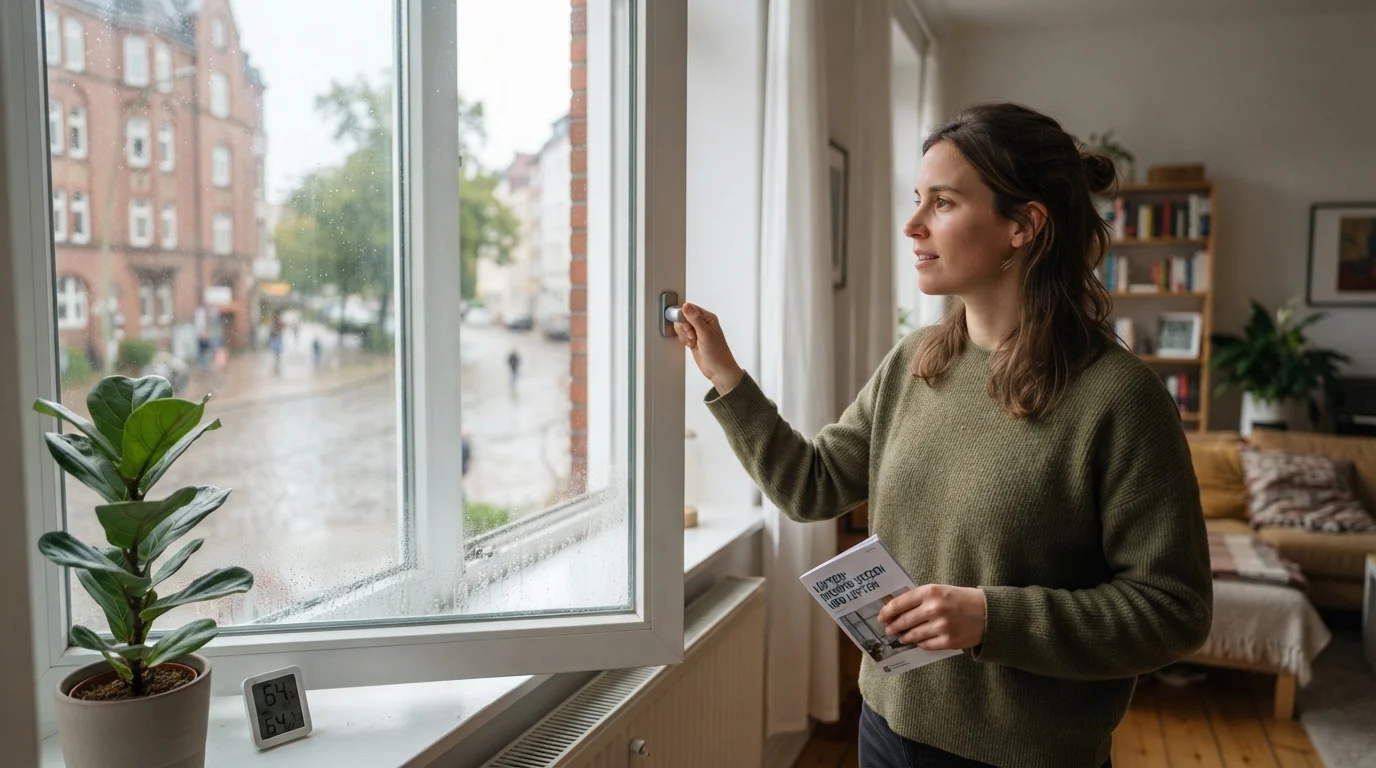
If you have recently moved into an apartment in Germany, you might have noticed a recurring topic of intense passion among German landlords, neighbors, and caretakers: das Lüften (ventilating). What might seem like a simple personal preference in many countries is treated in Germany as a rigorous science and a binding legal obligation. In fact, improper ventilation is one of the most frequent sources of dispute between tenants (Mieter) and landlords (Vermieter).
German buildings are constructed to be exceptionally energy-efficient. Thick insulation, double- or triple-glazed windows (Isolierglasfenster), and airtight seals keep cold weather outside. However, they also trap everyday moisture generated by cooking, showering, drying laundry, and simply breathing. Without proper air exchange, this trapped humidity condenses against cool exterior walls, creating a fertile breeding ground for toxic black mold (Schimmelpilz).
To avoid security deposit deductions, costly renovation disputes, or health problems, every tenant must understand how mold prevention works in Germany. Here is your complete guide to the cultural, practical, and legal rules of keeping your German apartment mold-free.
Walk through any German residential street and you will see window handles angled in different directions. German windows usually feature tilt-and-turn hardware (Dreh-Kipp-Beschläge), allowing you either to swing the sash wide open or tilt it inward from the top. Understanding the difference between these two ventilation methods is essential for tenant life in Germany.
Leaving a window tilted cracked open (auf Kipp) might seem like a convenient way to bring in fresh air without letting a room get freezing cold. In German rental culture, however, doing this during cold months is considered a cardinal sin. When a window stays tilted for hours in chilly weather:
In short: prolonged Kipplüften in autumn or winter cools your walls rather than clearing the room of moisture, drastically increasing the risk of mold growth around your window frame.
The gold standard recognized by German tenancy law, building scientists, and the Umweltbundesamt (Federal Environment Agency) is Stoßlüften, which literally translates to 'shock' or 'push' ventilation. The process is straightforward:
Because the exchange happens quickly, the stale, moisture-heavy air is swapped out for fresh, dry outdoor air before the heavy walls and furniture have time to cool down. Once the window is shut, the dense furniture and walls reheat the fresh, dry air within minutes. For maximum efficiency, combine this with proper heating techniques to keep indoor surfaces above the condensation point.
Even better than simple shock ventilation is Querlüften (cross-ventilation or draft ventilation). By opening windows and interior doors on opposite sides of your flat simultaneously (Durchzug), you create a brisk draft that replaces the apartment's entire air volume in just two to four minutes. While papers might fly off your desk, this remains the single fastest and most energy-efficient method of moisture control.
Mold disputes in Germany frequently escalate to lawyers or tenant protection associations like the Deutscher Mieterbund. Understanding where your landlord's legal duty ends and yours begins will help you safeguard both your living space and your bank account.
Under Section 535 of the German Civil Code (Bürgerliches Gesetzbuch, BGB), tenants have a legal duty of care (vertragliche Obhutspflicht) toward the rented property. This obligates you to prevent damage caused by negligence. Legally, tenants are expected to:
Failing to notify the landlord promptly can make you liable for subsequent damage, even if the original cause was not your fault.
When mold appears, landlords often rush to blame the tenant's lifestyle: 'You didn't air the apartment enough!' (Sie haben nicht ausreichend gelüftet!). However, German courts follow a strict legal doctrine regarding the burden of proof (Beweislast):
Importantly, courts have repeatedly ruled that tenancy agreements cannot demand unreasonable routines. A lease clause demanding that a working tenant open windows every two hours throughout the day is invalid (unwirksam). In daily life, adhering to customary domestic rules also aligns with broader German house rules (Hausordnung), ensuring peaceful coexistence with neighbors and property managers.
Preventing mold does not require an engineering degree, but it does demand consistent daily habits. Incorporate these standard practices into your household routine:
You cannot manage what you do not measure. A basic digital hygrometer (Hygrometer) costs under fifteen euros and tracks temperature alongside relative humidity (relative Luftfeuchtigkeit). Your ideal indoor humidity targets are:
Never allow localized humidity to dissipate across the whole flat:
Exterior walls (Außenwände) are always cooler than interior partition walls. If you push a large wardrobe, couch, or bed flush against an exterior wall, you prevent warm air from circulating behind it. The pocket of air trapped behind the furniture will cool down, condense, and foster mold unseen for months. Always leave a clearance gap of at least 5 to 10 centimeters (two to four inches) between bulky furniture and cold exterior walls.
Living in Germany means encountering rental terminology that rarely appears in standard textbooks. Here are the core German terms you will encounter when discussing apartment maintenance, heating, and lease obligations:
Mastering these vocabulary terms is critical when communicating with your property manager (Hausverwaltung) or reading through your lease. If you want to build practical language skills for everyday situations like apartment inspections or landlord calls, language apps can help. With Bretzi, an AI-powered German language learning app available on iOS 18+ and Android 8.0+, you can follow structured lessons from A0 to C1 covering the German of daily life, work, and exams. Bretzi includes a feature called SprachBuddy, an AI conversation partner that you call to speak German out loud about practical everyday situations—such as explaining a maintenance issue with your flat—and read back the conversation afterward.
Despite your best efforts, you might spot dark speckles on a silicone seam, behind a curtain, or in the corner of a ceiling. Taking the right legal and practical steps immediately is crucial:
Take clear, high-resolution photographs of the affected areas, both close-ups and wide shots showing the whole room. Note down the dates, current weather, indoor temperature, and hygrometer humidity readings. Keeping a written log (Lüftungsprotokoll) over several weeks detailing when you open windows and your indoor temperatures can serve as invaluable evidence if your landlord attempts to claim you neglected the flat.
Never rely solely on an informal phone call. Write an email or registered letter (Einwurfeinschreiben) stating clearly that mold has appeared. Request an inspection and set a reasonable deadline (typically two to three weeks) for remediation:
'Hiermit zeige ich Ihnen an, dass sich im Schlafzimmer an der Außenwand Schimmel gebildet hat. Ich bitte Sie, den Mangel bis zum [Datum in 2-3 Wochen] zu besichtigen und zu beseitigen.'
If you want to ensure your German emails to your landlord or property management are grammatically correct and well-phrased, Bretzi's Premium Sentence Check feature corrects the sentences you write and explains why, helping you communicate with clarity and confidence.
For very small surface patches on non-porous surfaces (like bathroom tile grout or window seals), you can wipe the area with 70% isopropyl alcohol (Isopropanol) or specialized mold cleaner without chlorine. Avoid scrubbing dry mold with a brush, as this sends thousands of spores airborne into your lungs and across the room. If the mold spans an area larger than a half square meter or has penetrated deep into plaster or drywall, professional remediation arranged by the landlord is essential.
Integrating into German rental living requires embracing the humble art of window management. To keep your deposit safe, your lungs healthy, and your home comfortable:
By making Stoßlüften a regular part of your daily routine, you will protect your health, prevent expensive disputes, and master one of the most quintessential habits of everyday life in Germany.
Rules, fees and dates change. Check the current version on the official pages before you act.
Share this article:
Planning a move to Germany as an international student, jobseeker, or vocational trainee is an exciting leap, but it comes with a fair share of...
Read moreSecuring an appointment at the local Bürgeramt (also called Bürgerbüro or Kundenzentrum depending on your federal state) has long been considered...
Read moreIf you have recently moved to Germany or walked through a German residential neighborhood, you have likely encountered a curious sight: stacks of old...
Read more