Understanding German Dental Insurance in 2026: An Expat Guide
Arriving in Germany and registering with a statutory health insurance provider (Gesetzliche Krankenversicherung or GKV) gives newcomers a comforting...
Read more
This article was written by AI and published by Bretzi.
AI can get things wrong. For anything official, check the source it points to.
AI-generated image
Winter in Germany brings festive Christmas markets, snow-dusted forests, and crisp alpine air. However, sub-zero temperatures, icy rain, and severe winter storms (Winterstürme) can also place strain on local infrastructure. While Germany boasts one of the most reliable electrical grids in the world, localized power outages (Stromausfälle) do happen—whether caused by heavy snow felling trees onto power cables or regional technical glitches.
For expats and new residents, dealing with a blackout in a German apartment building during freezing weather can be unsettling. Knowing what to do, what provisions to keep at home, and which German emergency terms to use will help you remain calm, warm, and safe. Here is your comprehensive guide to handling winter blackouts and basic emergency preparedness in Germany.
In public reporting and municipal guidelines, German authorities distinguish between different scales of electrical failure:
Germany's Federal Office of Civil Protection and Disaster Assistance (Bundesamt für Bevölkerungsschutz und Katastrophenhilfe (BBK)) strongly advises every household to be self-sufficient for several days in the event of any major infrastructure interruption.
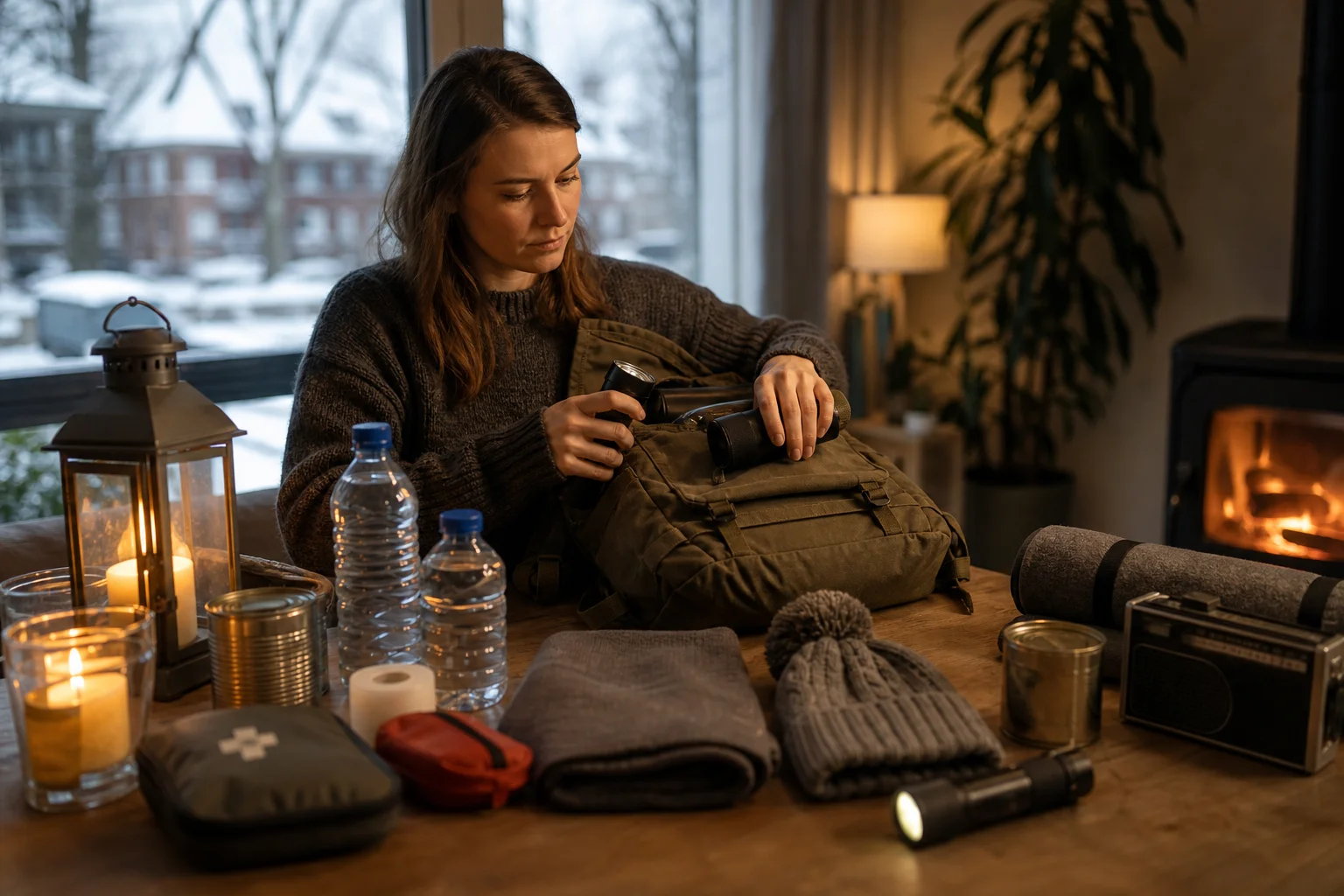
The BBK recommends maintaining a basic emergency pantry (Notvorrat) and essential equipment at home. You do not need to build an underground bunker; practical, space-conscious preparation is more than enough for everyday apartment living.
During a major power outage, municipal water towers and pumping stations may experience low pressure or temporary shut-offs, especially in multi-story apartment buildings where water relies on electric pressure pumps. The BBK recommends keeping:
Winter days in Germany are short, with darkness falling before 16:30 in December and January. Reliable alternative light sources are indispensable:
A standard home first-aid kit (Hausapotheke) should include bandages, sterile gauze, burn ointment, pain relievers, and disinfectant. If you rely on vital daily prescription medication, ensure you always request refills before your supply drops below a week. For advice on navigating German pharmacies and healthcare providers, read our guide on German for the doctor, the pharmacy and the Bürgeramt.
Most German apartments rely on central hydronic heating (gas, oil, district heating, or heat pumps). All of these systems require electricity to run circulating pumps and thermostat controls. If the electricity cuts out during a winter cold snap, your radiators (Heizkörper) will cool down rapidly.
Every winter, emergency services in Germany respond to tragic accidents caused by unsafe indoor heating practices. Observe these strict safety rules:
In any crisis, accurate local information is your most valuable asset. When home Wi-Fi routers turn dark and cellular towers experience congestion, knowing how official notifications are broadcast is essential.
Install Germany's official emergency warning apps on your mobile phone:
If mobile networks become overwhelmed or battery levels dwindle, local public radio remains the primary emergency broadcast medium in Germany. Keep a small battery-operated or solar/crank-powered FM/DAB+ radio (Kurbelradio) ready. Regional public broadcasters such as WDR, BR, SWR, or NDR broadcast official instructions from civil defense authorities during widespread emergencies.
Save these national numbers on paper in your emergency kit so you do not have to rely on a working phone contacts list:
If you plan to use your car battery to charge devices or keep warm during an outage, ensure your vehicle is legally equipped and parked safely; review our guide on winter tire regulations in Germany before setting out on snow-covered roads.
When contacting landlords, property management companies (Hausverwaltung), or neighbors during a service interruption, knowing precise German terminology makes communication straightforward.
| German Term | English Meaning |
|---|---|
| der Stromausfall | power cut / electricity blackout |
| die Taschenlampe | flashlight / torch |
| die Stadtwerke (pl.) | municipal utility company |
| der Heizungsausfall | heating system failure |
| die Hausverwaltung | property management |
| die Sicherung | fuse / circuit breaker |
| der Notvorrat | emergency food and water supply |
| die Notunterkunft | emergency shelter |
Here are practical expressions you can use with neighbors or emergency services:
Learning how to speak German confidently in everyday practical situations helps eliminate stress during unexpected apartment issues. The Bretzi app teaches the practical German of daily life, work, and exams from beginner (A0) to advanced (C1). With short lessons covering vocabulary and grammar, you can practise realistic dialogues. For spoken practice, Bretzi's AI conversation partner, SprachBuddy, lets you speak out loud in everyday roleplay scenarios—like calling a landlord or explaining a technical breakdown—with instant pronunciation feedback to sharpen your confidence.
Once the lights flicker back on and power returns, take a few thoughtful steps to protect your appliances and home:
Germany's energy network remains one of the safest and most robust globally, making severe prolonged blackouts a rare occurrence. Nevertheless, basic emergency preparedness is common sense for any resident. By assembling a modest emergency supply box, keeping basic battery-powered devices charged, and knowing how to communicate in German with neighbors and local authorities, you can navigate any cold winter storm with confidence.
Rules, fees and dates change. Check the current version on the official pages before you act.
Share this article:
Arriving in Germany and registering with a statutory health insurance provider (Gesetzliche Krankenversicherung or GKV) gives newcomers a comforting...
Read moreWhen autumn settles across Germany and temperatures plunge below freezing, life shifts outdoors. Morning frost glazes windshields, cobblestones...
Read moreArriving in Germany and moving into an unfurnished flat (Wohnung) is an exciting milestone, but it often comes with a classic shock for newcomers:...
Read more