How to Ace the Oral Picture Description in the DTZ B1 German Exam
Standing outside the exam room, heart thumping, waiting for the oral portion of the Deutsch-Test für Zuwanderer (DTZ) is an experience thousands of...
Read more
This article was drafted by AI and edited by a person before it was published.
AI can get things wrong. For anything official, check the source it points to.
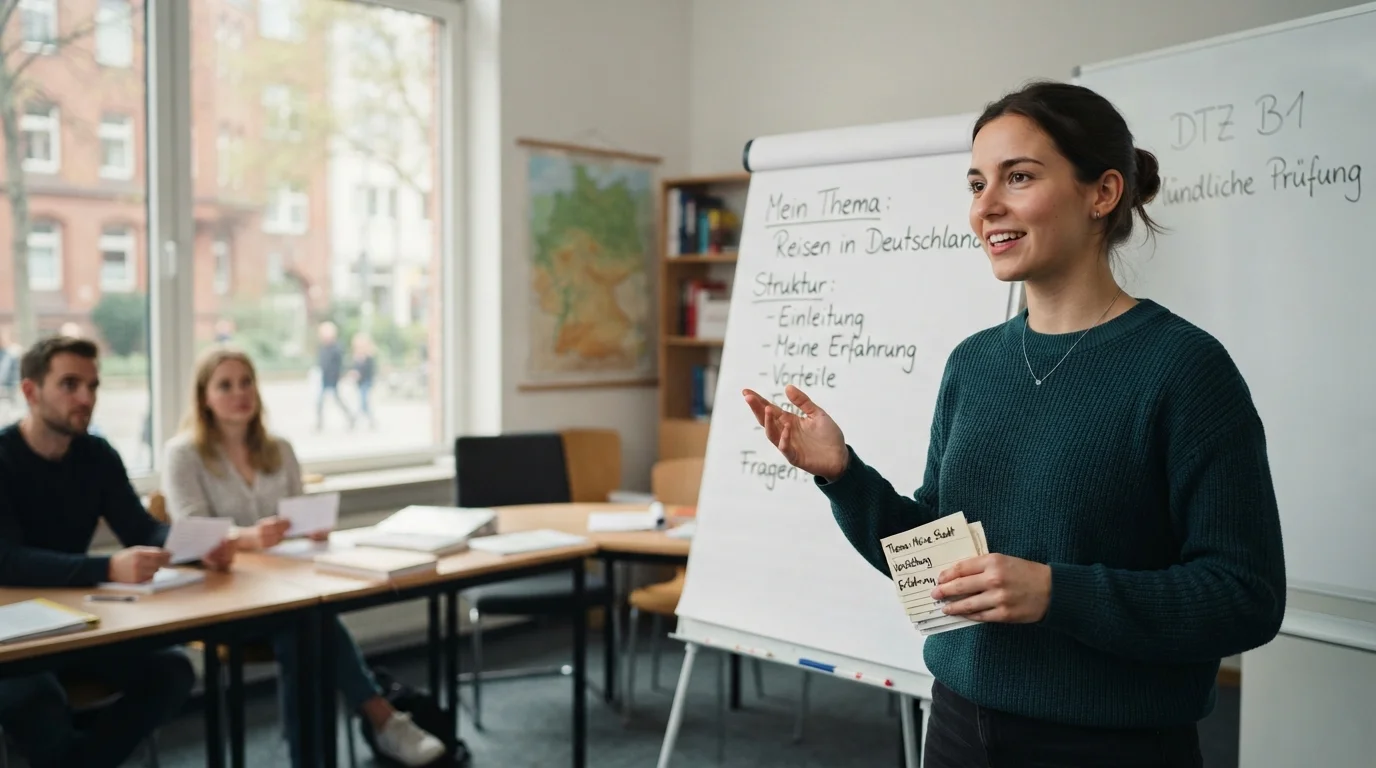
AI-generated image
Preparing for the Deutsch-Test für Zuwanderer (DTZ) can feel like a monumental task, especially when you are aiming for that B1 certificate. For expats, language learners, and those seeking permanent residency or citizenship in Germany, passing this exam is a crucial milestone. While the reading and listening sections test your passive comprehension, the speaking subtest is where many candidates feel the most pressure.
Specifically, Part 2 of the speaking exam (the Presentation or Präsentation) requires you to speak for about two minutes on a selected topic, followed by a brief Q&A session with the examiners and your exam partner. It is your best opportunity to showcase your vocabulary, grammatical range, and pronunciation.
In this guide, we will break down exactly what to expect, how to structure your presentation, the essential phrases (Redemittel) you need to score maximum points, and how to practice effectively.
The DTZ speaking exam is a paired assessment, meaning you will take it with another candidate. It lasts approximately 15 minutes and is divided into three parts:
The official guidelines set by the Federal Office for Migration and Refugees (BAMF) state that for Teil 2, you must choose one topic from a list of standard options, prepare it, and speak freely. Let's dive into how to make this section flawless.
The examiners will typically let you choose from several standard topics. Because these topics are known in advance, you can—and absolutely should—prepare your structures and vocabulary beforehand. The most common topics include:
Your goal is not just to talk randomly but to address specific prompt points provided on your task sheet. Usually, these prompts ask you to cover: What is it? Why is it important to you? What did you do/experience? How is it in your home country?
To score a B1 level, your presentation must be logical, coherent, and structured. Examiners value smooth transitions. Instead of jumping from one point to another, guide your listener through your thoughts.
Start with a polite and clear opening statement. State what you are going to talk about so the examiners know exactly what to expect.
Example: "Ich möchte heute über mein Lieblingsthema sprechen: Eine Reise, die ich gemacht habe. Ich habe dieses Thema gewählt, weil diese Reise eine sehr schöne Erinnerung für mich ist."
This is where you answer the core prompts. Try to use a variety of tenses. For instance, when describing a past trip or event, you must show proficiency in the past tense. Knowing when to use using als and wenn for past events is critical here, as it demonstrates grammatical precision when describing unique moments in your life.
To connect your sentences smoothly, focus on mastering German adverbial conjunctions like deshalb and trotzdem. Instead of making short, choppy sentences, link your thoughts logically: "Es hat viel geregnet, trotzdem hatten wir großen Spaß." (It rained a lot; nevertheless, we had great fun.)
Many prompts ask you to compare your experience or the topic with how it is done in your home country. This is an excellent opportunity to showcase comparative structures (komparativ) and cultural vocabulary.
Example: "In meinem Heimatland reisen die Menschen meistens mit dem Auto, aber hier in Deutschland ist das Bahnnetz viel besser ausgebaut."
Final Takeaway: Preparation is your strongest asset. By memorizing a few key transition phrases and practicing your structure for these standard topics, you will reduce your exam anxiety and significantly increase your chances of achieving that B1 certificate.
Share this article:
Standing outside the exam room, heart thumping, waiting for the oral portion of the Deutsch-Test für Zuwanderer (DTZ) is an experience thousands of...
Read moreGermany's modernized citizenship law has transformed how long-term foreign residents build their futures in the country. Following landmark updates...
Read moreSecuring a German B1 language certificate is one of the most critical milestones for anyone building a life in Germany. Whether you are aiming for a...
Read more