Ruhezeit in Germany: Sunday Quiet Hours & House Rules Guide
You have just finished completing your Anmeldung, unpacked the last moving boxes on a sunny Sunday afternoon, and decided it is the perfect time to...
Read more
This article was written by AI and published by Bretzi.
AI can get things wrong. For anything official, check the source it points to.
AI-generated image
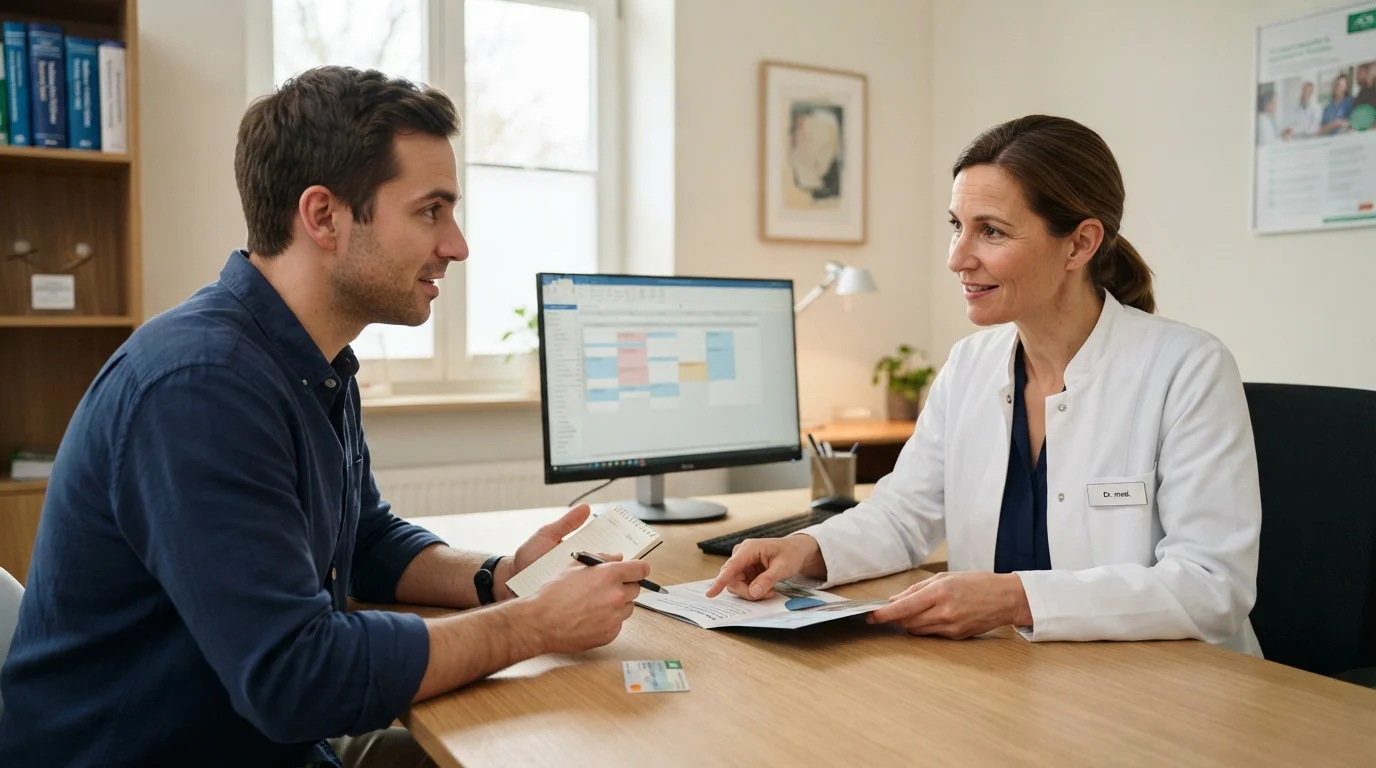
Waking up with a sudden fever, persistent cough, or unexplained back pain in a new country is stressful enough. But when you realize you have to explain your medical symptoms in a language you have not yet mastered, that stress can quickly turn into panic. For expats, international students, and newcomers across Germany, finding an English-speaking general practitioner—known locally as a Hausarzt—is one of the most critical steps in settling in.
While many German medical professionals understand basic English, medical terminology is notoriously nuanced. Communicating precisely how you feel without language barriers ensures you receive the right diagnosis, treatments, and prescriptions. In this comprehensive guide, we will walk you through how the German primary healthcare system works, the best tools to find an English-speaking Hausarzt near you, what to expect during your first visit, and essential German medical phrases you should know.
In Germany, the healthcare system is structured around primary care. Your Hausarzt (general practitioner or family doctor) serves as your primary point of contact for nearly all physical and mental health concerns. Unlike in some healthcare systems where you might consult specialized clinics directly, the German system strongly encourages the Hausarztzentrierte Versorgung (GP-centered care model).
Here is what your Hausarzt typically handles:
Just as completing your Anmeldung in Germany is your first bureaucratic prerequisite upon arrival, registering with a reliable Hausarzt should be your top healthcare priority before you actually fall ill.
Before beginning your search, you must verify whether a doctor's clinic (Praxis) accepts your specific health insurance:
Digital booking platforms have revolutionized the German medical landscape, making it significantly easier for non-German speakers to filter by spoken language:
The Kassenärztliche Bundesvereinigung (KBV) runs the official nationwide directory of all registered statutory doctors via the 116117.de portal. You can use their search engine (Arztsuche), select your federal state (Bundesland), and apply advanced search criteria to filter specifically for doctors who provide consultations in English, French, Spanish, or other languages.
Embassies—including the US Embassy, British Embassy, and Australian Consulates in Germany—maintain curated PDF lists of medical professionals, specialists, and hospitals where staff speak fluent English. These lists are particularly helpful in major hubs like Berlin, Munich, Frankfurt, Hamburg, and Düsseldorf.
Online expat forums (such as Reddit's r/germany or local city subreddits) and community social media groups frequently share recommendations for friendly, empathetic doctors who accommodate international patients without hesitation.
Once you have identified a promising practice, the next hurdle is booking your consultation. In Germany, medical appointments follow two primary formats:
For routine matters, ongoing health concerns, or preventive check-ups, you book a specific date and time either via Doctolib or by phone. Due to doctor shortages in high-density urban areas, regular appointments can sometimes be scheduled weeks in advance.
If you wake up with an acute condition (e.g., intense migraine, stomach flu, sudden infection) and urgently need treatment or a sick note for your employer, most GP practices offer an Akutsprechstunde or offene Sprechstunde. This usually takes place during the first one to two hours of the morning (e.g., 08:00 to 09:30). You do not need an appointment, but you should arrive before the practice opens and be prepared to wait in the waiting room (Wartezimmer).
To ensure a smooth registration at the front desk (Empfang or Anmeldung), bring the following documents:
While your doctor might speak fluent English, the receptionists and medical assistants (Medizinische Fachangestellte – MFA) at the front desk often communicate exclusively in German. Being able to navigate front-desk interactions in basic German will save you considerable time and avoid misunderstandings.
If you want to practice real-life conversational scenarios before stepping into a German medical practice, using the Bretzi app is an effective way to prepare. Bretzi offers interactive dialogue games and AI-powered conversation practice tailored to practical expat situations—such as explaining symptoms to a doctor, checking in at reception, or requesting a sick certificate. With immediate pronunciation feedback and spaced-repetition vocabulary drills, you can build speaking confidence quickly.
Here is a handy reference list of practical German phrases for medical visits:
| German Phrase | English Meaning |
|---|---|
| Ich möchte einen Termin vereinbaren. | I would like to make an appointment. |
| Sprechen Sie oder der Arzt Englisch? | Do you or the doctor speak English? |
| Ich bin akut krank und brauche eine Krankschreibung. | I am acutely ill and need a sick note for work. |
| Ich habe starke Kopfschmerzen / Bauchschmerzen. | I have severe headaches / stomach aches. |
| Ich habe seit drei Tagen Fieber und Husten. | I have had a fever and a cough for three days. |
| Ich benötige eine Überweisung zum Facharzt. | I need a referral to a specialist. |
| Ich bin gegen Penicillin allergisch. | I am allergic to penicillin. |
Illness does not follow office hours. If you fall sick in the evening, over the weekend, or during a public holiday when standard clinics are closed, you have several options:
If your condition is urgent but not life-threatening (e.g., severe ear infection, high fever that does not drop with medication, urinary tract infection), dial 116 117 (Ärztlicher Bereitschaftsdienst). This free nationwide service directs you to the nearest open on-call clinic (Bereitschaftspraxis) or can dispatch an on-call physician to your residence if you are unable to travel.
For acute, life-threatening emergencies (e.g., severe chest pain, signs of stroke, major trauma, severe shortness of breath), call 112 immediately. The dispatchers coordinate ambulances (Rettungswagen) and emergency physicians (Notarzt). Emergency operators generally speak English.
If you need prescription or over-the-counter medication late at night or on Sunday, regular pharmacies (Apotheken) will be closed. However, every district operates a rotating emergency pharmacy service (Apotheken-Notdienst). You can locate the nearest on-duty pharmacy via Aponet.de or check the notice board displayed in the window of any local pharmacy.
While health insurance covers emergency treatment, keeping your overall living security in check is equally essential when moving to Germany—such as protecting yourself with personal liability coverage (Haftpflichtversicherung) against accidental damages in daily life.
Finding an English-speaking Hausarzt gives you peace of mind and ensures that language barriers never compromise your health and wellbeing. By utilizing platforms like Doctolib and 116117.de, understanding local appointment protocols, and preparing your documentation in advance, navigating the German medical system becomes completely manageable.
As you settle into life in Germany, learning basic everyday German transforms routine tasks—from medical visits to grocery shopping—into smooth, stress-free experiences. Start practicing real-life conversations with Bretzi today to build your language skills step-by-step with interactive, AI-guided dialogues!
Share this article:
You have just finished completing your Anmeldung, unpacked the last moving boxes on a sunny Sunday afternoon, and decided it is the perfect time to...
Read moreSigning a contract in Germany is notoriously easy—whether you are picking up a shiny new smartphone plan or joining a local fitness club. But when...
Read moreIf you have recently moved to Germany, your first trip to a local grocery store might feel less like a routine errand and more like an Olympic sport....
Read more