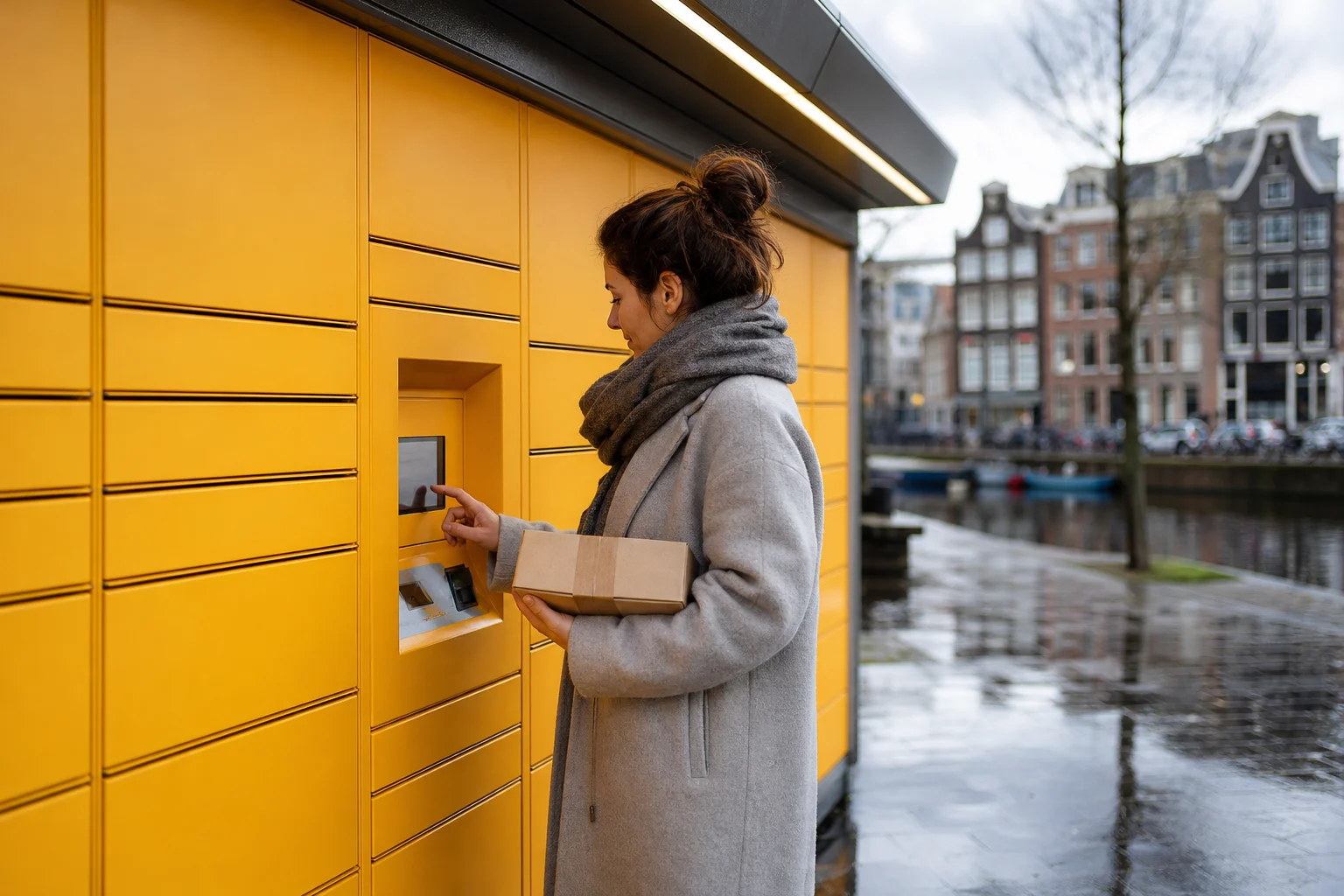
A Guide to German Post and DHL Packstation Setup (2026)
If you have recently moved to Germany, few things will test your patience quite like your first missed package. You wait at home all morning, only to...
Read more
This article was written by AI and published by Bretzi.
AI can get things wrong. For anything official, check the source it points to.
AI-generated image

It is one of the most chilling sounds an expat or resident in Germany can hear: the hollow clatter of a keychain dropping through a storm drain, or the sinking feeling of patting down your coat pockets outside your apartment door at midnight only to find them empty. In many countries, losing a house key is an annoying inconvenience that costs ten or twenty euros at a local hardware shop. In Germany, however, losing an apartment key can easily spiral into an administrative nightmare and a bill running well into the thousands of euros.
Why does a simple lost key carry such severe financial consequences in Germany? The answer lies in the country's ubiquitous master locking systems, strict legal liability rules, and the meticulous nature of German property management. In this comprehensive guide, we will break down exactly how locking systems work, what German law says about tenant liability, how key liability insurance (Schlüsselversicherung) protects you, and the practical steps you must take the moment your keys go missing.
To understand why losing a key in Germany is treated with such urgency, you need to understand the concept of a Zentralschließanlage (central locking system). If you live in an apartment building (Mehrfamilienhaus), you most likely do not have an isolated front door key. Instead, landlords install complex master key systems designed for security and convenience.
In a standard German apartment complex, a single physical key often unlocks:
While this system means you only need to carry one key rather than five, it also creates an interconnected web of security. If you lose your key and there is a realistic risk that an unauthorized person could find it and identify which building it opens, the entire security integrity of the building is compromised. To restore security, the landlord or property management company (Hausverwaltung) may be legally permitted to replace the central cylinder, the cylinders on every shared entry door, and occasionally the locks of all other apartments linked to that master system.
When you multiply custom security cylinders, specialist installation labor, and dozens of newly minted, patent-protected keys distributed to every neighbor in the building, the total invoice routinely reaches €1,500 to €5,000. In large commercial office complexes, losing a company master key (Generalschlüssel) can cause damages exceeding €20,000.
Under the German Civil Code (§ 823 BGB), anyone who intentionally or negligently damages the property of another person is obligated to compensate for the resulting damage. When you sign a rental contract (Mietvertrag), you receive a specific number of keys and agree to return them in full upon vacating the premises.
However, German tenancy law does not automatically grant landlords the right to bill you for an entire locking system just because a key is missing. Landmark rulings by German courts, including decisions by the Federal Court of Justice (Bundesgerichtshof or BGH), have established crucial guardrails:
A landlord can generally only demand the replacement of an entire locking system if there is a concrete danger of misuse. For example, if you dropped your keys into a deep lake, saw them fall into the tracks of an underground subway line where they were mangled beyond recognition, or lost them in another city with zero identifying tags, your landlord cannot simply order a brand-new master system at your expense. If no one can connect the lost key to your specific building, the lock replacement may be deemed unjustified by a court.
Conversely, if your bag was stolen containing both your keys and your registration certificate (Anmeldebestätigung), wallet, or driver's license showing your address, the risk of burglary is acute. In that scenario, replacing the locks is practically mandatory, and the financial liability falls squarely on the tenant who lost them.
German court precedents have established that landlords cannot charge you the hypothetical cost of replacing a locking system if they do not actually replace it. A landlord cannot pocket €2,000 as compensation for the "loss of value" and leave the old locks in place. If they demand compensation, they must present the invoice showing that the cylinders were indeed replaced.
Given the immense potential costs, carrying personal liability insurance that includes key loss coverage is considered virtually essential for anyone living in Germany. This is typically structured as an add-on or standard clause inside your private liability policy (Privathaftpflichtversicherung). If you want a complete overview of how general liability policies operate, read our comprehensive guide on German liability insurance.
When evaluating or purchasing liability insurance in Germany, you must verify how key loss (Schlüsselverlust) is handled in the policy documentation. Coverage is generally divided into two main categories:
This covers keys that belong to a rented house or apartment building. High-quality policies will pay for:
Always check your policy's coverage limit for key loss. While basic property damage might be insured up to €10 million or €50 million, some budget policies cap key loss at €5,000 or €10,000. Ensure the key-specific limit is high enough to cover an entire multi-family building's locking mechanism.
If your job requires you to carry keys to an office, a university laboratory, a school, or a warehouse, standard private key coverage will usually not pay out if you lose them. You need specific coverage for berufliche Schlüssel (occupational keys). If you are trusted with master keys at work, check whether your employer provides coverage or whether your private liability policy explicitly includes commercial key loss.
Even with excellent insurance, there are exclusions you should keep in mind:
Losing a key is stressful, but acting methodically can protect your bank account and your safety. Follow this step-by-step checklist the moment you realize a key is missing:
Before panicking, systematically retrace your route. Visit every shop, cafe, or train station you entered that day. In Germany, lost items frequently end up in official lost-and-found offices (Fundbüro).
If you are locked out of your apartment, you may need an emergency locksmith (Schlüsseldienst). The emergency locksmith industry in Germany is notorious for predatory pricing and rogue operators (Abzocke). Follow these defensive rules:
You have a legal obligation under your rental contract to inform your landlord (Vermieter) or property management company (Hausverwaltung) without undue delay (unverzüglich). Send an email or registered letter documenting:
Contact your private liability insurance company immediately to initiate a damage report (Schadensmeldung). Most insurers require notification within a few days. Provide them with your landlord's contact details and your explanation of how the loss occurred. Once notified, your insurer steps in to handle communications regarding the claim. Crucially, your liability insurer also acts as a "passive legal defense": if your landlord demands an unjustified complete lock replacement when there was no actual risk of misuse, the insurance company will contest the unreasonable costs on your behalf.
If your keys were stolen—whether picked from your pocket, taken from your car, or stolen alongside your handbag—file a theft report (Strafanzeige erstatten) with the local police. You will receive an incident case number (Tagebuchnummer or Aktenzeichen). Both your landlord and your insurance provider will require this official police document to verify the circumstances of the theft.
When an emergency happens, explaining the technical details in German can feel overwhelming. Here is a breakdown of the critical vocabulary you need when interacting with locksmiths, landlords, and insurers:
Practicing these realistic dialogues before you find yourself stranded in the hallway is one of the smartest ways to build confidence. If you want to prepare for real-world interactions in Germany, you can use the language learning app Bretzi. With Bretzi's AI conversation partner, SprachBuddy, you can call and speak German out loud to roleplay everyday situations—such as explaining a lost key to your landlord or negotiating prices with a local tradesperson—and review your written transcript afterward. You can also save relevant vocabulary terms in Bretzi's Words tab to review them with spaced-repetition flashcards whenever you have a few free minutes.
The problem of missing keys often surfaces during the end-of-tenancy handover (Wohnungsübergabe). When moving into an apartment, you sign an inventory protocol (Übergabeprotokoll) specifying the exact number of keys handed to you (e.g., three front door keys, two mailbox keys, one basement key).
When you give notice to terminate your lease—a process subject to statutory regulations outlined in our guide on tenant notice periods—you must return every single key recorded on that initial handover protocol. Never attempt to secretly duplicate a registered security key (Sicherheitsschlüssel) at a high-street key cutter to replace a lost one. Master system keys feature proprietary key profiles and unique serial numbers; legitimate locksmiths are legally prohibited from copying them without an official authorization card (Sicherungskarte) from the property owner.
If you cannot produce all original keys during the final walk-through, the landlord will note the deficit on the handover document and deduct the cost of rekeying or cylinder replacement directly from your rental deposit (Mietkaution), unless your key liability insurance assumes the claim.
While insurance provides financial protection, avoiding key loss altogether saves days of administrative paperwork. Implement these simple habits to safeguard your home:
A lost key in Germany is more than a momentary headache—it is a legal and logistical event tied to sophisticated locking infrastructure. By understanding how the Schließanlage works, verifying that your private liability policy includes comprehensive key loss protection, and maintaining composure when communicating with landlords and locksmiths, you can navigate an accidental lockout without draining your savings.
Taking the time to understand German tenancy conventions and mastering the German language needed to advocate for yourself turns intimidating situations into manageable everyday tasks. Keep your emergency numbers handy, ensure your insurance is up to date, and approach your life in Germany with complete peace of mind.
Rules, fees and dates change. Check the current version on the official pages before you act.
Share this article:
If you have recently moved to Germany, few things will test your patience quite like your first missed package. You wait at home all morning, only to...
Read moreFinding an appointment with a specialist doctor (Facharzt) in Germany can feel like an intimidating bureaucratic puzzle. Whether you need to see a...
Read moreWhen winter blankets Germany in thick white snow, neighborhoods transform into postcard-perfect scenes. But for residents, fresh snowfall also...
Read more