
German Public vs Private Health Insurance in 2026
Choosing between public and private health insurance in Germany can feel like a test of both bureaucracy and vocabulary. You may encounter terms such...
Read more
This article was written by AI and published by Bretzi.
AI can get things wrong. For anything official, check the source it points to.
AI-generated image
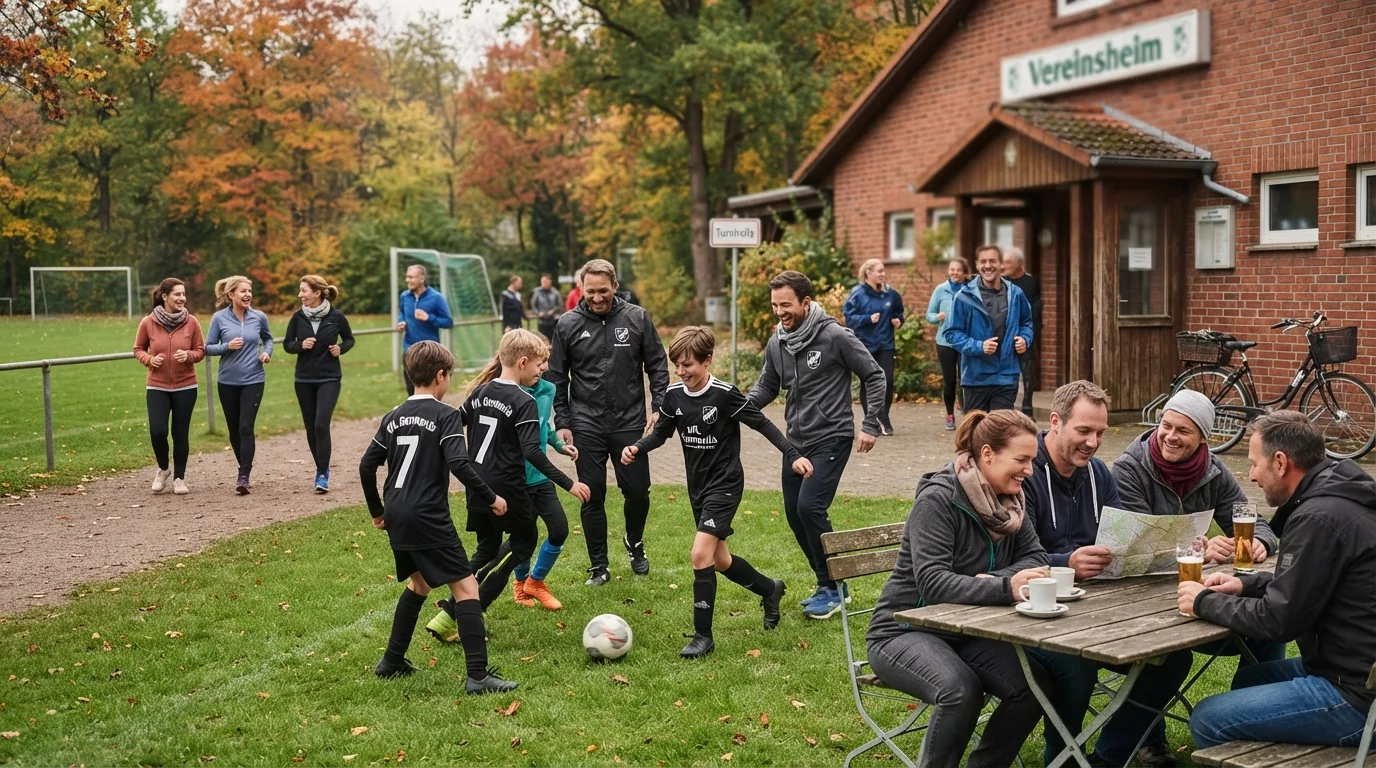
Autumn in Germany is more than cooler mornings, colourful forests and the return of indoor activities. It is also an excellent time to join a local Verein—a club where people meet regularly to play sport, practise a hobby, perform music or work together on a shared interest. For newcomers, a Verein can be a practical way to build friendships, understand everyday German culture and use German outside the classroom.
You do not need perfect German, a large social network or years of experience. With a little preparation, you can find a suitable club, contact the organisers and attend a trial session this autumn. This guide explains how German Vereine work, where to search, what vocabulary you need and how to make a confident first visit.
A Verein is an organised association based around a common interest or purpose. Many are non-profit organisations managed by members. A local sports club might offer football, volleyball, swimming, tennis, athletics or martial arts. Other clubs focus on music, theatre, photography, hiking, gardening, chess, dancing, crafts or community activities.
Some Vereine are large and offer several sections, while others are small groups that meet in a sports hall, community centre, music room or outdoor space. The atmosphere varies: some clubs are highly structured and competitive, while others are relaxed and mainly social. Reading the club's website and asking about the level before you join can help you choose a good match.
Membership usually involves registering with the association and paying a contribution called the Mitgliedsbeitrag. The amount and payment schedule differ from club to club. You should ask whether there is a trial session, a one-time registration fee, equipment cost or separate charge for a particular course. Do not assume that every club has the same rules.
Autumn often brings a new programme after the summer holidays. Clubs may begin indoor training, open new courses or welcome people who are returning to their normal routines. September and October can therefore be useful months for finding a regular activity, although clubs may accept new members throughout the year.
Seasonal activities also make it easier to start a conversation. You can ask about indoor training, an autumn hiking programme, a beginners' course or the club's schedule for the winter months. If you are planning your household for colder weather, you may also find our guide to preparing a German apartment for winter heating useful when organising your new routine.
Joining a club can support language learning in a way that textbooks cannot. You hear repeated phrases, announcements and informal conversations in a familiar context. You also learn how people organise appointments, arrive on time, share equipment and make plans. These everyday interactions are particularly useful for people preparing for integration exams, because they connect German vocabulary with life in Germany.
Start with your town, district or postcode and combine it with a German activity word. Useful searches include:
Check the website of your municipality, local sports federation, community centre or regional association directory. Libraries, noticeboards, schools and local newspapers may also advertise clubs. Ask colleagues, neighbours or classmates: Kennen Sie einen guten Verein in der Nähe? A personal recommendation can tell you more about the atmosphere than a short online description.
Before contacting a club, check its meeting location, timetable, age group, language expectations and experience level. A club that looks interesting may be difficult to reach by public transport or may be aimed at advanced competitors. In autumn, also check whether an outdoor activity changes location or moves indoors.
Make a short list of two or three options. Comparing clubs helps you avoid joining the first group you find if the time, cost or atmosphere is unsuitable. Look for clear information about contact details, registration and trial sessions. If the website has not been updated recently, send an email or telephone the office before travelling there.
You can often manage your first contact with a few prepared sentences. The following vocabulary is useful:
Here is a simple email template:
Guten Tag, ich interessiere mich für Ihre Anfängergruppe im Volleyball. Ich bin neu in der Stadt und würde gern an einer Schnupperstunde teilnehmen. Gibt es im Oktober noch freie Plätze? Welche Ausrüstung brauche ich, und wie hoch ist der Mitgliedsbeitrag? Vielen Dank für Ihre Antwort. Freundliche Grüße, [your name]
In English, this means that you are interested in the beginners' volleyball group, would like to attend a trial session and want to know about availability, equipment and the membership fee. Adapt the activity and month to your situation.
For a phone call, write down three questions before you dial. You could say: Guten Tag, ich habe eine Frage zur Mitgliedschaft or Ich möchte gern einmal zum Probetraining kommen. If the conversation becomes difficult, politely ask: Könnten Sie bitte etwas langsamer sprechen? This is a normal and useful request, not a failure.
A trial visit is the best opportunity to check whether the club suits you. Ask the following questions before or after the session:
In German, the question about a trial session can be phrased as: Kann ich an einem Probetraining teilnehmen? If the club uses a different term, the organiser can explain the process. Read any membership form carefully before signing, especially the contribution, cancellation conditions and data-handling information.
Membership arrangements vary. Some clubs collect contributions monthly, quarterly or annually. Some require members to help at events, maintain facilities or take part in volunteer work. This can be a valuable part of club life, but you should understand what is expected before joining.
Send a short message first unless the club clearly invites people to attend without registration. Confirm the address, start time and meeting point. In Germany, arriving a few minutes early is usually a good habit. Bring water, suitable clothing, indoor shoes if required and any documents the organiser has requested.
Prepare a short introduction in German:
Hallo, ich heiße [name]. Ich bin neu in [town] und interessiere mich für [activity]. Ich habe schon ein bisschen Erfahrung, aber ich möchte gern in einer Anfängergruppe anfangen.
If you have little experience, say so honestly: Ich bin Anfängerin or Ich bin Anfänger. If you have a health concern or injury, explain it before the activity begins. You can also say: Ich lerne noch Deutsch. Können Sie mir die Übung bitte zeigen?
During the first session, observe how instructions are given and how members interact. Do people explain things patiently? Is the level appropriate? Does the timetable fit your life? A welcoming club does not need to speak English all the time, but it should give you a reasonable chance to understand important safety and organisational information.
At first, club conversations may feel fast because members already know one another. Use small, repeatable questions to join in:
Remember that du and Sie are used differently. Many sports and hobby groups use du, but wait for someone to suggest it or follow the group's general habit. You can ask: Sollen wir uns duzen? This means, “Shall we use the informal form?”
Do not worry if you make grammatical mistakes. Repetition is one of the advantages of regular club participation. Between sessions, you can review relevant vocabulary and practise listening with Bretzi, whose lessons and situations follow daily life in Germany. Its speaking practice with SprachBuddy is also designed for saying German out loud, although it is software rather than a human conversation partner.
Each Verein has its own culture, but several habits are widely appreciated. Tell the organiser if you will be late or absent. Return shared equipment to its place. Follow instructions about changing rooms, shoes and cleaning. If the club asks members to help at a tournament, performance or community event, respond clearly even if you cannot volunteer.
Be attentive to house rules. Sports halls and community buildings may have specific rules about food, noise and clothing. Some residential areas also have quiet periods. If your club organises a private gathering or celebration, it is sensible to understand local expectations; our guide to Ruhezeit and Sunday quiet hours explains common issues for people living in Germany.
Sports clubs may use terms such as Aufwärmen (warm-up), Pause (break), Wiederholung (repetition), Partnerübung (partner exercise), Spielstand (score) and Feierabend (the end of the working day). Hobby clubs may use Material, Werkzeug, Entwurf and Ausstellung. Save unfamiliar words and review them before the next meeting.
As the weather becomes colder, indoor sports can provide a dependable weekly routine. Consider volleyball, badminton, table tennis, basketball, gymnastics, climbing or martial arts. Ask whether the group is recreational or competitive and whether beginners train separately.
Autumn is ideal for walking, hiking, cycling and nature photography. Look for a Wanderverein, local walking group or photography club. Check what happens in rain and darkness, and ask whether you need reflective clothing, suitable footwear or your own equipment.
Music, choir, theatre, painting, pottery, sewing, cooking and chess can offer frequent conversation as well as a shared task. These activities may be especially comfortable for learners because you can communicate through demonstration while gradually expanding your German vocabulary.
After your first visit, write down what you learned while it is fresh. Note the names of people you met, useful words, the next meeting date and any equipment you need. If the group felt suitable, attend a second session before deciding. Familiarity often makes the language and social atmosphere easier.
Choose a realistic commitment. A club can support integration, but it should fit your work, family responsibilities, studies and travel time. Put the meeting in your calendar and prepare your bag in advance. A consistent routine is more useful than joining several activities and quickly abandoning them.
Be patient with social connections. Existing members may already have established friendships, so it can take several meetings before conversations become personal. Greet people by name, ask simple questions and offer practical help. Volunteering at a club event can create natural opportunities to speak German, but never feel pressured to accept responsibilities you cannot manage.
Participation in local associations is often discussed as one way to take part in community life. It can help you learn informal expressions, discover local customs and meet people beyond work or language school. However, a Verein is not a replacement for an integration course, official advice or exam preparation. Treat it as a real-life setting where the German you learn can become active.
If you are preparing for the Leben in Deutschland test or another integration exam, pay attention to social vocabulary and everyday institutions you encounter. Practise explaining what your club does, when it meets and why you joined. These are useful topics for spoken German and for introducing your life in Germany to classmates.
For reliable general information about civic participation and associations, consult your municipality and established German organisations. The Wikipedia overview of German associations provides background on the concept, while local authorities can give you the most relevant information about clubs in your area.
Joining a local German Verein can turn a weekly hobby into a bridge to everyday life. Whether you choose an indoor sport, a hiking group, a choir or a creative activity, you will have repeated chances to listen, speak and participate in German. The goal is not to sound perfect at your first meeting; it is to show up, ask questions and return.
Start by searching for one club near you today. Send a short message, arrange a Schnupperstunde and save a few useful phrases before you go. With regular practice inside and outside the club, your German vocabulary and confidence can grow alongside your local connections.
Rules, fees and dates change. Check the current version on the official pages before you act.
Share this article:
Choosing between public and private health insurance in Germany can feel like a test of both bureaucracy and vocabulary. You may encounter terms such...
Read moreAutumn in Germany brings golden leaves, cooler mornings and one important change that affects almost everyone: the clocks move back by one hour. In...
Read moreYou have just finished completing your Anmeldung, unpacked the last moving boxes on a sunny Sunday afternoon, and decided it is the perfect time to...
Read more