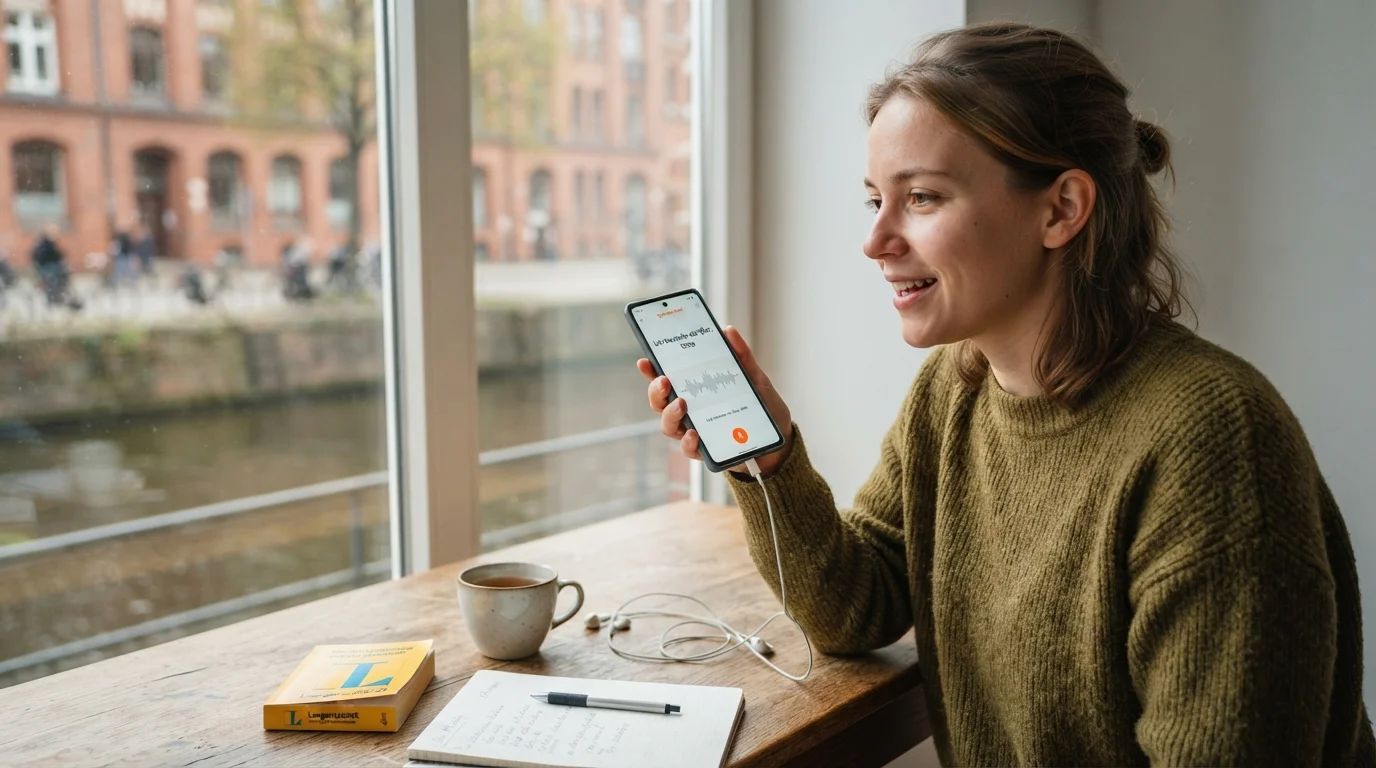
How to Practice German Pronunciation: Best App Features and Voice Recognition Tools
When you start learning German, the grammar often gets the lion's share of the attention. You wrestle with cases, memorize noun genders, and...
Read more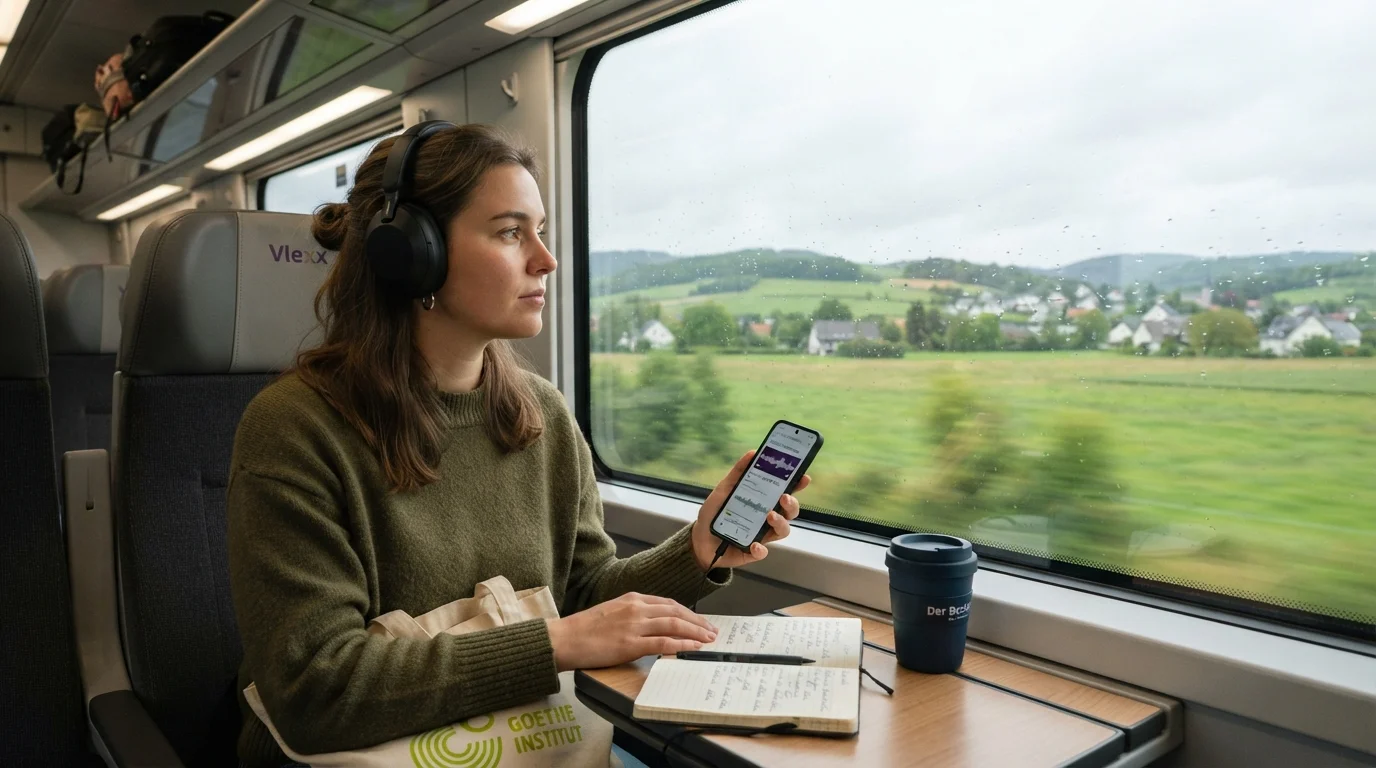
Every weekday, millions of expats, international professionals, and students spend anywhere from thirty to ninety minutes traveling to work or university. If you calculate that across an entire year, that represents between 150 and 400 hours of transition time—often spent scrolling social media or staring blankly out the train window. What if you could harness those dead hours to achieve conversational fluency in German?
With modern audio technology, smart audio apps, and tailored podcasts, transforming your daily travel into an immersive German classroom has never been more practical. However, commuting presents unique challenges: background noise, divided attention, crowded subway cars, and the mental fatigue of an early morning or late afternoon. To make genuine progress, you need more than just background noise—you need an actionable system.
In this comprehensive guide for 2026, we explore the science behind commuter learning, evaluate the best audio apps and podcasts across all CEFR levels (A1 to C1), and explain how to design a hands-free or low-touch language routine that fits seamlessly into your morning routine.
Before loading your phone with audio content, it is crucial to understand how adult brains acquire a language through sound. Many learners fall into the trap of pure passive listening—turning on a German radio station while stuck in bumper-to-bumper traffic and hoping the grammar structures somehow absorb through osmosis.
Research into second language acquisition consistently shows that passive exposure alone yields minimal results for beginner and intermediate learners. Without comprehension and focused cognitive engagement, fast German speech simply registers as acoustic background noise. To build real competence, you need a balance of two listening modes:
When you combine audio input with modern retention systems—such as how AI German apps speed up vocabulary memorization—those commute sessions cement grammar and vocabulary permanently into your long-term memory.
Podcasts remain one of the most flexible audio tools available. Because episodes vary in length from 5 to 45 minutes, you can easily match them to the exact duration of your commute. Here are the top podcast selections categorized by CEFR proficiency levels.
While podcasts offer rich passive and semi-active immersion, specialized language applications provide interactive, pedagogical structure. Depending on whether you drive or ride the train, you will need apps that support either completely hands-free voice interaction or rapid micro-learning sessions.
For learners who want structured progression rather than endless random listening, Bretzi provides an innovative approach. With its AI-driven personalized learning plans and real-life conversational dialogues, you can engage in voice-based scenarios while walking or waiting on the platform. The app's pronunciation training provides immediate phonetic feedback, helping you refine tricky sounds like the German ch or umlauts (ä, ö, ü) during your travel downtime. Its integrated spaced repetition engine ensures that words encountered during your morning commute are systematically reinforced on your journey home.
Pimsleur remains a popular choice for drivers because its lessons are 100% audio-driven and completely hands-free. Built around a core methodology of prompt-and-response, the narrator asks you to translate and construct sentences within a strict time limit before giving the correct answer. While its formal vocabulary can feel slightly dated, it is effective for training instant spoken reflexes during long highway drives.
Developed in partnership with the Easy German team, Seedlang places heavy emphasis on short video and audio clips spoken by diverse native speakers. If you commute via public transit where you can look at your screen, its interactive storytelling and flashcards make it a compelling choice for everyday vocabulary acquisition.
If you are exploring the wider ecosystem of study tools, check out our roundup of the best free and paid German learning apps for a complete breakdown of current features and pricing.
Your mode of transportation dictates how you should study. Attempting to read complex grammar charts while driving is dangerous, while sitting silently on a quiet train reading subtitles misses out on valuable pronunciation practice. Here is how to optimize your routine for your specific commute.
Public transportation gives you the freedom to look at your screen, read interactive transcripts, and type answers. However, background noise and crowded carriages require thoughtful adjustments:
When operating a vehicle or bicycle, safety is your non-negotiable priority. You cannot look at screens, manipulate sliders, or read transcripts. Your focus must be audio-only:
Turning commute time into tangible German language gains requires discipline and consistency. Follow these five practical rules to ensure your daily transit translates into measurable CEFR progress:
Do not jump between five different apps and podcasts during a single 25-minute train ride. Context-switching fragments your attention. Dedicate the entire outbound commute to one podcast or structured audio lesson, and use the return commute for vocabulary review or conversation practice.
Subway tunnels and rural train lines frequently suffer from poor cell service and dead zones. Streaming audio that buffers or drops out breaks your cognitive flow and leads to frustration. Always configure your audio apps to auto-download your daily lessons over home Wi-Fi.
When you hear an intriguing idiom or unfamiliar grammatical pattern during your morning commute, jot it down in a quick voice memo or notes app once you arrive at your destination. Later that evening, input that phrase into your spaced repetition system. Experiencing a word in audio context and reinforcing it within 24 hours produces unmatched retention.
If you are an expat preparing for a residency or citizenship milestone, tailor your audio input to formal exam themes. Commuters working toward official certifications will find that combining targeted listening drills with apps designed to pass your DTZ exam transforms transit time into focused test prep.
If you have worked a grueling 10-hour shift and your brain is exhausted, forcing yourself to decipher C1 political debates will lead to burnout. On low-energy days, switch to enjoyable, lighthearted content: German pop music, narrative comedy sketches, or basic cultural stories. Consistency beats intensity every single time.
Here is an example of how a balanced commuter study routine looks over the course of a typical five-day work week:
Can you learn German while commuting? Absolutely. While audio-based commuting alone will not teach you how to write complex legal letters or handle complicated tax forms, it is unrivaled for developing rapid listening comprehension, natural speech rhythm, and effortless vocabulary recall.
By pairing high-quality German podcasts with intelligent audio apps like Bretzi, you stop treating travel time as wasted hours. Instead, you turn every train ride, bus transfer, and traffic jam into an empowering step forward on your journey toward confident, fluent German in 2026.
Share this article:
When you start learning German, the grammar often gets the lion's share of the attention. You wrestle with cases, memorize noun genders, and...
Read moreAnyone who has attempted to learn German knows the infamous 'motivation cliff.' You start with immense enthusiasm, eager to master words like...
Read moreMoving to Germany, Austria, or Switzerland is an exciting milestone, but for many expats, the initial excitement quickly collides with linguistic...
Read more