Ruhezeit in Germany: Sunday Quiet Hours & House Rules Guide
You have just finished completing your Anmeldung, unpacked the last moving boxes on a sunny Sunday afternoon, and decided it is the perfect time to...
Read more
This article was drafted by AI and edited by a person before it was published.
AI can get things wrong. For anything official, check the source it points to.
AI-generated image
Germany is famous for many things: fairytale castles, efficient public transit, hearty bread, and cozy winter markets. But if you are an expat or a language learner spending your first summer in Germany, you might be in for a surprise. When a Hitzewelle (heatwave) hits, the country transforms. Suddenly, the land of structure and order is gripped by a collective quest for shade, ice cream, and water.
One of the first cultural shocks for newcomers is the lack of Klimaanlagen (air conditioning systems). Unlike in the US, parts of Asia, or Southern Europe, residential air conditioning is incredibly rare in Germany. Offices, public transport, and older buildings can quickly turn into saunas. To survive the summer months like a local, you need more than just a fan; you need the right cultural strategies and, most importantly, the essential German vocabulary to navigate this sweaty season.
Whether you are preparing for your integration exam, trying to chat with your German neighbors, or just trying to order a cold drink without sounding flustered, this guide will equip you with the essential German words, idioms, and cultural tips to handle the heat. Let's dive in!
To talk about the weather like a native, you need to go beyond the basic 'Es ist heiß' (It is hot). German has a rich vocabulary to describe various nuances of summer weather. Here are the most important terms you will hear on the daily weather forecast from the Deutscher Wetterdienst (DWD):
If you want to describe how hot it is, you can use these common adjectives:
Since most German homes do not have air conditioning, Germans have developed highly specific, almost scientific methods for keeping their apartments cool. If you want to blend in with the locals, you must master the art of German apartment climate control.
The golden rule of German living is Stoßlüften (shock-ventilation) and Querlüften (cross-ventilation). During a heatwave, you must never keep your windows tilted open (auf Kipp) during the day. This only lets the hot air in. Instead, you perform Stoßlüften: open all windows and doors completely early in the morning (around 6:00 AM) or late at night to create a draft (Durchzug) and replace the warm indoor air with cool outdoor air. Once the sun rises, you close everything tightly.
While creating a draft at night is acceptable, be careful during the day. Many Germans have a deep-seated cultural fear of Zugluft (drafts of air). There is a widespread belief that a draft of cool air from a window or a fan can instantly cause a stiff neck (einen steifen Hals), a cold, or even kidney problems. If you are in an office or a shared flat, always ask before turning on a fan: 'Stört dich der Luftzug?' (Does the draft bother you?).
When the indoor heat becomes too much to bear, Germans head outdoors to find water. This is where you will experience some of the best aspects of German summer culture.
The local Freibad is the hub of summer social life. Municipalities across Germany maintain excellent outdoor public pools, complete with diving boards, grassy sunbathing areas (Liegewiese), and water slides. However, be prepared for crowds. On a hot Saturday afternoon, the local pool will be packed. Don't forget to try the ultimate poolside snack: Freibadpommes (french fries ordered at the pool kiosk, usually with mayonnaise and ketchup, known as Pommes rot-weiß).
If you prefer nature, Germany is filled with beautiful natural lakes (Badeseen). Many of these lakes have designated swimming areas, sandy beaches, and even areas for FKK (Freikörperkultur - free body culture, i.e., nude sunbathing). Nudity is highly normalized in Germany, so do not be shocked if you see people of all ages sunbathing completely naked at designated lake areas!
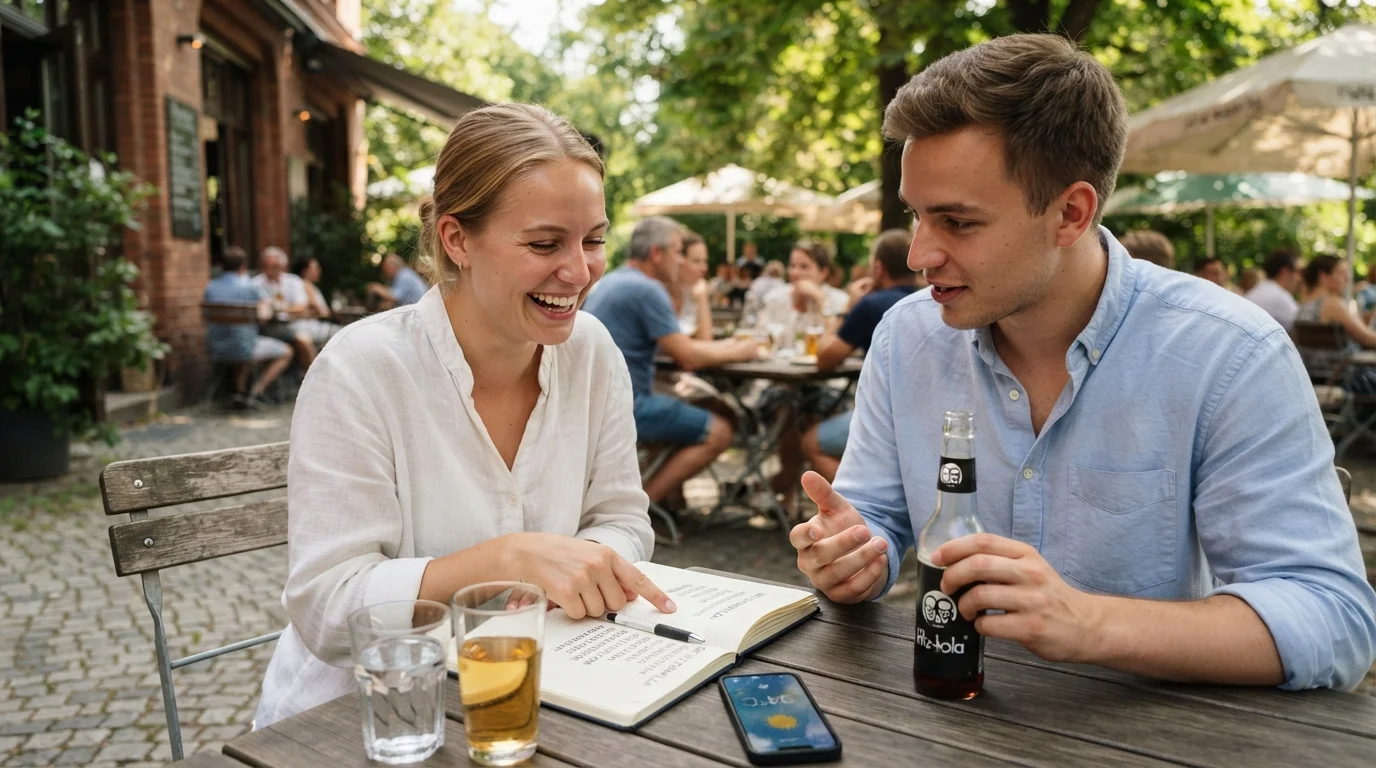
To cool down in the evening, nothing beats a shaded Biergarten under chestnut trees. Here, you can enjoy refreshing, light summer drinks. Instead of heavy beers, locals often order a Radler (beer mixed with lemon soda) or a Schorle (juice or wine mixed with sparkling water). A Apfelschorle (apple spritzer) is the ultimate thirst-quencher for all ages.
To truly integrate and sound like a native German speaker, you should learn some common idioms and colloquial expressions used during a heatwave. Germans love to complain about the weather (it is practically a national sport), so mastering these phrases will help you join in on the conversation.
This literally means "I am shrinking" or "I am perishing" (like a plant without water). Use this when you are walking down the street and the heat is overwhelming: 'Oh Mann, bei dieser Hitze gehe ich echt ein!' (Oh man, in this heat I am really perishing!).
Why monkeys? Nobody knows for sure, but an Affenhitze (monkey heat) is an intense, unbearable heat. If you walk into a stuffy room, you can say: 'Hier herrscht eine Affenhitze!' (It's monkey-hot in here!).
This is every German school child's favorite word. Hitzefrei (heat-free) is a rule where schools close early if the classroom temperature climbs too high (usually above 25 or 27 degrees Celsius by mid-morning). While adults in offices rarely get official Hitzefrei, employees often joke about it: 'Bekommen wir heute Hitzefrei?' (Do we get the day off for heat today?).
Learning all this vocabulary is one thing, but using it confidently in real-life situations is another. When you are standing in a long queue at the Freibad kiosk or trying to explain to your landlord that your apartment is overheating, you need instant, practical language skills.
This is where the Bretzi app can help you shine. Bretzi is an AI-powered German language learning app designed to prepare you for real-world scenarios. Instead of just memorizing dry word lists, you can practice:
Whether you are at the A1 level or preparing for your B2 integration exam, Bretzi customizes your learning journey with personalized plans, keeping you motivated with fun daily streaks and gamified lessons.
While a German summer without widespread air conditioning can be challenging, it is also one of the most vibrant times of the year. By mastering the art of Stoßlüften, packing your bag for the local Badesee, and learning the essential German heatwave vocabulary, you will not only survive the summer—you will thoroughly enjoy it.
Next time the temperatures soar, don't hide indoors. Put on your sunscreen (Sonnencreme), grab a cold spritzer (Schorle), head to the nearest shade, and practice your German with your friends or on the Bretzi app.
Ready to take your German to the next level before the next season hits? Download the Bretzi app today and start practicing real-life conversations with our interactive AI coach. Schönen Sommer noch! (Have a great rest of the summer!)
Share this article:
You have just finished completing your Anmeldung, unpacked the last moving boxes on a sunny Sunday afternoon, and decided it is the perfect time to...
Read moreSigning a contract in Germany is notoriously easy—whether you are picking up a shiny new smartphone plan or joining a local fitness club. But when...
Read moreIf you have recently moved to Germany, your first trip to a local grocery store might feel less like a routine errand and more like an Olympic sport....
Read more