Ruhezeit in Germany: Sunday Quiet Hours & House Rules Guide
You have just finished completing your Anmeldung, unpacked the last moving boxes on a sunny Sunday afternoon, and decided it is the perfect time to...
Read more
This article was written by AI and published by Bretzi.
AI can get things wrong. For anything official, check the source it points to.
AI-generated image
If you have recently moved to Germany, your first trip to a local grocery store might feel less like a routine errand and more like an Olympic sport. Between decoding bottle return machines, weighing vegetables yourself, and surviving the lightning-fast checkout line, buying food here comes with its own distinct culture, unwritten rules, and vocabulary.
Navigating German supermarkets is one of the most rewarding everyday milestones for expats, language learners, and newcomers. In this comprehensive guide, we will break down the German supermarket landscape, decode the sacred Pfand deposit system, explain checkout etiquette, and give you the essential German vocabulary you need to shop like a local.
Germany is the birthplace of the modern discount supermarket, but it also offers premium organic markets and sprawling hypermarkets. Understanding the store hierarchy helps you optimize your weekly food budget and find specialized ingredients.
Discounters prioritize efficiency, private-label goods, and low prices over fancy presentation:
If you are looking for branded items, extensive deli counters (Frischetheke), exotic imports, or specialty baking supplies, full-range supermarkets are your destination:
Germans take organic food seriously. Dedicated chains like Alnatura, Denns BioMarkt, and Bio Company offer certified organic (Bio), biodynamic (Demeter), and fair-trade products.
For toiletries, household cleaners, and baby products, skip the grocery store and head to a drugstore chain like dm, Rossmann, or Müller. They offer vastly superior selections and much lower prices for personal care items.
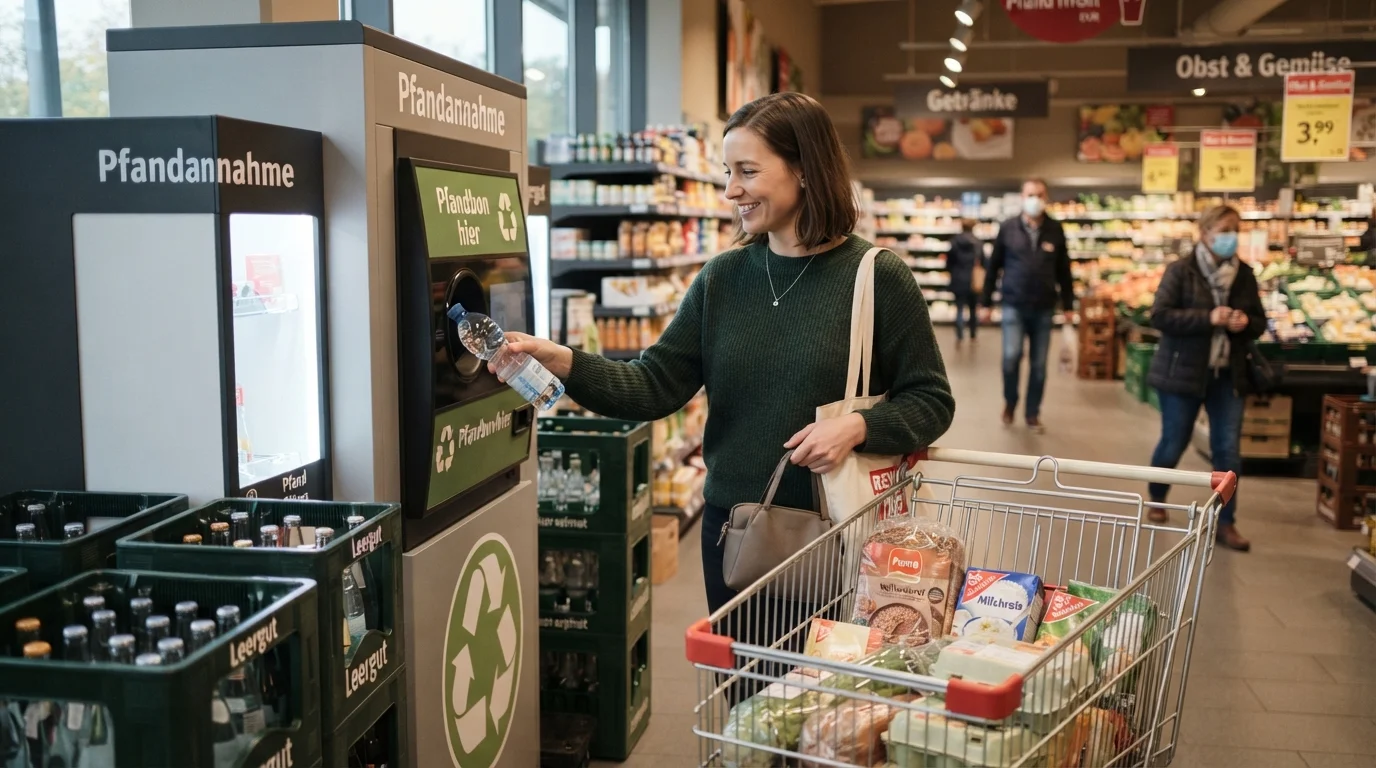
One of the first things you will notice in Germany is that beverage bottles carry a refundable deposit known as Pfand. Introduced to encourage reuse and recycling, the German deposit system is one of the most efficient in the world. You can learn more about its environmental impact via the Container Deposit Legislation overview on Wikipedia.
Understanding the Pfand system is closely tied to the broader German culture of recycling. To master waste separation at home, check out our guide on German waste sorting and Mülltrennung made simple.
Not all bottles are treated equally. There are two primary categories:
The checkout line (die Kasse) is where cultural differences become instantly apparent. German grocery checkouts are engineered for maximum throughput. Here is the unwritten etiquette you must know to avoid frantic packing panic.
Always place the plastic divider bar (der Warentrenner or das Kundentrennholz) onto the conveyor belt behind your items as soon as you finish unloading your basket. Neglecting to put down the divider behind your items is considered a minor social faux pas and may earn you a passive-aggressive clearing of the throat from the shopper behind you.
German supermarkets do not provide free plastic bags. You are expected to bring your own reusable tote bag (der Stoffbeutel), backpack, or shopping crate. If you forget, you can purchase paper bags or heavy-duty totes hung right below the conveyor belt before you reach the cashier.
Cashiers in Germany scan items with blistering speed and will not bag your groceries for you. Do not attempt to neatly arrange items into bags while the cashier scans. Instead:
In discounters like Aldi and Lidl, fresh fruits and vegetables are weighed automatically by the cashier at the till. However, in some traditional supermarkets (and some Rewe or Edeka branches), you must weigh produce yourself in the fresh produce aisle. Look for a scale, place your items, and enter the number listed on the price sign to print a barcode sticker before heading to the register.
While Germany historically had a strong preference for cash (Bargeld), contactless card payments and smartphone payments (Apple Pay, Google Pay) are now widely accepted across virtually all supermarkets.
Most stores accept debit cards, Visa, Mastercard, and the traditional German Girocard. If you are still setting up your financial life in Germany, make sure to read our detailed guide on how to set up a German bank account with free and online options for expats.
When you reach the register, you will hear a familiar script of short questions. Here are the essential exchanges:
If you want to practice real-life supermarket dialogues without the pressure of an impatient line behind you, the Bretzi app offers interactive dialogue games and AI-powered pronunciation practice. You can rehearse checkout scenarios, master grocery vocabulary with spaced repetition, and build confidence before your next shopping trip.
Here is a handy vocabulary table covering common aisle signage and product labels:
| German Term | English Meaning | Context / Note |
|---|---|---|
| Obst & Gemüse | Fruit & Vegetables | Fresh produce section |
| Backwaren / Backstation | Bakery goods / Self-serve bakery | Fresh bread, Brötchen, pretzels |
| Milchprodukte / Molkerei | Dairy products | Milk, cheese, quark, butter |
| Tiefkühlkost (TK) | Frozen food | Freezer aisles |
| Haltbare Lebensmittel | Non-perishables / Dry goods | Pasta, rice, canned goods, oil |
| Mindesthaltbarkeitsdatum (MHD) | Best before date | Usually formatted DD.MM.YYYY |
| Zu verbrauchen bis | Use by date | Found on fresh meat/fish; do not consume after |
| Stück (Stk.) / pro Bund | Per piece / per bunch | Pricing unit for produce (e.g., cucumbers, herbs) |
| Reduziert / Sonderangebot | Discounted / Special offer | Items on sale or nearing MHD expiration |
One of the biggest lifestyle adjustments for expats is the strict Sunday closing law (Ladenschlussgesetz). Under German federal and state laws, standard supermarkets, retail shops, and pharmacies remain completely closed on Sundays and official nationwide public holidays (Feiertage).
Keep these scheduling rules in mind:
Grocery shopping in Germany might feel intense on day one, but once you know the flow, it becomes quick, affordable, and incredibly efficient. Remember to bring your shopping bags, return your Pfand bottles before you fill your cart, keep your divider stick ready, and sweep your groceries into the cart before packing at your own pace.
Mastering day-to-day interactions like buying groceries is one of the quickest ways to feel truly settled in Germany. If you are learning German from A0 to C1 level, download Bretzi to build your vocabulary with spaced repetition flashcards, practice conversational roleplays with AI, and master everyday German culture effortlessly!
Share this article:
You have just finished completing your Anmeldung, unpacked the last moving boxes on a sunny Sunday afternoon, and decided it is the perfect time to...
Read moreSigning a contract in Germany is notoriously easy—whether you are picking up a shiny new smartphone plan or joining a local fitness club. But when...
Read moreYou have just arrived in Germany, completed your official address registration, unpacked your boxes, and started settling into your new life. Then, a...
Read more