German Workplace Health & Safety: Arbeitsschutz for Expats
Introduction: Navigating Workplace Safety in Germany Starting a new job in Germany comes with exciting opportunities, a fresh team culture, and...
Read more
This article was written by AI and published by Bretzi.
AI can get things wrong. For anything official, check the source it points to.
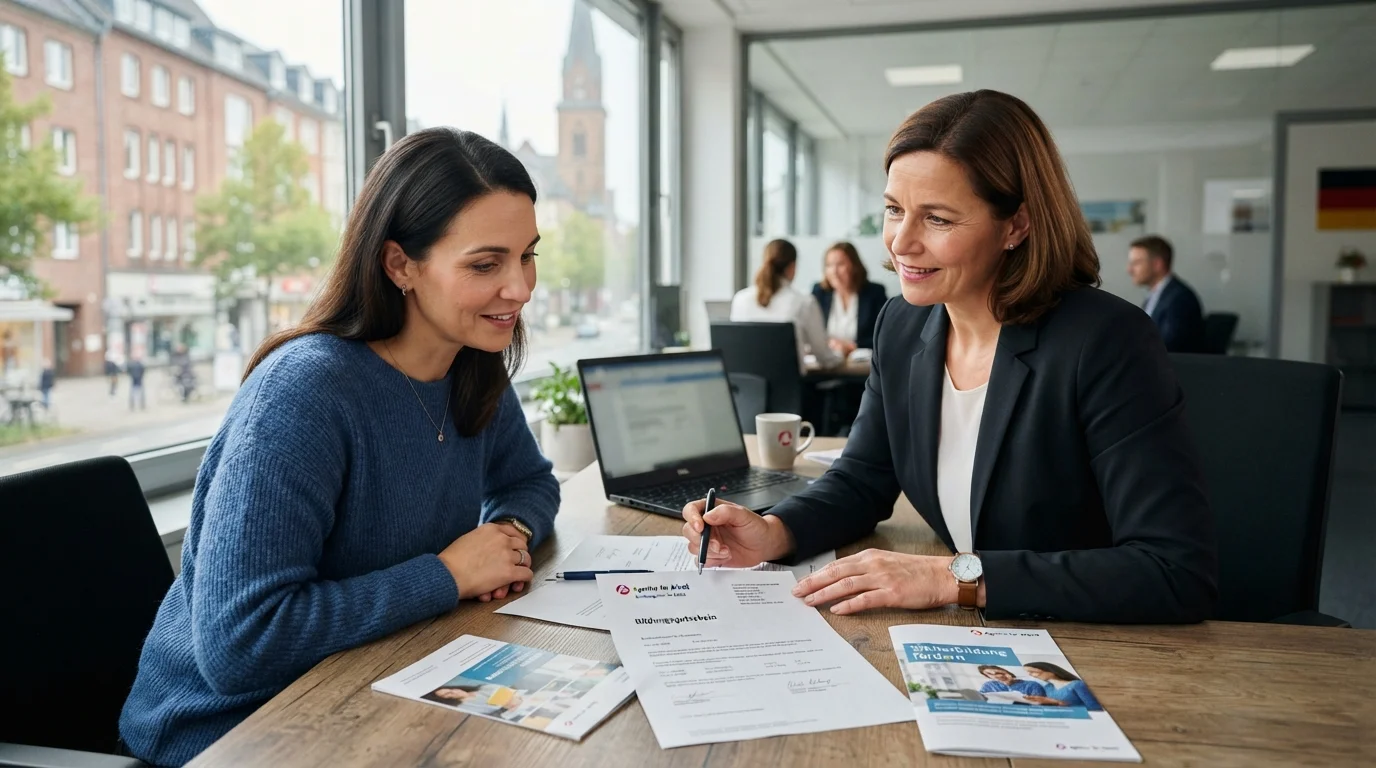
AI-generated image

Stepping into an executive role—whether as a Director, Vice President, Bereichsleiter, or Geschäftsführer—in Europe’s largest economy is a rewarding career move. However, the German hiring ecosystem for senior leadership operates on distinct cultural principles, rigorous documentation standards, and structural conventions that differ markedly from Anglo-American corporate traditions.
While executive search in London or New York often favors punchy, one-page impact resumes and aggressive personal branding, the German recruitment process values precision, verifiable career continuity, institutional substance, and formal credentials. For foreign executives, understanding how to adapt your application dossier (Bewerbungsunterlagen) without losing your international edge is critical.
According to the official government portal Make it in Germany, international qualified professionals and leaders are in sustained demand across diverse industries, particularly in engineering, tech, and sustainable transformation. Yet, even the most accomplished executives risk being filtered out early if their resume fails to speak the administrative and cultural dialect of German decision-makers.
In Germany, your resume is known as a Lebenslauf. For junior roles, brevity is often prioritized, but for leadership positions, thoroughness takes precedence over artificial limits. An executive Lebenslauf typically spans two to three pages, structured chronologically in reverse (antichronologisch).
One of the most frequent missteps international executives make is relying purely on narrative vision statements rather than empirical operational realities. German decision-makers—whether supervisory board members (Aufsichtsrat), advisory councils (Beirat), or retained executive search partners—look for operational control and governance metrics.
When presenting past leadership experience, structure every executive entry around four pillars:
Balance bold claims with understated, fact-based delivery. In German executive communications, overstatement is viewed with skepticism, whereas documented, verifiable facts convey authority and reliability.
The cultural specifics of German resumes can cause confusion for international leaders. What is modern practice, and what is outdated?
Under the AGG, a photograph cannot be strictly required. However, for C-level, VP, and Director-level positions, submitting a premium executive headshot remains standard practice. An executive photo should be taken by a specialized business photographer, reflecting gravitas, professional attire, and an open, composed posture. It is traditionally placed in the upper right or left corner of the first page.
A classic German resume traditionally ends with the city, current date, and a handwritten or high-resolution digital signature. While many international corporate ATS platforms bypass this, including a signature on a downloadable executive PDF shows attention to German business decorum. It signals personal responsibility for the factual accuracy of the dossier.
In Germany, employment law mandates that every departing employee is entitled to an official written reference letter: the Arbeitszeugnis. These documents follow a highly structured, coded language that evaluates performance and conduct on a standard grading scale.
If you have worked within the DACH region previously, your prospective employer or executive search committee will expect to see your formal Zeugnisse. Leaving them out might raise questions about whether you left on poor terms.
For executives whose prior careers unfolded in countries where formal letters of reference do not exist (such as the US or UK), you must manage this gap proactively:
Can an international executive succeed in Germany speaking only English? The answer depends heavily on corporate structure, company size, and ownership model.
In venture-backed scaleups, software giants, and DAX-listed global enterprises, English is frequently the primary business language at executive levels. However, the backbone of Germany's economy is the Mittelstand (medium-sized family-owned or private equity-backed industrial champions). In these organizations, operational leadership requires navigating German corporate boards, works councils (Betriebsrat), and blue-collar floor teams.
Even in international environments, everyday executive influence happens in German during side conversations, committee pre-meetings, and informal discussions. Familiarity with everyday office communication—such as German small talk at the office—builds essential social capital with peers and direct reports.
Be scrupulously honest about your German language level. Overstating your proficiency on a CV will unravel during an initial screening or panel interview. If your German is at an intermediate level (B1 or B2), describe it precisely as Gute Kenntnisse or Fließend in Wort und Schrift (if confident in business scenarios), and highlight your ongoing commitment to reaching professional fluency.
Developing executive-level German requires structured, consistent practice. The Bretzi app offers structured lessons from complete beginner up to C1, helping you build practical vocabulary for work and life in Germany. To practice the real-time spoken German needed for leadership scenarios—like handling sensitive employee discussions or presenting to stakeholders—Bretzi's Premium tier includes SprachBuddy, an AI-powered voice conversation partner that lets you roleplay realistic everyday and professional situations out loud, providing detailed pronunciation feedback so you can refine your phrasing.
While cover letters are diminishing in importance for technical and entry-level positions, the executive Anschreiben remains a pivotal instrument for positioning your strategic fit. It should not simply repeat your resume; it should outline your strategic thesis for the company.
When drafting cover letters or communicating with German headhunters in writing, precision in tone is critical. If you are learning German and preparing your correspondence, Bretzi's Premium Sentence Check feature can review your written sentences, correcting grammar and providing clear explanations of underlying rules so your communication reflects the necessary professional polish.
Applying for senior roles in Germany also requires understanding the legal distinctions governing executive employment contracts. Managing Directors (Geschäftsführer) and Board Members (Vorstand) do not have ordinary employee status; they fall under the Organstellung (corporate organ status) governed by commercial and corporate law rather than standard protective labor laws.
Senior executives below the board level are classified as Leitende Angestellte. While they enjoy some protections under employment law, key provisions—such as maximum working hours regulations—do not apply in the same way. When moving to the offer stage, consider how modern structural benefits are framed, such as negotiating remote work arrangements, performance equity, pension commitments (betriebliche Altersvorsorge), and severance protections (Abfindungsregelungen).
Before submitting your leadership dossier to a German enterprise or executive search boutique, run through this comprehensive review:
| Component | German Market Expectation | Common Expat Mistake |
|---|---|---|
| Length | 2 to 3 pages for senior leaders | Cramming 20 years into a rigid 1-page format |
| Metrics | Specific P&L (€), direct/indirect headcount, reporting level | Vague claims like "led global transformation" |
| Visuals | High-end professional headshot included | Casual selfie, passport photo, or no photo at all |
| Sign-off | City, date, and personal signature | Leaving the document anonymous and unsigned |
| Attachments | Complete bundle: CV, Anschreiben, Zeugnisse, Diplomas | Sending a CV alone without supporting credentials |
Succeeding as an executive applicant in Germany requires balancing your global vision with local precision. By presenting your accomplishments through structured metrics, respecting German documentation standards, and proactively bridging any language or credential gaps, you present yourself not merely as a foreign manager, but as an adaptable, credible organizational leader.
Focus on substance over flash, substantiate every claim with verifiable outcomes, and invest consistently in developing your business-level German. With a tailored dossier that meets the high expectations of German executive search panels, you will be well prepared to take on strategic leadership roles in Germany's corporate sphere.
Share this article:
Introduction: Navigating Workplace Safety in Germany Starting a new job in Germany comes with exciting opportunities, a fresh team culture, and...
Read moreFor international professionals working in Germany, few places provoke as much subtle anxiety as the office kitchen (die Kaffeeküche). You walk in...
Read moreRelocating to Germany or navigating a career transition can be both exciting and challenging. If you are currently unemployed, facing potential...
Read more