German Arbeitszeugnis Code Words: How to Read Your Job Reference
When leaving a job in Germany, receiving your Arbeitszeugnis (formal written job reference) is an essential milestone. On the surface, the letter...
Read more
This article was written by AI and published by Bretzi.
AI can get things wrong. For anything official, check the source it points to.
AI-generated image
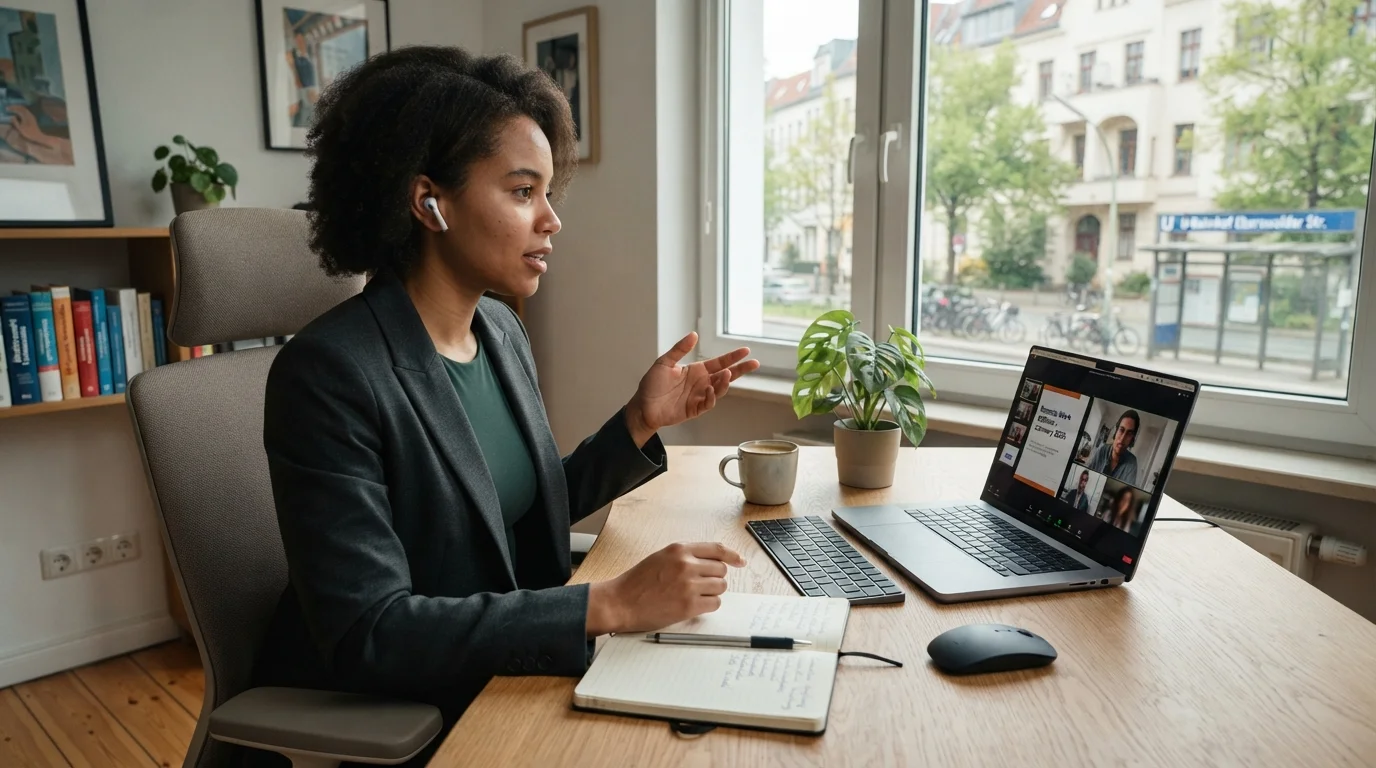
Securing a flexible work arrangement in Germany can transform your work-life balance, cut your daily commute on the S-Bahn, and give you autonomy over your schedule. However, approaching a German manager (*Vorgesetzter*) to request regular remote days requires more than casual persuasion. German workplace culture values clear contractual agreements, statutory workplace regulations, and concrete operational plans.
Whether you hold a role in an international firm or work within a traditional Mittelstand company, understanding local labor customs and speaking the language of German workplace negotiations is essential. In this comprehensive guide, we unpack the legal nuances of working remotely in Germany, the exact vocabulary you need, and practical strategies to negotiate a professional Homeoffice agreement in 2026.
Before initiating a conversation with your employer, you must understand how German labor law views remote work. In everyday speech, people frequently use the English loanword Homeoffice, but German legislation draws a clear technical distinction between two distinct setups:
Contrary to widespread belief, there is no automatic statutory entitlement to remote work under federal German law. While discussions around a legal "Right to Homeoffice" (*Recht auf Homeoffice*) have surfaced repeatedly in parliamentary debates, working remotely remains a matter of contractual agreement. If you are exploring employment opportunities via English-speaking tech jobs in Germany or applying to international firms, remote arrangements might be standard; however, in many German companies, you must establish an individual supplementary agreement (*Zusatzvereinbarung zum Arbeitsvertrag*) or adhere to a collective company policy (*Betriebsvereinbarung*).
Before scheduling a meeting with your direct supervisor, investigate whether your company already has an established remote work framework. If your company has a works council (*Betriebsrat*), they hold statutory co-determination rights (*Mitbestimmungsrechte*) regarding mobile working policies under § 87 of the Works Constitution Act (*Betriebsverfassungsgesetz*).
Check the internal intranet or consult your human resources department for an existing Betriebsvereinbarung Mobiles Arbeiten. Such agreements typically specify:
If an institutional framework already exists, your negotiation will focus on eligibility and scheduling rather than establishing a completely new policy from scratch.
German professional culture is distinctly fact-oriented (*sachlich*). Emphasizing personal convenience—such as wanting to sleep later or run personal errands—will quickly weaken your position. Instead, frame your proposal around organizational stability, measurable output, and technical compliance.
German managers place strong emphasis on efficiency (*Leistungsfähigkeit*). Highlight how complex tasks—such as software architecture, data modeling, legal draft review, or extensive report writing—benefit from dedicated, quiet work periods free from typical open-plan office distractions (*Großraumbüro-Lärm*).
Data privacy is taken extraordinarily seriously across Germany under the General Data Protection Regulation (GDPR / DSGVO). Proactively explain how your home setup guarantees confidentiality:
A primary fear among German supervisors is losing team cohesion or clear oversight. Clarify exactly how and when you will be reachable. Propose fixed check-ins via Microsoft Teams or Slack, calendar transparency, and strict adherence to established Kernarbeitszeiten.
Approaching your manager in clear, professional German demonstrates cultural integration and respect for corporate hierarchy. Even if your daily company language is English, familiarity with these statutory and professional terms ensures complete clarity during contract discussions:
If you are actively mastering professional German, regular practice is key to speaking comfortably under pressure. For everyday communicative agility, the Bretzi app teaches the German of daily life, work, and exams through structured lessons from A0 to C1. With Bretzi Premium, you can use SprachBuddy—the app's AI conversation partner—to call and speak German out loud, allowing you to rehearse workplace dialogues or professional scenarios before stepping into your actual manager meeting.
When presenting your proposal, structure your conversation logically. Pay close attention to workplace formality: unless your team has explicitly adopted the informal Du, always address your manager using the formal Sie. For a detailed breakdown of organizational customs, review our guide on Du vs. Sie in the workplace and German business etiquette.
Do not spring this request in a hallway or at the coffee machine. Request a brief, formal appointment:
"Guten Tag Herr Schmidt, ich würde gerne nächste Woche ein kurzes Gespräch führen, um über Möglichkeiten des mobilen Arbeitens für meine Projekte zu sprechen. Hätten Sie am Donnerstag 20 Minuten Zeit?"
(Good day Mr. Schmidt, I would like to schedule a brief meeting next week to discuss mobile working possibilities for my projects. Would you have 20 minutes on Thursday?)
Open with gratitude for current team progress, then introduce a structured, modest proposal—such as two remote days per week:
"Ich habe mir Gedanken gemacht, wie wir die Arbeitsabläufe noch effizienter gestalten können. Für konzentrierte Analysephasen eignet sich ruhiges Arbeiten zu Hause besonders gut. Ich würde daher vorschlagen, dienstags und donnerstags mobiles Arbeiten zu vereinbaren, während ich montags, mittwochs und freitags für Meetings und Abstimmungen im Büro präsent bin."
Offering a trial period removes perceived risk for your manager. German managers appreciate structured test intervals:
"Wir könnten zunächst eine dreimonatige Probephase vereinbaren. Nach dieser Zeit können wir gemeinsam prüfen, ob alle Projektziele wie gewohnt erreicht wurden und die Kommunikation im Team reibungslos funktioniert hat."
To refine your meeting delivery and professional phrasing further, read our curated reference on essential business German phrases for professional meetings.
Even well-prepared proposals may encounter resistance. Here is how to handle typical reservations from German employers:
Counter-strategy: Agree with the importance of teamwork. Emphasize that your presence in the office will be dedicated to collaborative tasks, while remote days will handle deep-focus tasks. Commit to attending all scheduled team retrospectives or department meetings on-site.
Counter-strategy: German law mandates strict documentation of working time (*Arbeitszeiterfassung*). Reassure your employer that you will meticulously log your hours via the company's digital recording software (e.g., Personio, Clockodo, or Jira), adhering strictly to the Working Hours Act (*Arbeitszeitgesetz - ArbZG*) regarding maximum daily hours and mandatory 11-hour rest periods between shifts.
Counter-strategy: Ground the arrangement in your specific job duties. Point out that your current scope of responsibility involves independent project work that lends itself to mobile working. Offering a trial phase also provides your manager with a documented case study they can evaluate objectively.
Once your mobile working arrangement is approved, you should understand the financial and tax implications. The German government offers tax relief for individuals working from home via the so-called Homeoffice-Pauschale.
Under current German income tax rules, employees who work from home can claim a lump-sum deduction of €6 per calendar day up to a statutory annual maximum of €1,260 (which covers up to 210 working days per tax year). This flat-rate allowance applies even if you do not possess a separate, dedicated study room (*häusliches Arbeitszimmer*), provided you perform your work primarily from your residence on those days.
Keep a clear monthly calendar or digital log showing which days were spent in the corporate office versus working remotely. Your tax advisor (*Steuerberater*) or local tax office (*Finanzamt*) will require this distinction when you file your annual income tax return (*Einkommensteuererklärung*).
Many international professionals hope to combine remote work with visits to their home country. While working from home within Germany is straightforward, working remotely outside German borders involves complex regulatory challenges:
Always get explicit, written permission from human resources and your executive management before attempting any cross-border remote working.
To maximize your chances of securing a sustainable remote work arrangement in Germany, follow this structured roadmap:
Clear communication builds trust. By understanding the legal boundaries, presenting a structured business case, and demonstrating professional language fluency, you can establish an optimal hybrid working routine within the German corporate landscape.
Rules, fees and dates change. Check the current version on the official pages before you act.
Share this article:
When leaving a job in Germany, receiving your Arbeitszeugnis (formal written job reference) is an essential milestone. On the surface, the letter...
Read moreWhen planning a career move to Germany, most international professionals immediately think of university degrees or direct corporate hiring. However,...
Read moreGermany is currently experiencing one of the most substantial tech talent shortages in Europe. From booming AI startups in Berlin to cloud...
Read more