Applying for an Executive Position in Germany: Expat Resume Tips
Stepping into an executive role—whether as a Director, Vice President, Bereichsleiter, or Geschäftsführer—in Europe’s largest economy is a...
Read more
This article was written by AI and published by Bretzi.
AI can get things wrong. For anything official, check the source it points to.
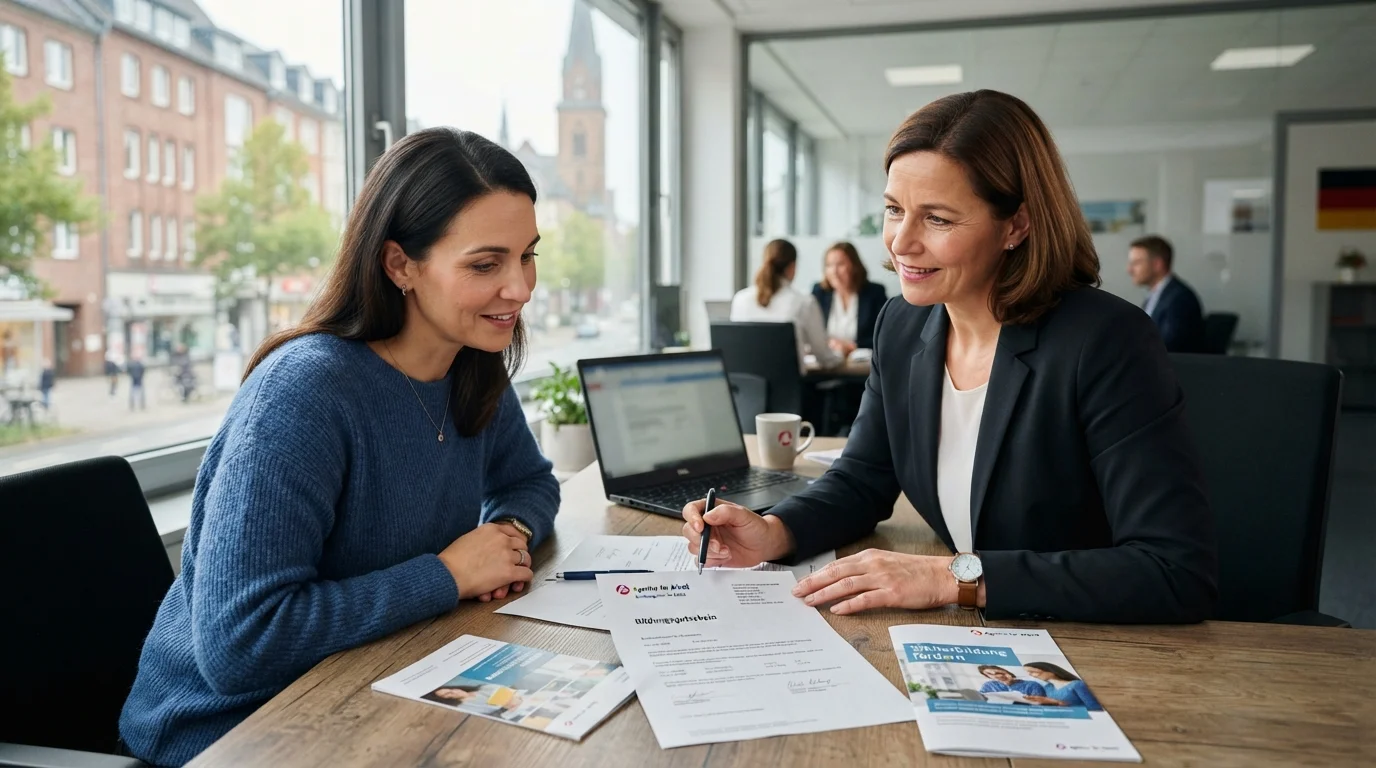
AI-generated image

Starting a new job in Germany comes with exciting opportunities, a fresh team culture, and inevitably, a healthy dose of German bureaucracy. While adjusting to the rhythms of the office or warehouse, international professionals quickly encounter a fundamental concept in German labor culture: Arbeitsschutz (occupational health and safety). Far from being merely a set of rules for construction sites or factories, German workplace safety rules cover every employee, including office workers, software developers, and remote contractors.
In Germany, workplace health and safety is treated as a core civic and legal pillar. Employers have a strict duty of care (Fürsorgepflicht) to protect the physical and mental well-being of their staff. From mandatory annual safety briefings to strict guidelines on screen ergonomics, understanding how Arbeitsschutz works empowers you to exercise your rights, stay safe, and navigate professional situations with confidence.
Germany has one of the most comprehensive occupational health and safety frameworks in the world. It is built upon federal statutes, trade association regulations, and EU directives. As an employee, you are not expected to memorize every legal paragraph, but being familiar with the key statutes will help you understand workplace protocols.
The core statute is the Arbeitsschutzgesetz (ArbSchG). It obliges employers to assess all workplace hazards and implement appropriate preventative measures. Crucially, the law covers both physical hazards (such as machinery risks, lighting, and ventilation) and psychological strains (such as chronic overwork, harassment, or extreme stress).
Physical health is directly tied to rest. The Arbeitszeitgesetz sets legally binding boundaries on how long you can work:
To learn more about how broader collective agreements shape these working conditions across different industries, explore our detailed guide to understanding the German Tarifvertrag.
When you start at a German company, you will likely encounter several designated figures responsible for your well-being. Knowing who these people are ensures you know where to turn if an issue arises.
Under the Occupational Safety Act, companies must provide access to an occupational physician (Betriebsarzt or Werksarzt). The company doctor is neutral; they are bound by medical confidentiality (ärztliche Schweigepflicht) and do not report your private health details to your employer or manager. Their duties include:
Often referred to as the Sicherheitsfachkraft (SiFa), this specialist advises management on accident prevention, technical equipment compliance, and workspace design. They inspect facilities and assist in preparing risk evaluations.
German regulations require employers to train a designated proportion of their workforce in first aid (Ersthelfer) and fire protection (Brandschutzhelfer). In an office, typically at least 5% of employees must be trained first aiders, while in industrial settings the minimum is 10%. Their names and contact details are displayed on noticeboards alongside first-aid kits.
If your company has a works council (Betriebsrat), they hold co-determination rights (Mitbestimmungsrecht) regarding occupational safety. They ensure safety guidelines are observed and can challenge management if employee welfare is compromised.
Every employee in Germany is automatically insured against work-related accidents through the statutory accident insurance system (Gesetzliche Unfallversicherung), organized by sector-specific trade associations known as Berufsgenossenschaften (BGen) or public accident insurance funds (Unfallkassen). This coverage is funded entirely by your employer—no deductions are taken from your paycheck.
An Arbeitsunfall is an accident that occurs while performing job-related duties on company premises, off-site client meetings, or during official business trips. It includes sudden physical injuries resulting directly from work activities.
German law extends coverage to your commute through the concept of a Wegeunfall. You are insured from the moment you step outside the outer door of your residential building until you arrive at your workstation, and vice versa. However, strict conditions apply:
If you suffer an accident at work or during your commute that leaves you incapacitated for work, requires medical treatment beyond basic first aid, or lasts more than a few days, you should consult a Durchgangsarzt (D-Arzt). A D-Arzt is an orthopedic or trauma surgeon certified by the accident insurance system. They oversee diagnosis, rehabilitation, and communication with the Berufsgenossenschaft.
If you need to discuss symptoms, injuries, or sick leave documentation with medical staff in German, review our reference guide to German for the doctor, the pharmacy and the Bürgeramt.
With remote and hybrid setups now commonplace in Germany, health and safety regulations have adapted to desk and computer environments (Bildschirmarbeitsplätze).
German employers must document a formal risk assessment (Gefährdungsbeurteilung) for every role. For office and remote setups, this evaluation covers:
German employment law distinguishes between formal home offices and flexible mobile working:
Even when working remotely, the Working Hours Act (Arbeitszeitgesetz) remains in effect. Working late into the night without observing the mandatory 11-hour rest window violates German labor law, regardless of location.
Safety in Germany is structured as a collaborative responsibility between employer and employee. You hold clear rights, accompanied by legal duties (Mitwirkungspflichten).
Under Section 9 of the ArbSchG, if there is an immediate, substantial danger to your life or health (erhebliche und unmittelbare Gefahr), you have the right to stop working and leave the hazard area. The employer cannot discipline or disadvantage you for taking reasonable precautions to protect yourself.
Addressing safety concerns with management requires clear, polite communication. Knowing whether to address your team leader with the formal or informal register helps keep discussions constructive; see our breakdown of Du vs. Sie in the workplace to navigate workplace hierarchy smoothly.
Familiarity with standard German health and safety terminology makes company safety briefings straightforward to understand. Key terms include:
Building vocabulary for professional life requires steady practice. In the Bretzi app, you can explore short lessons tailored to life and work in Germany from complete beginner (A0) up to C1. You can save specialized workplace terms directly to your Words tab, review them using spaced repetition, and practice roleplay conversations with SprachBuddy—Bretzi's AI conversation partner—to rehearse speaking about everyday workplace issues before discussing them with colleagues.
To settle into your new German workplace smoothly and protect your well-being, run through this practical safety checklist during your onboarding:
Germany's occupational health and safety regulations may feel detailed, but their goal is straightforward: ensuring every worker remains protected, rested, and healthy. From statutory coverage during your morning commute to thoughtful ergonomic assessments for remote workers, Arbeitsschutz guarantees rights designed to support you throughout your career.
As you build your professional life in Germany, mastering the relevant language makes working with colleagues, safety officers, and company physicians far easier. Consistent practice with practical apps like Bretzi helps you master everyday professional terms, grammar, and pronunciation step by step, allowing you to thrive in your German work environment.
Rules, fees and dates change. Check the current version on the official pages before you act.
Share this article:
Stepping into an executive role—whether as a Director, Vice President, Bereichsleiter, or Geschäftsführer—in Europe’s largest economy is a...
Read moreFor international professionals working in Germany, few places provoke as much subtle anxiety as the office kitchen (die Kaffeeküche). You walk in...
Read moreRelocating to Germany or navigating a career transition can be both exciting and challenging. If you are currently unemployed, facing potential...
Read more