How to Ace the Oral Picture Description in the DTZ B1 German Exam
Standing outside the exam room, heart thumping, waiting for the oral portion of the Deutsch-Test für Zuwanderer (DTZ) is an experience thousands of...
Read more
This article was written by AI and published by Bretzi.
AI can get things wrong. For anything official, check the source it points to.
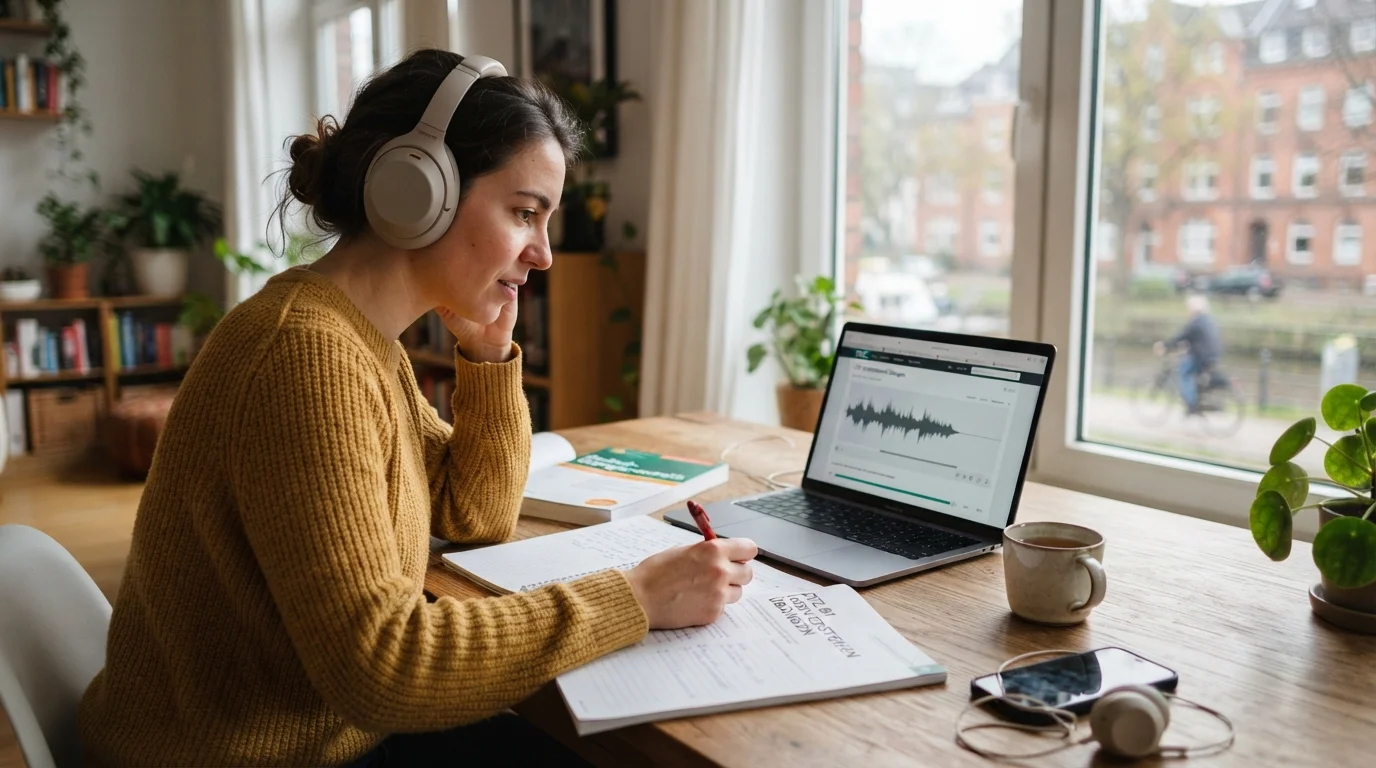
AI-generated image
Moving to Germany, building a career, and settling down into daily life requires clear communication. For thousands of expats and immigrants, the Deutsch-Test für Zuwanderer (DTZ) is the official gateway to proving language proficiency. Achieving a B1 result on the DTZ is a mandatory step for permanent residency and citizenship applications in Germany.
While many candidates feel confident in reading or writing, the Hörestimmungsteil (Listening section) often triggers the most exam anxiety. Spoken German in real-time can feel overwhelmingly fast, filled with unfamiliar accents, background noise, and tricky distractors designed to test your true comprehension. If you are currently attending an integration course—or exploring funding your BAMF integration course—preparing specifically for the listening module is essential to guarantee your B1 outcome.
In this comprehensive guide, we will break down the entire structure of the DTZ listening exam, explore key traps to avoid, detail step-by-step strategies for every audio section, and provide actionable daily practice tips to help you score maximum points on test day.
The DTZ exam evaluates your language skills at both A2 and B1 levels. Your overall listening score directly impacts whether you receive an A2 or B1 certificate according to the Common European Framework of Reference for Languages (CEFR). To get a high B1 grade, you must understand how the listening section is structured.
According to official guidelines from the Federal Office for Migration and Refugees (BAMF), the listening exam lasts approximately 25 minutes and consists of 4 distinct parts with 20 total questions.
In the first section, you will hear four short, official public announcements. Examples include train station delay messages, airport gate changes, store closing announcements, or public service updates.
This part transitions to broadcast media, such as weather forecasts, traffic updates, news snippets, or event schedules heard on German radio stations.
Here, you listen to personal and professional phone calls. These include automated voicemail messages from doctors' offices, customer service reps, colleagues, or friends leaving instructions.
The final part features longer, multi-speaker dialogues or interviews on everyday social topics, such as public transport, healthy eating, remote work, or childcare choices.
Many language learners study vocabulary for months yet still struggle during the audio exam. Recognizing common traps before entering the test room gives you a significant advantage.
Exam writers intentionally insert extra details designed to mislead passive listeners. A speaker might say: "Wir wollten uns eigentlich um 14 Uhr treffen, aber mein Bus hatte Verspätung, deshalb komme ich erst um 15 Uhr." (We originally wanted to meet at 2 PM, but my bus was delayed, so I won't arrive until 3 PM). If you hear 14 Uhr and immediately pick option A without listening to the end, you miss the correct answer (15 Uhr).
The exam text on your paper rarely matches the exact words spoken in the audio recording. The question might ask if a store is geschlossen (closed), while the speaker says "Wir haben heute leider nicht geöffnet" (We are unfortunately not open today). Building a strong web of synonyms is vital for B1 comprehension.
Words like kaum (barely),
Success on the listening section is not just about raw vocabulary; it is about test-taking strategy and acoustic processing speed. Follow these five core practices during your preparation.
Before each audio track begins, you receive a brief preparation pause (typically 10 to 25 seconds). Never sit passively during this window!
In standard textbook audio, voice actors speak slowly and clearly. However, the DTZ includes authentic speakers with subtle regional variations (e.g., Bavarian or North German intonations) and natural fast speech habits like sound reductions ("haben wir" becoming "habn'ma").
To prepare for real-world pace, supplement your study routine with tools like Bretzi. The Bretzi app features interactive audio dialogues and realistic conversation practice, letting you train your ear against real-time conversational flows while building listening comprehension naturally alongside exam preparation modules.
When listening to tracks played twice (Teil 1 and Teil 3), use a two-phase listening plan:
For tracks played only once (Teil 2 and Teil 4), keep your pencil on the answer sheet as you listen. If you miss an item, let it go instantly! Getting stuck analyzing a missed question will cause you to miss the next two audio cues.
Active listening and active speaking are two sides of the same coin. When you practice listening to conversational German patterns, practice speaking them out loud using the shadowing technique. This helps solidify German sentence structures in your memory. For extra practice on the oral portion of the test, explore our guide on preparing for the B1 German speaking module.
Simulating real exam conditions removes anxiety. Practice listening tests using headphones at first, but transition to external speakers for your final mock exams. On test day, audio is usually played over room speakers, which includes room reverb and minor ambient background noises. You must be prepared to focus through auditory distractions.
Relying solely on official sample tests can quickly become boring. To build native-like listening speed, integrate high-yield German audio habits into your daily schedule:
When you step into the exam center on test day, clear execution will ensure you capture every mark you have earned during study sessions.
Passing the DTZ listening module requires systematic practice, strategic pre-reading, and exposure to authentic spoken German. By breaking down each section, watching for distractors, and practicing daily with smart tools, reaching your target B1 grade is completely within reach.
Earning your B1 language certificate opens major doors in Germany—bringing you closer to fulfilling your residency goals or calculating your passing score required for German citizenship.
Ready to boost your German skills and build real exam confidence? Download Bretzi today to access AI-powered conversation practice, personalized study plans, and practical dialogue games tailored to take your German from beginner to fluent!
Share this article:
Standing outside the exam room, heart thumping, waiting for the oral portion of the Deutsch-Test für Zuwanderer (DTZ) is an experience thousands of...
Read moreGermany's modernized citizenship law has transformed how long-term foreign residents build their futures in the country. Following landmark updates...
Read moreSecuring a German B1 language certificate is one of the most critical milestones for anyone building a life in Germany. Whether you are aiming for a...
Read more