How to Ace the Oral Picture Description in the DTZ B1 German Exam
Standing outside the exam room, heart thumping, waiting for the oral portion of the Deutsch-Test für Zuwanderer (DTZ) is an experience thousands of...
Read more
This article was written by AI and published by Bretzi.
AI can get things wrong. For anything official, check the source it points to.
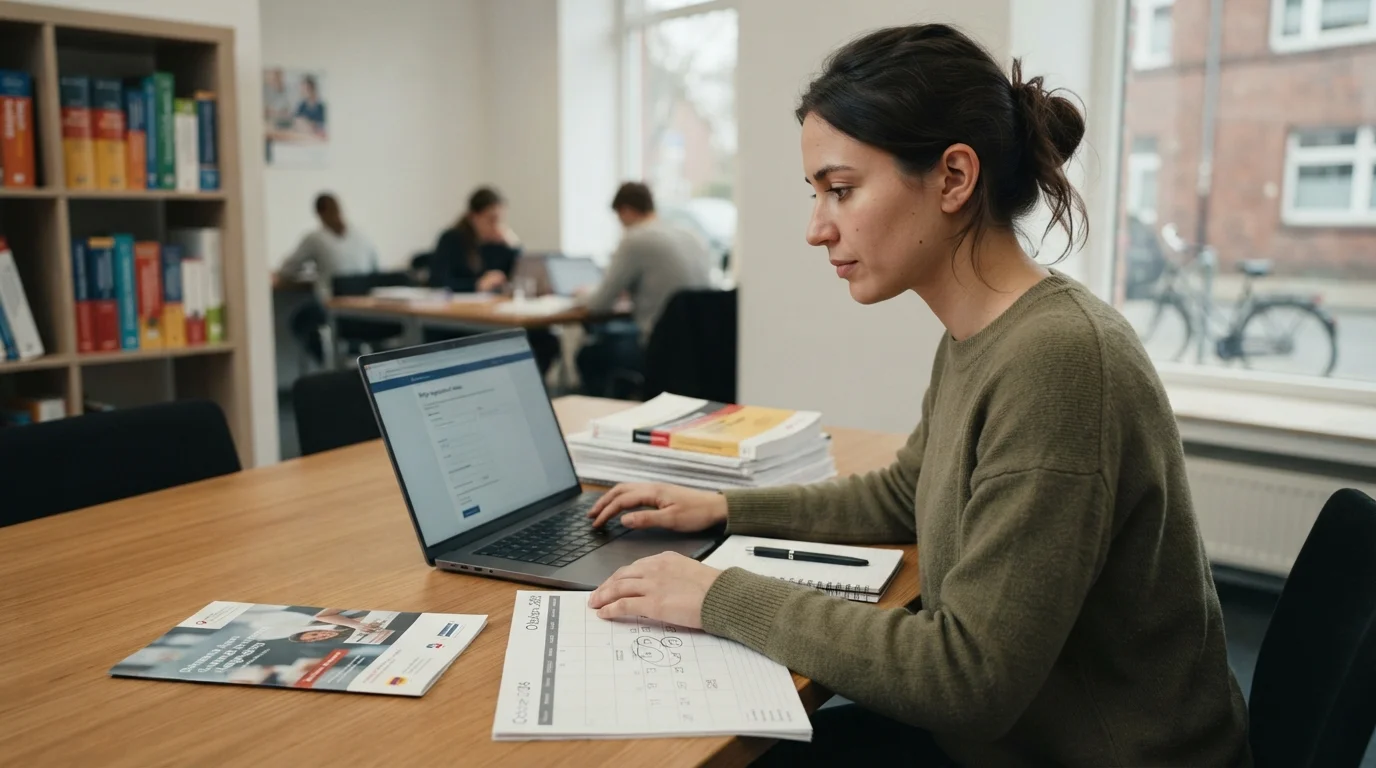
AI-generated image

Standing outside the examination room before your B1 German oral test, it is completely normal to feel a flutter of nerves. For many language learners, expats, and candidates aiming for permanent residency or citizenship, the Goethe-Zertifikat B1 or telc Deutsch B1 speaking module is the final hurdle to clear. While the exam evaluates various speaking competencies, the first section—"Gemeinsam etwas planen" (Planning something together)—is often where you can make your strongest first impression.
In this part of the exam, you and a partner are tasked with organizing an event, a trip, a visit to a sick friend, a present for a colleague, or a weekend outing. You have about 3 to 4 minutes to talk back and forth, exchange ideas, negotiate details, and reach a consensus. The good news? Because the structure of this task is highly predictable, you can prepare key vocabulary, conversational strategies, and transitions in advance to ensure success.
Whether you are taking the test after attending an official integration course or studying independently, this ultimate guide breaks down everything you need to know to excel in the Gemeinsam etwas planen speaking task.
Before diving into useful phrases, it is crucial to understand what the examiners from institutions like the Goethe-Institut or telc are actually evaluating. They are not looking for poetic eloquence or flawless complex grammar; rather, they want to see if you can communicate effectively in a routine interactive situation.
During the preparation phase (typically 15 minutes before entering the exam room), you will receive a task sheet containing a brief scenario and 4 to 5 bullet points (Stichpunkte). These bullet points outline the specific topics you and your partner must discuss. Typical bullet points include:
Your goal is not to deliver a long monologue. Instead, you must create a natural, symmetrical conversation where both speakers contribute proposals, react to each other's ideas, ask clarifying questions, and agree on a final plan.
To keep the conversation flowing smoothly without long pauses, you should memorize a toolkit of functional phrases. Memorizing these conversational chunks will reduce mental fatigue during the exam and make you sound natural and confident.
Don't hesitate to take the initiative right away. Starting the conversation demonstrates confidence and helps set a positive tone.
When suggesting ideas for the bullet points on your task sheet, use a variety of sentence structures. You can utilize conditional forms or modal verbs to make polite suggestions, or even practice mastering command forms and polite imperatives when recommending specific actions.
Showing active listening is essential. Never just nod silently; always respond verbally to your partner's ideas.
Examiners love to see candidates negotiate. If you agree with everything your partner says immediately, the task will finish too quickly. Rejecting an idea politely forces you to use richer language.
Before ending the task, ensure that all bullet points have been addressed and wrap up the planning with a concise summary.
To maximize your score in the oral exam, structure your interaction deliberately. Follow this step-by-step strategy during your 3-4 minute presentation:
Keep your task sheet in your hand or on the table in front of you. Check off the points mentally as you cover them. If your partner forgets a bullet point, bring it up yourself! Helping your partner cover the required points shows excellent communicative awareness.
The biggest trap in the B1 speaking exam is either talking too much (dominating) or talking too little (passive submission). Aim for a 50/50 split in talk time. After making a statement, pass the ball back to your partner with questions like: "Was meinst du dazu?" (What's your opinion on that?) or "Passt das für dich?" (Does that work for you?).
Native speakers rely heavily on conversational fillers and transitions to sound smooth. Try incorporating modal particles like 'ja', "also", "na ja", or "eigentlich" into your responses. For instance, saying "Das ist ja super!" sounds far more natural than a rigid "Das ist gut."
To help you visualize how this dialogue looks in practice, here is an example based on a typical Goethe B1 prompt: Organizing a surprise party for a classmate (Anna).
Candidate A: "Hallo Thomas! Weißt du schon? Anna hat nächste Woche Geburtstag. Ich finde, wir sollten eine kleine Überraschungsparty für sie organisieren. Was meinst du?"
Candidate B: "Hallo! Das ist eine tolle Idee! Anna freut sich bestimmt riesig. Wann sollen wir die Party machen? Am Wochenende?"
Candidate A: "Ja, am Freitagabend wäre es super. Wie wäre es ab 19 Uhr? Da haben meistens alle Zeit."
Candidate B: "Freitag um 19 Uhr passt mir gut. Und wo wollen wir feiern? Bei dir zu Hause oder vielleicht im Park?"
Candidate A: "Da das Wetter am Freitag wahrscheinlich schön sein wird, schlage vor, dass wir im Park picknicken. Das ist gemütlich."
Candidate B: "Super Idee! Was sollen wir denn mitbringen? Ich könnte einen Salat machen und ein paar Getränke kaufen."
Candidate A: "Das klingt prima. Ich kümmere mich um die Geburtstagstorte und bringe Musik mit. Wollen wir auch ein Geschenk für Anna kaufen?"
Candidate B: "Ja, auf jeden Fall! Sie wünscht sich schon lange ein gutes Buch über Fotografie. Ich kann das Buch morgen besorgen. Möchtest du dir die Kosten mit mir teilen?"
Candidate A: "Sehr gerne. Wir müssen nur noch den anderen Kursteilnehmern Bescheid sagen. Ich erstelle eine WhatsApp-Gruppe für unseren Kurs, okay?"
Candidate B: "Perfekt, das ist sehr praktisch. Dann steht der Plan! Ich freue mich schon auf Freitag."
Even well-prepared students make avoidable errors during the exam. Avoid these common mistakes:
To build spontaneous speaking confidence, static textbook exercises are rarely enough. You need interactive, real-time conversation practice that challenges you to react instantly.
This is where interactive digital tools can revolutionize your preparation. By using the Bretzi app, candidates can engage in real-life German conversation practice with AI and access specialized interactive dialogue games tailored for practical scenarios like the B1 exam. Bretzi offers personalized learning plans and instant pronunciation feedback, allowing you to refine your speech, master connector words, and practice interactive planning dialogues anytime, anywhere.
Before you step into your B1 German speaking exam, review this quick checklist:
With structured preparation, memorized conversational hooks, and consistent interactive practice, you will walk into your B1 oral exam feeling confident, composed, and ready to succeed. Good luck—Viel Erfolg bei deiner B1-Prüfung!
Share this article:
Standing outside the exam room, heart thumping, waiting for the oral portion of the Deutsch-Test für Zuwanderer (DTZ) is an experience thousands of...
Read moreGermany's modernized citizenship law has transformed how long-term foreign residents build their futures in the country. Following landmark updates...
Read moreSecuring a German B1 language certificate is one of the most critical milestones for anyone building a life in Germany. Whether you are aiming for a...
Read more