How to Ace the Oral Picture Description in the DTZ B1 German Exam
Standing outside the exam room, heart thumping, waiting for the oral portion of the Deutsch-Test für Zuwanderer (DTZ) is an experience thousands of...
Read more
This article was written by AI and published by Bretzi.
AI can get things wrong. For anything official, check the source it points to.
AI-generated image

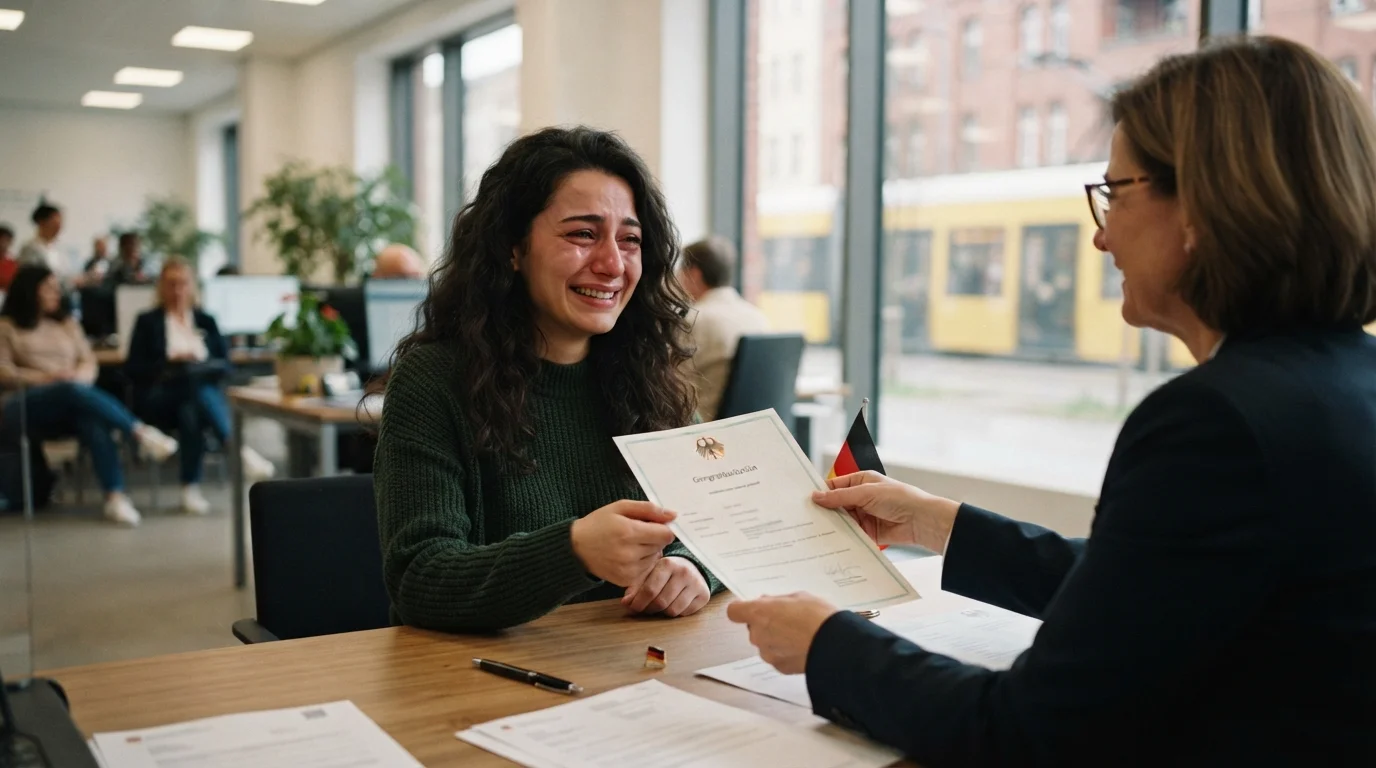
Applying for German citizenship is a major milestone in any expat's journey. After months or even years of collecting certificates, translating birth records, and waiting for updates, receiving an invitation to your appointment at the local citizenship authority (Einbürgerungsbehörde) is incredibly exciting. However, for many applicants, it also brings a wave of anxiety. Sitting face-to-face with a civil servant (Sachbearbeiter) to review legal documents in official German can feel overwhelming.
While you do not need to speak perfect legal German, demonstrating a good command of formal spoken German (*Siezen*) and understanding key administrative terminology can significantly smooth out the process. Officials appreciate applicants who show preparation, politeness, and a clear understanding of the procedure. Furthermore, showing confidence during your appointment helps satisfy the official language requirement, demonstrating that you can handle real-life administrative interactions independently.
In this comprehensive guide, we will break down essential German phrases, key terminology, practical dialogue examples, and communication strategies for every stage of your Einbürgerungsbehörde appointment.
When interacting with German authorities like the Einbürgerungsbehörde, official tone matters. Germany's administrative language (Amtssprache) is precise, formal, and structured. Using the correct register shows respect and helps avoid misunderstandings.
Here are three core principles to keep in mind:
Before attending your interview, it is helpful to make sure your general language skills meet official expectations. If you are still working toward meeting your B1 certification requirement, review our complete guide on preparing for your B1 German speaking exam to build a solid foundation.
Your appointment begins the moment you step into the office. Setting a positive, respectful tone immediately puts both you and the case worker at ease.
Sachbearbeiter: Guten Tag! Nehmen Sie bitte Platz. Wie kann ich Ihnen helfen?
Sie: Guten Tag, Frau Weber. Vielen Dank. Ich habe heute um 10:00 Uhr einen Termin bezüglich meines Einbürgerungsantrags.
Sachbearbeiter: Ah, ja. Herr Schmidt, richtig? Haben Sie Ihren Ausweis dabei?
Sie: Ja, natürlich. Hier ist mein Reisepass.
The core of your appointment usually involves verifying your identity, reviewing income statements, checking your language level, and confirming your test results. You will hand over original copies and sworn translations of various official records.
According to the official requirements set by the Federal Office for Migration and Refugees (BAMF), applicants must present comprehensive proof of identity, legal residency, economic stability, and civic integration.
Make sure you fully understand all legal thresholds prior to your appointment. For example, if you are unsure about the civic test results, check out our guide on understanding the Einbürgerungstest passing score to verify that your certificate fulfills all administrative criteria.
Understanding official administrative terms prevents confusion during document review. Here are the most critical terms you should know:
If you are also navigating your general residency status prior to applying for citizenship, you might want to read our detailed guide on the German language requirements for an EU Blue Card.
It is completely normal to feel nervous or fail to understand a complex administrative question. Civil servants do not expect you to be a native speaker; they expect you to handle communicative gaps politely and constructively in German.
Never pretend to understand something if you aren't sure. Use these phrases to request clarification:
Near the end of the appointment, the official will outline what happens next. They might request additional documents (Unterlagen nachreichen) or explain when you can expect a decision.
Listen for these key administrative phrases from your caseworker:
To help you visualize the entire conversation, here is an extended realistic dialogue between an applicant (Herr Patel) and an officer (Frau Hoffmann) at the Einbürgerungsbehörde.
Frau Hoffmann: Guten Tag, Herr Patel. Bitte nehmen Sie Platz. Sie haben heute den Termin zur Abgabe Ihres Einbürgerungsantrags.
Herr Patel: Guten Tag, Frau Hoffmann. Vielen Dank. Ja, genau. Ich habe alle ausgefüllten Formulare und meine Unterlagen mitgebracht.
Frau Hoffmann: Sehr gut. Zeigen Sie mir bitte als Erstes Ihren Reisepass und Ihren aktuellen Aufenthaltstitel.
Herr Patel: Hier bitte, mein Pass und die elektronische Aufenthaltserlaubnis.
Frau Hoffmann: Danke. Nun benötige ich Ihr B1-Sprachzertifikat und die Bestätigung über den Einbürgerungstest.
Herr Patel: Hier sind die Originalzertifikate sowie jeweils eine Kopie.
Frau Hoffmann: Perfekt. Haben Sie auch die Loyalitätserklärung gelesen und unterschrieben?
Herr Patel: Ich habe sie gelesen, aber ich wollte sie lieber hier vor Ihnen unterschreiben, falls Fragen auftauchen.
Frau Hoffmann: Das ist sehr aufmerksam von Ihnen. Unterschreiben Sie bitte hier unten. Haben Sie noch Fragen zur Erklärung?
Herr Patel: Nein, alles ist klar. Könnte ich fragen, wie lange die Bearbeitung ungefähr dauern wird?
Frau Hoffmann: Aktuell liegt die Bearbeitungszeit bei etwa sechs bis acht Monaten. Wir melden uns schriftlich bei Ihnen, sobald die Prüfung abgeschlossen ist.
Herr Patel: Vielen Dank für Ihre Hilfe, Frau Hoffmann. Einen schönen Tag noch!
Memorizing lists of vocabulary is a great start, but speaking confidently in a formal office setting requires real practice. Being able to respond smoothly under pressure makes a lasting positive impression during official appointments.
This is where the Bretzi app comes in. Designed as an AI-powered German learning partner, Bretzi provides interactive dialogue games and real-life conversation practice specifically tailored for scenarios like bureaucratic appointments, job interviews, and everyday administrative tasks.
With Bretzi, you can:
By simulating the conversation in a stress-free environment ahead of time, you can walk into the Einbürgerungsbehörde feeling prepared, confident, and articulate.
Before heading out the door on the day of your appointment, run through this quick preparation checklist:
Your appointment at the Einbürgerungsbehörde is a key step on your path to becoming a German citizen. By mastering essential phrases, learning key administrative terms, and understanding how to ask for clarification, you can face the meeting with complete confidence.
Take time to practice these phrases aloud before your appointment. If you want to refine your speaking skills and test your conversational fluency with interactive AI feedback, start practicing with Bretzi today to turn administrative German into a seamless experience!
Share this article:
Standing outside the exam room, heart thumping, waiting for the oral portion of the Deutsch-Test für Zuwanderer (DTZ) is an experience thousands of...
Read moreGermany's modernized citizenship law has transformed how long-term foreign residents build their futures in the country. Following landmark updates...
Read moreSecuring a German B1 language certificate is one of the most critical milestones for anyone building a life in Germany. Whether you are aiming for a...
Read more