Ruhezeit in Germany: Sunday Quiet Hours & House Rules Guide
You have just finished completing your Anmeldung, unpacked the last moving boxes on a sunny Sunday afternoon, and decided it is the perfect time to...
Read more
This article was written by AI and published by Bretzi.
AI can get things wrong. For anything official, check the source it points to.
You have just moved into a German apartment, opened the kitchen cupboard, and found four different bins. Then you discover that the glass container is somewhere down the street, the recycling bin has a yellow lid, and your neighbor is watching you put a yogurt cup in the wrong place. Welcome to Mülltrennung, Germany's system of household waste sorting.
German waste sorting can feel complicated at first, especially when local rules vary between cities and landlords. However, learning the basic categories will help you avoid contamination fees, warnings, unpleasant conversations, and possible fines. It is also an important topic for everyday German and for integration exams, where environmental protection and responsible citizenship are common themes.
This practical guide explains the main German waste bins, shows where common household items belong, discusses special waste, and gives you a simple routine for sorting correctly. You will also learn useful German vocabulary that you can use with your landlord, neighbors, or local waste authority.
Mülltrennung means waste separation. Instead of putting all household rubbish into one container, residents sort materials so that recyclable items can be processed, organic waste can become compost or biogas, and hazardous substances can be disposed of safely.
Germany has a highly organized waste-management system, but it depends on residents sorting correctly. If the wrong materials enter a recycling container, an entire batch may become more difficult or expensive to process. In apartment buildings, incorrect sorting can also create extra work for the building manager and higher waste fees for everyone.
Waste rules are connected to your wider responsibilities as a tenant. For example, your building's Hausordnung may explain when bins are moved to the street and how the shared waste area must be kept. If you are new to renting, this guide to the German Hausordnung can help you understand other common apartment rules.
The exact color of a bin may vary by municipality, so always check the label on your local containers. The German Federal Ministry's information on waste law provides official background, while your city's waste service usually publishes the practical collection rules.
Restmüll is residual waste that cannot be recycled through the other household systems. It is often placed in a gray or black bin, although colors can differ locally.
Do not use Restmüll as a convenient substitute for every other bin. Food scraps, clean packaging, paper, and glass usually have separate collection systems. Never put hot ash into a bin because it can cause fires.
Biomüll is organic kitchen and garden waste. It often goes into a brown bin, but some buildings use another color. Typical items include fruit and vegetable leftovers, coffee grounds, tea leaves, eggshells, and small amounts of garden waste.
Many municipalities do not allow plastic bags in the organic bin, including bags labeled biodegradable. These bags may not break down quickly enough during industrial composting. Use a paper bag, newspaper, or a washable kitchen container instead. Meat, bones, liquids, and garden soil are subject to local rules, so check your municipality's instructions.
The yellow bin or Gelber Sack is mainly for used packaging made of plastic, metal, or composite materials. It is not a general-purpose plastic recycling bin for every plastic object.
Packaging should be completely empty, but it normally does not need to be washed. Separate different materials when this is easy, such as removing an aluminum lid from a yogurt cup. Do not place toys, plastic coat hangers, toothbrushes, electrical appliances, or other non-packaging items in the yellow bin unless your local authority specifically says otherwise.
Altpapier, or waste paper, is usually collected in a blue bin or a clearly marked paper container. Newspapers, magazines, envelopes, cardboard boxes, paper bags, and clean office paper generally belong here.
Flatten cardboard boxes to save space. Remove large amounts of tape, plastic wrapping, and polystyrene. Greasy pizza boxes and wet or heavily soiled paper usually belong in Restmüll because the fibers cannot be recycled effectively. Receipts made from thermal paper should also be kept out of the paper bin and placed in residual waste.
Glass bottles and jars are often taken to public Altglascontainer rather than placed in a household bin. The containers usually have separate openings for Weißglas (clear glass), Grünglas (green glass), and Braunglas (brown glass).
Only packaging glass belongs in these containers. Drinking glasses, mirrors, window glass, ceramic, porcelain, light bulbs, and ovenproof glass have different compositions and usually go into Restmüll or a recycling center. Remove lids and put them into the appropriate packaging collection unless the local instructions say otherwise.
Glass containers are normally used only during permitted hours because dropping bottles can disturb neighbors. Never leave bags or boxes beside a full container. Report the problem to the municipality or waste company instead.
Some objects are confusing because their material does not automatically determine their waste category. Ask yourself first: Is it packaging? Is it hazardous? Can it be returned, donated, repaired, or taken to a special collection point?
For a useful general reference on recycling categories and terminology, see the overview of waste management in Germany. For a final decision about a specific item, however, your municipal waste calendar or recycling center remains the best source.
Germany does not have one identical waste system for every town. The city of Berlin may organize collection differently from Munich, Hamburg, Cologne, or a smaller municipality. Search online for your place name plus Abfall-ABC, Abfallkalender, or Abfallwirtschaft. An Abfall-ABC is an alphabetical guide that tells you where individual items belong.
When you move, ask your landlord, property manager, or neighbors these simple questions: Welche Tonne ist für Biomüll? (Which bin is for organic waste?), Wann wird der Müll abgeholt? (When is the waste collected?), and Wo kann ich Altglas entsorgen? (Where can I dispose of old glass?)
Tie waste bags securely and close bin lids. Do not leave bags on the floor when a container is full. Break down boxes before placing them in the paper bin. If you see a mistake in a shared bin, avoid accusing a neighbor; a polite message such as Bitte achten wir auf die Mülltrennung (Let's please pay attention to waste sorting) is usually more productive.
Some landlords or waste companies inspect contaminated bins. If a bin contains too much incorrect material, it may not be collected, or additional charges may be passed on to the building. Repeated illegal dumping can lead to administrative penalties, and leaving bulky waste in public areas can be treated as an offense.
Collection schedules may distinguish between different streets, bin sizes, and public holidays. Put containers outside at the time specified by your municipality and return them promptly after collection if residents are responsible for doing so. This is particularly important in narrow streets and apartment buildings where bins can block paths or entrances.
If you are managing other move-related tasks, such as registering your address, review this step-by-step Anmeldung guide. Learning the right administrative vocabulary makes it easier to understand letters from your city and your landlord.
You do not need to memorize every rule on your first day. Create a small sorting station under your sink or next to your kitchen bin. Label containers in both English and German: Restmüll, Biomüll, Papier, and Verpackungen.
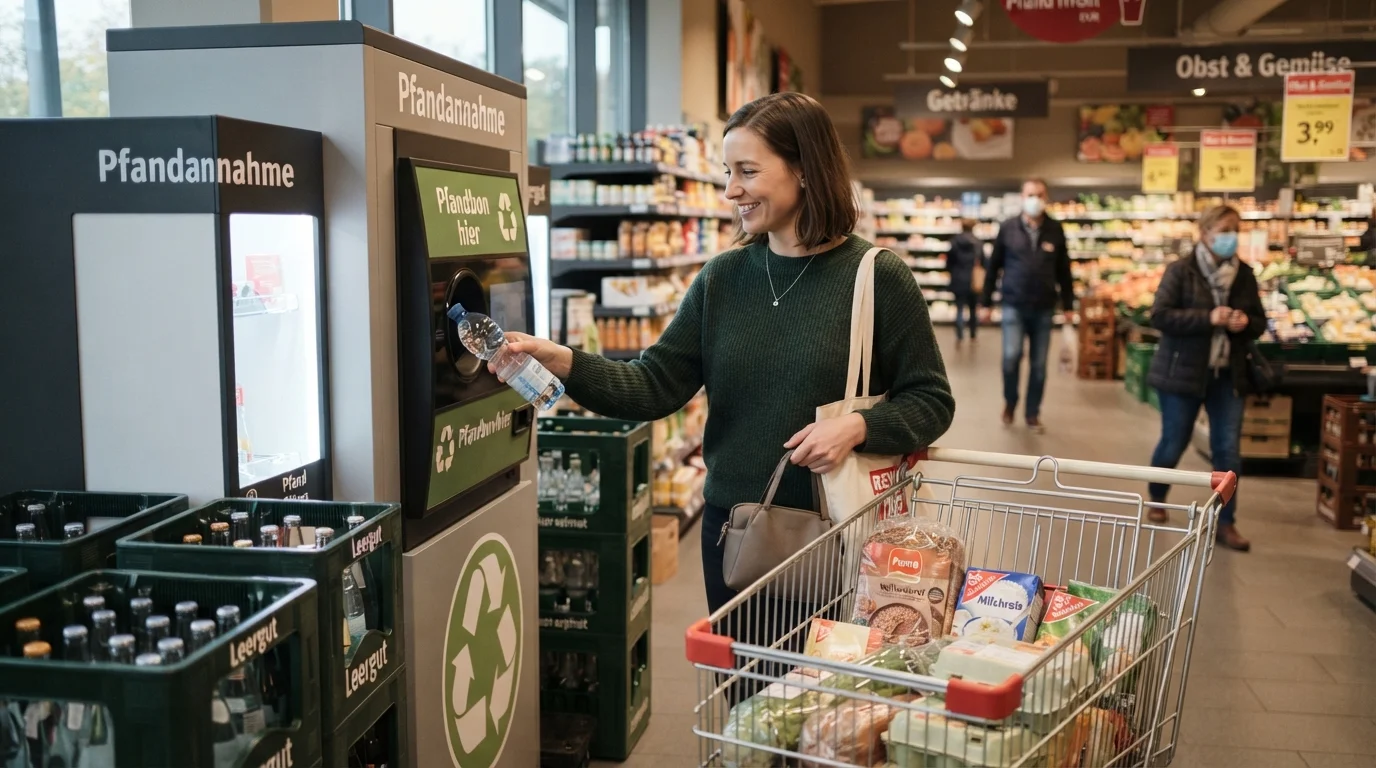
Take a photo of your building's bin labels and save your municipality's waste calendar on your phone. A ten-second lookup is better than contaminating a whole bin. You can also write down useful words such as Müllabfuhr (waste collection), Wertstoffhof (recycling center), Abholung (collection), Pfand (deposit), and Entsorgung (disposal).
German pronunciation and conversation practice can make everyday tasks less stressful. With Bretzi, you can practice realistic dialogues about asking a landlord where bins belong, reporting a full container, or finding a recycling center. Its pronunciation training gives instant feedback, and spaced repetition helps vocabulary such as Abfall, Pfand, and Wertstoffhof stay active.
For daily life and integration exams, remember these core principles:
German waste sorting becomes much easier once you understand the logic behind the main categories. Start with four labeled containers, learn the local collection schedule, and keep a list of special items that require a recycling center or return point. These small habits protect the environment, reduce shared costs, and help you build a positive relationship with neighbors.
Most importantly, do not worry about making a mistake while learning. Ask politely, check official local guidance, and practice the German vocabulary you need. Use Bretzi's personalized learning plans and interactive dialogue games to rehearse practical apartment situations, then turn your new Mülltrennung words into part of your daily German routine.
Share this article:
You have just finished completing your Anmeldung, unpacked the last moving boxes on a sunny Sunday afternoon, and decided it is the perfect time to...
Read moreSigning a contract in Germany is notoriously easy—whether you are picking up a shiny new smartphone plan or joining a local fitness club. But when...
Read moreIf you have recently moved to Germany, your first trip to a local grocery store might feel less like a routine errand and more like an Olympic sport....
Read more