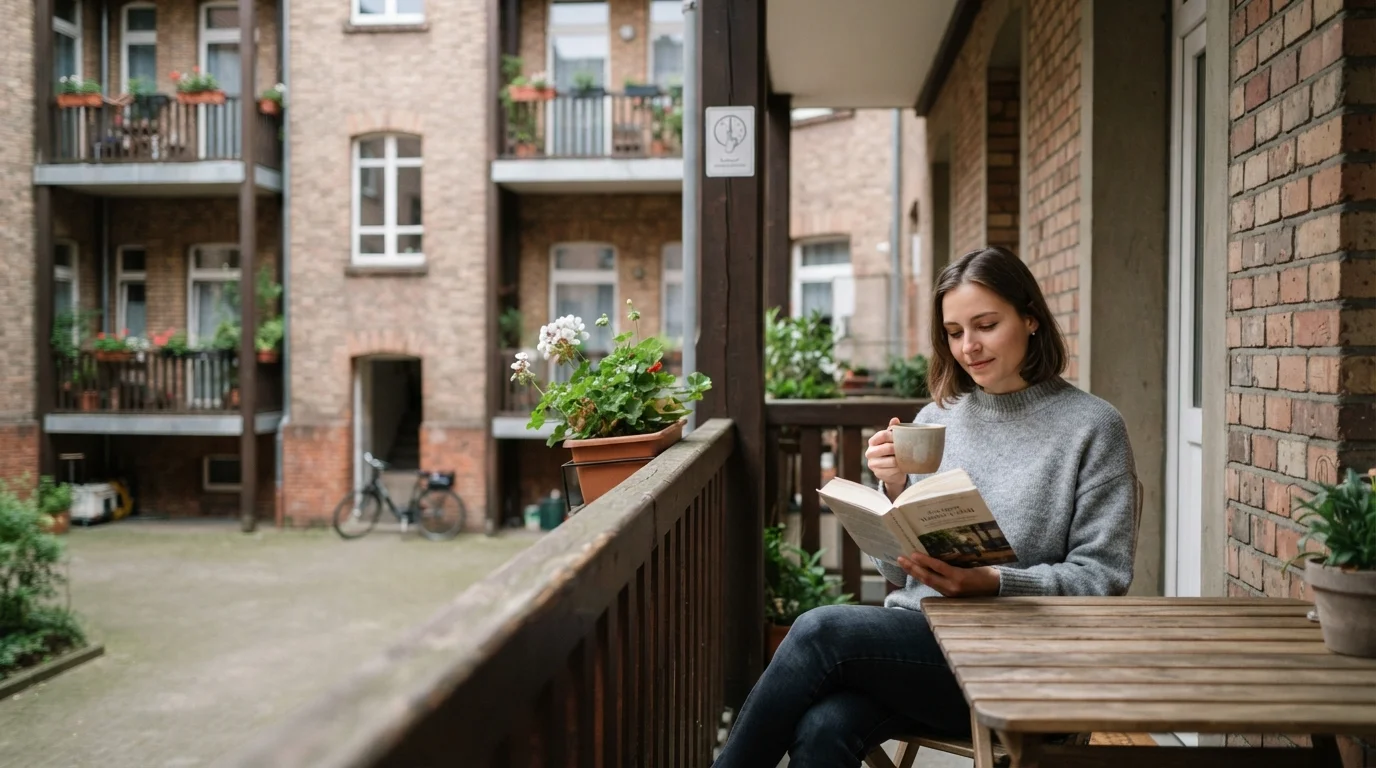
Ruhezeit in Germany: Sunday Quiet Hours & House Rules Guide
You have just finished completing your Anmeldung, unpacked the last moving boxes on a sunny Sunday afternoon, and decided it is the perfect time to...
Read more
This article was written by AI and published by Bretzi.
AI can get things wrong. For anything official, check the source it points to.
AI-generated image
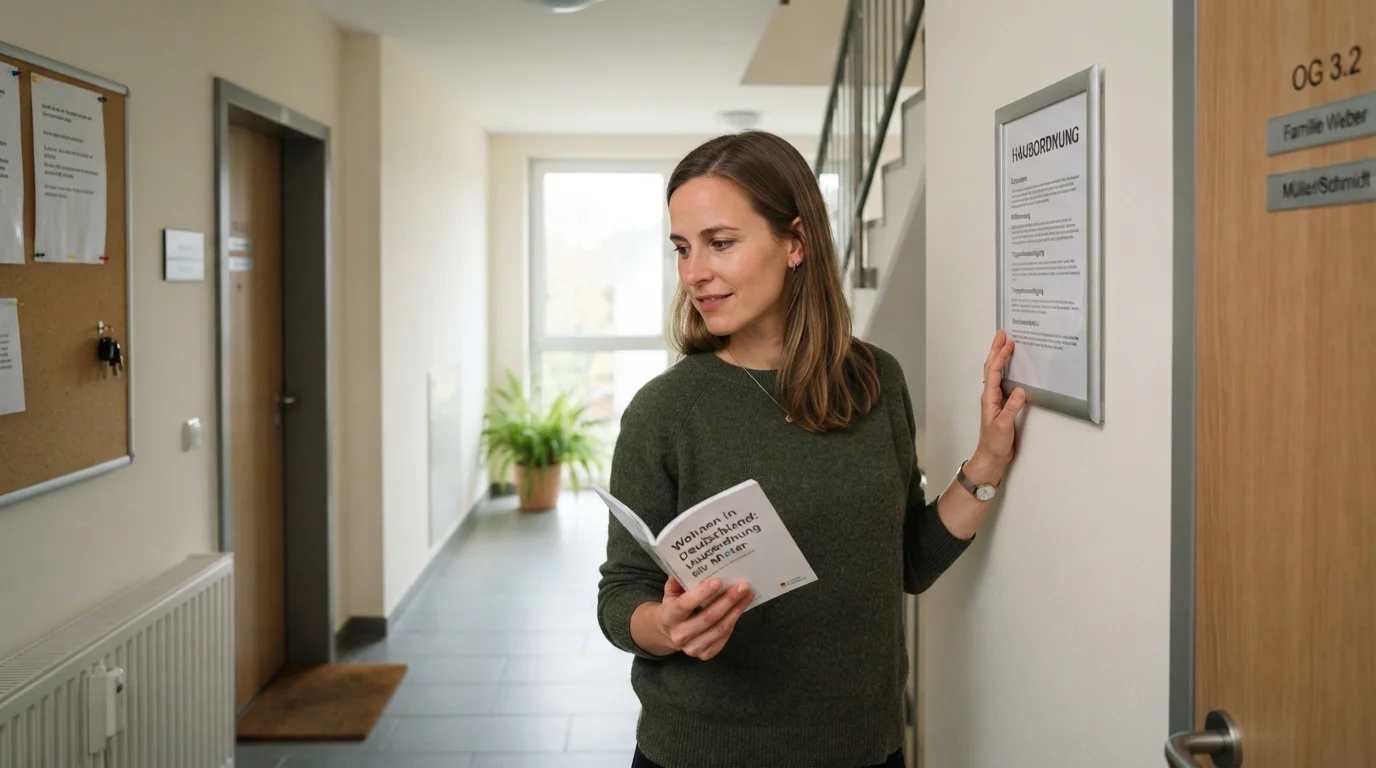
Moving into a new apartment in Germany is an exciting milestone for any expat. You have navigated the competitive housing market, deciphered the difference between cold rent and warm rent, signed your contract, and collected your keys. However, as you step into your new building, you might notice a framed document hanging in the hallway or attached to the back of your rental agreement. This document is the Hausordnung (house rules), and in Germany, it is far more than a list of friendly suggestions.
For newcomers, the Hausordnung can sometimes feel like a rigid set of bureaucratic regulations. However, its primary purpose is to ensure peaceful cohabitation among neighbors in high-density residential buildings. Understanding these rules—and the cultural expectations behind them—is essential for avoiding passive-aggressive notes in the hallway, formal warnings from your landlord, or awkward confrontations with your neighbors.
In this comprehensive guide, we will break down everything you need to know about the German Hausordnung, from quiet hours (Ruhezeiten) and ventilation practices (Stoßlüften) to staircase cleaning schedules and waste disposal. Along the way, we will also share practical language tips to help you communicate effectively in your building.
The term Hausordnung translates directly to 'house order' or 'building rules.' It is a set of regulations defined by property owners, management companies (Hausverwaltung), or housing associations to govern how tenants interact with each other and use shared spaces within an apartment complex.
Whether a Hausordnung is legally binding depends on how it is implemented:
To learn more about tenant rights and legal frameworks in Germany, you can consult resources provided by the Deutscher Mieterbund (German Tenants' Association), which offers advice on statutory rental protections.
If there is one aspect of the Hausordnung that every expat must memorize, it is the concept of Ruhezeiten (quiet hours). In German residential culture, undisturbed rest inside one's home is considered a fundamental right. Disrupting this peace can lead to immediate friction with your neighbors.
Generally, Nachtruhe applies every night between 10:00 PM and 6:00 AM or 7:00 AM. During these hours, all noise inside your apartment must be kept at Zimmerlautstärke (room volume). This means that noise should not be audible outside your closed apartment doors or windows.
During Nachtruhe, you should avoid:
In Germany, Sundays and official public holidays are legally protected days of rest (Sonn- und Feiertagsruhe). The quiet rules that apply during nighttime are extended across the entire day on Sundays. Drilling holes, hammering furniture together, mowing lawns, or playing loud instruments on a Sunday is strictly taboo.
Historically, many German towns enforced a Mittagsruhe (midday break) between 1:00 PM and 3:00 PM. While statutory midday quiet hours have been relaxed in many modern federal states, individual buildings may still include Mittagsruhe in their private Hausordnung. Check your specific document to see if this applies to your building.
Germany is famous for its intricate waste separation system (Mülltrennung), and your Hausordnung will almost certainly include strict rules regarding trash disposal in common bin areas (Müllplatz or Müllraum).
Failing to sort your trash properly can result in the entire building's waste bin being left uncollected by municipal workers, leading to extra sorting fees charged to all tenants via the utility bill (Nebenkosten).
For large items like old furniture or mattresses, you cannot simply leave them in the courtyard or next to the regular bins. You must organize Sperrmüll (bulky waste collection) through your local city services.
Common areas in German apartment buildings are governed by strict safety and cleanliness guidelines. Because hallways (Treppenhaus) double as primary emergency escape routes, fire safety regulations (Brandschutz) play a major role in what you can and cannot do in shared areas.
As a general rule, the hallway outside your apartment door is public property belonging to the building, not an extension of your flat. You should avoid leaving the following items in the hallway:
Most German apartments come with a dedicated basement storage unit (Kellerabteil). Your Hausordnung will outline how cellar hallways must be kept clear and whether you are allowed to store flammable liquids or hazardous materials there (usually prohibited). If your building has a communal laundry room (Waschkeller) or drying room (Trockenraum), a sign-up sheet or fixed schedule may dictate when each tenant is allowed to use shared washing machines.
Who cleans the stairs, entrance hall, and front sidewalk? In some modern buildings, the landlord hires an external property cleaning service, the cost of which is split among tenants as part of the operational utility costs (Betriebskosten). However, in many traditional or smaller complexes, tenants are expected to take turns cleaning common spaces themselves.
In southern regions of Germany (particularly Baden-Württemberg and Swabia), this system is known as the famous Kehrwoche (sweeping week). In other parts of Germany, it is simply referred to as Treppenhausreinigung.
When it is your turn (often indicated by a hanging sign passed from door to door, or marked on a building schedule), your duties usually include:
German apartments are built to be energy efficient and airtight. While this keeps heat inside during chilly winters, it also creates moisture buildup from daily activities like cooking, showering, and drying clothes indoors. To prevent structural damage and mold (Schimmel), almost every Hausordnung explicitly instructs tenants on proper heating and ventilation practices.
Rather than leaving a window cracked open all day on tilt mode (Kippstellung)—which wastes heating energy and cools down window frames without circulating air effectively—Germans practice Stoßlüften (shock ventilation).
Here is how to practice proper Stoßlüften as expected by German landlords:
If mold forms because a tenant failed to ventilate or heat the apartment properly, the cost of mold remediation can legally fall on the tenant. Therefore, taking Stoßlüften seriously protects both your healthy living environment and your deposit.
Understanding house rules becomes much easier when you know the core German vocabulary. Here are key terms you will encounter in written rules and discussions with your neighbors:
| German Term | English Meaning |
|---|---|
| die Hausordnung | House rules / Building regulations |
| die Ruhezeiten | Mandatory quiet hours |
| die Zimmerlautstärke | Room volume (sound confined to flat) |
| der Hausmeister | Building superintendent / Facility manager |
| die Hausverwaltung | Property management company |
| die Mülltrennung | Waste separation / Garbage sorting |
| das Stoßlüften | Shock ventilation (opening windows wide briefly) |
| die Treppenhausreinigung | Staircase cleaning duty |
| die Abmahnung | Formal written warning for contract breach |
Navigating apartment life and communicating with landlords or neighbors in German can feel daunting at first. If you want to build confidence speaking German in daily life scenarios, the Bretzi app offers interactive conversation lessons and real-life dialogue practice powered by AI. Whether you need to ask your Hausmeister for assistance or clarify administrative details after completing your registering your new address through the Ummeldung process, practicing real scenarios with Bretzi makes everyday communication natural and stress-free.
What should you do if a rule is broken—or if you accidentally breach a rule yourself? Understanding the typical steps of conflict resolution in German apartment buildings will help you maintain good relations with your surrounding community.
It is a well-known cultural trope in Germany that neighbors often communicate grievances via written notes posted on doors, bulletin boards, or tape on trash bins. These notes are sometimes signed, but often anonymous. If you find a note regarding loud music or misplaced shoes, take it as an informal friendly reminder to review the rules before the issue escalates.
If a neighbor's noise or mismanaged trash is bothering you, the best first approach is to politely knock on their door during non-quiet hours and explain the situation calmly in simple language. Most neighbors are happy to adjust once they realize they caused a disturbance.
If quiet hour violations or common area obstructions persist despite direct communication, you can report the issue to your Hausmeister or Hausverwaltung. Keep a written log (Lärmprotokoll) detailing dates and times of repeated severe disruptions if you plan to report noise issues formally.
If a tenant continuously violates the binding Hausordnung despite written warnings from property management, the landlord can issue an official Abmahnung (formal legal warning). Repeated violations after an Abmahnung can provide grounds for extraordinary lease cancellation. Knowing your rights and contractual obligations is key—much like understanding formal administrative processes when learning how to write a formal German Kündigung.
While the German Hausordnung may seem strict to expats coming from countries with more relaxed communal living structures, its ultimate goal is to maintain comfort, quietness, and safety for everyone in the building. By respecting quiet hours (Ruhezeiten), separating your garbage diligently, keeping shared stairwells clear, and practicing regular shock ventilation (Stoßlüften), you will quickly settle in as a model neighbor.
Language is one of the most effective tools for settling into life in Germany. To master German living vocabulary, build your speaking confidence, and handle everyday conversations with landlords and neighbors effortlessly, start learning today with the Bretzi app. With personalized bite-sized lessons and instant speech feedback, Bretzi helps you feel at home in Germany faster.
Share this article:
You have just finished completing your Anmeldung, unpacked the last moving boxes on a sunny Sunday afternoon, and decided it is the perfect time to...
Read moreSigning a contract in Germany is notoriously easy—whether you are picking up a shiny new smartphone plan or joining a local fitness club. But when...
Read moreIf you have recently moved to Germany, your first trip to a local grocery store might feel less like a routine errand and more like an Olympic sport....
Read more