Ruhezeit in Germany: Sunday Quiet Hours & House Rules Guide
You have just finished completing your Anmeldung, unpacked the last moving boxes on a sunny Sunday afternoon, and decided it is the perfect time to...
Read more
This article was drafted by AI and edited by a person before it was published.
AI can get things wrong. For anything official, check the source it points to.
AI-generated image
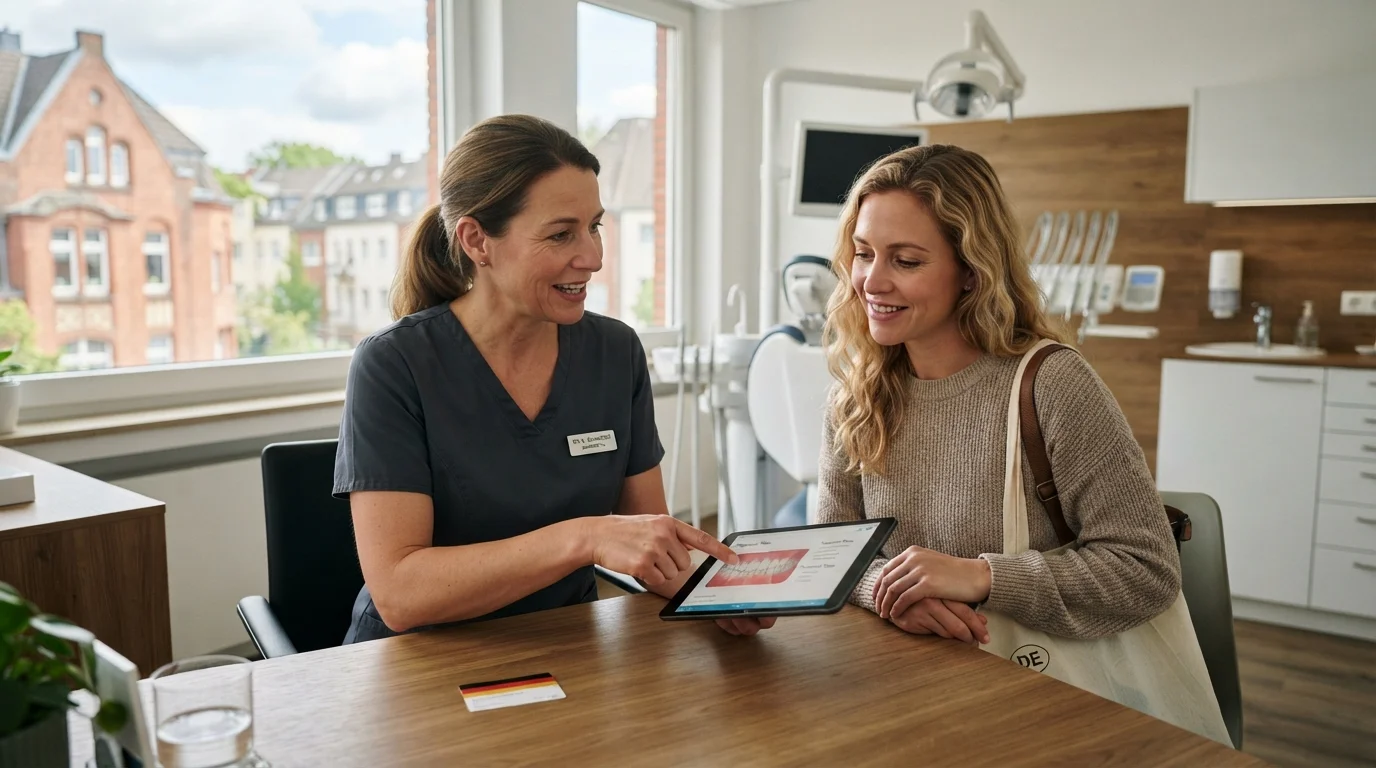
Moving to Germany presents plenty of exciting milestones: discovering your local bakery, figuring out the public transport network, and setting up your new apartment. However, nothing tests your confidence quite like a sudden toothache when you are thousands of miles away from home. Trying to explain a localized throbbing pain in your back molar using Google Translate while sitting in a clinic waiting room is an experience most expats would prefer to avoid.
The good news is that dental care in Germany (Zahnheilkunde) is among the best in the world. Modern technology, rigorous hygiene standards, and highly qualified practitioners mean your teeth are in very safe hands. Moreover, a vast majority of German dentists speak proficient English because English instruction is mandatory in German medical universities. However, finding a practitioner who is fully comfortable conducting complex medical discussions in English—and managing front-desk interactions in English—requires a bit of know-how.
In this comprehensive guide, we will walk you through how the German dental system works, how to find an English-speaking dentist near you, how insurance coverage applies to teeth, what to expect during your appointment, and key vocabulary to help you communicate effectively.
Before booking your first check-up, it is crucial to understand how dental care intersects with the German healthcare system. Whether you hold statutory health insurance (Gesetzliche Krankenversicherung - GKV) like Techniker Krankenkasse (TK) or Barmer, or private health insurance (Private Krankenversicherung - PKV), coverage rules differ significantly from general medical consultations.
Public health insurance covers essential dental procedures aimed at keeping your mouth healthy. Standard covered treatments include:
While basic healthcare prevents immediate disaster, aesthetic treatments, advanced materials, and comprehensive preventive care often require co-payments (Zuzahlungen):
To bridge this gap, many expats and locals take out a supplemental dental insurance policy (Zahnzusatzversicherung). Much like filing your German tax return to claim medical expenses, optimizing your healthcare expenditures with supplementary insurance can save you thousands of Euros if you ever need major dental surgery or cosmetic procedures.
Finding a dentist who speaks fluent English is much easier today thanks to specialized search engines and digital booking systems. Here are the most reliable methods to locate an English-speaking practitioner in your city.
Doctolib has become the standard medical booking portal across Germany. It allows you to search specifically for dentists (Zahnarzt) in your postal code and filter results by spoken languages (Gesprochene Sprachen). Select Englisch in the filter bar, and you will see a curated list of practitioners who explicitly indicate they conduct appointments in English. You can even book your slot directly online without making a telephone call.
Jameda is Germany's largest physician review and rating platform. Similar to Doctolib, Jameda lets you filter specialists by location, patient ratings, insurance type (GKV vs. PKV), and spoken languages. Reading reviews written by fellow expats can give you peace of mind regarding the dentist's actual level of English fluency and bedside manner.
Every federal state in Germany has an official dental association (Landeszahnärztekammer). Their official registry websites offer detailed practitioner search tools. For overarching national healthcare guidelines, you can consult official resources like the Kassenzahnärztliche Bundesvereinigung (KZBV), which oversees public dental care standards across Germany.
Embassies (such as the US, UK, Canadian, or Australian embassies) maintain vetted lists of English-speaking medical professionals, including dentists, pediatricians, and general practitioners across major hubs like Berlin, Munich, Frankfurt, Hamburg, and Cologne. If you are also managing healthcare for young children, check out our companion guide on finding an English-speaking pediatrician in Germany.
Facebook groups, Reddit forums (such as r/germany or city-specific subreddits like r/berlin), and local expat networks are goldmines for word-of-mouth recommendations. Fellow expats can tell you not only if the dentist speaks English, but whether the receptionist staff at the front desk (Empfang) can handle phone inquiries in English.
Even if your dentist speaks English fluently, front-desk staff or dental assistants (Zahnmedizinische Fachangestellte - ZFA) may rely primarily on German. Knowing key German terms will dramatically lower your anxiety and ensure seamless communication.
If you want to feel completely self-assured when booking appointments or speaking with receptionists, practicing real-life medical conversations ahead of time makes all the difference. Using the Bretzi app, you can engage in AI-powered conversation practice and interactive dialogue games tailored specifically for practical scenarios like doctor visits, bureaucracy, and everyday living in Germany. Bretzi's instant feedback on pronunciation helps you work on speaking clearly before you step into the practice.
Dental visits in Germany follow a structured and efficient routine. Here is a step-by-step breakdown of what happens when you visit a German dental office.
When you arrive for your first visit, you will be handed an Anamnesebogen. This intake questionnaire asks about your general health history, pre-existing conditions, allergies, regular medications, and insurance details. Many modern practices offer this form in English upon request, but having a translation app ready is helpful if only the German version is available.
The dentist will inspect your teeth, gums, and bite. They may take digital X-rays (Röntgenbilder) if you haven't had them taken recently. German dentists are known for detailed explanation; they will explain their observations clearly, often showing you the intraoral camera pictures or X-rays on a screen in front of you.
Don't leave your first appointment without asking for a Bonusheft! This small yellow booklet is a vital tool in German public healthcare. Every year you complete a routine check-up, your dentist stamps and dates this booklet. If you maintain continuous annual stamps for 5 to 10 years, your public health insurance increases its mandatory co-payment contribution for future crowns, bridges, or dentures by 20% to 30%. It is a simple habit that pays off significantly in the long run.
If you require significant dental work beyond standard fillings—such as crowns, root canals, or implants—your dentist cannot simply perform the work and bill you later. By law, they must provide you with a written estimate called a Heil- und Kostenplan (HKP).
This detailed document breaks down the treatment steps, medical fees according to the official German dental fee scale (GOZ / BEMA), expected insurance contributions, and your personal co-payment (Eigenanteil). You must submit this document to your public insurance provider (and supplemental insurer, if applicable) for pre-approval BEFORE treatment begins.
Dental emergencies rarely happen during convenient office hours. If you suffer acute tooth trauma, severe infection, or unbearable pain outside regular opening hours (weekends, public holidays, or late at night), standard dental practices will be closed.
In Germany, emergency dental coverage is organized through the Zahnärztlicher Notdienst (Emergency Dental Service):
Navigating these urgent situations highlights why getting accustomed to German administrative processes is so important for expats—much like mastering getting your SCHUFA credit report or registering your address (Anmeldung) when settling into the country.
To make your dental experience in Germany as seamless as possible, keep these best practices in mind:
While finding an English-speaking dentist solves immediate healthcare needs, building your German language skills is the ultimate key to feeling completely at home in Germany. From medical appointments to everyday social life, clear communication builds confidence.
The Bretzi app makes language acquisition natural and engaging. With personalized learning plans powered by AI, real-life conversation practice, structured grammar modules from level A0 all the way to C1, and gamified vocabulary building using spaced repetition, Bretzi helps you speak German naturally in practical, everyday situations.
Finding an English-speaking dentist in Germany doesn't have to be a stressful endeavor. By leveraging platforms like Doctolib, understanding how your statutory insurance works, claiming your Bonusheft, and knowing a few key German medical phrases, you can maintain optimal oral health with complete peace of mind.
Take charge of your health and integration journey today. Book your routine check-up, download Bretzi to boost your language confidence, and enjoy your expat life in Germany with a bright, healthy smile!
Share this article:
You have just finished completing your Anmeldung, unpacked the last moving boxes on a sunny Sunday afternoon, and decided it is the perfect time to...
Read moreSigning a contract in Germany is notoriously easy—whether you are picking up a shiny new smartphone plan or joining a local fitness club. But when...
Read moreIf you have recently moved to Germany, your first trip to a local grocery store might feel less like a routine errand and more like an Olympic sport....
Read more