
Ruhezeit in Germany: Sunday Quiet Hours & House Rules Guide
You have just finished completing your Anmeldung, unpacked the last moving boxes on a sunny Sunday afternoon, and decided it is the perfect time to...
Read more
This article was drafted by AI and edited by a person before it was published.
AI can get things wrong. For anything official, check the source it points to.
AI-generated image
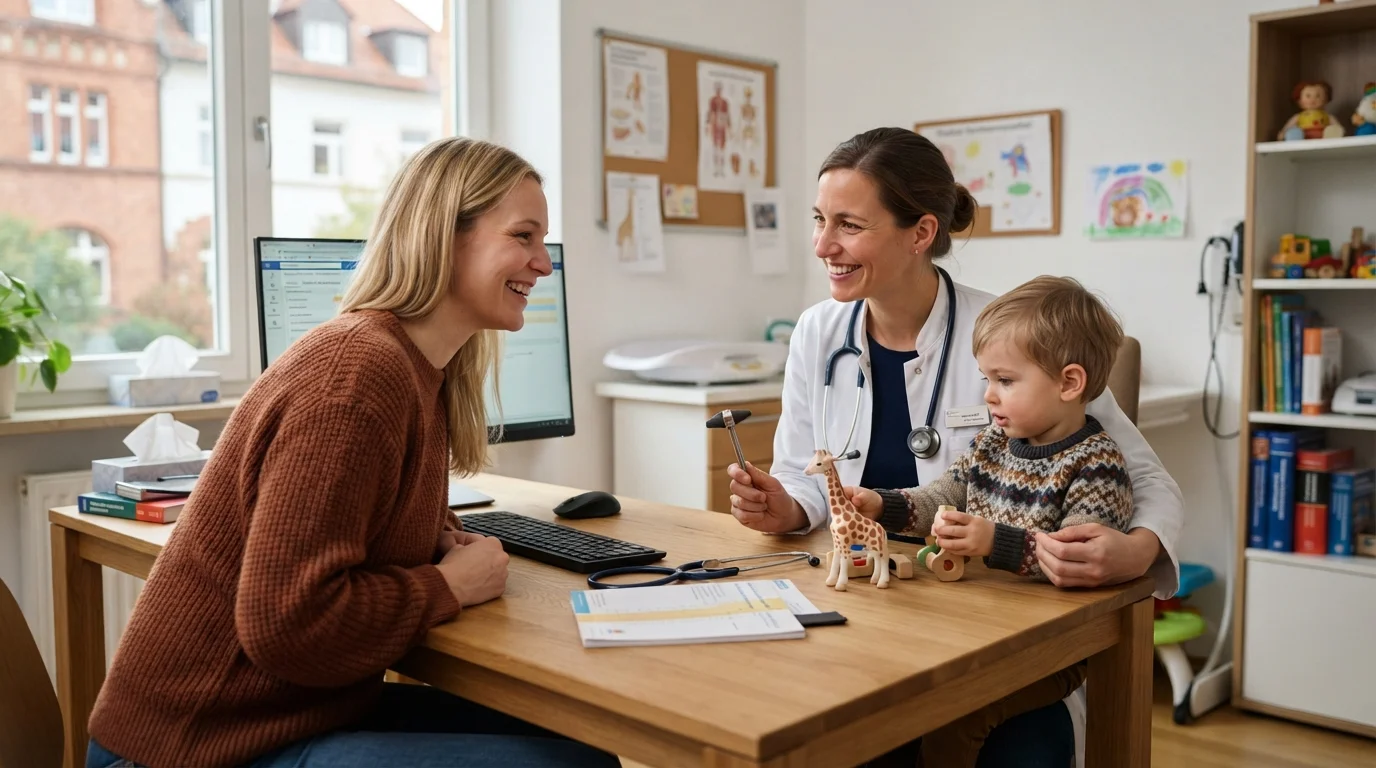
Moving to a new country is an exciting adventure, but it also comes with a unique set of challenges—especially if you are relocating with children. One of the most urgent tasks for expat parents arriving in Germany is securing healthcare for their little ones. The German healthcare system (Gesundheitssystem) is world-class, but navigating it in a foreign language can feel overwhelming, particularly when your child is unwell.
Finding a Kinderarzt (pediatrician) who speaks English is not just a matter of convenience; it is essential for clear communication, accurate diagnoses, and your peace of mind. In this comprehensive guide, we will walk you through everything you need to know about finding an English-speaking pediatrician in Germany, understanding the pediatric healthcare system, preparing for appointments, and handling medical emergencies.
Before you begin your search, it is important to understand how pediatric care works in Germany. Unlike in some countries where family doctors treat patients of all ages, children in Germany are typically seen by a specialized Kinderarzt from birth until their 18th birthday.
Your search for a doctor will be influenced by your health insurance status. Germany has a dual system: public health insurance (gesetzliche Krankenversicherung or GKV) and private health insurance (private Krankenversicherung or PKV). Most expats are enrolled in the public system. If you have public insurance, you must ensure the pediatrician you choose is a Kassenarzt (a doctor licensed to treat publicly insured patients). Fortunately, the vast majority of pediatricians accept public insurance, but it is always wise to double-check.
Upon registration with a pediatrician or at the hospital where your child is born, you will receive a bright yellow booklet called the Gelbes Heft. This booklet is a crucial document that tracks your child's developmental milestones through a series of mandatory preventative check-ups known as U-Untersuchungen (U1 to U9, followed by J1 and J2 for adolescents). These check-ups are highly structured, and missing them can result in reminders from your local youth welfare office (Jugendamt).
Finding a pediatrician who is both accepting new patients and speaks fluent English can take some time, especially in major cities where pediatric practices are often at full capacity. Here are the most effective strategies to find the right doctor for your family.
Several online directories allow you to filter doctors by location, specialty, and language spoken. These are invaluable tools for expats:
Each German federal state has its own association of statutory health insurance physicians, known as the Kassenärztliche Vereinigung (KV). Their official search engines are highly reliable and let you filter specifically for doctors who accept public insurance and speak foreign languages. For example, if you live in Munich, you would search the KV Bayern directory; if you are in Berlin, you would use the KV Berlin portal. You can find the national directory search tool via the Kassenärztliche Bundesvereinigung (KBV).
Word of mouth is incredibly powerful. Join local expat Facebook groups or parenting forums in your city (e.g., 'Expats in Berlin' or 'English-Speaking Parents in Frankfurt'). Parents are always happy to recommend English-speaking pediatricians who are particularly welcoming to international families.
Additionally, if you have a midwife (Hebamme), ask them for recommendations. Midwives are deeply integrated into the local pediatric network and often know which practices have open slots or English-speaking staff.
Once you have identified a potential pediatrician, you will need to contact the practice (Praxis). Be prepared: even if the pediatrician speaks excellent English, the reception staff (Medizinische Fachangestellte or MFAs) might only speak German. This is where having a few key German phrases ready can make a world of difference.
When calling the practice, you can use these helpful phrases:
If you want to build your confidence and practice these conversations beforehand, the Bretzi app is an incredible resource. With Bretzi's real-life German conversation practice and interactive dialogue games, you can roleplay a typical phone call to a doctor's office or practice describing symptoms in a low-pressure environment. Bretzi's AI-powered pronunciation feedback helps you practice saying the words clearly before you make the real call.
When you head to the clinic, make sure you have the following documents ready:
As you settle into life in Germany, you will find that the seasons dictate much of family life. German pediatricians place a strong emphasis on outdoor play and fresh air, even in less-than-perfect weather. However, seasonal changes bring their own health considerations.
During the hot summer months, keeping your little ones safe from heat-related illnesses is paramount. Be sure to check out our practical tips on surviving a German heatwave to keep your family cool, hydrated, and safe. Conversely, as the weather warms up, you will likely spend lots of time enjoying Germany's beautiful parks. If you are planning a family gathering outdoors, you might want to learn how to rent a grill area (Grillplatz) in Germany so you can host a safe, fun, and legally compliant family barbecue.
If your child becomes suddenly and severely ill outside of regular clinic hours (which typically close on Wednesday afternoons, weekends, and public holidays), you need to know how to access immediate care. Do not wait for your regular pediatrician's office to open.
Most major cities have designated children's hospitals or general hospitals with a dedicated pediatric emergency department (Kindernotaufnahme). It is highly recommended to locate your nearest Kindernotaufnahme before you actually need it. Save their address and phone number in your contacts.
Securing an English-speaking pediatrician in Germany is a vital step in establishing your family's new life abroad. By leveraging online tools like Doctolib, utilizing local expat networks, and understanding the core structure of the German healthcare system, you can ensure your child receives outstanding medical care. While the language barrier can feel intimidating at first, taking a proactive approach to learning basic medical German will empower you as a parent and help you navigate the system with confidence.
If you want to master the German language for your daily life, integration exams, or professional growth, let the Bretzi app guide you. With its customized, AI-powered learning plans, vocabulary builders, and real-life dialogue training, Bretzi helps you learn the exact German you need to thrive in your new home. Download Bretzi today and take the stress out of your next doctor's visit!
Share this article:
You have just finished completing your Anmeldung, unpacked the last moving boxes on a sunny Sunday afternoon, and decided it is the perfect time to...
Read moreSigning a contract in Germany is notoriously easy—whether you are picking up a shiny new smartphone plan or joining a local fitness club. But when...
Read moreIf you have recently moved to Germany, your first trip to a local grocery store might feel less like a routine errand and more like an Olympic sport....
Read more