German Ausbildung Guide: Vocational Training for Expats
When planning a career move to Germany, most international professionals immediately think of university degrees or direct corporate hiring. However,...
Read more
This article was written by AI and published by Bretzi.
AI can get things wrong. For anything official, check the source it points to.
AI-generated image
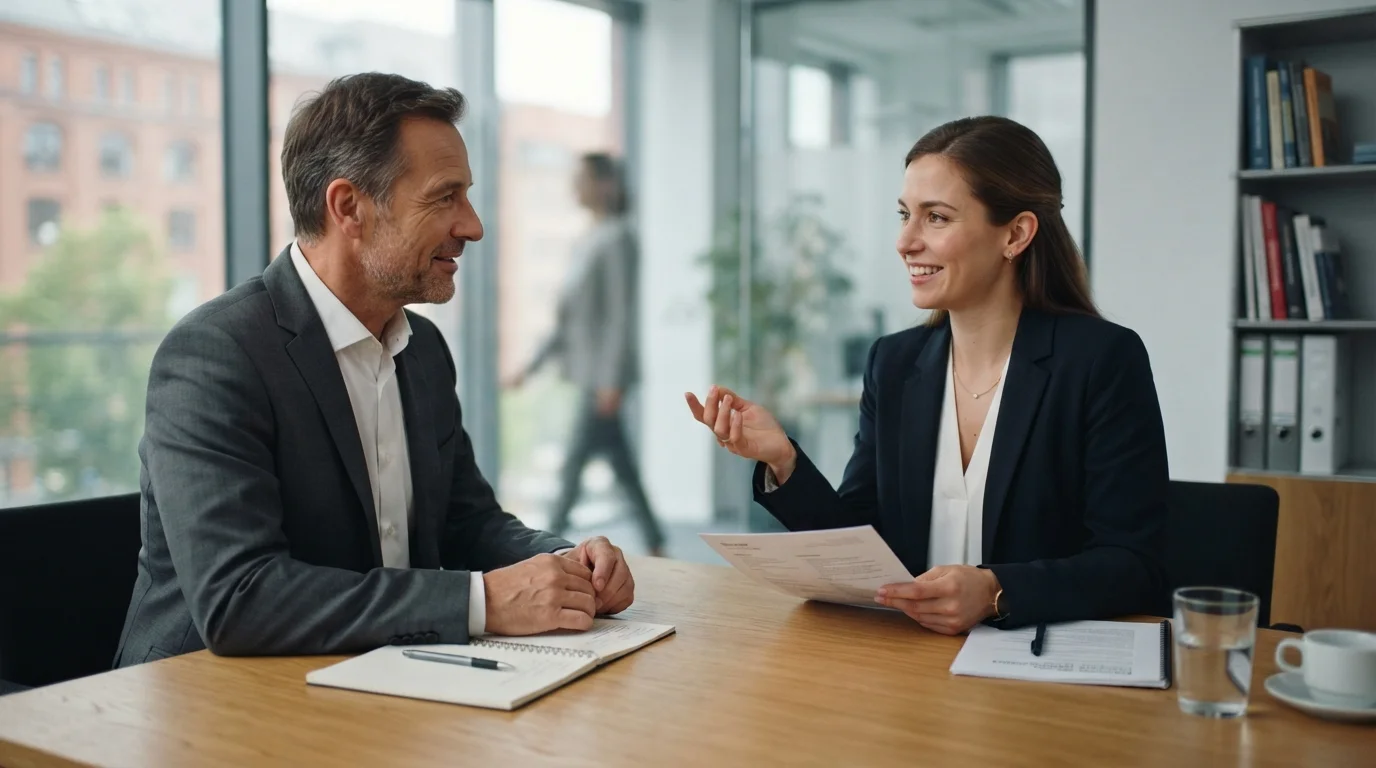
Securing a job interview in Germany, Austria, or Switzerland is a major career milestone. It means your professional background, qualifications, and application materials have met the high standards expected by German employers. However, winning over a hiring panel in Germany requires more than just an impressive resume. German workplace culture (Arbeitskultur) has distinct unwritten rules, communication styles, and behavioral expectations that can surprise expats and foreign job seekers.
Whether you are applying for a tech startup in Berlin, an engineering position in Stuttgart, or a finance role in Frankfurt, navigating the interview process successfully requires an understanding of German professional etiquette. In this comprehensive guide, we will break down the essential cultural dos and don'ts of a German job interview, explore crucial business vocabulary, and explain how to present yourself as a reliable, competent, and culturally aligned candidate.
To perform well in a German job interview, you first need to understand the underlying values of the German professional landscape. While every company culture varies—from formal corporate enterprises (Konzerne) to agile modern startups—certain core values remain consistent throughout the DACH region.
Before stepping into the interview room, ensure your foundational application documents are aligned with local standards. If you are still refining your written application, take time to review our step-by-step guide on crafting a tailored German cover letter to ensure your initial impression is just as strong.
Preparation in Germany is taken very seriously. Passing a German job interview requires more than skimming the company's home page five minutes before your call. Recruiters will test your genuine interest in the organization and your functional expertise.
Be prepared to answer questions about the company's recent achievements, core products, target market, and structural goals. Take a look at official career pages and government resources like the Make it in Germany portal to understand broad industry standards and labor guidelines.
Most German interviews begin with a request such as: "Erzählen Sie etwas über sich" (Tell us about yourself) or "Stellen Sie sich bitte kurz vor" (Please introduce yourself briefly). Prepare a concise 2-to-3-minute summary of your professional background, highlighting key achievements and explaining why this specific position is the logical next step in your career.
Even if the interview is conducted primarily in English, demonstrating basic to intermediate German proficiency gives you a major competitive advantage. Utilizing tools like the Bretzi app allows you to practice real-life German conversation with AI tutors, providing instant feedback on your pronunciation and helping you master formal business interactions before your interview date.
To leave a lasting positive impression on German recruiters, integrate these key behaviors into your preparation and interview presentation.
Punctuality in Germany is absolute. If your interview is in person, arrive at the location 10 to 15 minutes before the agreed time. If the interview is online via Video link, log into the waiting room 3 to 5 minutes early to test your microphone and camera settings. Arriving late—even by two minutes—without a severe, communicated emergency creates a strong negative impression.
In German, there are two ways to address someone: the informal "Du" and the formal "Sie". Always use "Sie" along with the interviewer's surname (e.g., "Guten Tag, Frau Müller" or "Herr Schmidt") unless they explicitly invite you to use their first name by saying, "Wir können uns gerne duzen." Even in modern companies where English is spoken, maintaining professional respect from the start demonstrates strong cultural awareness.
When answering questions about your past experience, use concrete metrics, specific project outcomes, and clear methodology. Instead of making broad statements like "I am a fantastic project manager," provide detailed facts: "I managed a cross-functional team of six, reducing delivery timelines by 15% across three major software releases." Using structured response frameworks like the STAR method (Situation, Task, Action, Result) aligns perfectly with German expectations.
Toward the end of the interview, you will almost certainly be asked: "Haben Sie noch Fragen an uns?" (Do you have any questions for us?). Always say yes. Asking thoughtful questions shows engagement. Suitable topics include:
For additional insights into workplace norms, you can consult our guide on workplace etiquette and professional phrasing to better understand long-term career growth in German organizations.
Avoiding cultural missteps is just as critical as highlighting your strengths. Here are common errors foreign applicants should avoid during German job interviews.
In some workplace cultures, bold self-promotion and aggressive confidence are encouraged. In Germany, over-exaggeration (Prahlerei) can be viewed with skepticism or seen as dishonesty. Modesty combined with quiet confidence is far more respected. State your accomplishments truthfully without inflating your role or claiming sole credit for team efforts.
German hiring managers conduct rigorous technical evaluations. Avoid vague, high-level answers when asked about tools, processes, or problem-solving approaches. If you do not know the answer to a question, it is far better to admit it honestly—stating how you would find the solution—than to attempt to bluff your way through.
While Germany offers generous employee benefits, including strong leave policies, bringing up vacation days, home office flexibility, or perks in the first 20 minutes of an initial interview can suggest your priorities lie away from the work itself. Save detailed questions about benefits for the final stages of the interview process or when reviewing the job offer.
When you reach the contract discussion phase, it helps to understand how work conditions are regulated. Read our overview on understanding German Tarifvertrag salary structures to learn how collective bargaining agreements influence compensation and leave.
Small talk in German job interviews is typically brief and focused on professional transitions or safe, neutral topics. Avoid sharing personal financial problems, political opinions, or family drama. Keep your conversation friendly, professional, and focused on your career trajectory.
Mastering relevant vocabulary helps you follow the conversation smoothly and express your thoughts with precision. Here is a handy reference list of German terms commonly heard in job interviews:
If you want to practice these terms in dynamic scenarios, interactive language tools make a significant difference. Using Bretzi, you can engage in interactive dialogue games tailored to practical workplace situations, helping you practice vocabulary retention with spaced repetition while boosting your conversational fluency.
Salary discussions in Germany usually take place toward the end of the initial interview or during a follow-up meeting. Understanding the norms surrounding compensation prevents misunderstandings.
In Germany, salary figures are almost always discussed as annual gross income (Bruttojahresgehalt). When asked about your salary expectations ("Was sind Ihre Gehaltsvorstellungen?"), state a realistic annual gross range based on industry benchmarks in Germany. Make sure you calculate taxes and social security contributions ahead of time so you know what your net income (Netto) will look like.
Within 24 hours of completing your interview, send a short, polite thank-you email to your interviewers or recruiter. Express appreciation for their time, reiterate your interest in the position, and mention that you look forward to hearing about the next steps. Keep it brief, professional, and grammatically precise.
To summarize your preparation, review this quick checklist before your interview day:
Navigating a German job interview successfully comes down to thorough preparation, cultural awareness, and clear, structured communication. By arriving on time, demonstrating professional respect, presenting clear facts, and mastering essential business German, you will stand out as an exceptional candidate ready to integrate smoothly into the German workforce.
Ready to boost your spoken German and feel completely confident in your next interview? Download the Bretzi app today to practice real-life German dialogues with instant AI feedback, master essential vocabulary, and unlock your full potential in the DACH job market!
Share this article:
When planning a career move to Germany, most international professionals immediately think of university degrees or direct corporate hiring. However,...
Read moreGermany is currently experiencing one of the most substantial tech talent shortages in Europe. From booming AI startups in Berlin to cloud...
Read moreThe Expat Dilemma: Navigating the German Workplace Picture this: It is your first week at a German company. You walk into the kitchen to grab coffee,...
Read more