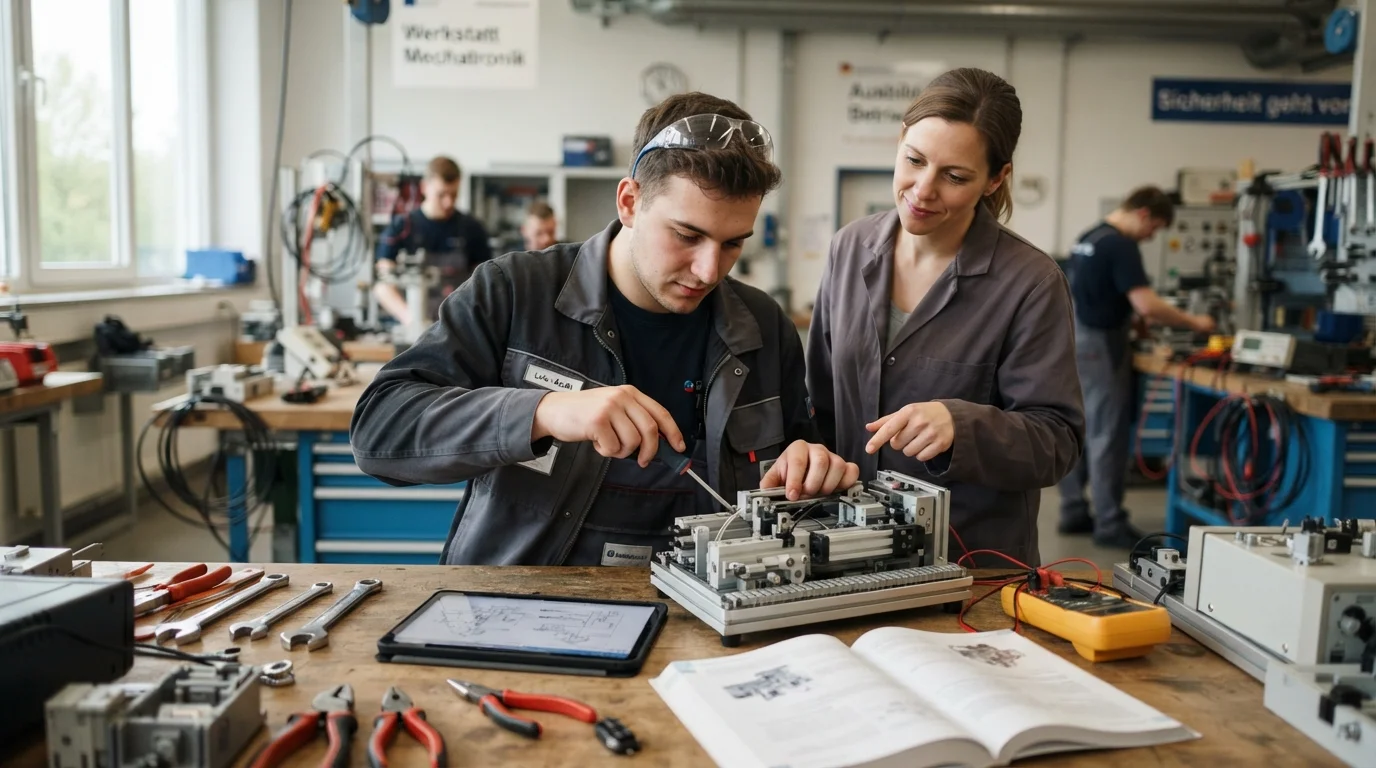
German Ausbildung Guide: Vocational Training for Expats
When planning a career move to Germany, most international professionals immediately think of university degrees or direct corporate hiring. However,...
Read more
This article was drafted by AI and edited by a person before it was published.
AI can get things wrong. For anything official, check the source it points to.
AI-generated image

Landing a job in Germany is a massive milestone for any expat. But once you have settled into your role, mastered your daily tasks, and started contributing significantly to your team, it is natural to look toward the next step: a promotion (die Beförderung). However, negotiating a step up the career ladder in a German-speaking environment involves more than just translating your request from English. It requires a deep understanding of German corporate culture, specific vocabulary, and strict professional etiquette.
In Germany, business negotiations are guided by objectivity, preparation, and structure. If you approach your manager with vague requests or emotional appeals, you are unlikely to succeed. Instead, you need to build a logical, fact-based case. In this comprehensive guide, we will walk you through the cultural nuances of asking for a promotion in Germany, equip you with the essential vocabulary, and provide actionable scripts to help you secure your next career milestone.
Before you schedule a meeting with your boss, it is crucial to understand the underlying values of German workplace culture. Unlike in some Anglo-American corporate cultures where loud self-promotion and "fake it till you make it" attitudes can sometimes succeed, German business culture values Sachlichkeit (objectivity, matter-of-factness) and the Leistungsprinzip (the merit/performance principle).
When asking for a promotion, you must prove your value with concrete data. German managers expect you to present a clear, documented list of your achievements (Leistungsnachweis). Be prepared to answer: What projects did you lead? How much revenue did you help generate? How have you optimized internal processes? Emotional arguments, such as "I have been here for two years and feel I deserve it," carry very little weight.
While modern German startups may have flat hierarchies, traditional companies (especially the Mittelstand) still adhere to formal structures. You should always address your request to your direct supervisor first. Bypassing your manager to talk to HR or a higher-level executive is considered a major breach of etiquette.
Additionally, pay close attention to whether your company is bound by collective bargaining agreements. If you work in a sector governed by union contracts, your salary bands and promotion pathways might be predefined. To understand how these structures affect your career growth, read our comprehensive guide on understanding the German Tarifvertrag.
Do not spring a promotion request on your boss in the hallway or at the end of a casual team meeting. The most appropriate time to discuss career advancement is during your annual or bi-annual performance review (das Mitarbeitergespräch). If your annual review is still months away, you can formally request a separate meeting specifically to discuss your career development (ein Gespräch über meine berufliche Entwicklung).
To sound professional and confident, you need to integrate specific business German terms into your pitch. Using the correct terminology shows your manager that you are integrated into the German working world and take your career seriously.
Before you speak a single word of German to your manager, you must prepare your written case. In Germany, documentation is key. Create a short, structured document outlining your achievements over the past 12 to 18 months. This is highly similar to the structured approach you would take when drafting application materials; for inspiration on how to frame your achievements professionally in German, check out our guide on how to write a German cover letter for tech jobs.
Your performance portfolio should include:
When requesting a meeting to discuss your promotion, keep your email formal, polite, and clear. Do not explicitly state "I want a promotion" in the subject line. Instead, frame it around your professional development and contributions to the company.
Use this template if you work in a traditional corporate environment where formal address is the norm.
Betreff: Bitte um ein Gespräch zu meiner beruflichen Entwicklung
Sehr geehrte(r) Frau/Herr [Nachname],
da ich nun seit [Anzahl] Jahren erfolgreich im Team tätig bin und mein Aufgabengebiet in letzter Zeit stark erweitert habe, möchte ich mich gerne mit Ihnen über meine berufliche Entwicklung und meine Zukunft im Unternehmen austauschen.
Hätten Sie in den nächsten zwei Wochen Zeit für ein persönliches Gespräch von etwa 30 bis 45 Minuten?
Ich freue mich auf Ihre Rückmeldung.
Mit freundlichen Grüßen,
[Ihr Vorname] [Ihr Nachname]
Use this template for startups, tech companies, or modern workplaces where the team uses first names.
Betreff: Gespräch zu meiner beruflichen Entwicklung
Hallo [Vorname],
ich hoffe, es geht dir gut. Da ich in letzter Zeit einige neue Aufgaben übernommen habe und wir das Quartal erfolgreich abgeschlossen haben, würde ich mich gerne kurz mit dir über meine berufliche Entwicklung und meine nächsten Schritte im Team austauschen.
Hast du in den nächsten Tagen Zeit für ein kurzes Gespräch?
Viele Grüße,
[Ihr Vorname]
Once you are in the meeting, structure your pitch logically. Start by expressing your commitment to the company, present your achievements, and then make your formal request.
Start on a positive note. Show that you enjoy working for the company and are motivated to stay.
Pivot to your contributions. Use active verbs and focus on the added value you have created.
Be direct but polite. State clearly that you are looking to take the next step in your career.
A promotion almost always comes with a salary adjustment. Frame this as a natural consequence of your new responsibilities.
German managers are known for being pragmatic and sometimes cautious with budgets. If they hesitate or say "no" initially, do not take it personally. Use it as an opportunity to establish a clear roadmap.
| Manager's Objection | Your Professional Response (German) | English Translation |
|---|---|---|
| "Wir haben aktuell kein Budget dafür." (We don't have the budget right now.) | "Ich verstehe die wirtschaftliche Situation. Können wir vereinbaren, unter welchen Bedingungen eine Beförderung im nächsten Quartal möglich wäre?" | "I understand the economic situation. Can we agree on the conditions under which a promotion would be possible next quarter?" |
| "Sie sind noch nicht bereit für diesen Schritt." (You are not ready for this step yet.) | "Welche spezifischen Kompetenzen oder Ergebnisse fehlen mir noch, um diesen Schritt erfolgreich zu machen?" | "What specific skills or results am I still missing to make this step successfully?" |
| "Wir müssen das erst mit der HR-Abteilung prüfen." (We need to check this with HR first.) | "Das verstehe ich vollkommen. Wann darf ich diesbezüglich wieder auf Sie zukommen?" | "I completely understand. When may I follow up with you regarding this matter?" |
Negotiating a promotion is stressful in your native language; doing it in German can feel downright terrifying. The key to overcoming this anxiety is targeted practice. This is where Bretzi can help you build the confidence you need.
With Bretzi’s real-life German conversation practice with AI, you can simulate a high-stakes performance review with a German manager. You can practice pitching your achievements, navigating tough objections, and negotiating your salary in a safe, stress-free environment. Additionally, Bretzi's pronunciation training with instant feedback helps you polish how you sound before you step into the actual meeting. By practicing these complex business dialogues beforehand, you will turn linguistic anxiety into professional confidence.
Asking for a promotion in Germany is not about demanding more money; it is about presenting a compelling business case that demonstrates your value to the company. By respecting German business etiquette, preparing a robust Leistungsnachweis, and using precise, professional vocabulary, you position yourself as a highly valuable asset to your employer.
For more official resources on employment laws, workplace integration, and career development in Germany, you can consult the official government portal Make it in Germany.
Are you ready to take the next step in your career? Start practicing your negotiation skills today. Download Bretzi, set up your personalized learning plan, and master the business German you need to land that well-deserved promotion!
Share this article:
When planning a career move to Germany, most international professionals immediately think of university degrees or direct corporate hiring. However,...
Read moreGermany is currently experiencing one of the most substantial tech talent shortages in Europe. From booming AI startups in Berlin to cloud...
Read moreThe Expat Dilemma: Navigating the German Workplace Picture this: It is your first week at a German company. You walk into the kitchen to grab coffee,...
Read more