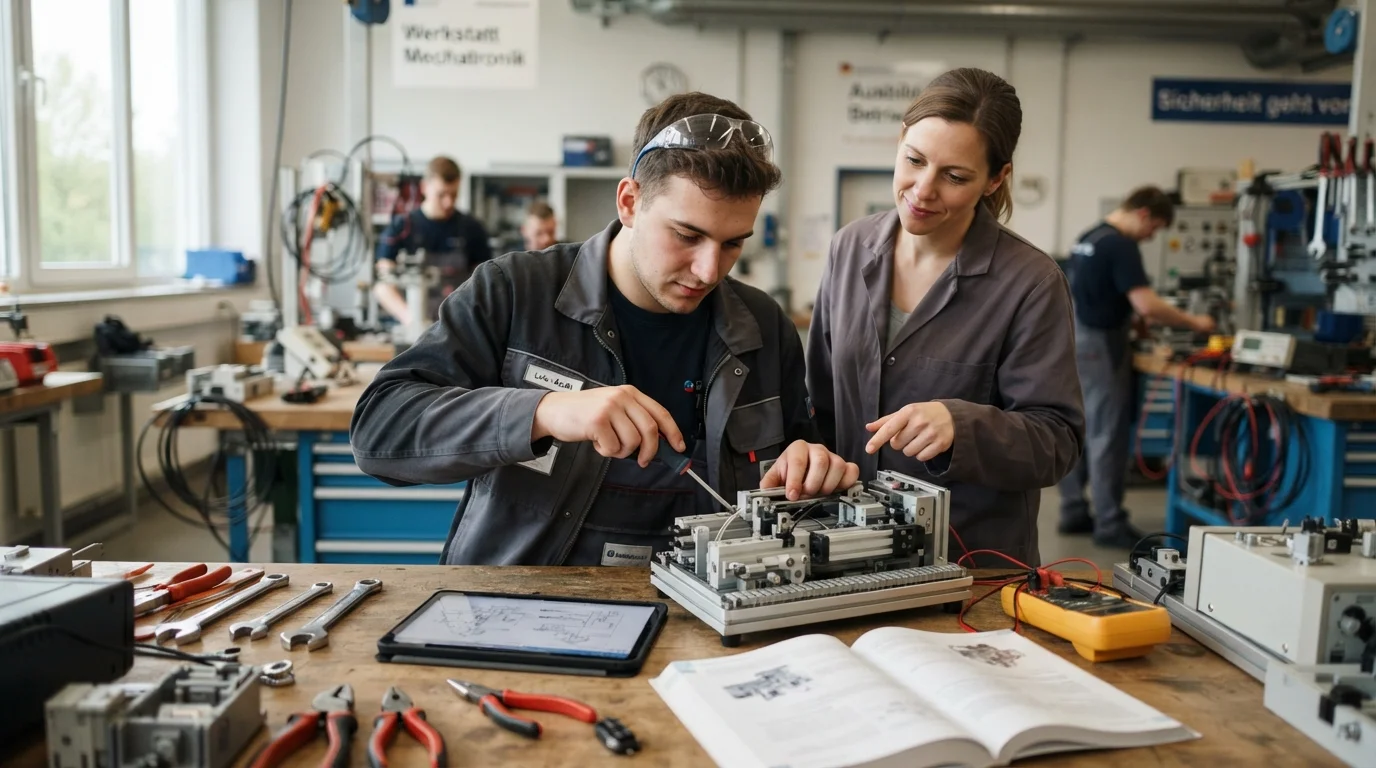
German Ausbildung Guide: Vocational Training for Expats
When planning a career move to Germany, most international professionals immediately think of university degrees or direct corporate hiring. However,...
Read more
This article was written by AI and published by Bretzi.
AI can get things wrong. For anything official, check the source it points to.
AI-generated image

Welcoming a new child into your family is one of life's most exciting milestones. If you are living and working in Germany as an expat, you are fortunate to benefit from one of the most progressive and supportive parental leave systems in the world. However, navigating the German administrative machine—replete with intricate legal terms, tight deadlines, and bureaucratic paperwork—can feel overwhelming, especially if German is not your native language.
Germany's parental leave system is designed around two main pillars: Elternzeit (parental leave from your job) and Elterngeld (financial parental allowance funded by the state). Understanding how these systems work together is essential for planning your career, family finances, and time away from the office.
In this comprehensive guide, we will break down everything expat workers need to know about Elternzeit, including legal entitlements, financial allowances, application timelines, protection against dismissal, and essential German vocabulary to help you communicate smoothly with your employer and local authorities.
Elternzeit is an unpaid, legally protected leave of absence from work granted to mothers and fathers following the birth or adoption of a child. It allows parents to take time off work to care for their child while maintaining an active employment contract with their employer.
It is vital to distinguish between Mutterschutz (Maternity Protection) and Elternzeit:
Germany places immense value on work-life balance and social protections. Just as employees in Germany enjoy unique rights like paid study leave (Bildungsurlaub), parents are given robust statutory rights to raise their children without losing their career footing.
As an expat worker, you are entitled to Elternzeit if you satisfy the following standard statutory conditions:
Note for self-employed expats: If you are freelancing, the formal job-protection of Elternzeit does not apply to you because you do not have an employer to request leave from. However, self-employed parents can still receive Elterngeld (financial support). For more details on freelancing regulations, check out our guide on freelancing in Germany and tax requirements.
Because Elternzeit itself is unpaid time off from your employer, the German state offers financial assistance through Elterngeld (Parental Allowance) to help compensate for lost income.
There are three primary forms of parental allowance you can combine depending on your family's financial and child care strategy:
Income support thresholds are subject to federal legislation. For precise details on income limits and official benefit calculators, visit the Federal Ministry for Family Affairs (Familienportal des Bundes).
Claiming parental leave in Germany requires strict adherence to legal deadlines and formal communication etiquette. Following these steps will ensure a stress-free process.
Decide how you and your partner wish to split the leave. Remember, each parent can take up to 36 months total. The first 24 months must typically be taken between the child's birth and their 3rd birthday. Up to 24 months can be transferred to the period between the child's 3rd and 8th birthdays (subject to employer notification timelines).
You must formally notify your employer of your Elternzeit at least 7 weeks before your intended start date if the leave is taken before the child's 3rd birthday. For leave taken between the child's 3rd and 8th birthdays, the notice period increases to 13 weeks.
Pro Tip for Mothers: Because the 8-week Mutterschutz period after birth counts toward your total time, mothers starting Elternzeit immediately after maternity protection must submit their written notification to the employer no later than one week after the child is born!
German law strictly demands the physical Schriftform (written form with a handwritten signature) for parental leave applications. Emails, Slack messages, or printed letters with digital signatures are legally invalid and can be rejected by HR.
Your letter (often referred to as an Elternzeitantrag or notification) must state:
Before submitting, review your employment contract or ask whether your workplace operates under a collective agreement. If your employer is bound by a collective contract, review our guide on understanding the German Tarifvertrag to see if additional benefits, top-up allowances, or favorable leave options apply to you.
Dealing with HR managers, the local Elterngeldstelle (parental allowance office), and the Standesamt (registry office) requires specific German terminology. Here are the crucial terms every expat parent should learn:
Navigating these complex administrative terms and drafting professional letters to HR can be daunting. To build confidence in professional workplace conversations, apps like Bretzi provide AI-powered German conversation practice and tailored vocabulary building with spaced repetition, helping you master workplace German and handle administrative tasks stress-free.
One of the greatest benefits of the German employment system is the high level of security guaranteed during major life changes.
From the moment you submit your formal Elternzeit notification (at earliest 8 weeks before the leave starts for leave under age 3) and throughout your entire parental leave, your employer is legally prohibited from terminating your employment contract under standard circumstances. This job security gives expat workers peace of mind while adjusting to parenthood.
You are legally permitted to work part-time (up to 32 hours per week) during your Elternzeit, provided your company employs more than 15 people and you have been with the company for longer than 6 months. This allows a gradual transition back into professional life while continuing to care for your infant.
When your parental leave concludes, you have the right to return to your previous job position under the original contract terms, or to an equivalent position with equal pay and standing within the company.
To keep your parental leave preparation organized, follow this practical checklist:
Taking Elternzeit in Germany is an incredible opportunity to bond with your child without sacrificing your professional standing. While the paperwork and foreign legal terms might initially seem intimidating, understanding the timelines and rules puts you in complete control of your family's future.
Clear communication with your employer and local state offices is key to a hassle-free transition. Upgrading your German language skills is the best way to handle HR negotiations and municipal forms with absolute confidence. Start learning real-life workplace German with Bretzi today to prepare for your career and family journey in Germany!
Share this article:
When planning a career move to Germany, most international professionals immediately think of university degrees or direct corporate hiring. However,...
Read moreGermany is currently experiencing one of the most substantial tech talent shortages in Europe. From booming AI startups in Berlin to cloud...
Read moreThe Expat Dilemma: Navigating the German Workplace Picture this: It is your first week at a German company. You walk into the kitchen to grab coffee,...
Read more