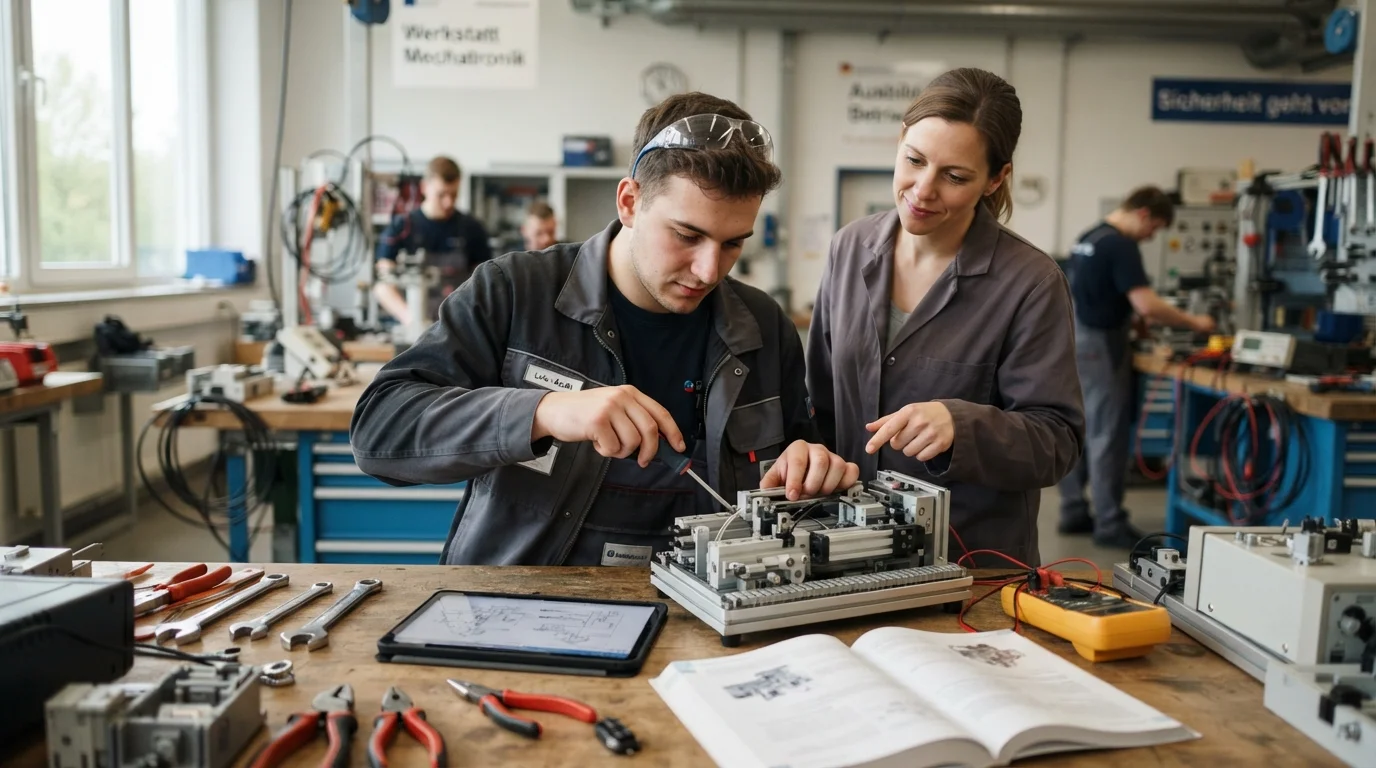
German Ausbildung Guide: Vocational Training for Expats
When planning a career move to Germany, most international professionals immediately think of university degrees or direct corporate hiring. However,...
Read more
This article was drafted by AI and edited by a person before it was published.
AI can get things wrong. For anything official, check the source it points to.
AI-generated image

Germany has firmly established itself as a premier technology hub in Europe. From the vibrant startup ecosystem of Berlin to the deep-tech and automotive giants in Munich, the demand for skilled software engineers, product managers, data scientists, and UX designers is higher than ever. According to the official German government portal for qualified professionals, Make it in Germany, the country is actively seeking international tech talent to fill critical skill gaps.
However, landing your dream tech role in Germany requires more than just a polished GitHub repository or a sleek LinkedIn profile. You need to navigate the traditional German application process. At the heart of this process lies the Anschreiben—the German cover letter. Even in the progressive tech industry, where the daily working language is often English, submitting a professional, well-structured German cover letter can be your ultimate secret weapon. It demonstrates respect for the local culture, showcases your commitment to integrating, and immediately sets you apart from other international applicants.
In this comprehensive guide, we will break down the anatomy of a perfect German cover letter for tech jobs, share essential German vocabulary, provide a customizable template, and show you how to avoid common pitfalls that could cost you an interview.
Many expats assume that because they are applying for an English-speaking DevOps or Full-Stack Developer role, they can skip the cover letter or just send a brief note. This is a missed opportunity. German business culture deeply values structure, thoroughness, and clear intent.
An Anschreiben is not just a summary of your resume. It is a formal document that explains your motivation, connects your technical achievements to the company's specific needs, and proves your communication skills. For expats, writing this letter in German—or at least including a well-crafted German introduction—sends a powerful message: "I am here to stay, I respect your culture, and I am actively investing in my integration."
German business correspondence is highly standardized. Most professional letters follow the DIN 5008 standard, which dictates the layout, margins, and placement of address blocks. Adhering to this layout shows recruiters that you understand German professional norms. You can learn more about the history and strictness of this formatting on Wikipedia's DIN 5008 page. Here is how to structure your document from top to bottom:
Start by placing your contact information at the very top of the page. Directly below it, aligned to the left, write the recipient's details. Make sure to find the name of the specific hiring manager or recruiter instead of writing a generic address.
The subject line must be bold, clear, and concise. It should state exactly what position you are applying for and include the reference number if applicable. Do not write "Subject:" or "Betreff:"—simply start with the text.
Example: Bewerbung als Senior Frontend Developer (m/w/d) – Referenznummer #12345
Always try to address a specific person. Avoid the generic "Sehr geehrte Damen und Herren" if you can find the name of the recruiter or team lead. While the tech sector is often more casual, sticking to a formal salutation remains the safest approach.
Important: In German, the salutation ends with a comma, and the first word of the next paragraph begins with a lowercase letter (unless it is a noun).
Do not start with "My name is... and I am writing to apply for...". Recruiters already know this from your header and subject line. Instead, start with a punchy hook that connects your expertise to their current goals or tech stack.
Example: "Ihre Cloud-Infrastruktur auf das nächste Level zu heben und gleichzeitig die Ladezeiten Ihrer Web-Applikation zu optimieren – das ist die Herausforderung, die mich an der Position als DevOps Engineer bei [Company Name] fasziniert."
This is where you showcase your technical prowess. Do not just list programming languages; explain how you used them to solve business problems. Focus on quantifiable achievements.
Explain why you want to work for this specific company. Is it their product, their open-source contribution, their scaling phase, or their company culture? Show that you have done your research.
End your letter confidently. State your earliest possible starting date (or notice period) and, if requested in the job description, your salary expectations. Conclude with a request for an interview.
Example: "Über die Gelegenheit, meine Erfahrungen in einem persönlichen Gespräch vorzustellen, freue ich mich sehr."
Use the classic, formal German sign-off. Note that there is no comma after the sign-off in German.
Mit freundlichen Grüßen,
[Your Name]
To write a compelling cover letter, you need to use the right professional vocabulary. Here are some essential terms and phrases that will make your Anschreiben sound authentic and sophisticated:
To master these complex terms and sound natural during your job hunt, you can use the Bretzi app. Bretzi's AI-powered personalized learning plans and spaced repetition vocabulary builder ensure you retain technical German terms effortlessly, preparing you to speak confidently in your interviews.
Here is a customizable template designed specifically for software developers and tech professionals. You can adapt the placeholders in brackets to match your background and the specific job description.
[Vorname] [Nachname]
[Straße und Hausnummer]
[PLZ und Ort]
[Telefonnummer]
[E-Mail-Adresse]
[GitHub/LinkedIn Link]
[Name des Unternehmens]
[Name des Ansprechpartners]
[Straße und Hausnummer des Unternehmens]
[PLZ und Ort des Unternehmens]
[Ihr Wohnort], den [Aktuelles Datum]
Bewerbung als [Job Title, z. B. Full-Stack Developer] – Referenznummer [falls vorhanden]
Sehr geehrte/r Frau/Herr [Nachname des Ansprechpartners],
Ihre Vision, die [Branche, z. B. E-Commerce-Plattform] durch innovative Cloud-Lösungen zu revolutionieren, hat mich sofort begeistert. Als leidenschaftlicher [Ihr Beruf, z. B. Softwareentwickler] mit über [Anzahl] Jahren Erfahrung in der Entwicklung robuster Webanwendungen möchte ich mein Wissen gewinnbringend in Ihr Team einbringen.
In meiner letzten Position bei [Name des vorherigen Arbeitgebers] war ich maßgeblich an der Neugestaltung der [Projekt/Produkt] beteiligt. Durch den Einsatz von [Technologien, z. B. React, Node.js und AWS] konnte mein Team die Performance der Anwendung um [z. B. 30 %] steigern und die Ladezeiten drastisch verkürzen. Ich bin es gewohnt, in agilen Teams nach Scrum zu arbeiten, und schätze den engen Austausch mit Product Ownern und UX-Designern.
Besonders reizt mich an der Position bei [Name des Zielunternehmens], dass Sie einen starken Fokus auf [z. B. Clean Code / Test-Driven Development / Skalierbarkeit] legen. Ich freue mich darauf, meine Kenntnisse im Bereich [spezifische Technologie/Methode] bei Ihnen weiter zu vertiefen und gemeinsam innovative Features zu entwickeln.
Für eine Arbeitsaufnahme stehe ich Ihnen ab dem [Datum] / unter Berücksichtigung meiner Kündigungsfrist von [Anzahl] Monaten zur Verfügung. Meine Gehaltsvorstellung liegt bei einem Bruttojahresgehalt von ca. [Betrag] Euro.
Über eine Einladung zu einem persönlichen Gespräch, in dem ich Ihnen mehr über meine Motivation und meine technischen Fähigkeiten erzählen kann, freue ich mich sehr.
Mit freundlichen Grüßen
[Ihre handschriftliche Unterschrift bei postalischer Bewerbung oder digitaler Name]
Even highly qualified tech candidates can get rejected early in the hiring process due to simple, avoidable errors. Keep an eye out for these common pitfalls:
Translating phrases directly from English often leads to unnatural German. For example, writing "Ich schreibe Ihnen, um mich zu bewerben" (literally: "I am writing you to apply") sounds clunky. Instead, use natural German formulations like "mit großem Interesse habe ich Ihre Stellenausschreibung gelesen."
In summary, writing a German cover letter is a strategic investment in your career. By following these guidelines and tailoring your message, you demonstrate not just your technical skills, but your genuine enthusiasm for the German tech landscape. Take the time to craft a thoughtful Anschreiben—it could be the key that unlocks your next great opportunity.
Share this article:
When planning a career move to Germany, most international professionals immediately think of university degrees or direct corporate hiring. However,...
Read moreGermany is currently experiencing one of the most substantial tech talent shortages in Europe. From booming AI startups in Berlin to cloud...
Read moreThe Expat Dilemma: Navigating the German Workplace Picture this: It is your first week at a German company. You walk into the kitchen to grab coffee,...
Read more