Ruhezeit in Germany: Sunday Quiet Hours & House Rules Guide
You have just finished completing your Anmeldung, unpacked the last moving boxes on a sunny Sunday afternoon, and decided it is the perfect time to...
Read more
This article was drafted by AI and edited by a person before it was published.
AI can get things wrong. For anything official, check the source it points to.
AI-generated image
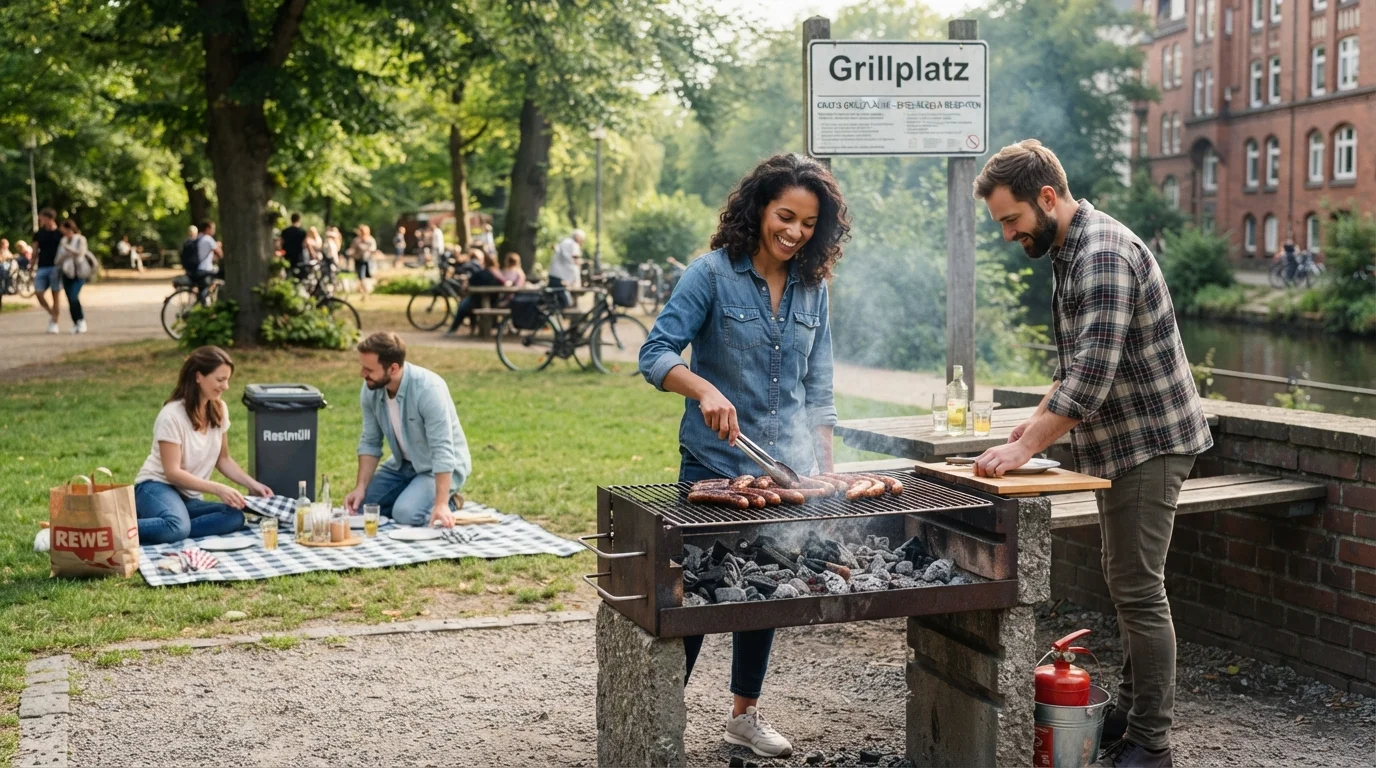
Warm summer nights, cold German beer, and the irresistible smell of sizzling bratwurst in the air. In Germany, grilling (Grillen) is not just a casual cooking method; it is a sacred national pastime. As soon as the thermometer climbs past 20 degrees Celsius, parks, gardens, and balconies across the country fill with smoke and laughter. If you want to make the most of the season, you might want to brush up on some essential summer vocabulary in German to help you navigate the warm months.
However, if you are an expat or a language learner living in Germany, you will quickly realize that even the simple act of grilling is subject to the country's legendary love for organization, rules, and bureaucracy. You cannot just set up a barbecue grill wherever you please. Doing so can result in angry glares from locals, a visit from the Ordnungsamt (public order office), and hefty fines. To grill legally and peacefully with a larger group, you often need to rent a dedicated public grill area, known as a Grillplatz.
In this comprehensive guide, we will walk you through everything you need to know about renting a Grillplatz in Germany, the strict rules you must follow, the cultural etiquette to observe, and the essential German vocabulary you will need to book your spot like a local.
Before diving into how to rent a space, it is crucial to understand the legal landscape of grilling in Germany. The laws vary significantly depending on where you are, but the general rule of thumb is: grilling is prohibited in public spaces unless explicitly permitted by signs.
Many expats mistakenly assume that because they see people grilling in a park, it is legal everywhere. In reality, cities designate very specific zones within parks for public use. Grilling outside of these zones is an administrative offense (Ordnungswidrigkeit). If you are caught grilling in a non-designated forest or nature reserve, the fines can be staggering, sometimes reaching up to several thousand euros, especially during dry seasons when the risk of forest fires is high.
To avoid these issues, cities set up official, rentable grill areas. These are often equipped with brick grills, wooden picnic tables, trash bins, and sometimes even shelter from the rain. To understand more about the deep-rooted cultural aspects of outdoor activities and community gatherings in Europe, you can read about general barbecue culture and its historical significance.
Renting a Grillplatz might sound intimidating, especially if you have to deal with local authorities in German. However, once you know the steps, the process is highly structured and straightforward.
Public grill areas are managed by different local bodies depending on their location:
Because grilling is incredibly popular, the best spots are booked out months in advance, especially for weekends in June, July, and August. Start looking for a spot in early spring. You will usually need to visit the website of your local city portal (e.g., Berlin.de, Muenchen.de) and search for "Grillplatz mieten" (rent a grill area).
Renting a professional Grillplatz is rarely free, but it is usually very affordable. You can expect to pay:
Once you pay, you will receive an official permit (Grillerlaubnis or Genehmigung). Crucial tip: Print this document out and bring it with you on the day of your barbecue. The Ordnungsamt or park rangers do make rounds, and you must be able to prove you have booked the space.
Once you have secured your permit and gathered your friends, you must adhere to the rules of German grilling etiquette, often referred to as the Grill-Knigge. Germans highly value public order, peace, and environmental protection. Violating these social norms will quickly alienate you from your neighbors.
In Germany, peace and quiet are legally protected. The general public quiet hours (Ruhezeit) start at 10:00 PM (22:00). This means that even if you have rented a beautiful forest Grillplatz, you must significantly lower your music and voices by 10 PM. Many rented spaces require you to pack up and vacate the premises by this time anyway.
Leaving trash behind is a cardinal sin in Germany. When you rent a Grillplatz, you are expected to leave it spotless. This means:
Never, under any circumstances, dump hot coals onto the grass or bury them in the sand. This is a severe fire hazard and can damage the soil. Official grill areas usually have a designated, fireproof metal container labeled "Heiße Asche" (hot ash) or "Grillkohle". If no such container is available, you must wait for the coals to cool down completely, douse them thoroughly with water, and pack them out with you.
Dealing with German city offices, reading terms of service (AGB), and filling out booking forms for a Grillplatz can feel overwhelming if you are still learning the language. This is where Bretzi, the AI-powered German learning app, becomes your ultimate companion.
With Bretzi's interactive dialogue games, you can practice realistic scenarios, such as calling a local Bezirksamt to reserve a grill area or asking a park ranger for directions. Bretzi’s real-life conversation practice with AI allows you to build confidence in speaking without any fear of making mistakes. Furthermore, you can use Bretzi’s spaced repetition vocabulary builder to memorize essential administrative and cultural terms, helping you prepare for both your local barbecue and your integration exams.
To help you sound like a true Grillmeister (grill master), here is a list of essential vocabulary words you should practice before your big day:
Renting a Grillplatz in Germany might require a bit of planning and bureaucracy, but the reward is absolutely worth it. You get to enjoy a beautiful, legally compliant day outdoors with your friends, surrounded by nature, without the stress of wondering if the police are going to shut down your party. By understanding the rules, paying your deposit, respecting the quiet hours, and leaving the space clean, you will prove yourself to be a respectful and well-integrated resident.
Before you send out those invitations, make sure your German speaking skills are up to the task of hosting. Download the Bretzi app today to unlock personalized learning plans, practice real-world dialogues, and master the vocabulary you need to thrive in Germany. Happy grilling, or as the Germans say: Guten Appetit und frohes Grillen!
Share this article:
You have just finished completing your Anmeldung, unpacked the last moving boxes on a sunny Sunday afternoon, and decided it is the perfect time to...
Read moreSigning a contract in Germany is notoriously easy—whether you are picking up a shiny new smartphone plan or joining a local fitness club. But when...
Read moreIf you have recently moved to Germany, your first trip to a local grocery store might feel less like a routine errand and more like an Olympic sport....
Read more