Ruhezeit in Germany: Sunday Quiet Hours & House Rules Guide
You have just finished completing your Anmeldung, unpacked the last moving boxes on a sunny Sunday afternoon, and decided it is the perfect time to...
Read more
This article was written by AI and published by Bretzi.
AI can get things wrong. For anything official, check the source it points to.
AI-generated image
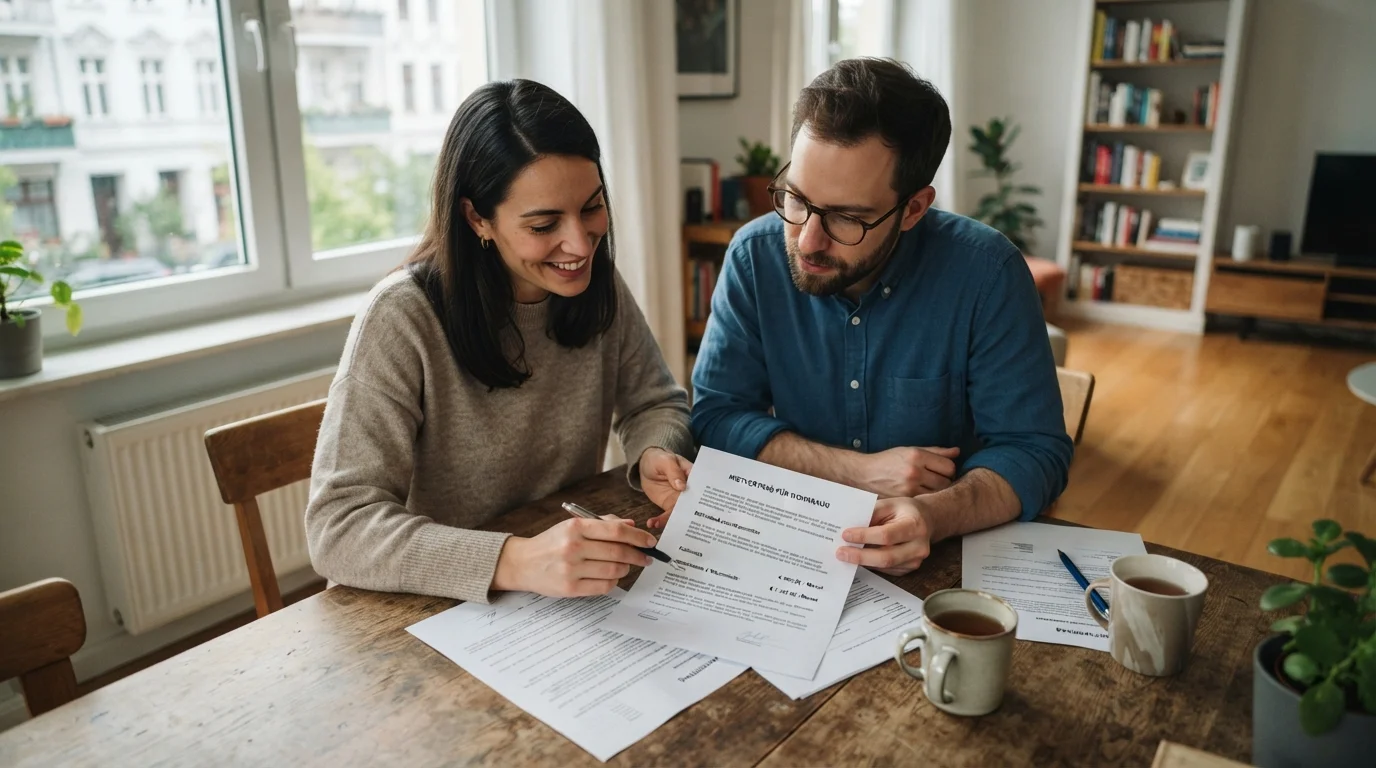
Finding an apartment in Germany is an exciting milestone, but navigating German real estate listings can quickly feel overwhelming. As you scroll through rental portals like ImmobilienScout24 or WG-Gesucht, you will almost immediately encounter two terms that confuse nearly every newcomer: Kaltmiete and Warmmiete.
At first glance, a apartment listed for €800 might seem like an incredible bargain—until you realize that figure is only the base rent, and your actual monthly payout will be substantially higher. In Germany, housing costs are split into clear administrative layers. Understanding the difference between cold rent and warm rent is essential for accurate budgeting, avoiding unexpected legal disputes, and communicating effectively with potential landlords.
In this comprehensive guide, we will unpack exactly what Kaltmiete and Warmmiete mean, break down what is (and isn't) included in your utility bills, explore key German vocabulary, and share practical advice for securing your dream home in Germany.
Kaltmiete (literally translates to 'cold rent') represents the pure, base cost of occupying the bare living space. It is the payment you make solely for the right to use the physical square meters of the property, excluding any heating, water, or communal maintenance costs.
When comparing real estate prices across different neighborhoods or cities, real estate experts and local authorities rely on the Kaltmiete because it reflects the true market value of the physical property regardless of individual consumption habits or building efficiency. In Germany, municipal rental indices, known as the Mietspiegel, are calculated using cold rent values.
Note on kitchens: Unlike in many other countries, German apartments are often rented completely unequipped. If an apartment includes a built-in kitchen (Einbauküche or EBK), the landlord may charge a small additional monthly surcharge, which is typically added to the base rent.
Warmmiete (literally 'warm rent') is the total monthly advance payment you transfer to your landlord's bank account. It is calculated by taking the base rent (Kaltmiete) and adding an advance payment for operating and utility costs, known in German as Nebenkosten or Betriebskosten.
Warmmiete = Kaltmiete + Nebenkosten (Advance Payment)
It is crucial to understand that Warmmiete is usually an estimate. Your landlord calculates an estimated monthly advance payment based on past consumption or building averages. At the end of the year, you will receive a detailed reconciliation statement comparing your actual usage against what you paid upfront.
German tenancy law strictly regulates which operating expenses can be passed on to tenants. Standard operating costs included in your monthly Warmmiete advance payment generally cover:
One of the most common pitfalls for expats moving to Germany is assuming that Warmmiete covers all living utilities. In reality, several major living expenses are almost never included in your warm rent.
Unless you are moving into a short-term serviced apartment or a shared flat (WG or Wohngemeinschaft) where utilities are bundled at a flat rate, household electricity is not included in Warmmiete. As soon as you move in, you must independently contract with an electricity provider (such as Vattenfall, E.ON, or green providers like Ostrom and Tibber) and pay them directly each month.
High-speed internet and Wi-Fi services are your personal responsibility. You will need to sign a contract with a telecommunications provider (e.g., Telekom, Vodafone, O2) and pay a separate monthly bill.
In Germany, every household is required by law to pay a public broadcasting fee known as the Rundfunkbeitrag (currently €18.36 per month). This is charged per residence, regardless of whether you own a television or speak German. The fee is billed directly by the Beitragsservice agency and is never bundled into standard landlord rental contracts.
Because the Nebenkosten portion of your Warmmiete is an advance estimate, your landlord is required by law to prepare a formal annual balance sheet called a Nebenkostenabrechnung within 12 months following the end of the accounting period.
If your actual heating and water consumption was lower than estimated—or if you enjoyed a mild winter—you will receive a refund (Guthaben). Conversely, if energy prices spiked or you kept the radiators blasting all winter, you will receive a demand for additional payment (Nachzahlung). To avoid surprising year-end bills, read our detailed guide to the annual Nebenkostenabrechnung.
When browsing property portals or filling out tenant application forms, encountering specialized terms can be challenging. Here is a quick glossary of high-frequency rental terminology every expat should know:
Mastering this real estate vocabulary and building confidence for housing viewing appointments is much easier when you practice real-world conversations. With the Bretzi app, you can engage in AI-powered dialogue scenarios specifically designed for apartment viewings in Germany, practice pronunciation with instant feedback, and build a tailored vocabulary list for daily living and official admin tasks.
To help you structure your monthly household budget realistically, let us examine a typical breakdown for a 60-square-meter apartment in a major German city like Frankfurt, Hamburg, or Berlin:
As you can see, your true housing outlay is approximately 36% higher than the advertised Kaltmiete. Factoring in these extra layers from the beginning ensures you won't encounter financial stress down the road.
Due to high demand in major German metro areas, landlords often receive dozens—sometimes hundreds—of applications for a single listing. To stand out as a prospective tenant, you should assemble a standardized document portfolio (Bewerbungsmappe) containing:
When you sign your lease, make sure to examine the clauses carefully. Pay close attention to notice periods for ending the tenancy, which in Germany default to three months. When the time comes to move on, ensure you follow formal procedures by writing a proper notice of cancellation (Kündigung).
Navigating the German housing market becomes significantly smoother once you understand the distinction between Kaltmiete and Warmmiete. Always budget for electricity, internet, and the Rundfunkbeitrag on top of your warm rent, and keep all monthly utility receipts organized for your annual Nebenkostenabrechnung.
Beyond paperwork, clear communication with landlords, housing agents, and utility companies is key to settling into Germany comfortably. If you want to boost your German language skills for apartment hunts, registration offices (Bürgeramt), and daily life, try Bretzi. Featuring interactive dialogue games, personalized AI learning plans, and structured lessons from A0 to C1, Bretzi gives you the practical language confidence you need to thrive in Germany.
Share this article:
You have just finished completing your Anmeldung, unpacked the last moving boxes on a sunny Sunday afternoon, and decided it is the perfect time to...
Read moreSigning a contract in Germany is notoriously easy—whether you are picking up a shiny new smartphone plan or joining a local fitness club. But when...
Read moreIf you have recently moved to Germany, your first trip to a local grocery store might feel less like a routine errand and more like an Olympic sport....
Read more