How to Ace the Oral Picture Description in the DTZ B1 German Exam
Standing outside the exam room, heart thumping, waiting for the oral portion of the Deutsch-Test für Zuwanderer (DTZ) is an experience thousands of...
Read more
This article was drafted by AI and edited by a person before it was published.
AI can get things wrong. For anything official, check the source it points to.
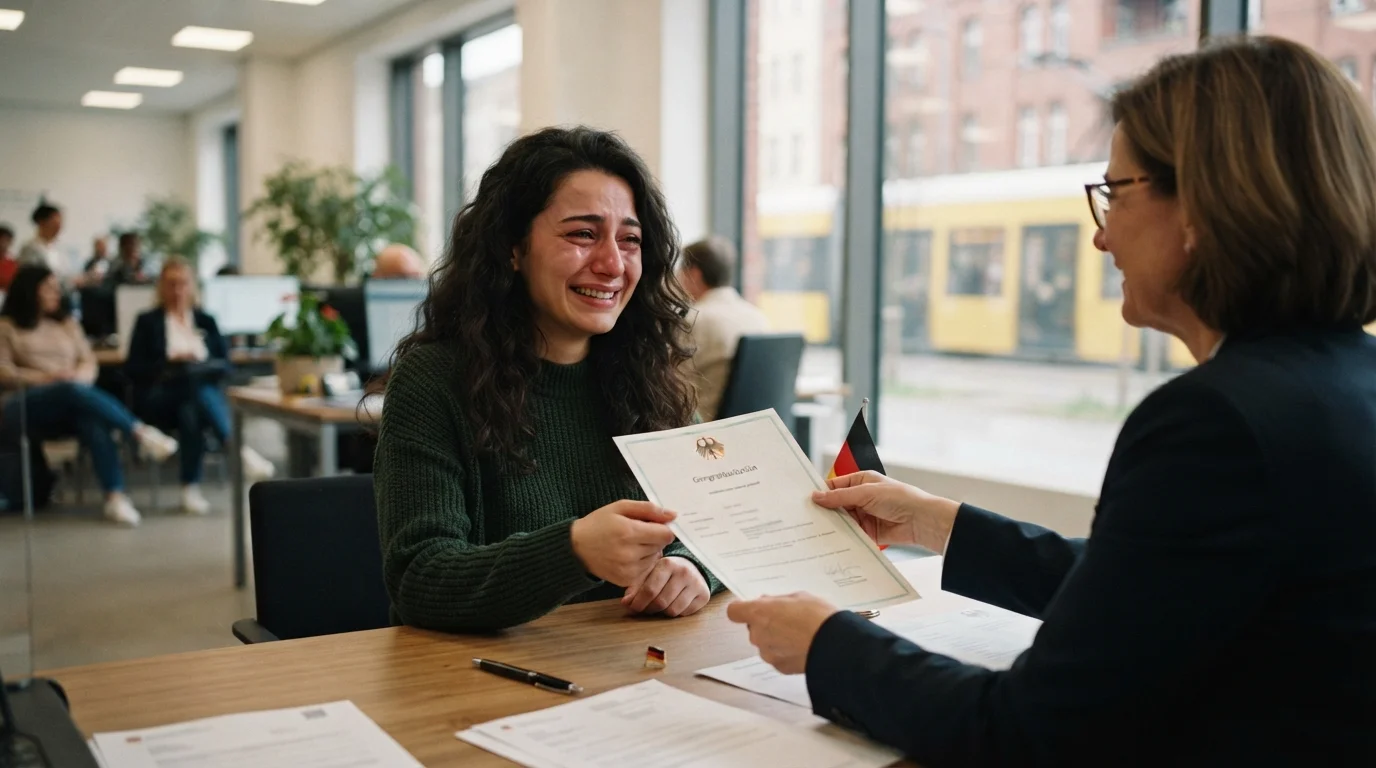
AI-generated image

Relocating to Germany is a journey filled with milestones: finding your first apartment, decoding the mysteries of the Rundfunkbeitrag, and finally, integrating into your local community. For many expats, the ultimate goal of this journey is obtaining German citizenship (Einbürgerung). With Germany's historic 2024 citizenship reform reducing the residency requirement from eight years down to five (and in some cases of exceptional integration, just three!), the dream of holding a German passport is closer than ever.
However, before you can attend your naturalization ceremony and receive your certificate, you must pass one final, crucial hurdle: the Einbürgerungstest (German citizenship test). Designed to test your knowledge of Germany's legal system, history, society, and living conditions, this test can feel intimidating to many applicants.
But exactly what score do you need to pass the Einbürgerungstest? How is the exam structured? And what happens if you do not get enough points? In this comprehensive guide, we will break down the scoring system, detail the exam structure, and provide actionable tips to ensure you pass with flying colors on your very first attempt.
Let us start with the most important question: What is the passing score?
To pass the Einbürgerungstest, you must answer at least 17 out of 33 questions correctly. This means you need a score of roughly 51.5% to pass.
Here are some key facts about the scoring and exam format that should put your mind at ease:
Because the passing threshold is relatively low and the questions are multiple-choice, the pass rate for the Einbürgerungstest is exceptionally high. According to the Federal Office for Migration and Refugees (BAMF), over 90% of applicants pass the test on their first attempt. If you struggle with numbers or dates while studying, taking some time to practice mastering German cardinal and ordinal numbers can help you feel much more confident when reading historical years and statistics on the exam.
To prepare effectively, you need to understand where the questions come from. The Einbürgerungstest does not pull random questions out of thin air. Instead, they are selected from a public catalog of exactly 310 questions (300 general questions and 10 questions specific to each of Germany's 16 federal states).
When you sit down to take your test, your unique exam paper will consist of:
Let us take a closer look at the three core pillars of the general questions:
This section focuses on Germany's political system, its constitution (the Grundgesetz), and how the government functions. You will need to understand the roles of the Federal Chancellor (Bundeskanzler), the Federal President (Bundespräsident), and the parliament (Bundestag). Questions might ask about the basic rights of citizens, the division of powers, or how elections work.
Germany's history plays a major role in its modern identity. This section covers key historical events, with a strong focus on the lessons of the 20th century. Topics include the National Socialist regime, the division of Germany after World War II, life in the German Democratic Republic (GDR), and the reunification of the country in 1990.
This area covers daily life in Germany, social values, and cultural norms. You will be tested on topics like religious freedom, gender equality, the education system, social security, and the rights of minority groups. Knowing how German society functions on a daily basis is key to answering these questions correctly.
While the Einbürgerungstest is a standard requirement for most people seeking naturalization, not everyone is obligated to take it. You are generally exempt from the test if you meet any of the following criteria:
If you do not fall into these categories, you will need to register for the exam. Keep in mind that the citizenship test is only one part of the application. You must also prove your German language proficiency at a B1 level or higher. If you are preparing for your language exam alongside your citizenship application, check out our comprehensive guide on acing the DTZ German B1 Speaking Exam to master the oral portion of your language requirement.
Because the Einbürgerungstest is conducted entirely in German, having a solid grasp of the language is essential. Even if you know the historical facts, you must be able to read and understand the German phrasing of the questions. Specialized legal, political, and historical vocabulary can sometimes trip up language learners.
This is where Bretzi, the AI-powered German learning app, becomes an invaluable asset in your preparation toolkit. Bretzi offers structured lessons from A0 to C1, helping you build the exact vocabulary you need to comprehend complex bureaucratic texts. With Bretzi's AI-powered personalized learning plans and vocabulary building tools featuring spaced repetition, you can systematically practice terms like Grundgesetz (Basic Law), Bundestag (Federal Parliament), and Gewaltenteilung (separation of powers) until they become second nature. By boosting your overall reading comprehension, you can make the 33 exam questions easier to read on test day.
If you are ready to take the test, here is how the administrative process works:
While the test has a very high pass rate, you should not go in completely unprepared. A little bit of smart studying goes a long way. Here are our top tips for guaranteed success:
The BAMF offers a free, official online practice portal where you can answer all 310 questions. The interface mimics the actual exam, allowing you to test your knowledge in real-time. Since the questions on the actual exam are word-for-word identical to the practice questions, memorizing the official question pool is the most effective way to prepare.
Do not waste time memorizing the state-specific questions for all 16 states! Only study the 10 questions designated for the Bundesland where you live. These questions usually cover state history, local political figures, state symbols, or regional geography.
Some questions require you to remember specific historical dates (such as the founding of the Federal Republic of Germany in 1949 or the uprising of June 17, 1953). Use flashcard apps to study these dates with spaced repetition, and work through the Leben in Deutschland questions in Bretzi's exam practice.
Because the test is multiple-choice, some incorrect answers are designed to look plausible at first glance. Take your time. Read the question and all four potential answers fully before making your selection. With 60 minutes on the clock, there is absolutely no need to rush.
Passing the Einbürgerungstest is a major milestone on your path to becoming a German citizen. Requiring only 17 correct answers out of 33, the exam is highly achievable with just a few hours of dedicated study. By understanding the structure, practicing the official question pool, and keeping your German language skills sharp, you will walk into the test center with complete confidence.
As you prepare for your naturalization, remember that language mastery is the key that unlocks all doors in Germany. Whether you are aiming to pass your B1 language exam or simply want to feel more at home in your local community, Bretzi is here to help. With interactive dialogue games, real-life conversation practice with AI, and comprehensive grammar lessons, Bretzi makes learning German engaging and efficient.
Ready to level up your German skills? Download the Bretzi app today and start your personalized learning journey!
Share this article:
Standing outside the exam room, heart thumping, waiting for the oral portion of the Deutsch-Test für Zuwanderer (DTZ) is an experience thousands of...
Read moreGermany's modernized citizenship law has transformed how long-term foreign residents build their futures in the country. Following landmark updates...
Read moreSecuring a German B1 language certificate is one of the most critical milestones for anyone building a life in Germany. Whether you are aiming for a...
Read more