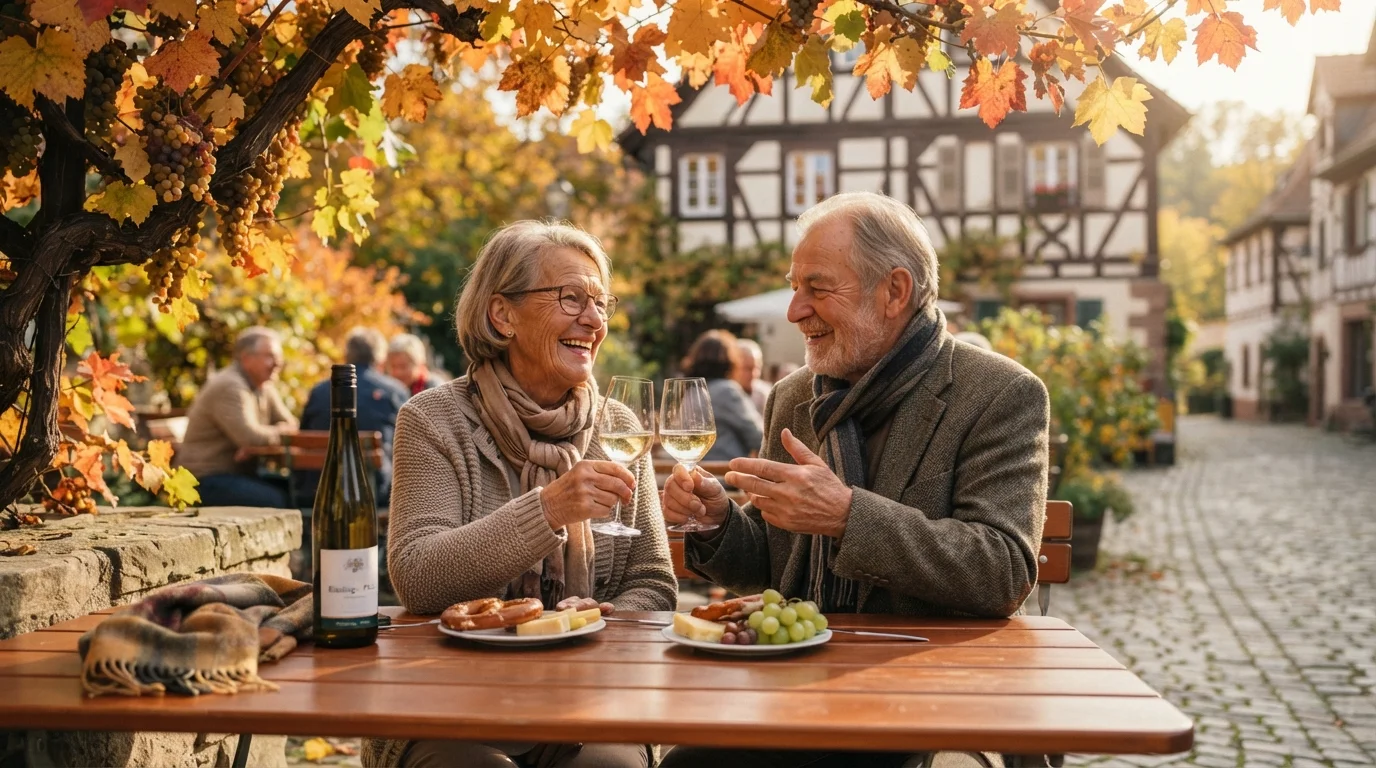
Federweißer and Zwiebelkuchen: Germany’s September Taste
September in Germany has a flavor: slightly sweet, gently sparkling Federweißer served with a warm slice of savory Zwiebelkuchen. This seasonal...
Read more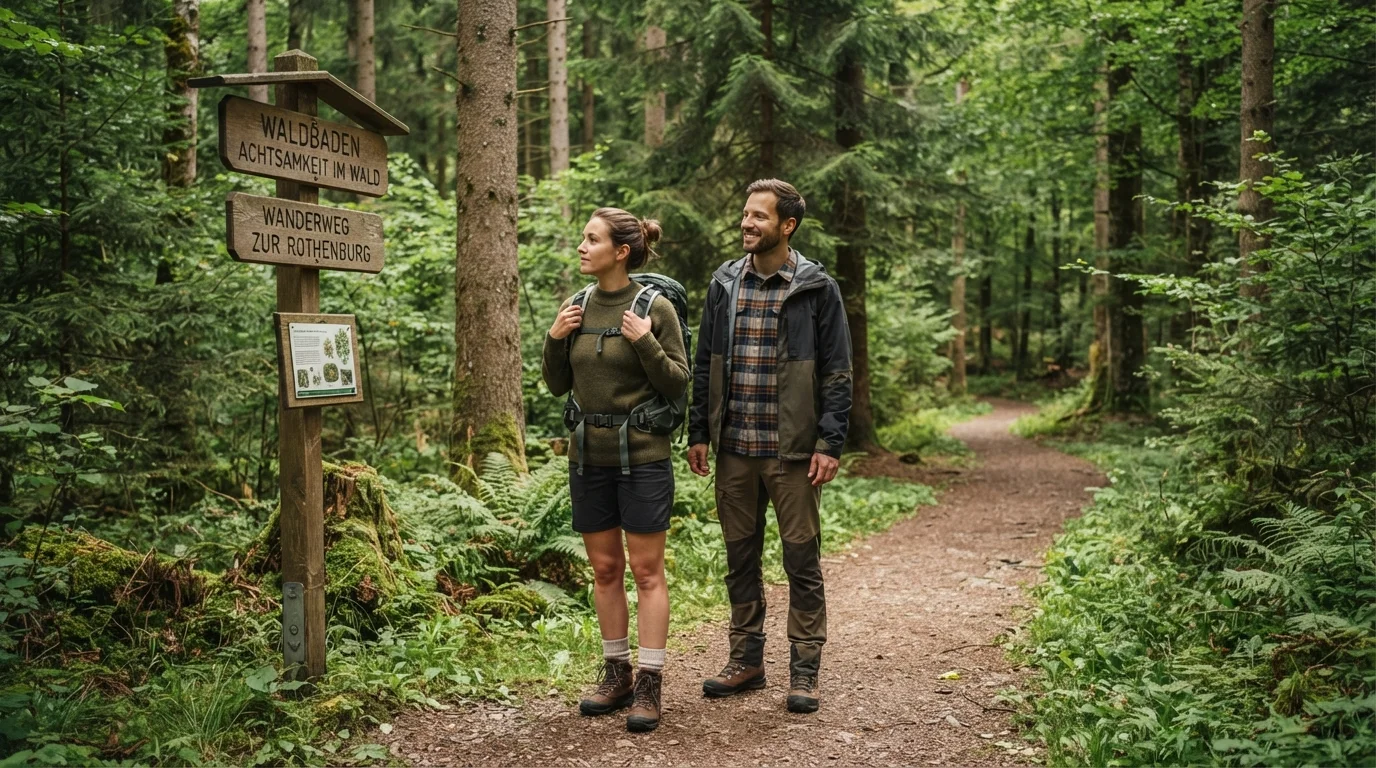
Few nations share as deep, soulful, and culturally ingrained a connection with their woodlands as Germany. To Germans, der Wald (the forest) is far more than a collection of trees—it is a sanctuary, a romantic ideal, a cultural refuge, and a playground for bodily and mental well-being. Whether you are stepping onto a sun-dappled trail in the Black Forest, exploring the dramatic sandstones of Saxon Switzerland, or simply strolling through a local Stadtwald (city forest), understanding the unspoken customs of German hiking culture and forest etiquette is essential for any expat or language learner.
In recent years, the practice of Waldbaden (forest bathing)—a concept centered on mindful immersion in nature—has revitalized Germany's age-old forest tradition. However, enjoying the woods in Germany comes with its own distinct set of rules, laws, and linguistic rituals. In this comprehensive guide, we will explore everything you need to know about German forest etiquette, the legal right to roam, trail manners, and essential German hiking vocabulary so you can navigate the trails like a local.
To understand German hiking customs, one must first appreciate the mythic status of the forest in German culture. During the 19th-century Romantic movement, writers like Johann Wolfgang von Goethe and artists like Caspar David Friedrich immortalized the woods as places of deep emotional longing (Sehnsucht) and peaceful solitude (Waldeinsamkeit). Fairy tales collected by the Brothers Grimm further cemented the forest as a magical, mysterious backdrop in the German psyche.
Today, this romantic heritage translates into a massive outdoor culture. Hiking (Wandern) is practically a national sport. During weekends and vacation periods, millions of Germans head into nature—a habit closely tied to how Germans plan summer holidays and time off to maximize their time outdoors. Knowing how to conduct yourself in the woods is considered a basic sign of civic respect and environmental awareness.
One of the most remarkable aspects of German forestry law is das Betretungsrecht (the right of entry). Under the Federal Forest Act (Bundeswaldgesetz), every individual has the legal right to enter public and private forests for recreational purposes free of charge. You can learn more about the broader European context of these laws through Wikipedia's guide on the freedom to roam.
However, with great freedom comes great responsibility. The law strictly balances public access with environmental protection and private ownership rights. Here are the core legal guidelines every hiker must follow:
Beyond legal statutes, German hiking culture operates on a foundation of mutual courtesy and respect. Mastering these unwritten rules will ensure smooth interactions on the trail.
In German cities, people rarely greet strangers on the street. But the moment you step onto a hiking trail, a warm greeting becomes standard practice! Passing another hiker without saying hello can be perceived as cold or rude.
The appropriate greeting depends heavily on the region and elevation:
Narrow mountain tracks require cooperation. As a general rule, hikers going uphill have the right of way over those descending, as ascending hikers maintain momentum and have a narrower field of vision ahead. Mountain bikers (Mountainbiker) are expected to yield to pedestrians, though hikers should also step aside safely when hearing a bell on shared multi-use trails.
Germany is a very dog-friendly nation, but dogs in the forest require strict control. During the Brut- und Setzzeit (breeding and nesting season, usually from April 1 to July 15), many German states enforce a mandatory leash law (Leinenpflicht) in forests and open fields to protect young wildlife. Even outside this period, your dog must remain under control on the trail at all times.
Germans pride themselves on clean natural spaces. Trash bins are rarely provided along forest trails to discourage wildlife feeding and litter accumulation. Everything you bring into the forest—including banana peels, apple cores, and tissue paper—must be carried back out with you.
While traditional Wandern emphasizes distance, elevation gains, and physical exertion, Waldbaden (derived from the Japanese practice of Shinrin-yoku) focuses on slow, sensory immersion. It has gained massive popularity across Germany as a preventative health practice to combat stress, lower blood pressure, and boost immune function.
Unlike standard hiking, Waldbaden involves slow walking, quiet observation, deep breathing, and mindful contact with tree bark, moss, and forest soil. Many German spa towns (Kurorte) now offer certified Heilwälder (healing forests) specifically designated for quiet contemplation and therapeutic exercise.
If you encounter people sitting silently against trees or walking at a very slow pace, you have likely stumbled upon a Waldbaden group. The top rule here is silence: keep conversations to a minimum and turn off mobile phone ringers.
No German hiking day is complete without the traditional Einkehr—stopping at a rustic mountain hut (Wanderhütte), forest inn (Waldgasthaus), or beer garden along the route. It is here that hikers recharge their batteries and socialize.
Popular orders after an invigorating walk include a cold, sparkling Apfelschorle (apple spritzer) for summer refreshment, a hearty plate of Brotzeit (cheese, cured meats, and dark rye bread), or sitting down for afternoon Kaffee und Kuchen (coffee and cake) in a cozy Gasthaus. Remember to greet fellow diners with a friendly "Mahlzeit!" or "Guten Appetit!" when sitting down nearby.
To feel confident on the trails and during your Einkehr, here is a handy list of key German terms every outdoor enthusiast should know:
If you want to practice your outdoor German vocabulary and prepare for real-world interactions—like asking for trail directions or ordering food at a remote mountain hut—the Bretzi app offers personalized AI-powered conversation practice and interactive dialogue scenarios tailored to everyday German culture.
Before heading out into the German wilderness, keep these quick practical tips in mind:
Respecting forest etiquette and hiking customs in Germany is about more than avoiding fines—it is about participating in a deeply held cultural ritual. By sticking to paths, greeting fellow travelers, leaving no trace, and taking time for a peaceful moment of Waldbaden, you will gain a profound appreciation for Germany's stunning countryside.
Ready to level up your German language skills for your next outdoor adventure? Download Bretzi today to master practical conversational German, polish your pronunciation with instant AI feedback, and explore real-life cultural lessons from A0 to C1 level!
Share this article:
September in Germany has a flavor: slightly sweet, gently sparkling Federweißer served with a warm slice of savory Zwiebelkuchen. This seasonal...
Read moreHave you ever experienced a warm, golden autumn day in Germany when summer seems to return for one last visit? Germans have a beautiful word for this...
Read moreAs summer winds down and the morning air turns crisp, Germany undergoes a golden transformation. While millions of tourists flock to Bavaria for...
Read more