Federweißer and Zwiebelkuchen: Germany’s September Taste
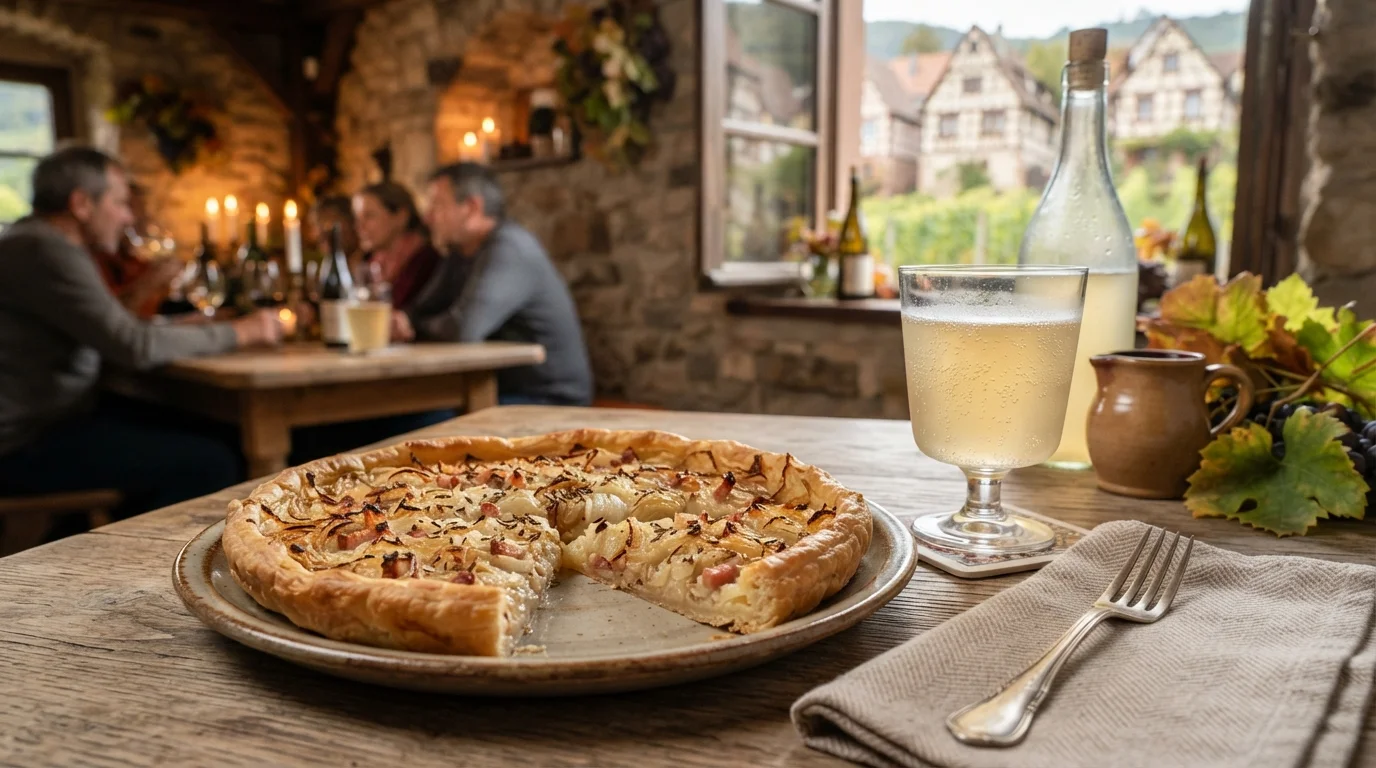
September in Germany has a flavor: slightly sweet, gently sparkling Federweißer served with a warm slice of savory Zwiebelkuchen. This seasonal...
Read more
Picture this: It is a scorching hot July afternoon in Munich, Frankfurt, or Berlin. The sun is beating down on the cobblestone streets, and the local Biergarten is packed to the brim. You look around, expecting to see everyone chugging massive steins of heavy German lager. Instead, you notice a vibrant, bubbly, clear-to-amber liquid in almost every second glass. Parents are handing it to their children, hikers are drinking it at mountain huts, and colleagues are clinking glasses of it after a long day at the office.
Welcome to the wonderful world of Schorle.
If you are learning German, planning to move to Germany, or preparing for your integration exams, understanding Schorle is about more than just food and drink—it is a vital lesson in German cultural integration. Germans have an unparalleled love affair with carbonated drinks, and during the summer months, nothing reigns supreme quite like a cold, crisp Schorle. In this guide, we will dive into what Schorle actually is, explore its many varieties, teach you how to order it like a native, and examine why this simple beverage holds such a special place in the German heart.
At its most basic level, a Schorle (sometimes called a Gespritzter in southern regions and Austria) is a beverage made by diluting juice or wine with carbonated mineral water (Sprudelwasser). The typical mixing ratio is 50:50 or 60:40 (more juice/wine than water), creating a drink that is refreshing, bubbly, and significantly less sweet or heavy than its pure counterparts.
To understand why this is so popular, you first have to understand the German obsession with carbonation. In Germany, flat tap water (Leitungswasser) is historically undervalued. If you ask for water in a German restaurant without specifying, you will almost certainly be served highly carbonated sparkling water. Combining this national love for bubbles with fruit juice or regional wines was a natural evolutionary step in German culinary history. According to Wikipedia's history of Apfelschorle, the drink has been a commercial staple in Germany since the early 20th century, praised for its refreshing and isotonic qualities.
Before you head out to the nearest terrace, you might want to practice saying the word out loud. The combination of the German 'sch' and the final 'e' can be tricky for English speakers. If you want to perfect your accent before speaking to a busy German waiter, consider reading our guide on mastering German pronunciation at home to build your confidence.
If there is one drink that defines the German childhood, adolescence, and adulthood, it is Apfelschorle (apple juice mixed with sparkling water). It is so ubiquitous that it is sold pre-mixed in every supermarket, kiosk, and vending machine across the country, produced by major brands and local apple orchards alike.
If you are planning a summer trip to Germany, packing a bottle of Apfelschorle in your backpack is a must. If you are using your travel time to brush up on your language skills, check out our selection of the offline German learning apps for summer vacation to keep your learning streak going even when you are off the grid in the German countryside.
While apple is the undisputed king, Germans will turn almost any fruit juice into a Schorle. When you visit a cafe or restaurant, you will often see a dedicated section on the menu for Fruchtschorlen (fruit spritzers). Here are some of the most popular varieties you should try:
This is the ultimate trendy urban drink of modern Germany. Rhubarb, which is quite sour on its own, is lightly sweetened and mixed with sparkling water to create a beautifully pink, tart, and highly refreshing summer drink. It has a sophisticated flavor profile that is not too sweet, making it a favorite for adults who want a non-alcoholic option at a bar.
Usually made with red currants (Rote Johannisbeere) or black currants (Schwarze Johannisbeere), this drink has a deep red hue and a sharp, berry-like tartness. It is incredibly refreshing and packed with vitamin C.
For a tropical twist on the classic German drink, Maracuyaschorle is extremely popular in the summer. The exotic, sweet-sour profile of passion fruit juice pairs wonderfully with heavy carbonation.
When the sun begins to set, the juice is swapped for wine. Weinschorle (wine spritzer) is an absolute cornerstone of German summer social life, particularly in the wine-growing regions of southwest Germany, such as the Pfalz, Rheinhessen, and Rheingau.
In these regions, drinking Weinschorle is practically a religion. In the Pfalz, it is traditionally served in a Dubbeglas, a heavy 0.5-liter glass with dimples. Drinking half a liter of white wine spritzer is considered a perfectly normal afternoon activity!
When ordering a Weinschorle, you will often be asked a crucial question: "Sauer oder süß?" (Sour or sweet?)
Generally, Weinschorle is made with crisp, dry white wines like Riesling, Pinot Blanc (Weißburgunder), or Pinot Gris (Grauburgunder). During hot summer days, a cold Rieslingschorle is arguably the most refreshing alcoholic beverage you can find in Europe.
There is no better place to enjoy a cold Schorle than by the water. When the temperatures rise, Germans flock to their local lakes (known as a Baggersee or Badesee) to swim, sunbathe, and relax. However, before you pack your cooler and head to the nearest beach, it is highly recommended to familiarize yourself with the unique cultural expectations of these spots. Be sure to read our comprehensive guide on essential Baggersee etiquette to avoid any awkward social faux pas and blend in seamlessly with the locals.
While Schorle is the star of the show, German summer drink culture has several other refreshing options that you will encounter at biergartens and festivals:
| Drink Name | What It Is | Best Enjoyed... |
|---|---|---|
| Radler / Alsterwasser | A 50:50 mix of pale lager beer (Helles or Pils) and sparkling lemonade. Radler is highly refreshing and lower in alcohol. | At a sunny Biergarten after a long bike ride. |
| Spezi / Mezzo Mix | A unique German blend of Cola and Orange Soda. It sounds unusual to foreigners but is universally loved by Germans. | Ice-cold at a summer barbecue. |
| Berliner Weisse mit Schuss | A sour, cloudy wheat beer from Berlin served with a shot (Schuss) of sweet syrup—either green (Waldmeister/woodruff) or red (Himbeere/raspberry). | On a terrace overlooking the Spree river in Berlin. |
To help you navigate your next trip to a German cafe, restaurant, or wine festival, here are some practical phrases and vocabulary words you should memorize.
Using the correct grammatical gender is always a challenge for learners. Remember that Schorle is feminine (die Schorle), so you will order "eine Schorle." If you find yourself struggling with German noun genders, the Bretzi app features dedicated article mastery games and vocabulary building with spaced repetition to help you effortlessly memorize whether a word is der, die, or das.
"Ich hätte gerne eine große Apfelschorle, bitte."
(I would like a large apple spritzer, please.)
"Bringen Sie mir bitte eine Weißweinschorle, sauer gespritzt."
(Please bring me a white wine spritzer, mixed with sparkling water.)
"Haben Sie auch hausgemachte Rhabarberschorle?"
(Do you also have homemade rhubarb spritzer?)
If you want to practice these interactions in a zero-pressure environment, the Bretzi app offers interactive dialogue games specifically designed for practical real-life scenarios like ordering food and drinks in a German restaurant. You can chat with Bretzi's friendly AI tutor, receive instant feedback on your pronunciation, and build the confidence you need to order your summer drinks flawlessly.
The German love for Schorle is a reflection of the culture itself: practical, balanced, and deeply tied to enjoying the outdoors. By diluting sweet juices and heavy wines with crisp sparkling water, Germans have created the ultimate formula for staying hydrated and happy throughout the hot summer months. Next time you find yourself at a German supermarket or sitting in a bustling Biergarten, step outside your comfort zone and order a cold, tart Rhabarberschorle or a classic Rieslingschorle—your taste buds will thank you. Ready to take your German language skills to the next level? Download the Bretzi app today for bite-sized lessons and cultural insights to help you live your best life in Germany. Prost!
Share this article:
September in Germany has a flavor: slightly sweet, gently sparkling Federweißer served with a warm slice of savory Zwiebelkuchen. This seasonal...
Read moreHave you ever experienced a warm, golden autumn day in Germany when summer seems to return for one last visit? Germans have a beautiful word for this...
Read moreAs summer winds down and the morning air turns crisp, Germany undergoes a golden transformation. While millions of tourists flock to Bavaria for...
Read more