
Federweißer and Zwiebelkuchen: Germany’s September Taste
September in Germany has a flavor: slightly sweet, gently sparkling Federweißer served with a warm slice of savory Zwiebelkuchen. This seasonal...
Read more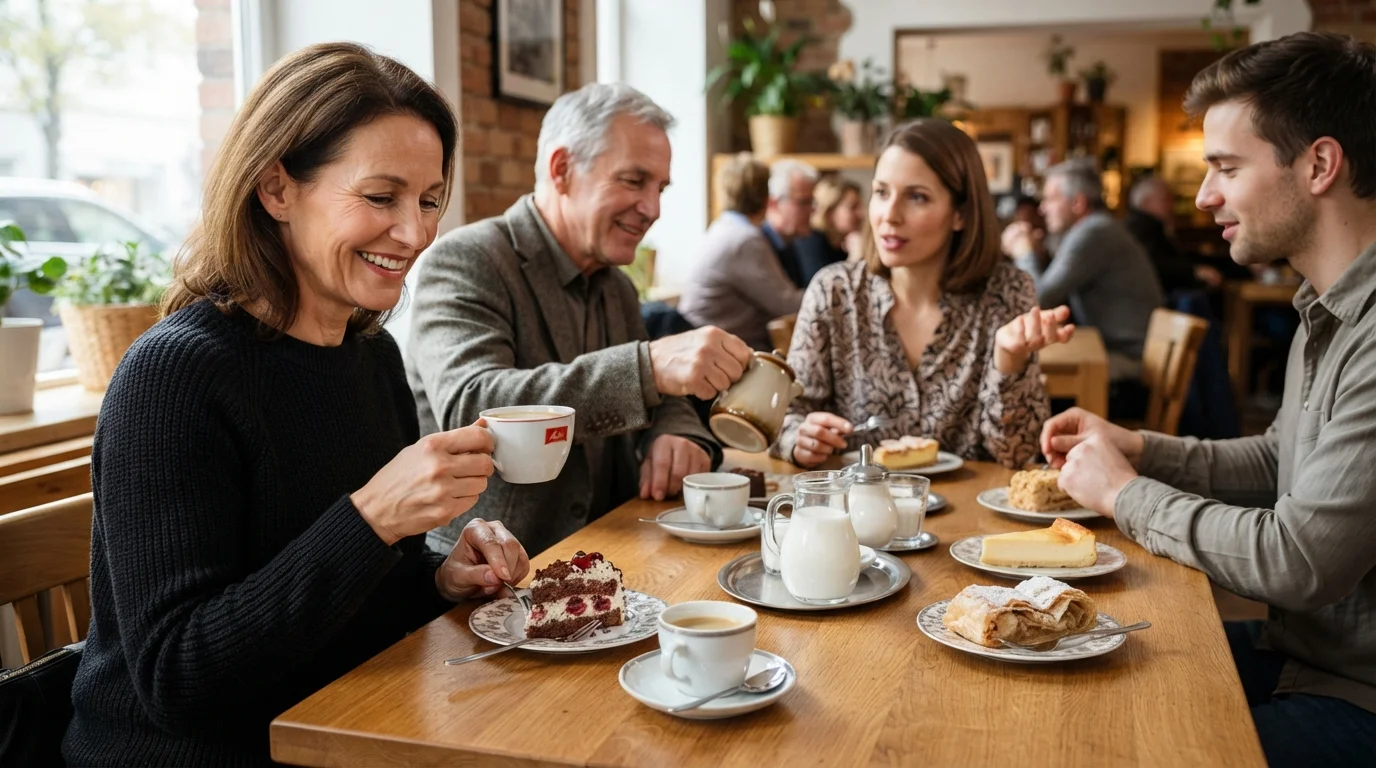
If you live in Germany, are planning to move there, or are preparing for your German integration exam, you will quickly discover that one specific weekly ritual holds a sacred place in German social life: Kaffee und Kuchen (Coffee and Cake). Occurring late in the afternoon—typically between 3:00 PM and 5:00 PM, especially on Sundays—this custom is far more than just a quick mid-afternoon snack. It is an institution of German hospitality, a cornerstone of family bonding, and a prime example of the cherished German concept of Gemütlichkeit (coziness and warm hospitality).
Whether you have been invited to a German neighbor's home, are attending a family birthday party, or simply want to order at a local Konditorei (pastry shop) with confidence, understanding the rules, etiquette, and social expectations of Kaffee und Kuchen is essential. In this comprehensive guide, we will break down the history of this delicious tradition, outline proper host and guest etiquette, explore the most iconic German cakes, and share key vocabulary to help you navigate your next gathering like a native speaker.
The practice of sitting down for afternoon coffee and cake dates back to the 17th century, when coffee houses first began opening across major European trading hubs. Initially, coffee was an expensive luxury reserved for the aristocracy and wealthy merchant classes. By the 19th century, with the expansion of trade and domestic sugar beet production, coffee and baked goods became accessible to the broader public.
Today, the tradition is closely linked to the German concept of Sonntagsruhe (Sunday rest). Because most shops, supermarkets, and businesses are legally required to close on Sundays in Germany, the day is reserved for rest, outdoor walks (Sonntagsspaziergang), and spending quality time with family and friends. The traditional German coffee and cake break serves as the social heart of Sunday afternoon, bringing generations together around the kitchen table.
Receiving an invitation to someone’s home for Kaffee und Kuchen is a sign of friendship and warm welcome. However, German social customs involve clear, unwritten expectations. To avoid cultural faux pas, keep these key etiquette rules in mind:
In German-speaking cultures, punctuality is paramount. If your host invites you for coffee at 3:30 PM, you should aim to arrive exactly at 3:30 PM—or at most, within 5 minutes of the agreed time. Arriving 15 to 20 minutes late without notifying your host is considered disrespectful, as coffee is often freshly brewed right as guests arrive.
Never show up completely empty-handed. Just as you would bring something when learning what to bring as a guest to a German BBQ, bringing a small gift for your host during Kaffee und Kuchen is proper etiquette. Excellent gift choices include:
Note: Unless explicitly asked to do so, you generally do not need to bring your own homemade cake. The host takes pride in baking or purchasing the afternoon pastries!
When entering the host's home, take off your shoes if you notice footwear lined up at the door (asking "Soll ich die Schuhe ausziehen?" is always polite). Greet each person individually with a warm handshake or, if you know them closely, a light hug. Maintain direct eye contact while greeting people—this is a key sign of sincerity in Germany.
Once seated around the decorated table (often laid with special porcelain known as Kaffeegeschirr), wait until the host invites everyone to start eating. It is customary for the host to say "Guten Appetit!" or "Lass es dir schmecken!" before anyone takes their first bite.
Here are a few additional table etiquette guidelines:
German baking is world-renowned for its variety, seasonal ingredients, and perfect balance of sweetness. When attending a Kaffee und Kuchen gathering, you are likely to encounter one or more of these classic specialties:
Perhaps the most famous German cake internationally, this rich dessert consists of layers of chocolate sponge cake, whipped cream, and sour cherries, flavored with Kirschwasser (cherry schnapps). It is a staple at formal family gatherings and milestone celebrations.
A classic German dessert made of sweet yeast dough with a baked topping of caramelized almonds and a rich vanilla custard or buttercream filling. The contrast between crunchy almonds and smooth cream makes it an absolute favorite.
Unlike American cheesecake, which uses cream cheese, authentic German Käsekuchen is made using Quark—a fresh, tart dairy product similar to strained yogurt or farm cheese. This gives German cheesecake a lighter, fluffier texture with a pleasing tanginess.
Simple yet iconic, German apple cake comes in many forms, from Gedeckter Apfelkuchen (covered apple pie style) to Versunkener Apfelkuchen, where sliced apples sink into a soft, buttery batter. It is often served warm with a dollop of fresh whipped cream (Schlagsahne).
A late-summer favorite made with fresh Italian plums arranged over yeast dough or shortcrust pastry on a large baking sheet (Blechkuchen). It is often topped with crispy cinnamon streusel (Streusel).
While Kaffee und Kuchen is a routine weekend ritual, it plays a central role in major life milestones and cultural festivities across Germany:
To feel completely confident during your next German afternoon coffee session, familiarize yourself with these essential words and phrases:
| German Phrase / Word | English Meaning |
|---|---|
| der Kuchen | Cake |
| die Torte | Gateau / Cream layer cake |
| die Schlagsahne (oder: Sahne) | Whipped cream |
| die Kaffeekanne | Coffee pot |
| die Kuchengabel | Cake fork |
| Guten Appetit! | Enjoy your meal! |
| Möchtest du noch ein Stück? | Would you like another piece? |
| Der Kuchen schmeckt fantastisch! | The cake tastes fantastic! |
| Darf ich dir etwas Kaffee nachgießen? | May I pour you some more coffee? |
| Ich bin schon voll / satt, danke. | I am already full, thank you. |
Understanding cultural customs like Kaffee und Kuchen is just as important as mastering German grammar when building real fluency and integration confidence. When taking state integration exams (like the Leben in Deutschland test) or navigating daily life as an expat, practical cultural knowledge is tested alongside language skills.
This is where Bretzi makes all the difference. Bretzi is an AI-powered German language learning app designed to bridge the gap between textbook German and real-world conversations. With Bretzi, you can:
The Kaffee und Kuchen tradition is one of the most heartwarming aspects of German culture. It encourages slowing down, enjoying delicious food, and cultivating meaningful connections with friends and family over a cozy cup of coffee. By remembering basic guest etiquette—arriving on time, bringing a small token gift, and engaging warmly at the table—you will feel right at home in any German household.
Ready to level up your German conversation skills and navigate social situations with total ease? Download Bretzi today to experience AI-powered learning tailored to your personal goals!
Share this article:
September in Germany has a flavor: slightly sweet, gently sparkling Federweißer served with a warm slice of savory Zwiebelkuchen. This seasonal...
Read moreHave you ever experienced a warm, golden autumn day in Germany when summer seems to return for one last visit? Germans have a beautiful word for this...
Read moreAs summer winds down and the morning air turns crisp, Germany undergoes a golden transformation. While millions of tourists flock to Bavaria for...
Read more