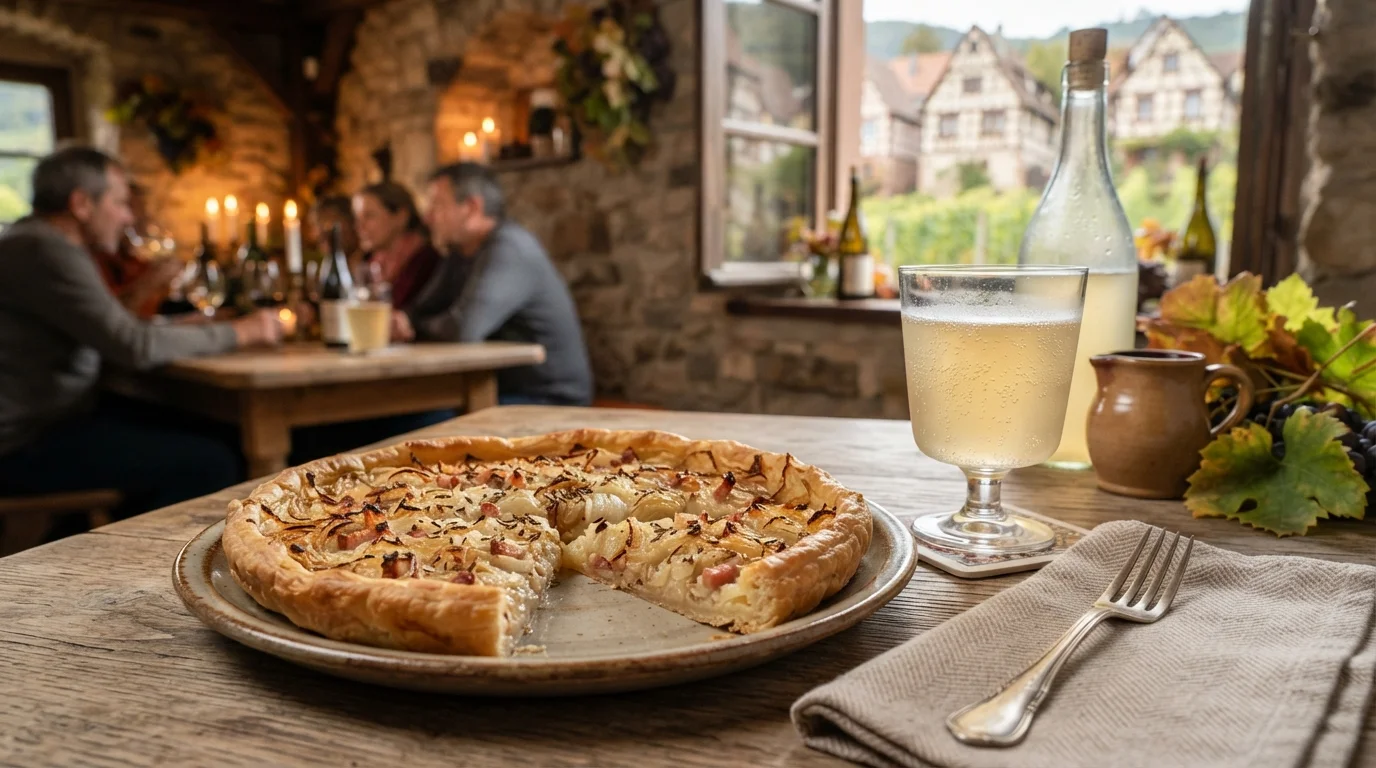
Federweißer and Zwiebelkuchen: Germany’s September Taste
September in Germany has a flavor: slightly sweet, gently sparkling Federweißer served with a warm slice of savory Zwiebelkuchen. This seasonal...
Read more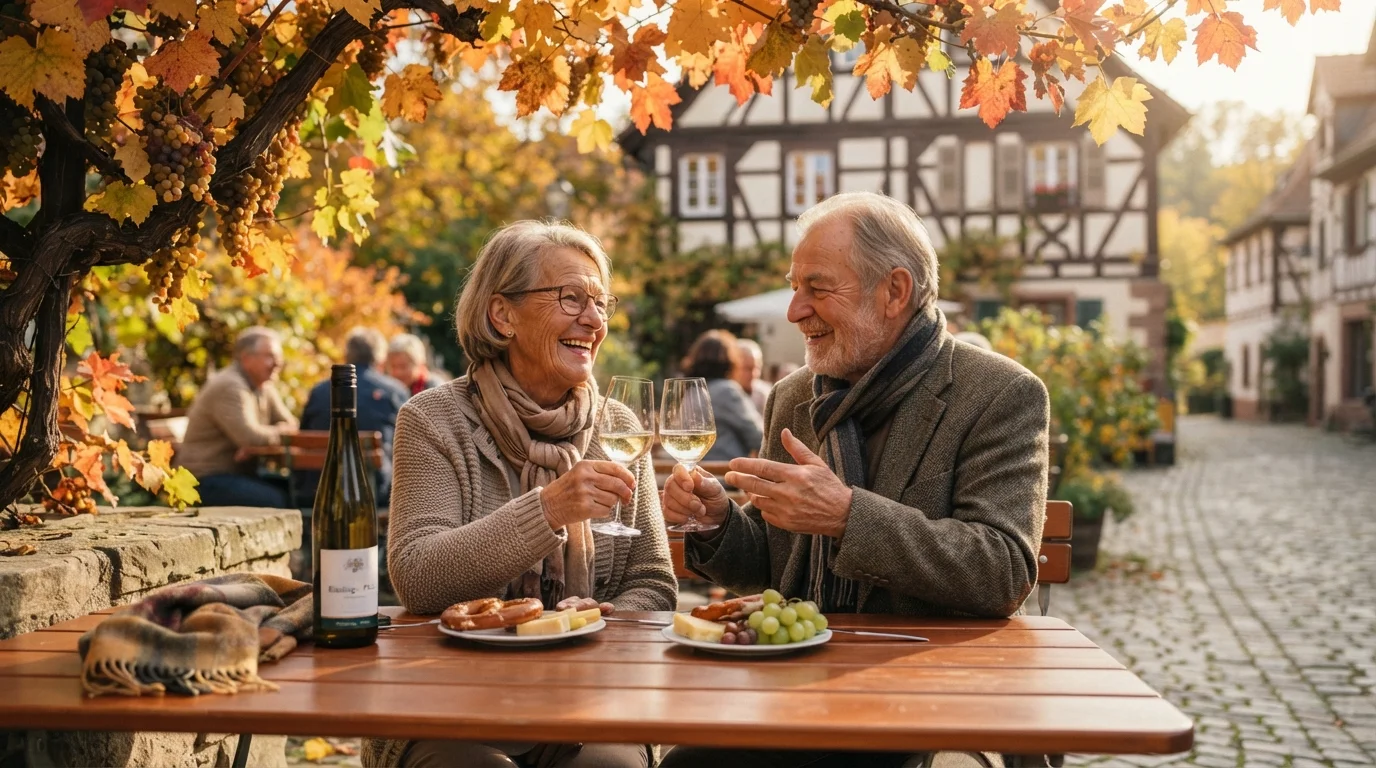
Have you ever experienced a warm, golden autumn day in Germany when summer seems to return for one last visit? Germans have a beautiful word for this seasonal moment: Altweibersommer. Often translated as Indian summer, the term describes a period of unusually mild, sunny weather in late September or October. It is also connected with fine spider webs shining in the morning light, changing landscapes, and a distinctive cultural mood between summer and winter.
For German learners, Altweibersommer is more than a weather expression. It offers useful vocabulary, insight into German seasonal traditions, and a natural topic for conversations with neighbors, colleagues, and friends. In this guide, you will learn what Altweibersommer means, where the word comes from, how Germans use it today, and how to talk about this special time of year with confidence.
Altweibersommer is the German name for a warm, dry period that often occurs in early autumn. The weather may feel surprisingly summery even though the calendar has moved into fall. Days are often sunny and mild, while mornings and evenings can be cool. In English, the closest equivalent is Indian summer.
The word can be divided into two parts:
Literally, the term appears to mean old women's summer. However, modern speakers do not normally understand it as a comment about older women. It is a traditional expression with a long linguistic and cultural history. The word Weib itself is grammatically neutral and historically meant woman or wife, although in contemporary German it can sound old-fashioned, rude, or disrespectful depending on the context. For this reason, learners should use Altweibersommer as a fixed seasonal term rather than trying to use Weib casually.
German speakers may also use more neutral descriptions such as ein warmer Herbst or mildes Herbstwetter. For example:
Altweibersommer is not a precisely defined meteorological event. Instead, it is a popular term for a recurring weather pattern. High-pressure systems can bring stable air, clear skies, little rain, and relatively warm temperatures to Central Europe. Because the nights are already longer and cooler, the contrast between chilly mornings and warm afternoons can be especially noticeable.
One of the most recognizable signs is the presence of fine spider silk across grass, bushes, fences, and woodland paths. In German, these threads are often called Haare der alten Weiber in traditional explanations. The silk may be produced by young spiders and carried by the wind. When the strands catch dew and sunlight, they look like silver or white hair scattered across the landscape.
This natural detail helps explain why Altweibersommer has such a poetic quality. The season is not simply defined by temperature. It is associated with soft light, colorful leaves, misty mornings, late flowers, and the feeling that nature is offering a final celebration before winter.
Weather patterns vary from year to year, and climate change can affect the timing and intensity of warm autumn periods. Therefore, it is better to think of Altweibersommer as a cultural and everyday weather expression than as a guaranteed event on a specific date.
The origin of Altweibersommer is debated, and several historical explanations exist. One theory connects the word with the shimmering spider webs seen in autumn. In older Germanic and European traditions, these webs were sometimes associated with threads spun by supernatural female figures, fate, or the work of wise old women.
Another explanation relates the spider silk to old age because the shining strands resemble gray or silver hair. In this interpretation, the expression describes an old woman's hair spread across the fields. Similar autumn expressions exist in other European languages, although the imagery and meanings differ from region to region.
It is important not to translate the word too literally in everyday communication. A German speaker saying Altweibersommer is usually referring to pleasant late-autumn weather, not making a statement about women. Like many idioms, the historical parts of the word do not fully determine its modern meaning.
Language learners often encounter this kind of cultural vocabulary in integration courses and German exams. Understanding the word's background can help you recognize it in newspaper articles, weather reports, radio programs, and conversations about seasonal activities.
In Germany, weather is a common conversation starter. A warm autumn day gives people an easy reason to talk to one another: Was für ein schöner Altweibersommer! — What a beautiful Indian summer! You may hear this phrase at work, in a bakery, on public transport, or while talking with neighbors.
The season also encourages outdoor activities. People may take a walk in the forest, cycle along a river, sit outside a café, or enjoy a final meal on a terrace. If you are interested in responsible outdoor behavior, our guide to German forest etiquette and hiking customs explains useful rules such as staying on marked paths, respecting wildlife, and taking your rubbish home.
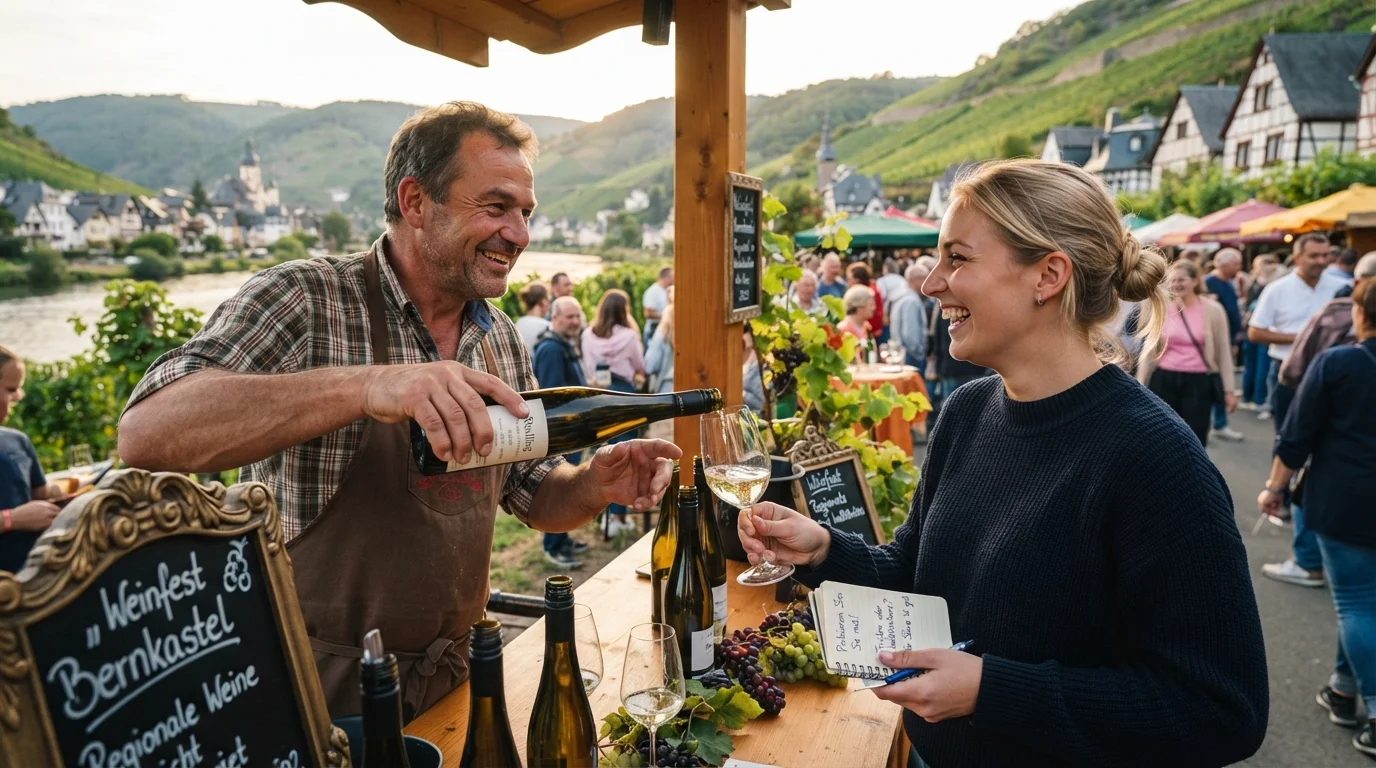
Altweibersommer is also linked with local food and drink. Autumn brings apples, pumpkins, mushrooms, onions, and regional wine. In wine-growing areas, September and early October are a particularly lively time. You can combine a walk through the vineyards with a visit to a harvest celebration or wine festival. For useful vocabulary before attending one, explore these German phrases for September wine festivals and tastings.
Families may use the pleasant weather for outings before school routines become fully established. September is also connected with the start of the school year, known as die Einschulung. If you are learning about German family customs, you may find this introduction to Einschulung and the first day of school helpful.
At the same time, Altweibersommer has a reflective side. It is a reminder that warm days are temporary. The expression can suggest gratitude, nostalgia, and a gentle awareness of seasonal change. People enjoy the sunshine precisely because they know colder, darker days are approaching.
Learning a small group of related words will help you discuss Altweibersommer naturally. Pay attention to grammatical gender and useful combinations.
Here are several sentence patterns you can practice:
For integration exams, adjectives and weather phrases are especially useful. You might need to describe a picture, write an informal message, or discuss leisure activities. Try changing the adjective ending in simple phrases: ein schöner Herbst, eine sonnige Woche, and mildes Wetter.
A short conversation about the weather can become a valuable language-learning exercise. Begin with an observation, ask a question, and add a personal response.
Example dialogue:
A: Was für ein schönes Wetter heute!
B: Ja, wirklich. Das ist ein richtiger Altweibersommer.
A: Gehen Sie später noch spazieren?
B: Ja, ich möchte die letzten warmen Tage genießen.
Translation:
A: What beautiful weather today!
B: Yes, truly. This is a real Indian summer.
A: Are you going for a walk later?
B: Yes, I want to enjoy the last warm days.
Useful questions include:
When speaking with Germans, remember that du and Sie depend on the relationship and situation. Use Sie with strangers, officials, and many professional contacts unless invited to use du. This is useful both in daily life and in formal integration-course role plays.
You do not need a special festival to enjoy Altweibersommer. A few simple activities can help you experience the culture while practicing German.
Bretzi can support this routine with AI-powered conversation practice, personalized learning plans, and instant pronunciation feedback. You can rehearse a short discussion about autumn, practice difficult sounds in words such as Herbst and Spinnweben, and review seasonal vocabulary through spaced repetition.
This topic is also useful for reviewing German grammar. Because Altweibersommer is masculine, it takes the article der in the nominative case: Der Altweibersommer ist schön. In the accusative, it becomes den Altweibersommer: Wir genießen den Altweibersommer.
You can practice prepositions with seasonal activities:
Notice the adjective endings in these examples: bei schönem Wetter, durch den bunten Wald, and mit warmen Getränken. Seasonal descriptions are an easy way to practice case endings in meaningful sentences rather than isolated grammar exercises.
Altweibersommer and Indian summer are broadly equivalent, but they are not always identical in cultural associations. Indian summer is the common English expression, especially in North American contexts. In Germany, Altweibersommer is the established traditional term, and it is often connected more explicitly with spider webs and Central European autumn landscapes.
There are also regional expressions. In parts of Germany, people may refer to goldener Oktober, or golden October, when describing bright, warm weather and colorful foliage. The phrase is easy to understand and sounds more neutral to some speakers. However, Altweibersommer remains widely recognized in newspapers, weather discussions, and everyday speech.
When translating, choose the expression that fits your audience. If you are explaining the German word in English, say that it means Indian summer and then mention the traditional spider-web imagery. If you are speaking German, use the fixed term confidently and avoid translating each word literally.
Words like Altweibersommer show that language and culture cannot be separated. A dictionary may give you a translation, but cultural knowledge explains when the expression is used and what feeling it carries. Germans may use the word to describe weather, but also to express appreciation for a brief period of comfort and beauty.
For expats, this kind of vocabulary can make everyday interactions easier. Understanding a comment about the weather helps you participate in small talk instead of simply listening. For integration-exam candidates, it provides useful material for speaking and writing tasks about seasons, leisure, nature, and local customs.
Try creating your own five-sentence presentation: define Altweibersommer, describe the weather, mention one outdoor activity, give your opinion, and ask a question. Then say it aloud without reading. This combines vocabulary, word order, pronunciation, and conversational confidence.
Altweibersommer is one of the most evocative seasonal words in German. It describes a warm spell in autumn, but it also brings together nature, history, everyday conversation, and the quiet beauty of transition. Fine spider webs, golden leaves, sunny afternoons, and cool mornings all contribute to its special atmosphere.
Use this season as a practical language-learning opportunity. Read a German forecast, take a walk, describe the landscape, and start a conversation with someone in your community. Review the vocabulary regularly and practice saying your sentences aloud. With tools such as Bretzi's interactive dialogue games, grammar lessons from A0 to C1, and daily gamified practice, you can turn a simple discussion about autumn into steady progress in German.
So the next time Germany enjoys a warm autumn spell, try saying: Das ist ein wunderschöner Altweibersommer! You will not only describe the weather—you will be using a word that opens a window into German culture.
Share this article:
September in Germany has a flavor: slightly sweet, gently sparkling Federweißer served with a warm slice of savory Zwiebelkuchen. This seasonal...
Read moreAs summer winds down and the morning air turns crisp, Germany undergoes a golden transformation. While millions of tourists flock to Bavaria for...
Read moreEvery autumn, millions of visitors from across the globe descend upon Munich's Theresienwiese for the world's largest folk festival: Oktoberfest....
Read more