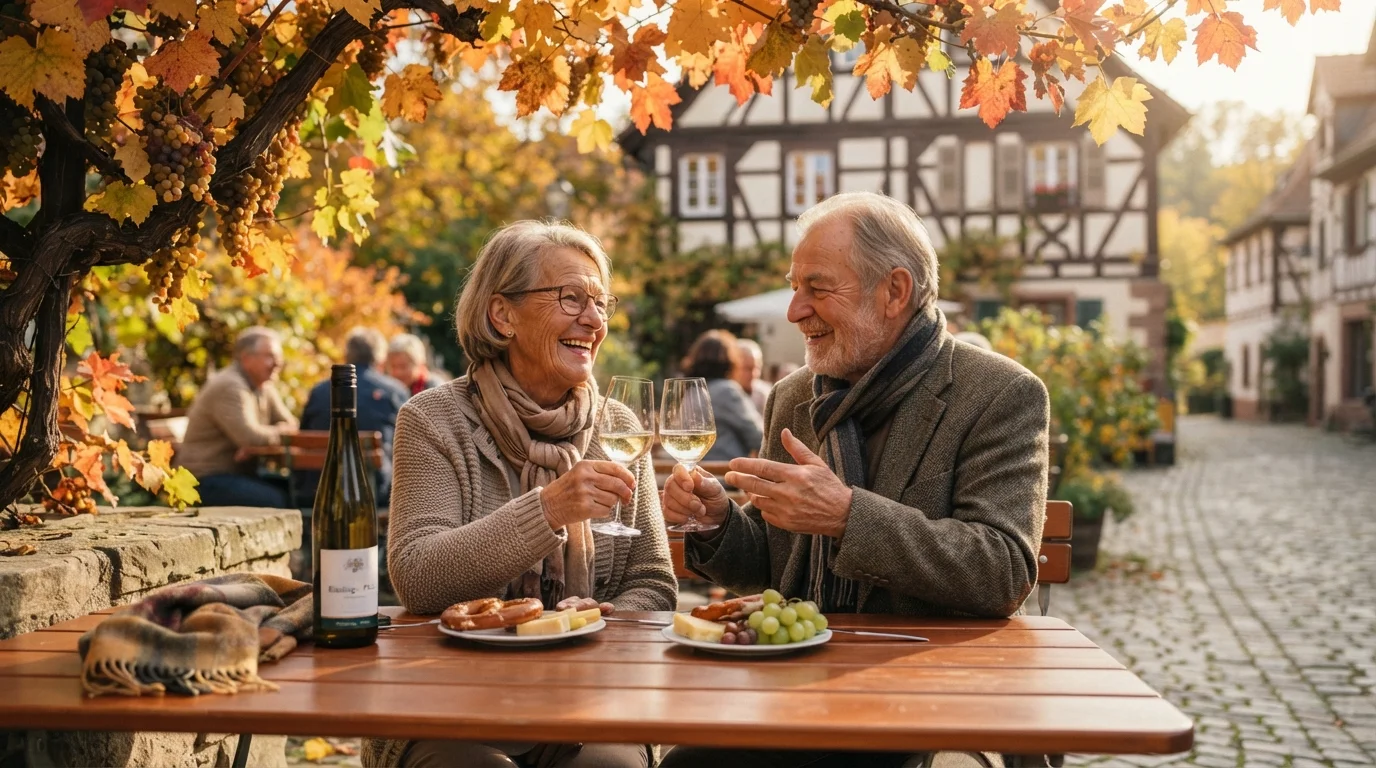
Federweißer and Zwiebelkuchen: Germany’s September Taste
September in Germany has a flavor: slightly sweet, gently sparkling Federweißer served with a warm slice of savory Zwiebelkuchen. This seasonal...
Read more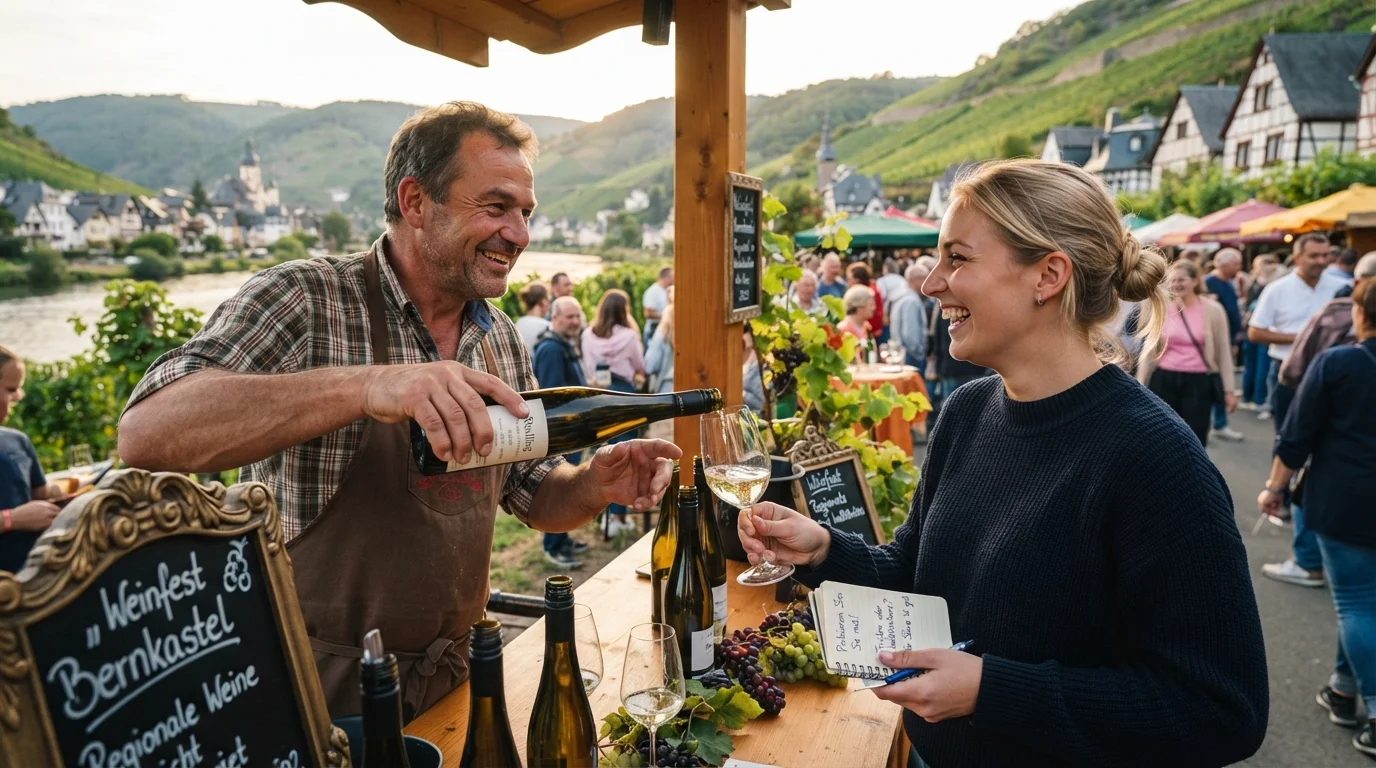
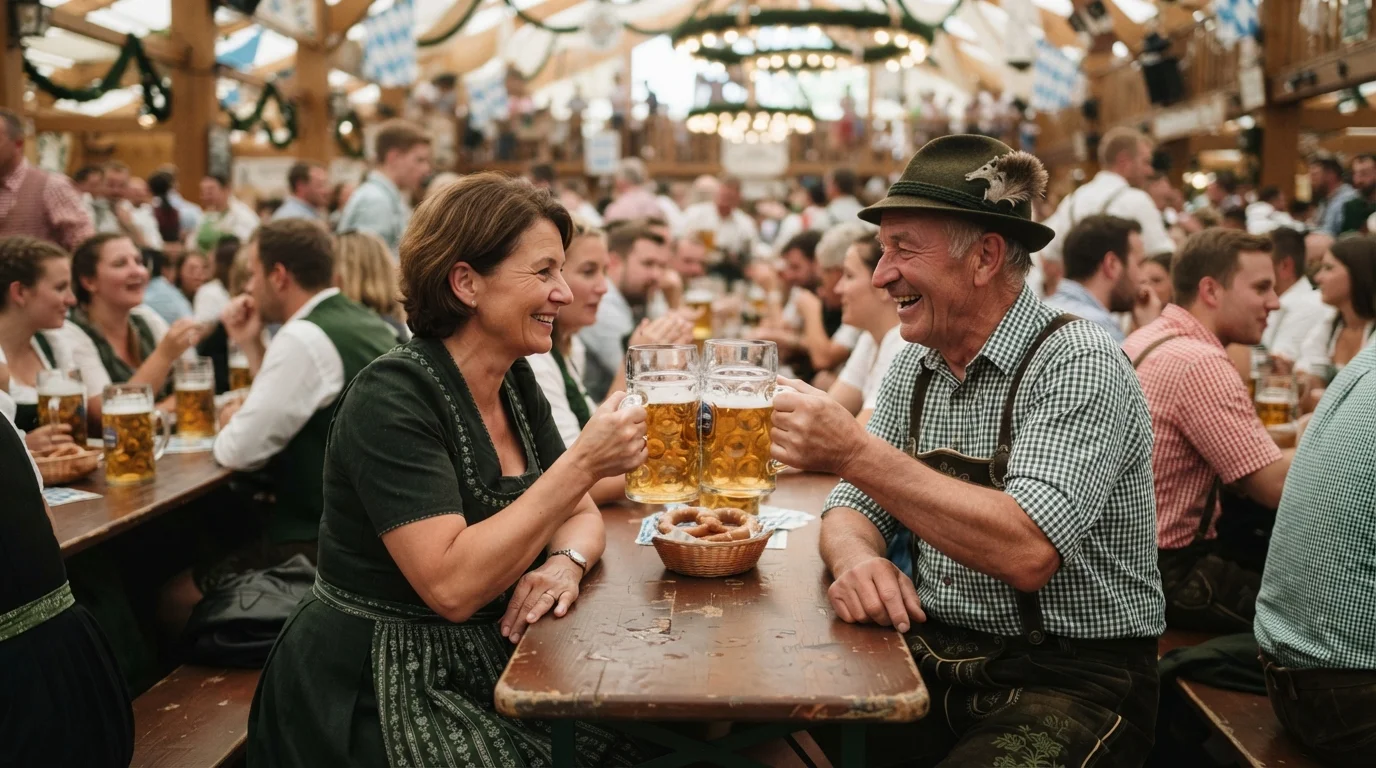
As summer winds down and the morning air turns crisp, Germany undergoes a golden transformation. While millions of tourists flock to Bavaria for massive beer celebrations, savvy travelers, locals, and language learners look toward the rolling hills along the Rhine, Mosel, and Neckar rivers. September marks the peak of the German wine harvest season (Weinlese), bringing with it a centuries-old tradition: the Weinfest (wine festival).
For anyone learning German, living as an expat, or preparing for everyday life in Germany, visiting a wine festival is one of the most delightful cultural immersion experiences you can have. Unlike bustling urban events, wine festivals offer relaxed, community-centered atmospheres where sharing a long wooden bench (Biertischgarnitur) with strangers is the norm. Just as late summer festivals in Germany celebrate regional harvests, September wine festivals offer a direct window into German Gemütlichkeit (coziness and warmth).
In this comprehensive guide, we will explore the best German wine regions to visit in September, iconic festival customs like drinking Federweißer, and essential German phrases to help you order, taste, and discuss wine like a local.
Germany is home to 13 official wine-growing regions (Anbaugebiete), each boasting unique microclimates, historic vineyards, and distinct varietals. While beer culture often takes the spotlight when celebrating Oktoberfest in Munich, Germany's wine heritage stretches back over 2,000 years to Roman times. Here are the top regions hosting unforgettable festivals every September:
Located in southwestern Germany along the German Wine Route (Deutsche Weinstraße), the Pfalz region enjoys almost Mediterranean sunshine. The crown jewel of September festivals is the Dürkheimer Wurstmarkt in Bad Dürkheim. Despite its historical name (literally "Sausage Market"), it is officially the largest wine festival in the world, attracting over 600,000 visitors across two weekends in September. Here, you will find over 300 regional wines served in traditional half-liter glasses known as Dubbegläser.
The Mosel valley is famous for having some of the steepest terraced vineyards in the world. In early September, towns like Bernkastel-Kues host the renowned Weinfest der Mittelmosel. Complete with artisan markets, castle fireworks over the river, and the coronation of the regional Wine Queen (Weinkönigin), the Mosel offers the quintessential romantic German festival setting. It is also an ideal region to combine vineyard strolls with German hiking customs along the panoramic Moselsteig trail.
Stretching along the right bank of the Rhine River near Wiesbaden and Frankfurt, the Rheingau is celebrated for producing refined Rieslings and rich Pinot Noirs (Spätburgunder). In September, the Rheingauer Weinwoche and regional harvest celebrations in towns such as Rüdesheim am Rhein and Eltville showcase aristocratic wine estates (Weingüter) operating alongside cozy family-run taverns (Straußwirtschaften).
Baden is Germany's southernmost and warmest wine region. September brings lively village festivals across the Kaiserstuhl and Markgräflerland regions near Freiburg. Across the border in Württemberg, wine enthusiasts gather in Stuttgart for the Stuttgarter Weindorf, where local specialties like Trollinger red wine are paired with handmade Maultaschen (filled pasta dumplings) and Käsespätzle.
You cannot talk about September wine festivals in Germany without mentioning Federweißer. This special seasonal drink is young, freshly pressed grape must that has just begun to ferment. It is cloudy, naturally effervescent, and sweet, tasting almost like a fizzy grape juice with a gentle alcoholic kick (usually between 4% and 10% ABV depending on how long it has fermented).
Because the yeast is actively producing carbon dioxide, bottles of Federweißer are sold with loosely capped, breathable lids to prevent explosions. If you buy a bottle at a festival or supermarket, remember the cardinal rule: always transport and store the bottle upright!
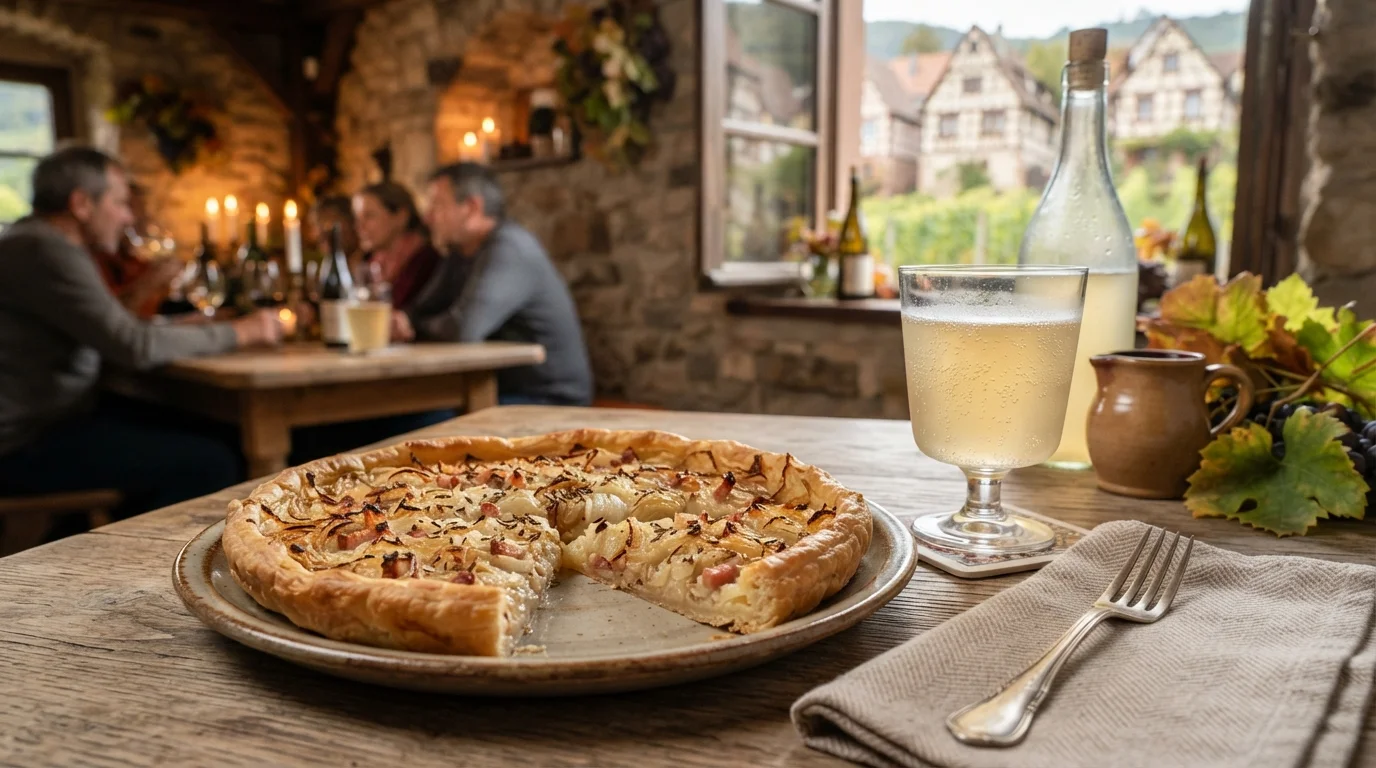
Culturally, Federweißer is almost always paired with Zwiebelkuchen—a savory, warm onion tart baked with sour cream, eggs, and smoked bacon (Speck). For vegetarians, many stalls also serve vegetarian versions or Flammkuchen (thin Alsatian flatbread) topped with cheese and herbs.
Navigating a festival or a traditional wine tavern (Weinstube) is much easier when you know key tasting and ordering terms. If you are preparing for conversational milestones or German integration exams, mastering these practical nouns and adjectives will boost your confidence.
Pro tip: Practicing regional pronunciation and sentence flow beforehand makes ordering effortless. Using an interactive language app like Bretzi allows you to engage in real-life dialogue simulations and hone your pronunciation with instant AI feedback before stepping up to the wine counter.
When you approach a wine booth (Weinstand) at a German festival, the atmosphere is informal and welcoming. Here are handy phrases you can use throughout the day:
To enjoy wine festivals like a true insider, keep these cultural norms and etiquette tips in mind:
At popular festivals, seating is arranged on long wooden benches (Festzeltgarnituren). It is completely standard to sit with groups you do not know. Simply make friendly eye contact and ask: "Ist hier noch frei?" (Is this seat free?) or "Dürfen wir uns dazu setzen?" (May we sit with you?). Once seated, you will quickly find locals offering recommendations and friendly conversation.
While beer drinkers often say "Prost!", wine drinkers in Germany frequently use "Zum Wohl!" (To your health/wellbeing). The most crucial rule: always look the other person directly in the eye when clinking glasses. According to German folklore, failing to maintain eye contact brings seven years of bad luck in love!
Almost every wine festival uses a deposit token system (Pfandmarke). When you buy your first glass, you will pay a deposit (€2–€5) and receive a small plastic token alongside your glass. When you return the glass and token to the counter (Rückgabe), your cash deposit is refunded.
Participating in local festivals is one of the fastest ways to transition from textbook learner to active German speaker. But memorizing vocabulary lists alone won't always give you the spontaneous speaking reflexes needed in a lively festival setting.
With Bretzi, you can practice realistic dialogue scenarios with AI conversation partners designed specifically around daily life in Germany—from ordering drinks and asking about menu items to casual small talk. Bretzi's spaced repetition vocabulary builder and bite-sized grammar lessons (covering levels A0 through C1) ensure you retain these essential phrases long after harvest season ends.
September wine festivals showcase the very best of German regional pride, culinary craftsmanship, and social warmth. Whether you are sipping an exquisite dry Riesling overlooking the Mosel or sharing a bubbly glass of Federweißer with new friends in the Pfalz, you will experience an authentic side of Germany that textbooks rarely capture.
Equip yourself with a few key phrases, grab a slice of freshly baked Zwiebelkuchen, and raise your glass: Zum Wohl auf einen goldenen Herbst!
Share this article:
September in Germany has a flavor: slightly sweet, gently sparkling Federweißer served with a warm slice of savory Zwiebelkuchen. This seasonal...
Read moreHave you ever experienced a warm, golden autumn day in Germany when summer seems to return for one last visit? Germans have a beautiful word for this...
Read moreEvery autumn, millions of visitors from across the globe descend upon Munich's Theresienwiese for the world's largest folk festival: Oktoberfest....
Read more