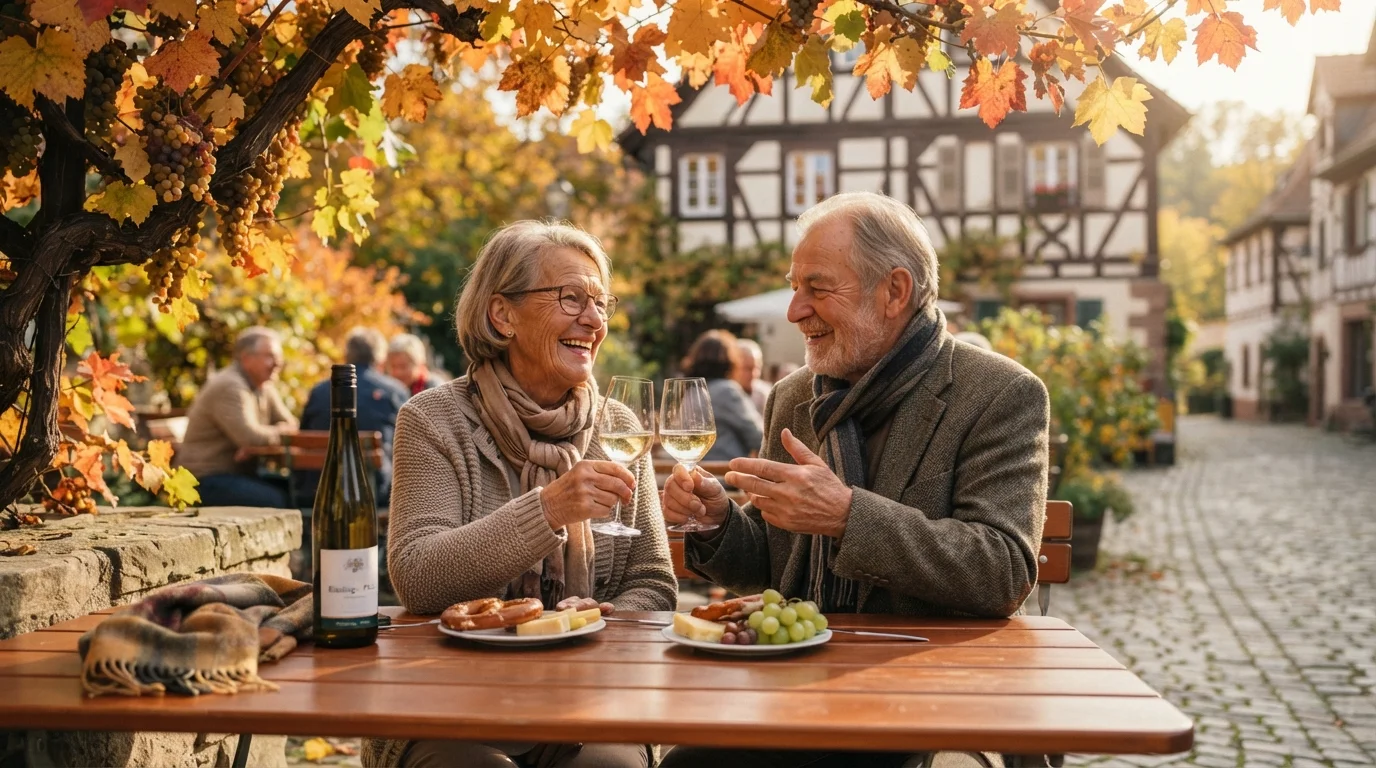
Federweißer and Zwiebelkuchen: Germany’s September Taste
September in Germany has a flavor: slightly sweet, gently sparkling Federweißer served with a warm slice of savory Zwiebelkuchen. This seasonal...
Read more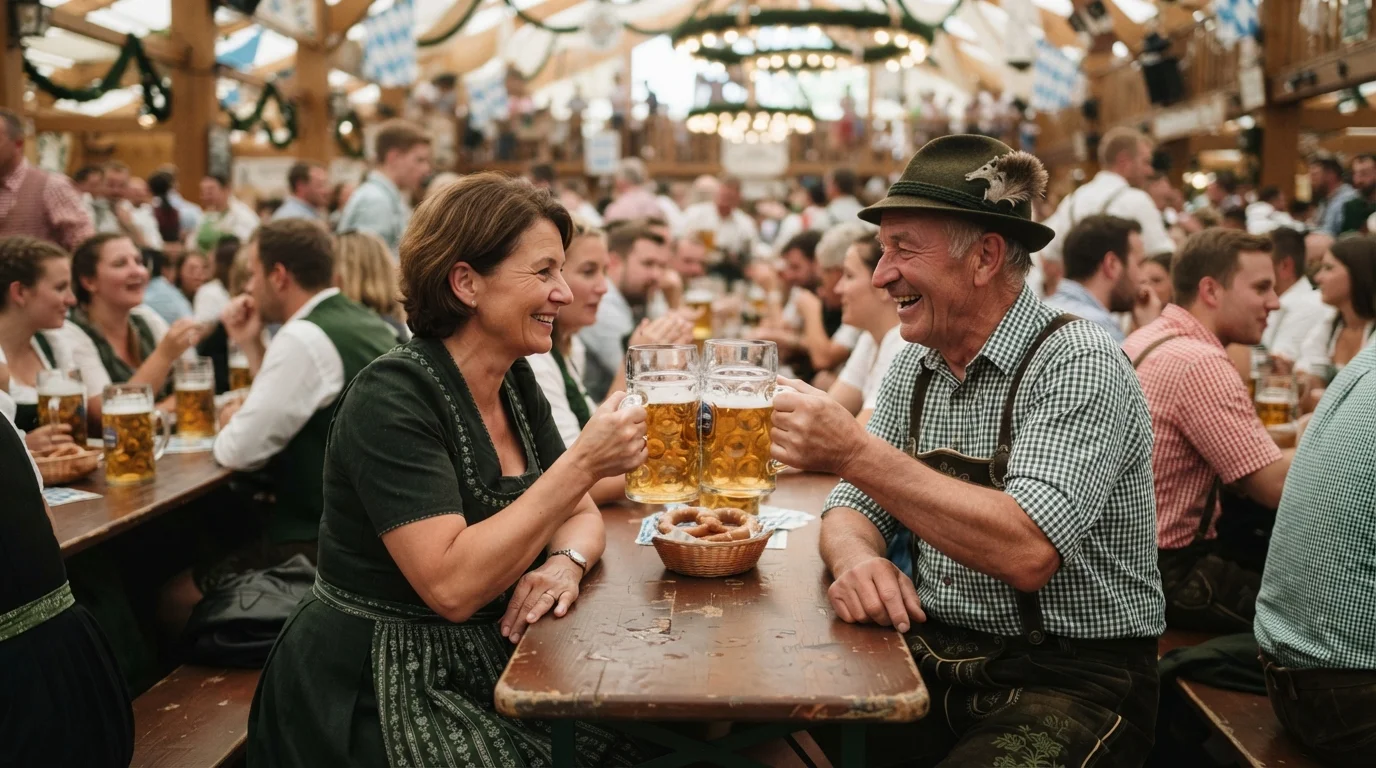
Every autumn, millions of visitors from across the globe descend upon Munich's Theresienwiese for the world's largest folk festival: Oktoberfest. Known locally simply as die Wiesn (named after the meadow grounds where it takes place), this legendary celebration is far more than an excuse to drink beer by the liter. It is a deep-rooted, centuries-old Bavarian cultural institution defined by hospitality, lively folk music, historic customs, and intricate social codes.
For expats, German language learners, and travelers, attending Oktoberfest offers an unforgettable immersive cultural experience. However, the festival can feel overwhelming if you do not understand the unwritten rules of the beer tents. Showing up unprepared—or committing basic etiquette blunders—can turn an exhilarating day into an awkward one.
In this comprehensive guide, we will walk you through everything you need to know to celebrate Oktoberfest like a true local: from decoding traditional dress codes and securing seats in the tents to mastering essential Bavarian vocabulary and toasting etiquette.
To truly appreciate the festival, it helps to understand its origins. The very first celebration took place on October 12, 1810, to honor the royal marriage of Crown Prince Ludwig (later King Ludwig I) of Bavaria and Princess Therese of Saxe-Hildburghausen. The citizens of Munich were invited to celebrate on the fields in front of the city gates, which were promptly christened Theresienwiese in honor of the bride.
Over the decades, horse races transformed into agricultural showcases, which eventually evolved into the sprawling festival of giant tents, carnival rides, and brass bands we recognize today. While late summer festivals across Germany mark the transition of seasons, Oktoberfest signals the arrival of autumn with unmatched scale. For further historical context, you can explore the history of Oktoberfest on Wikipedia.
Key Takeaway: Locals never call it "Oktoberfest." If you want to sound like someone in the know, refer to the event as die Wiesn (short for die Theresienwiese) and the grounds as das Festgelände.
One of the most distinctive aspects of Oktoberfest is seeing thousands of attendees dressed in traditional Bavarian clothing, known collectively as Tracht. While wearing Tracht is not legally mandatory, wearing genuine traditional clothing helps you blend into the festive atmosphere. However, there are crucial rules you should follow.
Authentic Lederhosen are crafted from robust leather (ideally deer, goat, or cowhide) and feature detailed embroidery. They are traditionally paired with:
A traditional Dirndl consists of a bodice (Mieder), a blouse (Dirndlbluse), a full skirt (Rock), and an apron (Schürze). The skirt should ideally fall at or below the knee; micro-mini Dirndls are widely regarded as cheap tourist costumes.
Where a woman ties her apron bow carries an important cultural meaning:
Pro Tip: Avoid cheap synthetic "costume" versions from souvenir shops. If you do not want to invest in high-quality Tracht, it is considered far more respectful to wear neat, casual everyday clothing (such as dark jeans and a nice shirt) than a nylon fancy-dress costume.
Oktoberfest features 14 large tents (große Festzelte) and over 20 smaller ones, each with its own distinct personality, culinary specialties, and brewery partnerships. For official maps and tent schedules, check the official Oktoberfest Munich portal.
In Munich's beer tents, you cannot simply order a beer standing in the aisle. You can only be served beer if you have a seat at a table. Tents fill up rapidly, especially on weekends and evenings.
As the brass band (Blaskapelle) plays and the atmosphere heats up, you will see people dancing. Follow these strict rules to avoid getting removed by security:
Social interactions in Germany follow clear social norms, whether you are attending a relaxed Sunday gathering—as explored in our guide to German Kaffee und Kuchen etiquette—or navigating a loud beer tent with 6,000 strangers.
Beer at Oktoberfest is served exclusively in heavy, one-liter glass steins called a Maß (pronounced with a short 'a', like "Mahss", not "Mass" or "Mayss"). Do not ask for "ein Bier" or a pint; simply ask the server for: "Eine Maß, bitte!"
Be aware that Oktoberfest beer (Märzen or special Festbier) is brewed specifically for the event and has an alcohol content between 5.8% and 6.3%—significantly stronger than standard lager. Pace yourself and alternate with water or an Apfelschorle (apple spritzer).
Toasting is an essential ritual at the Wiesn. Every twenty minutes, the brass band will play the famous drinking tune: "Ein Prosit der Gemütlichkeit!" When the song ends, everyone raises their glasses and shouts: Oans, zwoa, g'suffa! (Bavarian for: "One, two, drink!").
When toasting with tablemates (Anstoßen):
Beer tent food is hearty, rustic, and designed to balance the alcohol. Much like the communal spirit found in German social gatherings and BBQ culture, sharing food across the table is a great way to bond with new friends. Must-try specialties include:
Tipping Tip: Wiesn servers carry up to a dozen heavy steins at once through dense crowds. It is standard etiquette to round up the bill generously (usually 10-15%) per round. Generous tippers guarantee faster service when the tent is packed!
While High German (Hochdeutsch) is understood everywhere, sprinkling in authentic Bavarian phrases will instantly earn you warm smiles from servers and locals. If you are learning German as the seasons change during September in Germany, practicing festival vocabulary is a fantastic way to boost your conversational confidence.
Here are the core terms and phrases you should master before stepping onto the Wiesn:
Want to practice ordering food and holding spontaneous conversations before you hit the beer tents? With the Bretzi app, you can engage in realistic AI-powered conversation practice and get instant pronunciation feedback, ensuring you order your Maß with total Bavarian confidence.
A successful Oktoberfest visit requires a little practical foresight. Keep these safety and logistical guidelines in mind:
Do not drive to Oktoberfest. Munich's public transport network (MVV) is world-class. Take the underground lines U4 or U5 directly to Theresienwiese. Alternatively, get off at Goetheplatz (U3/U6) or Hauptbahnhof (Main Station) and walk 10 minutes to avoid the biggest exit crowds at closing time.
Oktoberfest has strict perimeter security checks:
The infamous grassy hill behind the tents—affectionately and colloquially known as the Kotzhügel—is where overindulged visitors collapse to sleep off the beer. Avoid becoming part of the landscape by drinking plenty of water, eating regular meals, and keeping an eye on your group.
Oktoberfest is an extraordinary showcase of Bavarian hospitality, music, and communal celebration. By dressing respectfully, observing tent etiquette, toasting with proper eye contact, and attempting a few Bavarian pleasantries, you will find locals eager to welcome you to their tables.
Language and culture go hand in hand when living in or visiting Germany. Whether you are preparing for integration exams, relocating to Munich, or planning your dream trip to the Wiesn, building practical speaking skills makes all the difference. Download the Bretzi app today to explore bite-sized cultural lessons, master everyday conversational German, and gain the linguistic fluency you need to thrive anywhere in the German-speaking world. Prost!
Share this article:
September in Germany has a flavor: slightly sweet, gently sparkling Federweißer served with a warm slice of savory Zwiebelkuchen. This seasonal...
Read moreHave you ever experienced a warm, golden autumn day in Germany when summer seems to return for one last visit? Germans have a beautiful word for this...
Read moreAs summer winds down and the morning air turns crisp, Germany undergoes a golden transformation. While millions of tourists flock to Bavaria for...
Read more