Federweißer and Zwiebelkuchen: Germany’s September Taste
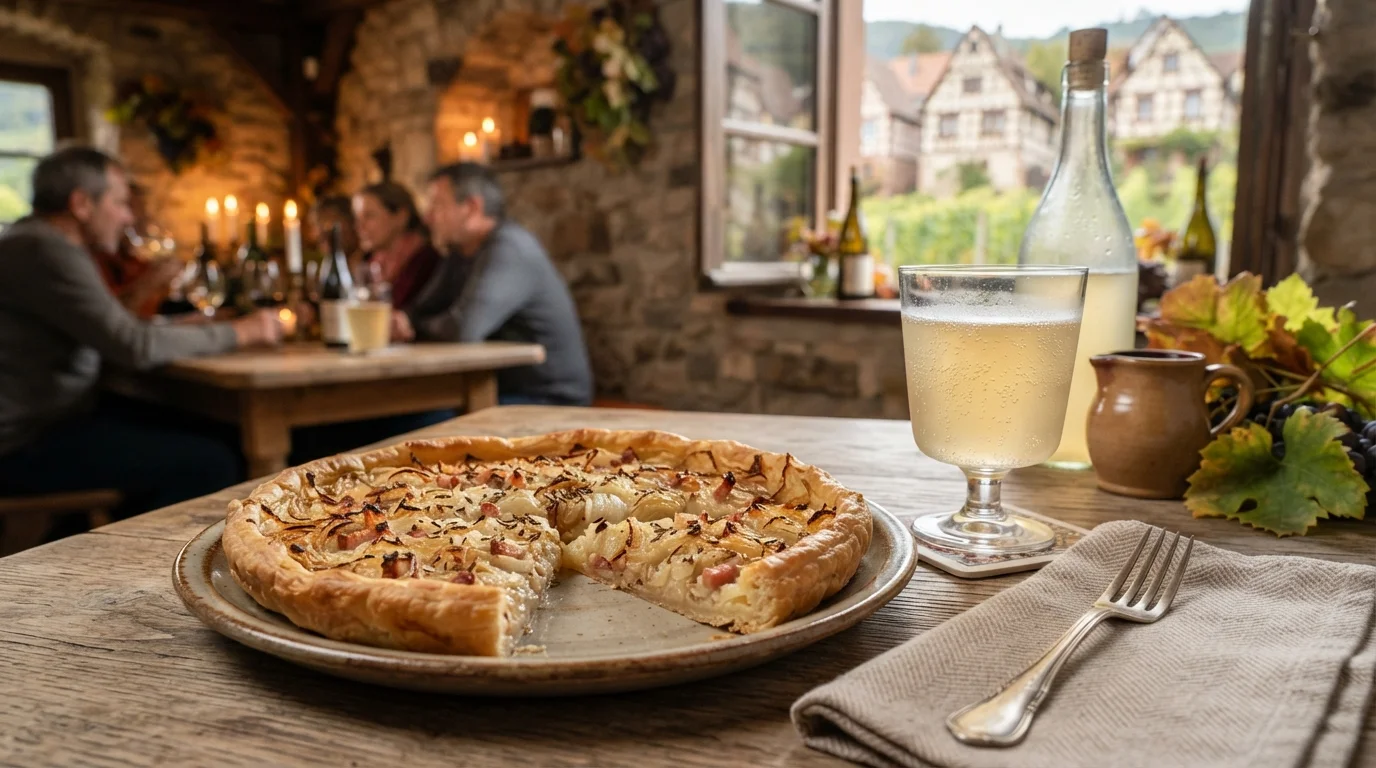
September in Germany has a flavor: slightly sweet, gently sparkling Federweißer served with a warm slice of savory Zwiebelkuchen. This seasonal...
Read more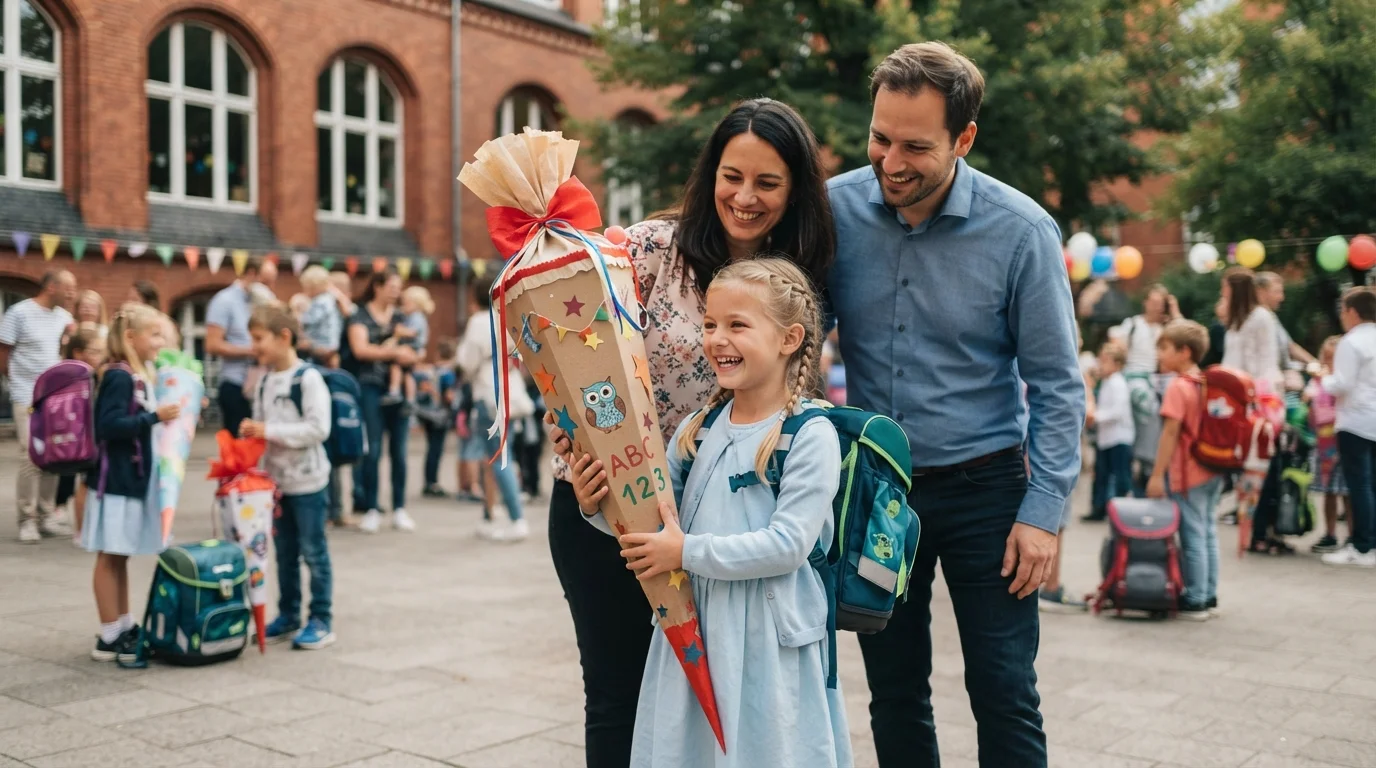
If you live in Germany, move to a German-speaking country, or study German culture, you will inevitably hear about a magical rite of passage every late summer: Einschulung. Across the country, children dressed in their finest clothes can be seen carrying colorful, oversized paper cones that are almost as tall as they are. Proud parents and grandparents trail behind with camera flashes, large flower bouquets, and custom backpack setups.
For international residents, expats, and German language learners, the concept of Einschulung can seem like a fascinating blend of formal ceremony and joyful family holiday. It is far more than a simple first day of class—it is a major cultural milestone marking a child's transition from early childhood into the world of formal education. Understanding this tradition gives you deep insight into German society, family values, and daily life.
In this comprehensive guide, we will unpack everything you need to know about Einschulung: its historical origins, the iconic Schultüte, what happens during the celebration, crucial vocabulary for your integration exam or daily conversation, and practical etiquette if you are invited to one.
The word die Einschulung comes from the verb einschulen, which means "to enroll in school" or "to start school." In Germany, children usually enter primary school (die Grundschule) at six years of age. While in many English-speaking countries starting school is a routine weekday event, in Germany it is treated as a major life ceremony known as der Erste Schultag (the first day of school).
German culture places a high emphasis on clear life stages. Before Einschulung, a child is a Kita-Kind (playgroup/kindergarten child) whose primary focus is play and social development. Upon Einschulung, the child officially becomes a Schulkind (school child). This title comes with elevated status, new responsibilities, and a sense of growing independence.
The celebration usually takes place on a Saturday in late August or early September, right as the summer heat begins to cool down and the quiet period known as the Sommerloch news slump comes to an end. Because each of Germany's 16 federal states (Bundesländer) sets its own school holiday calendar, the exact date of Einschulung varies depending on where you live.
The literal Einschulung meaning translates to "school enrollment" or "induction into school," combining the German prefix ein- (into/in) with Schulung (schooling/education). In modern German society, the term refers specifically to the formal celebration and public rite of passage that takes place when a child begins first grade (erste Klasse) in elementary school.
While the English word "enrollment" sounds like administrative paperwork, die Einschulung represents both the legal administrative registration and the festive family gathering that honors this milestone. When German speakers ask "Wann ist die Einschulung?" ("When is the enrollment ceremony?"), they are asking about the date and celebration of the first day itself, not just registration deadlines. Mastering terms like this is a core part of building essential German vocabulary for the first day of school.
Beyond the linguistic root, the cultural meaning of Einschulung centers on family solidarity and childhood accomplishment. It is widely viewed alongside communions, bar mitzvahs, or major graduation events as one of the pivotal formative markers in a German individual's upbringing.
Einschulung is celebrated across all 16 federal German states each year between early August and mid-September, depending on each state's individual summer vacation calendar (Sommerferien). Because German education is decentralized under the cultural sovereignty of the states (Kulturhoheit der Länder), there is no single nationwide Einschulung date.
Here is what defines the timing and participation of Einschulung across Germany:
You cannot talk about Einschulung without mentioning the Schultüte (literally "school bag/cone"), also commonly called a Zuckertüte ("sugar cone") in eastern and central Germany. This large cone-shaped cardboard container is decorated with vibrant themes—ranging from dinosaurs and space rockets to unicorns and soccer players—and sealed with crepe paper and ribbon at the top.
The tradition dates back to the early 19th century in Saxony and Thuringia. According to local folklore, teachers told young children that a special tree grew in the schoolmaster's cellar. When the cones hanging on the tree were ripe and full of sweets, it meant it was time to start school! According to the historical records detailed on Wikipedia's overview of the Schultüte, the tradition gradually spread across all of Germany and Austria during the 20th century.
Historically, the cone was filled almost exclusively with nuts, dried fruit, and sweets (hence the name Zuckertüte). Today, parents aim for a balanced mix of fun treats, practical school items, and small gifts. Common contents include:
Crucially, children are not allowed to open their Schultüte until the formal school ceremony has finished and they have returned home or arrived at the family reception!
If you are attending or organizing an Einschulung, here is the typical sequence of events for the day. While specific details vary by region and school, the general blueprint remains consistent throughout Germany.
In many parts of Germany, particularly in southern and western states, the day begins with an optional short church service (Einschulungsgottesdienst). Children receive a blessing for their upcoming educational journey, focusing on themes of courage, friendship, and curiosity.
Families gather in the school assembly hall (die Aula) or gym. The principal gives a warm welcome speech, and older students (usually 2nd or 3rd graders) perform songs, short plays, or poems to welcome the new Erstklässler (first-graders). The atmosphere is cheerful, welcoming, and intentionally designed to ease any anxiety the new students might feel.
This is the highlight for the children. Teachers call out the names of their new students, and the children line up behind their class teacher (Klassenlehrer/in). They walk together to their new classroom for their very first 30-to-45-minute lesson while parents remain in the hall or courtyard.
During this symbolic mini-lesson, children get assigned their desks, learn where to hang their coats, receive their first workbook, and complete a simple activity like drawing or introducing themselves. Meanwhile, the school parent association often serves coffee and cake to waiting parents.
Once the mini-lesson ends, children rejoin their families in the schoolyard. This is prime time for photo shoots: taking individual portraits holding the heavy Schultüte and wearing their brand-new Schulranzen (ergonomic school backpack).
After photos, families head home or to a restaurant for lunch, followed by traditional afternoon Kaffee und Kuchen (coffee and cake). Much like traditional German wedding guest customs, family celebrations surrounding Einschulung come with expected etiquette, celebratory dining, and thoughtful gifts from close relatives.
Whether you are preparing for your German integration exam (Integrationskurs / B1-B2 levels) or simply want to chat with German neighbors and colleagues, mastering vocabulary related to school enrolment is essential. Here is a handy reference list:
| German Word | Grammar | English Meaning |
|---|---|---|
| die Einschulung | die (Pl. die Einschulungen) | School enrollment / first day of school ceremony |
| der Erstklässler | der (Fem. die Erstklässlerin) | First-grader / beginner student |
| die Schultüte | die (Pl. die Schultüten) | Traditional cone filled with treats & gifts |
| der Schulranzen | der (Pl. die Schulranzen) | Ergonomic hard-shell school backpack |
| das Schulkind | das (Pl. die Schulkinder) | School-age child |
| die Grundschule | die (Pl. die Grundschulen) | Primary / elementary school |
| der Ernst des Lebens | Noun phrase | "The serious side of life" (idiom used when starting school) |
An interesting cultural idiom to know is "Jetzt beginnt der Ernst des Lebens" ("Now the serious side of life begins"). Adults often say this playfully to children starting school, implying that playtime is over and responsibilities are starting! However, modern German parents tend to soften this phrase to avoid stressing out young kids.
If you are an expat raising children in Germany or have been invited to an Einschulung celebration for a friend's or coworker's child, here are practical tips to navigate the occasion smoothly.
In Germany, a school backpack is not just a cheap bag picked up at a supermarket. The Schulranzen is a serious investment item engineered for back support, safety reflectors, and durability. Popular brands like Ergobag, Step by Step, and Scout design heavy-duty bags that can cost anywhere between €150 and €300.
Parents often buy the bag months in advance, often taking the child to specialized stores (Ranzen-Party events) to test fitting. Grandparents or godparents (Taufpaten) frequently sponsor the backpack as their main contribution to Einschulung.
If you are invited to a family's Einschulung gathering, you might wonder what gift is appropriate. Here are standard guidelines:
To fully appreciate Einschulung, it helps to see where primary school fits within the overall structure. Primary education data from the Federal Statistical Office of Germany shows that over 700,000 children enter German primary schools each year. Grounded in equality and public service, over 90% of students attend state-funded public Grundschulen in their local neighborhood catchment area (Schulbezirk).
Grundschule lasts for four years in most federal states (grades 1 to 4), except in Berlin and Brandenburg where it lasts six years (grades 1 to 6). After Grundschule, students transition into secondary tracks such as Gymnasium, Realschule, Hauptschule, or Gesamtschule. Because this initial four-year period sets the foundation for a child's entire educational trajectory, starting Grundschule on a high note during Einschulung is treated with immense importance by parents and educators alike.
Just as Germans carefully organize their summer holiday schedules and academic breaks months in advance, preparing for Einschulung requires structured planning—from reserving restaurant tables to ordering custom-printed name stickers for school supplies.
Understanding traditions like Einschulung is one of the best ways to advance your German skills beyond textbook grammar. Vocabulary surrounding family life, school systems, and regional customs often appears on official language exams such as Goethe-Zertifikat or Telc B1/B2.
This is where Bretzi makes learning natural and effective. Bretzi is an AI-powered German learning app that helps you master practical, real-world language skills. With interactive dialogue practice and personalized feedback, Bretzi allows you to practice realistic conversations—like discussing family traditions, shopping for school supplies, or congratulating a German neighbor on their child's milestone. Combined with article mastery games and spaced-repetition vocabulary tools, Bretzi ensures you learn words like der Schulranzen and die Einschulungsfeier in context and remember them for good.
Einschulung is a heart-warming showcase of German cultural values: celebrating personal growth, encouraging independence, fostering community, and balancing serious learning with joyful fun. The image of a proud six-year-old proudly carrying a giant Schultüte down the sidewalk remains one of the most endearing symbols of German family life.
If you are living in Germany, keep an eye out late this summer for families celebrating Einschulung in your local parks and restaurants. And if you are learning German, use cultural milestones like this to expand your vocabulary, build real conversations, and connect deeper with the community around you!
Ready to take your German skills to the next level? Download the Bretzi app today to explore interactive lessons, practice real conversations, and master the language and culture of Germany with personalized AI guidance!
Share this article:
September in Germany has a flavor: slightly sweet, gently sparkling Federweißer served with a warm slice of savory Zwiebelkuchen. This seasonal...
Read moreHave you ever experienced a warm, golden autumn day in Germany when summer seems to return for one last visit? Germans have a beautiful word for this...
Read moreAs summer winds down and the morning air turns crisp, Germany undergoes a golden transformation. While millions of tourists flock to Bavaria for...
Read more