Ruhezeit in Germany: Sunday Quiet Hours & House Rules Guide
You have just finished completing your Anmeldung, unpacked the last moving boxes on a sunny Sunday afternoon, and decided it is the perfect time to...
Read more
This article was written by AI and published by Bretzi.
AI can get things wrong. For anything official, check the source it points to.
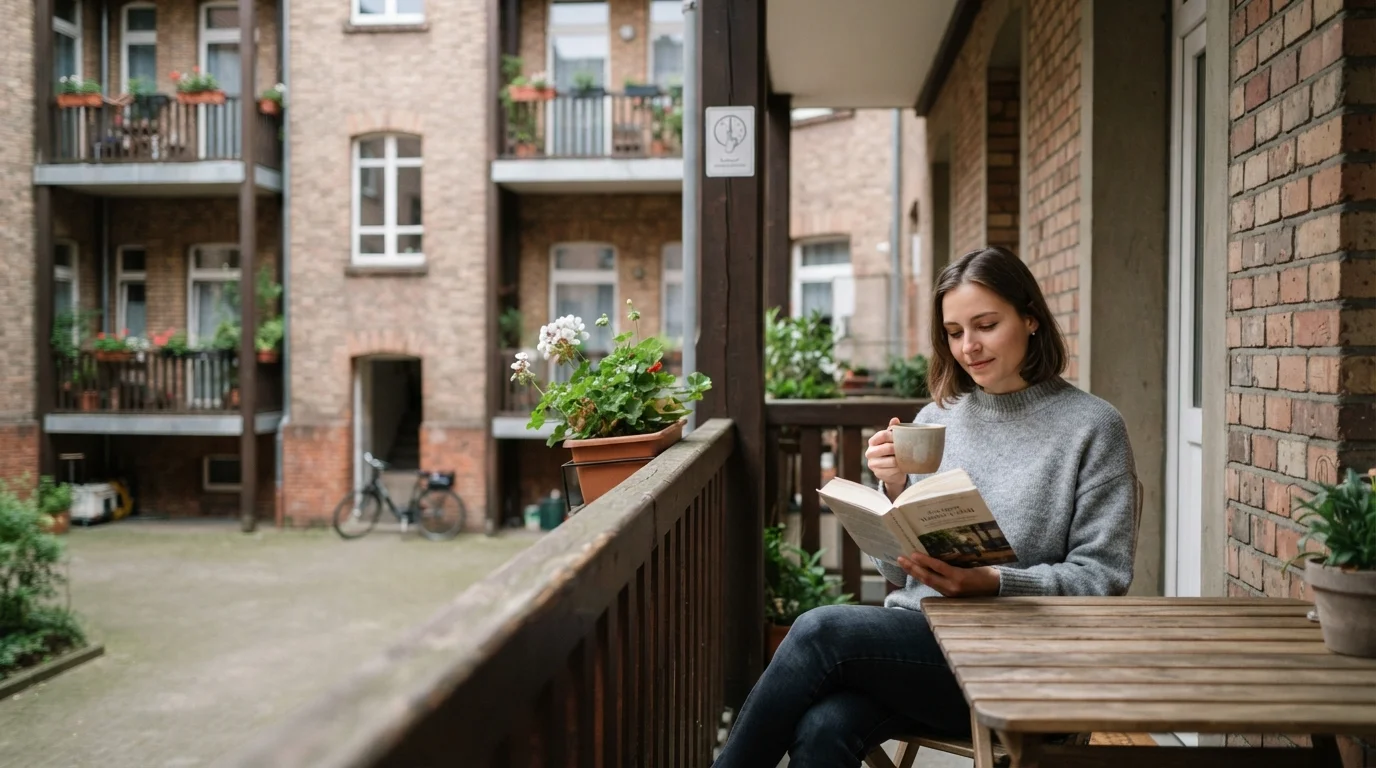
AI-generated image

You have just arrived in Germany, completed your official address registration, unpacked your boxes, and started settling into your new life. Then, a few weeks later, a crisp white envelope lands in your mailbox with an ominous logo: ARD ZDF Deutschlandradio Beitragsservice.
Inside, you find a formal letter demanding €18.36 per month. Even if you do not own a television, do not listen to the radio, or cannot understand a single word of German news, you are still being asked to pay. Welcome to the world of the Rundfunkbeitrag—often referred to by expats and locals alike as the German "TV tax" or simply "the GEZ."
Navigating German bureaucracy can be daunting, especially when unexpected bills arrive in technical official language (Behördendeutsch). In this comprehensive guide, we will break down everything you need to know about the German Rundfunkbeitrag: what it is, why it exists, who actually has to pay it, how flatshares work, how to register or apply for an exemption, and what happens if you simply ignore the letters.
The Rundfunkbeitrag (literally "broadcasting contribution") is a mandatory fee paid by residents in Germany to fund public service broadcasting. These funds finance public television networks (such as ARD and ZDF), regional broadcasters (like WDR, NDR, BR, and SWR), national radio stations (Deutschlandradio), and their associated digital platforms and educational channels (such as KiKA, 3sat, and ARTE).
Historically, this fee was collected by an organization known as the GEZ (Gebühreneinzugszentrale). Although the system was completely restructured in 2013 and the organization was rebranded as the ARD ZDF Deutschlandradio Beitragsservice, millions of Germans still casually refer to the fee as "die GEZ."
To understand the Rundfunkbeitrag, it helps to understand modern German history. After World War II, the Federal Republic established an independent public media model inspired by the British BBC. The goal was to prevent state-controlled propaganda and ensure that the public always has access to impartial, high-quality journalism, cultural programming, and regional news without political or commercial interference.
Because public broadcasters are funded directly by citizens rather than through government tax budgets or advertising alone, they remain structurally independent from whichever political party is in power. You can learn more about this legal framework on the official Rundfunkbeitrag portal.
As of 2026, the Rundfunkbeitrag is set at €18.36 per month. You can choose how frequently you want to pay:
The standard payment method is quarterly in advance. Most residents set up a SEPA Direct Debit (Lastschrift) connected to their German bank account so the payment happens automatically without worrying about missed deadlines.
The single most important principle to remember is the statutory rule: Eine Wohnung, ein Beitrag (One apartment, one contribution).
Prior to 2013, fees were calculated based on the number of devices you owned (radios, TVs, computers). Since 2013, the contribution is completely device-independent. It does not matter whether you own three 4K televisions or zero electronics: the fee is tied to the physical apartment itself.
Many newcomers wonder how the Beitragsservice got their name and address so quickly. The explanation is simple: Germany maintains a synchronized registration database.
When you complete your mandatory municipal registration (following our detailed guide on the Anmeldung registration process), the local residents' registration office (Einwohnermeldeamt or Bürgeramt) legally forwards your data to the Beitragsservice. A few weeks later, an automated letter titled "Rundfunkbeitrag: Anmeldung / Klärung Ihres Beitragskontos" arrives at your registered address.
When the letter arrives, do not panic, but do not throw it away. Follow these simple steps depending on your scenario:
If you find dealing with German administrative language overwhelming, tools like the Bretzi app can be a game-changer. Bretzi offers interactive dialogue games and cultural lessons covering real-life German bureaucratic scenarios, helping you master the exact vocabulary needed to manage paperwork, leases, and official correspondence with confidence.
While the Rundfunkbeitrag is compulsory for almost all residents, German law provides exemptions (Befreiung) or fee reductions (Ermäßigung) under specific social and medical conditions.
You can apply for a 100% exemption if you receive certain government welfare assistance, including:
German and international university students receiving state financial aid (BAföG) are eligible for a complete exemption. However, simply being enrolled as a student (Studentenstatus) does not grant an automatic exemption. If you are a student paying your own way or receiving money from parents, you are still required to pay.
Individuals with specific physical or sensory impairments (such as severe visual or hearing impairments) may qualify for a reduced fee (€6.12/month) or a complete exemption, depending on the disability marking (Merkzeichen) on their disability pass (Schwerbehindertenausweis).
Exemptions are never granted automatically. You must submit the form "Antrag auf Befreiung/Ermäßigung" online, print the signed application, attach official certified proof of your benefit (Leistungsbescheid), and mail it directly to the Beitragsservice in Cologne.
To help you navigate your letters and online forms, here are the most important terms you need to know:
Building a strong vocabulary foundation is the secret to thriving in Germany. Using the Bretzi app, you can practice spaced repetition vocabulary building, pronunciation training, and A0–C1 grammar lessons tailored to everyday living situations—from calling customer support to writing formal letters to public authorities.
Some expats mistakenly assume that because they do not watch German TV or because the Beitragsservice is technically not a police force, they can safely ignore the letters. This is a severe mistake.
The Beitragsservice is backed by public law. If you ignore their correspondence, the following escalation will occur:
In short: you cannot win an avoidance battle against the Beitragsservice. Always respond promptly, provide your flatmate's number if applicable, or set up regular payments.
When you permanently leave Germany or move in with a partner who is already paying, remember to formally cancel your account (Abmeldung). The Beitragsservice will not automatically know that you have left the country, and invoices will continue to accumulate unless you deregister.
To cancel your contribution:
The German Rundfunkbeitrag can feel like a frustrating surprise when you first arrive, but it is simply a standard part of German civic infrastructure. As long as you remember the core rule—one payment per apartment—and communicate with the Beitragsservice early on, managing the fee is straightforward and stress-free.
Want to turn bureaucratic headaches into language learning milestones? Download the Bretzi app today to practice authentic German dialogue scenarios, master grammar from beginner to advanced levels, and gain the cultural confidence you need to make Germany feel like home.
Share this article:
You have just finished completing your Anmeldung, unpacked the last moving boxes on a sunny Sunday afternoon, and decided it is the perfect time to...
Read moreSigning a contract in Germany is notoriously easy—whether you are picking up a shiny new smartphone plan or joining a local fitness club. But when...
Read moreIf you have recently moved to Germany, your first trip to a local grocery store might feel less like a routine errand and more like an Olympic sport....
Read more