Best Mobile Apps to Master German Verbs and Cases: Bretzi Review 2026
Ask any German learner what keeps them awake at night, and chances are you will hear two words: verbs and cases. Between memorizing whether a verb...
Read more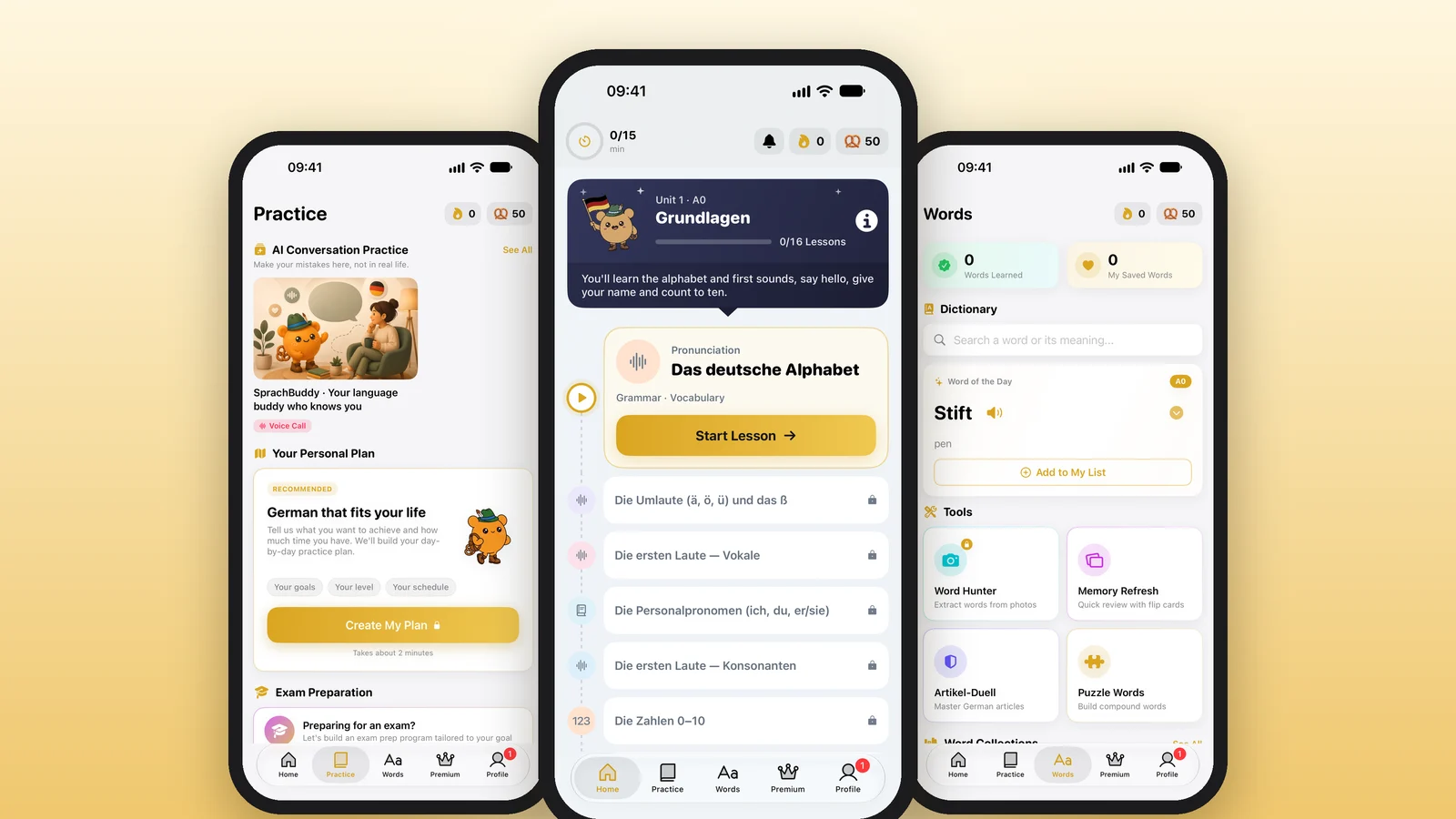
When relocating to Germany, settling in often hinges on a single major challenge: mastering the language. Whether dealing with administrative appointments at the Bürgeramt, reading official correspondence, or integrating socially, reaching a solid proficiency level is essential. Traditionally, expats turned to in-person classroom courses, such as those offered by a local Volkshochschule (VHS) or private language institutes. However, with demanding work schedules and the rise of smart learning technology, many newcomers wonder whether a dedicated app can replace traditional classroom instruction entirely.
To answer this question honestly, we must examine what traditional language classes offer, where they often fall short for busy professionals, and how modern self-study platforms address the day-to-day language demands of living in Germany.
For decades, classroom instruction has been the default standard for foreign language acquisition. In Germany, this is heavily embodied by the official integration course system supervised by the Federal Office for Migration and Refugees (BAMF). Under standard regulations, a general integration course comprises 700 teaching units (600 units of language instruction plus 100 units of the orientation course). For paying participants, the cost is set at €2.29 per teaching unit, bringing the total course contribution to €1,603, paid in 100-unit modules.
While structured classroom courses offer undeniable advantages—such as direct contact with peers and a dedicated physical environment—they also come with notable friction for working expats:
Because traditional courses can be hard to reconcile with career and family obligations, mobile solutions have gained immense traction. Expats looking for the best app to learn German increasingly look beyond casual gamified trivia toward comprehensive tools that cover the full Common European Framework of Reference for Languages (CEFR) from complete beginner (A0) up to C1.
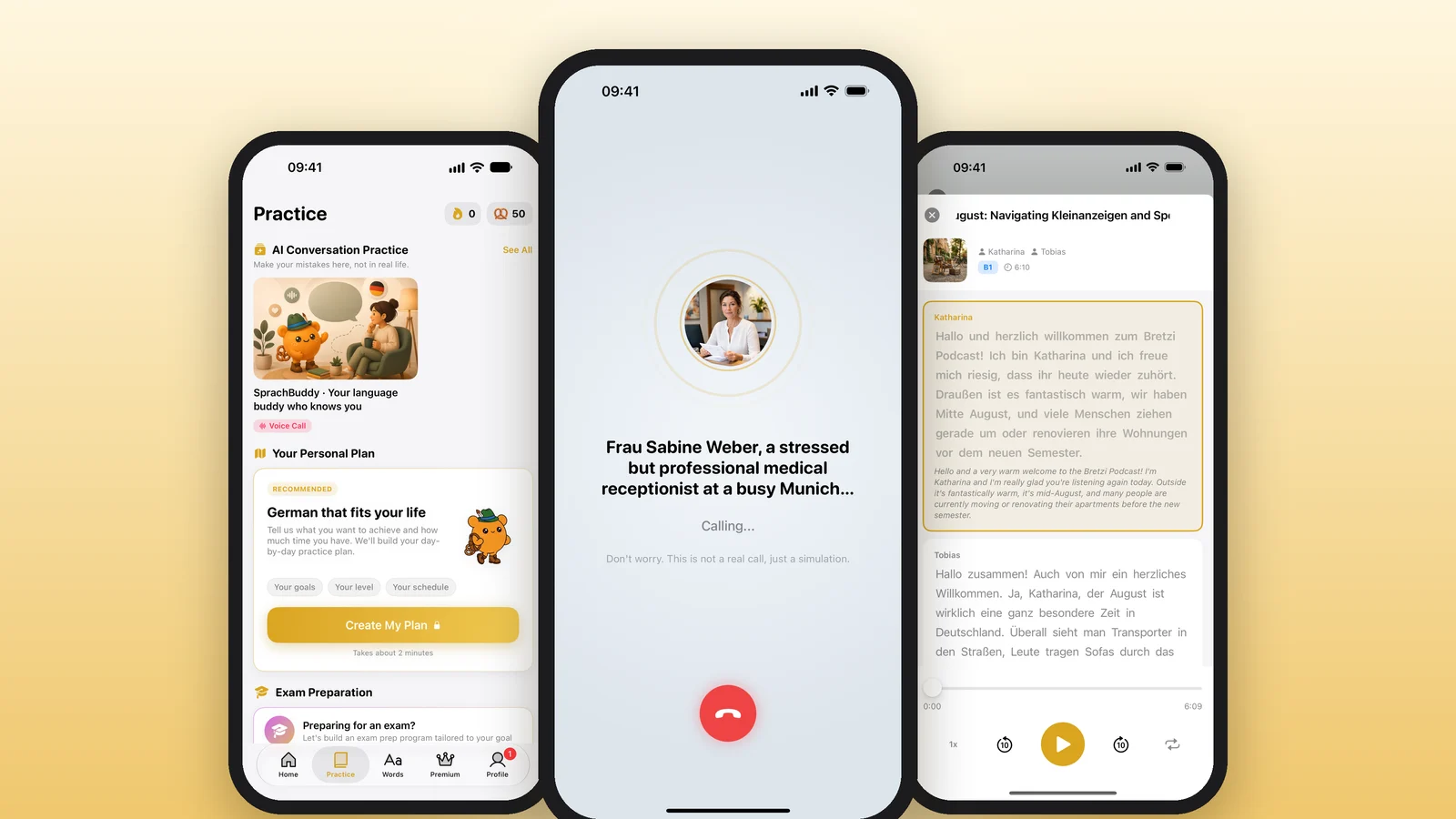
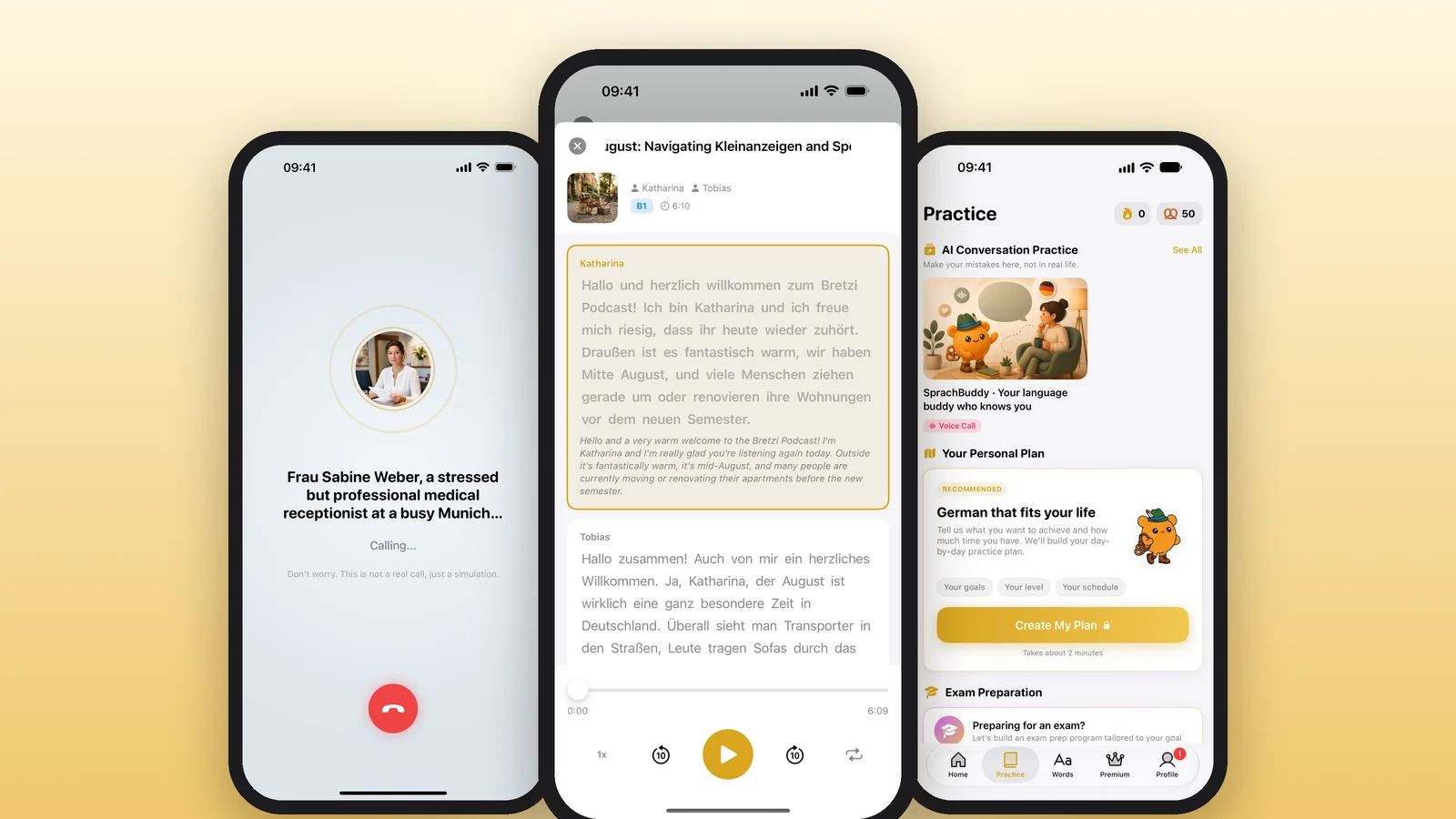
This is where apps like Bretzi play a pivotal role. Designed specifically around the German spoken in Germany for daily life, work, and exams, Bretzi structures learning into sequential lesson paths. Learners engage in varied active exercises: choosing and typing answers, rearranging sentence structures, filling gaps, and listening to dictations, with clear explanations provided immediately after each response. Grammar rules, declension tables, and verb conjugations are integrated directly into lesson steps, rather than treated as an afterthought.
Where an app holds a distinct advantage over a classroom is personalization through spaced repetition. In a 20-person class, a teacher cannot monitor which specific case prepositions you forget after three days. A digital review system, however, tracks past mistakes and resurfaces challenging vocabulary just as memory traces begin to fade.
The single biggest critique of studying exclusively via an app has historically been the lack of speaking practice. Sitting in front of a textbook or tapping multiple-choice prompts does not teach someone to speak out loud when ordering bread at a bakery or discussing symptoms at a doctor's office.
Modern platforms have bridged much of this gap through speech recognition and simulated dialogues. In Bretzi, for instance, speaking practice is handled in multiple ways:
For many expats, discovering how Bretzi helps expats learn real-life German means finding a way to practice unscripted spoken German daily—from 5 to 30 minutes at a time—without needing to arrange private tutoring.
While an app can build strong communicative and grammatical competence, it is crucial to understand the legal boundaries regarding residency and naturalization in Germany.
If you are applying for permanent residency (Niederlassungserlaubnis) or German citizenship under the Nationality Act (StAG), legal statutes require recognized proof of language proficiency and civic knowledge:
No language learning app can issue an official state language certificate. While Bretzi awards level-completion certificates containing verifiable links, these record your coursework inside the app and are not official accredited diplomas. However, digital tools are invaluable for independent preparation. For instance, learners preparing for the DTZ exam or TestDaF (B2–C1) can use Bretzi's timed exam practice modules to rehearse reading, listening, writing, and speaking sections with AI evaluation and readiness scoring.
To help determine whether an app can fulfill your needs, consider how daily learning dynamics compare across key areas:
| Aspect | Traditional Classroom (e.g., VHS) | Bretzi App |
|---|---|---|
| Location & Access | Fixed physical location; requires commuting. | iOS (18+) or Android (8.0+), requires internet connection. |
| Time Commitment | Fixed blocks (often 3-4 hours daily or twice weekly evenings). | Custom daily goals from 5 to 30 minutes; practice anytime. |
| Speaking Practice | Live interactions with teachers and fellow students. | Voice calls with AI (SprachBuddy) and pronunciation scoring. |
| Grammar & Feedback | Teacher-led explanations; manual homework corrections. | Immediate answer explanations, conjugation tables, Sentence Check. |
| Official Certification | Institutions frequently host official telc/DTZ testing sessions. | Provides independent exam practice and app-based completion certificates (non-official). |
Whether Bretzi can completely replace traditional classroom lessons depends on your specific goals and legal requirements:
When an App Can Fully Replace Classes: If you are an expat who already works or studies in an English-speaking or international environment and needs German for daily autonomy, an app can serve as your primary learning system. If you possess the discipline to maintain a daily study habit, use spaced-repetition vocabulary reviews, read transcripts alongside German podcasts, and speak out loud using AI conversation tools, you can progress through the CEFR levels (from A0 to C1) without setting foot in an evening school.
When You Still Need Official Institutions: If the immigration authorities (Ausländerbehörde or Jobcenter) have issued you a formal obligation to complete an integration course, an app cannot legally substitute for attendance. Furthermore, when the time comes to submit proof for citizenship or permanent residency, you must register at an authorized testing center to sit the official DTZ and Leben in Deutschland exams.
For most expats, the most practical approach is not treating this as an "either-or" decision. Many who attend mandatory or voluntary courses use Bretzi as a daily companion to reinforce weak spots, scan real-world German text using the photo tool, and practice speaking scenarios that teachers rarely have the individual time to cover in a crowded room.
Rules, fees and dates change. Check the current version on the official pages before you act.
Share this article:
Ask any German learner what keeps them awake at night, and chances are you will hear two words: verbs and cases. Between memorizing whether a verb...
Read moreLearning German often feels like navigating a maze of intricate grammatical machinery. One day you feel confident ordering a bread roll at the local...
Read moreWhen learning German, many people find that reading a textbook or recognizing words on a screen feels manageable, yet the moment someone speaks on a...
Read more