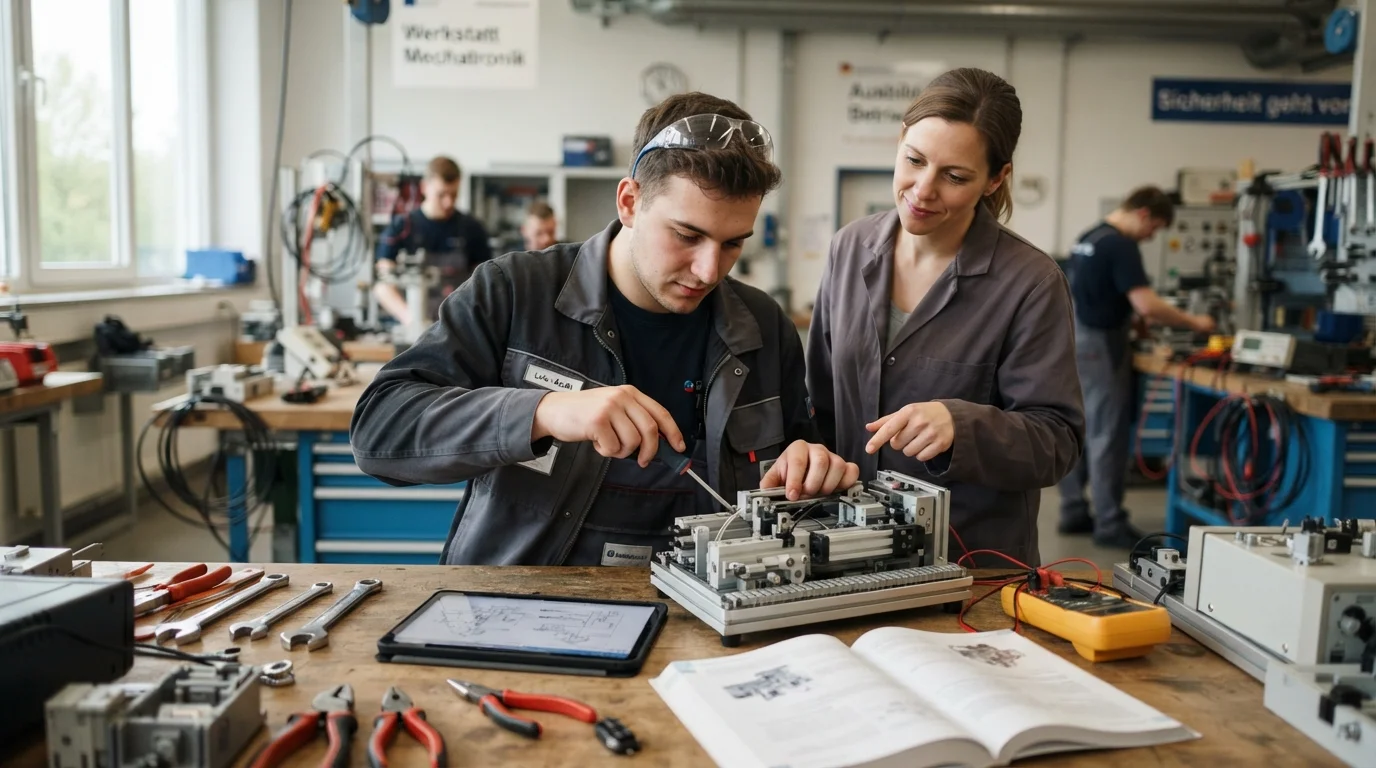
German Ausbildung Guide: Vocational Training for Expats
When planning a career move to Germany, most international professionals immediately think of university degrees or direct corporate hiring. However,...
Read more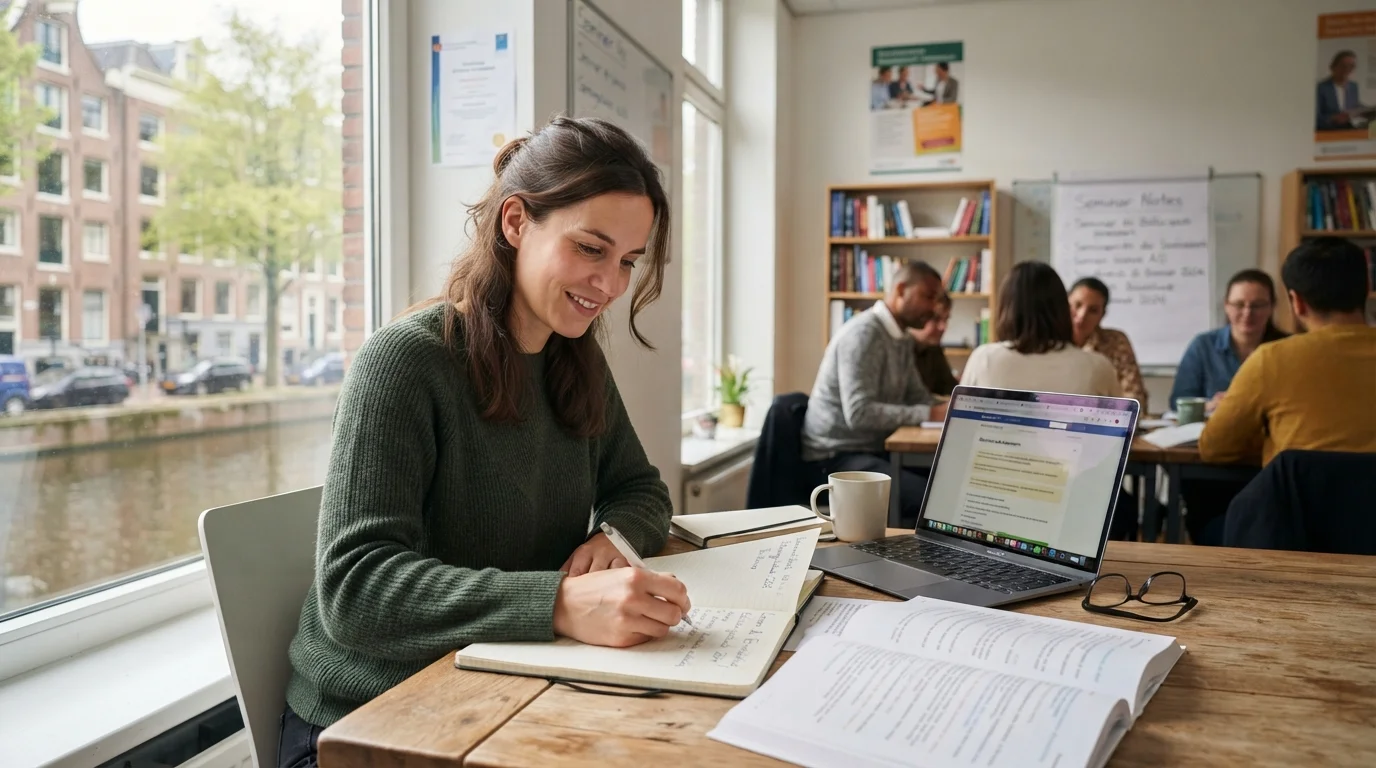
Imagine getting an extra week of paid vacation every year, fully funded by your employer, specifically to learn something new. It sounds like an expat's dream or a loophole in the labor system, but in Germany, it is a legally protected right. This system is known as Bildungsurlaub (educational leave), and it is one of the best-kept secrets among international workers and language learners in Germany.
Whether you want to boost your professional skill set, dive deep into political education, or finally master the German language to integrate into your new home, Bildungsurlaub offers you the dedicated time and space to do so without sacrificing your regular annual leave. In this comprehensive guide, we will break down exactly what Bildungsurlaub is, who qualifies for it, how you can use it to supercharge your German language learning, and the step-by-step process to get it approved by your employer.
Bildungsurlaub—sometimes referred to as Bildungszeit or Bildungsfreistellung depending on the federal state—is a legal provision that allows employees in Germany to take paid leave for the purpose of continuing education. The core philosophy behind this law, which dates back to the 1970s, is that a well-educated, culturally aware, and politically engaged workforce benefits society as a whole.
During your Bildungsurlaub, your employer continues to pay your regular salary, while you attend an approved seminar, workshop, or language course. It is important to understand that this is in addition to your contractually agreed-upon annual vacation days. If you have 28 days of regular vacation, your educational leave gives you an extra cushion of time to focus entirely on personal development.
However, because education is regulated at the state level in Germany (due to the country's federal structure), the exact rules, duration, and conditions of Bildungsurlaub vary significantly depending on where your workplace is located. Currently, 14 out of the 16 German federal states have active Bildungsurlaub laws. The only exceptions are Bavaria (Bayern) and Saxony (Sachsen), which do not offer statutory educational leave.
Before you start planning your study week, you need to verify if you meet the eligibility criteria. While the specific regulations depend on your state's legislation, the general requirements for employees include:
It is also worth checking your company's collective agreement, as some industries have specific provisions. To understand how these agreements influence your general rights and working hours, you can read our detailed guide on understanding the German Tarifvertrag.
A common misconception is that the course you choose must be directly related to your current daily tasks at work. For instance, a software engineer might assume they can only take coding bootcamps. Fortunately, the definition of "educational" under German law is incredibly broad. Eligible courses generally fall into three categories:
For expats and international professionals, using Bildungsurlaub to learn German is an absolute game-changer. Reaching professional fluency not only helps you navigate daily administrative hurdles but also plays a massive role when you are planning how to ask for a promotion in German or preparing for permanent residency exams.
To qualify for Bildungsurlaub, the language course must be officially recognized (anerkannt) by the federal state in which your employer is based. This means the course must meet certain criteria, such as a minimum of 30 teaching hours per week spread over at least 5 consecutive days.
The German administrative process can feel daunting, but securing your educational leave is relatively straightforward if you follow these steps in order:
You cannot simply sign up for any online tutorial or evening class. The course must be certified as a Bildungsurlaub event by your state's educational authority. Look for language schools or educational institutions that explicitly advertise "Bildungsurlaub-certified" courses. When booking, make sure to specify which federal state your employer is located in, as schools must provide the specific state-level certification document.
Once you select a course, the provider will send you two essential documents:
Most schools will provide these documents free of charge or for a small deposit that is later applied to your tuition fees.
You must formally submit your request to your employer's HR department as early as possible. Most states require you to submit the application at least 6 to 8 weeks before the course begins. When writing this request, professionalism is key. If you are unsure how to structure formal written communication with your employer, you might find inspiration in our article on how to write a German cover letter, which covers the formal tone and etiquette required in German business environments.
Your employer has the right to refuse your request only under very strict, legally defined circumstances—for example, if a critical mass of your team is already on sick leave or vacation during that exact week, or if an urgent, company-threatening deadline coincides with your course. If they do not reject your application in writing within a certain timeframe (usually 2 to 3 weeks, depending on the state), it is legally deemed approved.
During your study week, you must actually attend the classes. At the end of the course, the school will issue a certificate of attendance (Teilnahmebescheinigung). You must submit this certificate to your HR department as proof that you completed your studies. If you fail to attend without a medical excuse, your employer can retract your pay for those days.
It is important to understand the division of costs when taking Bildungsurlaub:
Tax Tip: The good news is that you can declare all costs associated with your Bildungsurlaub—including course fees, books, travel expenses, and overnight stays—as professional expenses (Werbungskosten) on your annual German tax return, which can significantly lower your taxable income.
While spending 30 hours in a classroom during an intensive Bildungsurlaub week will give your German skills a massive boost, real fluency requires consistent, long-term practice. An intensive course can sometimes feel like drinking from a firehose; without active reinforcement, much of that newly acquired grammar and vocabulary can quickly fade.
This is where the Bretzi app becomes your ultimate learning companion. To prepare yourself for the rapid pace of an intensive course, you can use Bretzi's AI-powered personalized learning plans to build a solid foundation beforehand. After your study week ends, Bretzi helps you maintain your momentum through daily gamified habits, including interactive dialogue games and pronunciation training with instant feedback. By practicing real-life German conversations with Bretzi's AI, you can transition the complex grammar rules you learned during your Bildungsurlaub into natural, confident speech.
Bildungsurlaub is a fantastic legal right designed to support your personal growth and professional integration in Germany. If you qualify, there is absolutely no reason not to take advantage of it. It is a win-win scenario: you gain valuable skills and cultural insights, and your employer gains a more capable, motivated team member.
Take the first step today: look up your state's specific guidelines, find a certified German course that fits your goals, and start preparing your application. And to ensure you get the absolute most out of your educational leave, download the Bretzi app today to start building your vocabulary and practicing conversational German on your own schedule!
Share this article:
When planning a career move to Germany, most international professionals immediately think of university degrees or direct corporate hiring. However,...
Read moreGermany is currently experiencing one of the most substantial tech talent shortages in Europe. From booming AI startups in Berlin to cloud...
Read moreThe Expat Dilemma: Navigating the German Workplace Picture this: It is your first week at a German company. You walk into the kitchen to grab coffee,...
Read more