German Hiking Etiquette for Autumn Forest Walks (Herbstwanderungen)
When the crisp air settles across Germany and broadleaf canopies in the Black Forest, Harz, and Bavarian Alps turn vibrant shades of amber and gold,...
Read more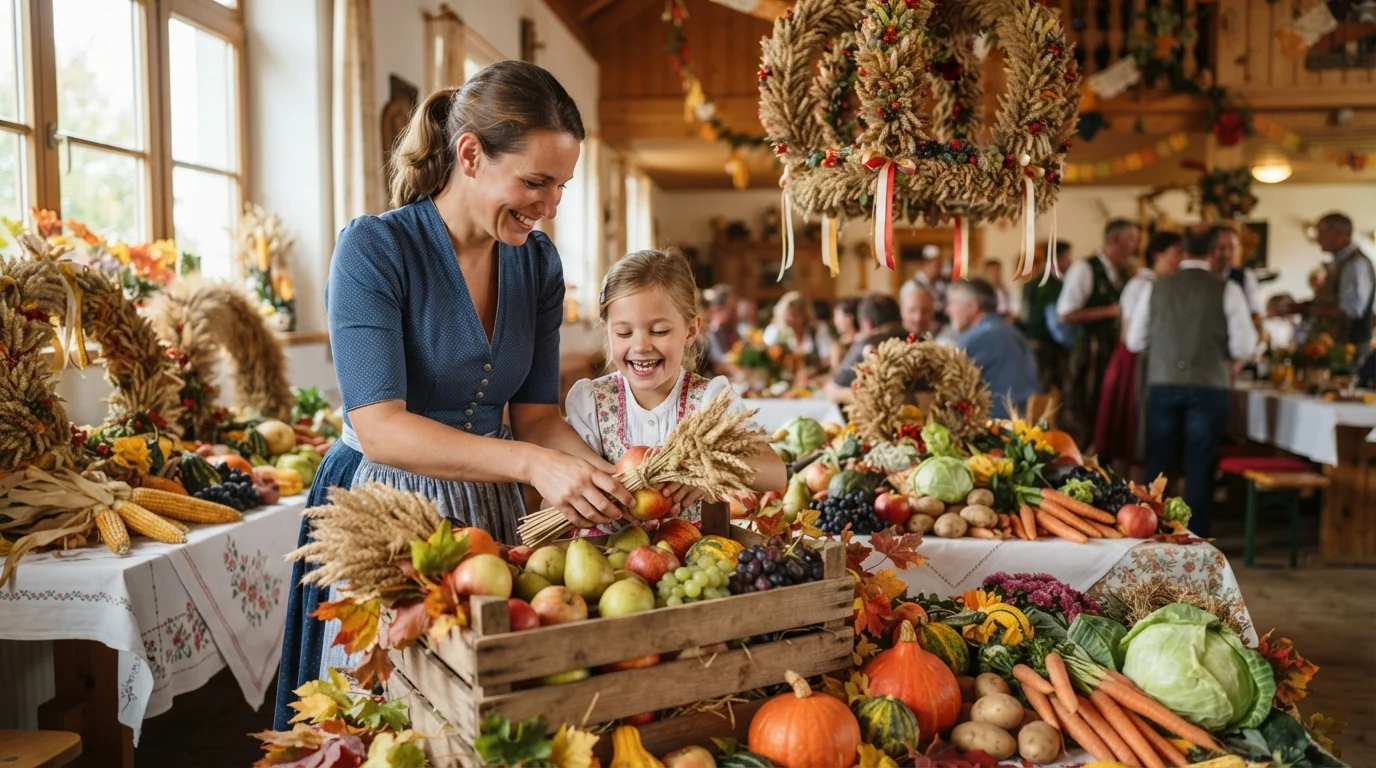
When golden leaves drift across cobblestone streets and farm stands brim with squash, apples, and newly pressed cider, Germany shifts into its cozy autumn rhythm. If you come from North America, autumn often brings thoughts of Thanksgiving: large family reunions, roasted turkey, football on television, and a long holiday weekend. In Germany, however, the harvest is marked by a distinct celebration with its own deep history and reflective character: das Erntedankfest.
Literally translating to the "harvest-thanks-festival," Erntedankfest is one of the oldest customs in Central Europe. For expats, international professionals, and German learners, discovering this tradition opens a fascinating window into German culture, rural heritage, and seasonal vocabulary. In this guide, we explore the origins of Erntedankfest, how it is celebrated across Germany today, how it contrasts with North American Thanksgiving, and the essential German terms you should know to participate in local discussions.
Erntedankfest is Germany's autumn harvest thanksgiving festival, traditionally observed on the first Sunday of October to express gratitude for the year's agricultural yields, sustenance, and community wellbeing.
The impulse to celebrate a successful harvest predates modern borders and formal religions. For centuries, agrarian communities across Germanic regions recognized that survival through a harsh winter depended directly on the autumn yield. Communities held rituals to thank higher powers for good weather, fruitful soil, and grain in the granaries.
With the spread of Christianity, these pre-Christian agricultural rites were incorporated into church life. Unlike the United States or Canada, where Thanksgiving is anchored in early colonial history and recognized as a statutory civic holiday, German Erntedankfest remained predominantly an ecclesiastical and community tradition. While Roman emperors and later Prussian kings attempted to mandate state-wide days of prayer and thanksgiving at various times, the holiday kept its decentralized, agrarian character.
Today, according to the German Catholic Bishops' Conference (Deutsche Bischofskonferenz) and the Evangelical Church in Germany (EKD), Erntedankfest is typically celebrated on the first Sunday of October. Catholic dioceses established this fixed calendar recommendation in 1972, though local Protestant parishes may occasionally hold their services a week earlier or later depending on the regional harvest schedule.
Erntedankfest in Germany is celebrated on the first Sunday of October, although it is an ecclesiastical observance rather than a statutory nationwide public holiday (gesetzlicher Feiertag). In 1972, the German Catholic Bishops' Conference formally designated the first Sunday in October as the recommended date, a schedule observed by both Catholic and Protestant (EKD) parishes across the country.
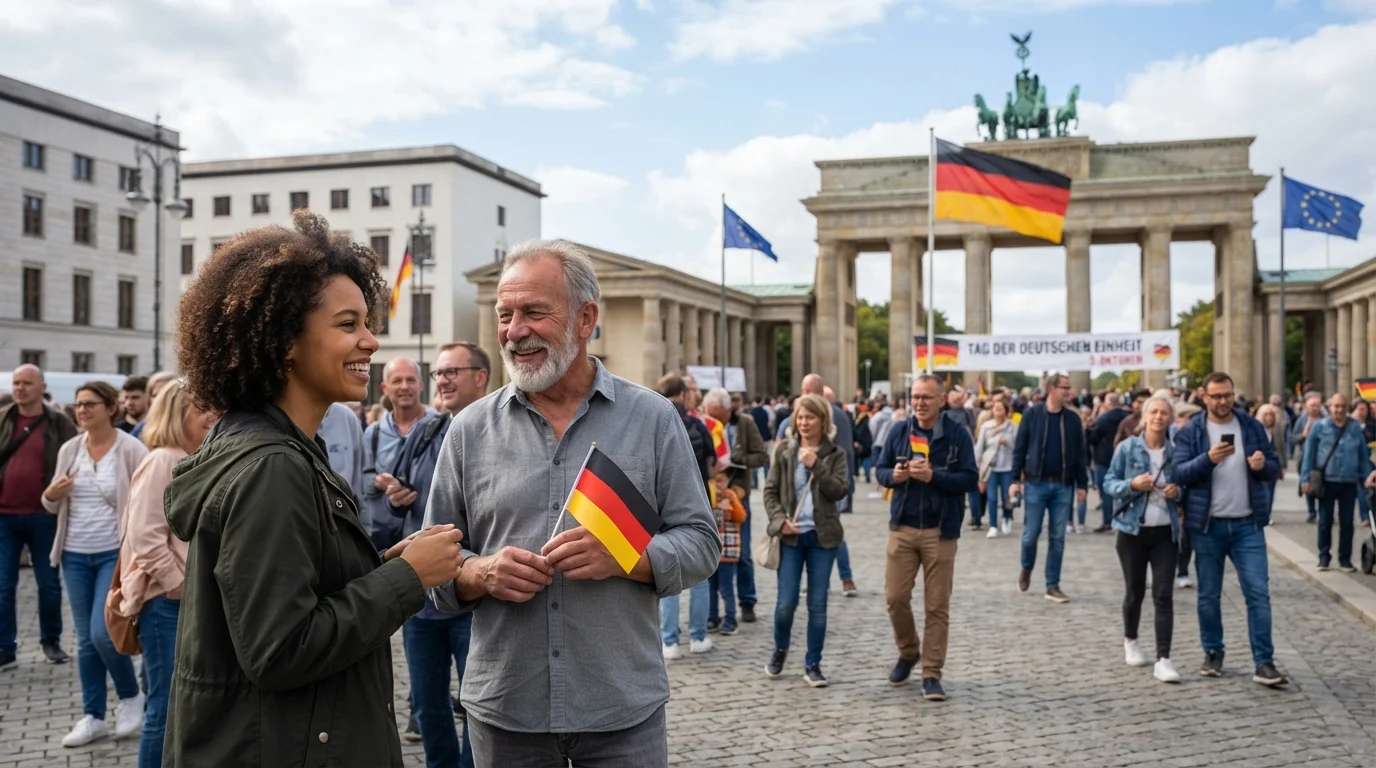
Because Erntedankfest always takes place on a Sunday, shops and public offices are already closed under Germany's Sunday rest laws (Sonntagsruhe), meaning employees do not receive an extra weekday off work. In many calendar years, the celebration falls directly adjacent to Tag der Deutschen Einheit on October 3, creating a festive, reflective atmosphere across early October.
Erntedankfest is celebrated primarily through festive church services, harvest altar displays, grain crown processions, rural tractor parades, and charitable donations to local food banks.
Festivities typically commence with a Sunday morning service where parishioners gather in sanctuaries adorned with freshly harvested fruit, vegetables, and bread. Following church services, farming communities frequently host open-air markets, harvest breakfasts, and lively processions featuring marching bands, while volunteers distribute the altar produce to local families in need.
Because Erntedankfest is not a nationwide statutory public holiday (gesetzlicher Feiertag), schools and offices do not close on the following Monday, and families rarely travel long distances solely for a dinner. Instead, festivities center on local churches, rural communities, and neighbourhood farm markets.
The centerpiece of Erntedankfest takes place inside local parish churches. In the days leading up to the Sunday service, parishioners bring agricultural produce to decorate the altar. A traditional Erntedankaltar is a striking visual display: pyramids of pumpkins, woven baskets of apples and pears, bunches of carrots, sacks of potatoes, bottles of wine, and fresh bread baked specifically for the occasion.
During the service, the congregation gives thanks not only for food, but also for stewardship of nature, labor, and peace. In modern times, many sermons emphasize sustainability, environmental protection, and fair global trade.
One of the most recognizable cultural symbols is die Erntekrone (the harvest crown). Woven meticulously by local farmers, rural youth groups (Landjugend), or parish volunteers, the crown consists of four arches bound together with ears of grain—typically wheat, rye, barley, and oats. Decorated with vibrant autumn flowers and colorful ribbons, the crown is carried into the church in a solemn procession and hung prominently above the sanctuary or displayed near the altar.
The Erntekrone (harvest crown) is a traditional German crown woven from ears of wheat, rye, barley, and oats that serves as the central visual centerpiece of harvest thanksgiving.
Crafted by rural youth groups (Landjugend) or local agricultural associations, the four arches of the crown traditionally represent the four seasons and the cardinal directions. It is adorned with colorful ribbons, sunflowers, and ears of corn before being carried into the church or village hall during the harvest procession, where it frequently remains on display throughout the autumn season.
A crucial element of the modern German harvest festival is solidarity. The food displayed on the altar is not left to spoil or consumed exclusively by the clergy. Following the Sunday service, the fresh produce and non-perishable goods are customarily donated to local community charities or distributed through die Tafel, Germany's nationwide network of food banks that supports people facing economic hardship.
While urban centers like Berlin or Hamburg may observe Erntedankfest quietly inside churches, rural regions across Bavaria, Baden-Württemberg, Lower Saxony, and Hesse celebrate with lively outdoor festivities. Villages frequently organize a Festumzug (parade), where historic tractors, horse-drawn carts adorned with corn husks and sunflowers, and marching bands parade through the streets. Craft markets, brass band performances (Blasmusik), and harvest queens (Ernteköniginnen) often accompany these community gatherings.
German thanksgiving traditions center on honoring agricultural labor through consecrated grain crowns, altar displays of autumn produce, blessed harvest bread (Erntebrot), and community charity drives.
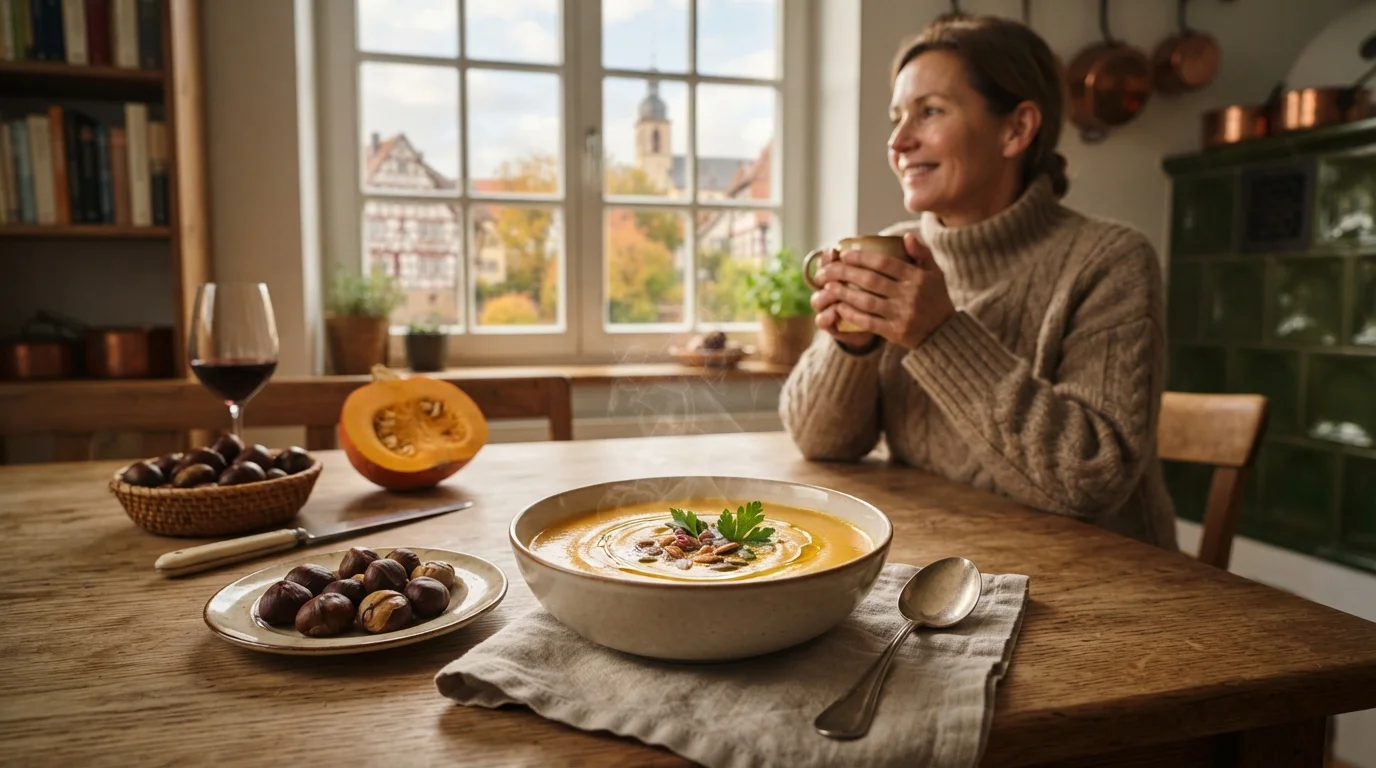
Unlike commercial autumn celebrations, these customs maintain strong ties to rural life and civic solidarity. Families often prepare seasonal recipes featuring pumpkins, roasted chestnuts, or root vegetables. In wine-growing valleys along the Rhine, Mosel, and Neckar, harvest thanksgiving also connects closely with autumn viticulture; you can learn more about these regional festivities in our guide to German wine harvest festivals in October 2026.
Germany thanksgiving, known as Erntedankfest, is an ecclesiastical and agrarian holiday dedicated to thanking nature and supporting community food drives, rather than a commercial national feast.
While American Thanksgiving functions as a major homecoming holiday involving cross-country flights and four-day family gatherings, Erntedankfest in Germany remains quiet and local. Germans view the day as an opportunity to reflect on sustainable consumption, appreciate local agriculture, and give back to those in need through organized parish collections and community initiatives.
For newcomers to Germany, it is easy to assume that Erntedankfest is simply the European equivalent of the American or Canadian holiday. However, several cultural distinctions set them apart:
To explore more about the culinary treats that define the season in Germany, take a look at our guide on German autumn comfort foods like Kürbissuppe and Maroni, as well as the beloved tradition of enjoying Federweißer and Zwiebelkuchen during early autumn winery outings.
Erntedankfest in Germany varies noticeably by region, featuring alpine processions in Bavaria, fruit-filled church altars in Baden-Württemberg, and rural tractor parades in Lower Saxony.
In southwestern Germany, the celebration often blends into viticultural festivities, where winegrowers give thanks for the grape harvest. In northern coastal regions, fishing communities adapt the tradition by giving thanks for maritime bounty alongside agricultural crops, highlighting how regional geography shapes local observance.
Learning the vocabulary surrounding seasonal customs is an effective way to deepen your practical language proficiency. Here are the core German words and phrases connected to Erntedankfest:
When discussing the holiday with German neighbors or colleagues, you might hear or use phrases like:
Understanding regional and religious traditions is not just an academic exercise—it plays a meaningful role in settling into German society. If you are preparing for your naturalization pathway, cultural literacy complements your legal and political study.
Under current German citizenship law, permanent integration involves demonstrating language ability at the B1 level through recognized certifications like the Deutsch-Test für Zuwanderer (DTZ), along with passing the standardized citizenship test. The official test catalogue—managed through the Federal Office for Migration and Refugees (BAMF)—covers the German legal framework, state structure, and social customs. You can read our detailed breakdown of how the Leben in Deutschland test and Einbürgerungstest work to understand the 310-question pool and test format.
While the test focuses heavily on constitutional rights, federalism, and history, familiarizing yourself with living customs like Erntedankfest helps you understand the values that shape German communal life, civic volunteerism (Ehrenamt), and local holidays.
Memorizing isolated word lists can feel tedious, but learning German words through cultural contexts like seasonal festivals makes them stick. This is where the Bretzi app helps you build practical language skills.
Bretzi follows the CEFR curriculum from complete beginner (A0) all the way to advanced C1, focusing directly on the German of daily life, work, and exams in Germany. When learning nouns like die Ernte, der Altar, or das Fest, the app's Words tab provides interactive flashcards, word puzzles, and a dedicated article game to help you master which article belongs with which noun. Spaced repetition brings words back for review just as they begin to fade from memory.
If you want to practice discussing autumn plans, Bretzi's Premium feature SprachBuddy provides an AI conversation partner. You can speak out loud, practice everyday conversational scenarios, and review your transcript afterward with pronunciation scoring that highlights where you can improve. Because Bretzi works on iPhone, iPad, Android, and Apple Watch (with an active internet connection), you can easily review your daily streak while commuting or taking a walk through the autumn park.
If you want to experience Erntedankfest in Germany this autumn, here are three actionable ways to get involved:
German Erntedankfest may lack the commercial fanfare of its American counterpart, but its quiet charm lies in its focus on gratitude, community solidarity, and respect for nature's cycles. By exploring traditions like the harvest altar, the woven harvest crown, and local charity drives, you gain a deeper appreciation for the rhythms of daily life across Germany.
Embrace the season: visit your nearest market, sample the fresh harvest dishes, and use your evolving German skills to connect with the traditions around you.
Rules, fees and dates change. Check the current version on the official pages before you act.
Share this article:
When the crisp air settles across Germany and broadleaf canopies in the Black Forest, Harz, and Bavarian Alps turn vibrant shades of amber and gold,...
Read moreWhen the crisp October winds begin to sweep across Germany and the golden days of Altweibersommer transition into darker, chillier evenings, the...
Read moreWhat is Tag der Deutschen Einheit? If you live in Germany or have spent an autumn here, you have likely noticed that on October 3rd, the bustle of...
Read more