Erntedankfest: Germany's Autumn Thanksgiving Tradition Explained
When golden leaves drift across cobblestone streets and farm stands brim with squash, apples, and newly pressed cider, Germany shifts into its cozy...
Read more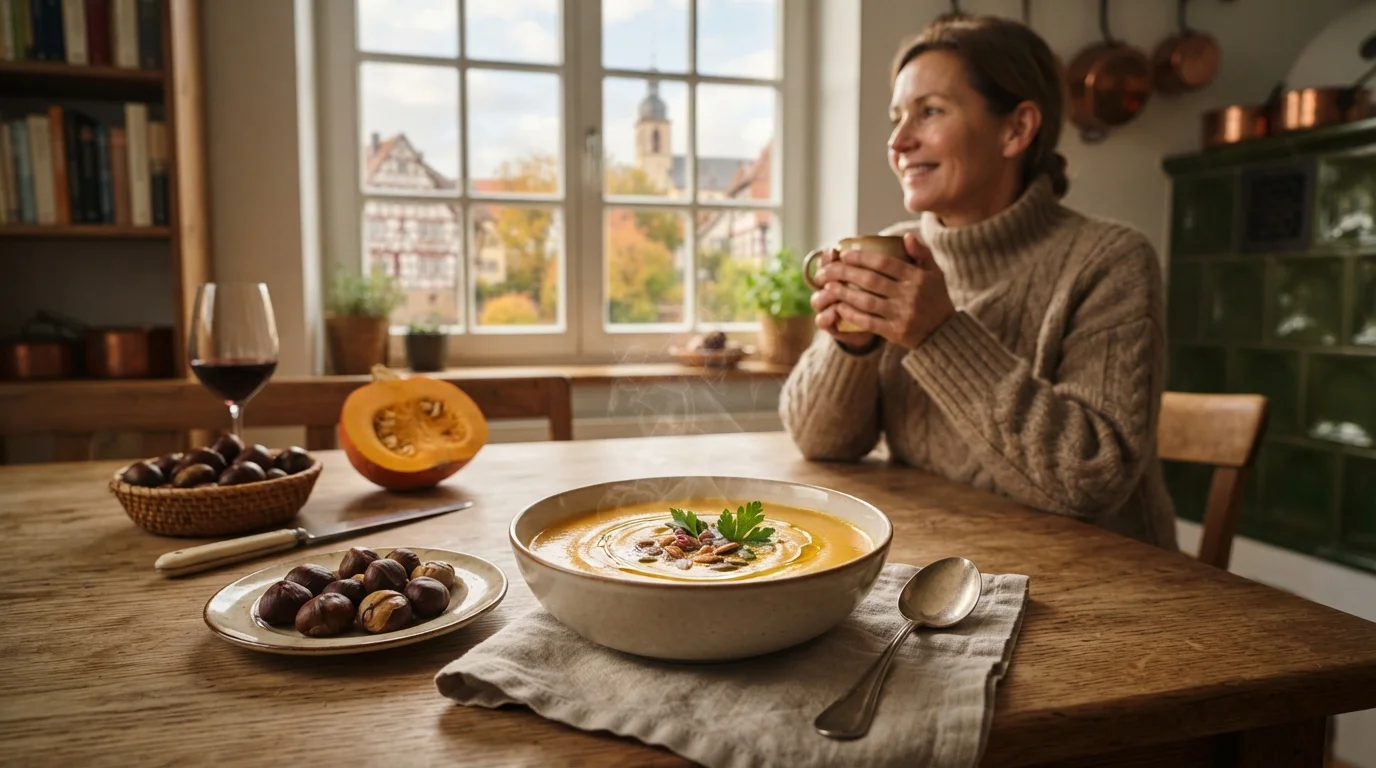
When the crisp October winds begin to sweep across Germany and the golden days of Altweibersommer transition into darker, chillier evenings, the country undergoes a comforting culinary transformation. While summer in Germany revolves around biergartens and light salads, autumn is a celebration of warmth, hearth, and earthy produce. Two seasonal staples take center stage during this time: velvety Kürbissuppe (pumpkin soup) and steaming bags of heiße Maroni (roasted sweet chestnuts).
For expats, travelers, and German language learners, exploring seasonal comfort foods is far more than an exercise in good eating. Food in Germany is bound up with local rhythms, calendar customs, and everyday language. In this guide, we explore the cultural significance of Germany's autumn food rituals, decipher the culinary traditions behind pumpkin soup and roasted chestnuts, and supply you with practical German vocabulary to navigate weekly markets, cozy bistros, and your own autumn kitchen.
To anyone newly arrived in Germany, the sheer magnitude of the country's pumpkin obsession—der Kürbishype—can come as a delightful surprise. From late September until late November, vibrant orange and green squashes dominate supermarket entryways, farm stalls, and restaurant menus across all 16 federal states.
While carving jack-o’-lanterns has gained popularity over recent decades, the culinary star of autumn remains the Hokkaido pumpkin (red kuri squash). Unlike traditional Halloween carving pumpkins, which are fibrous and watery, the Hokkaido has a dense, nutty, sweet flesh reminiscent of chestnuts. Most importantly for home cooks, its skin is completely edible and softens during cooking, eliminating the tedious chore of peeling.
You will also encounter the Butternusskürbis (butternut squash) and Muskatkürbis (muscat pumpkin), but in German homes, Hokkaido remains the undisputed champion for whipping up a quick weeknight soup.
German pumpkin soup is not a one-size-fits-all recipe; it ranges from rustic, peasant-style broths to elegant, creamy restaurant veloutés. However, a modern German autumn dinner party standard typically brings together several classic elements:
One of the most pleasant weekend rituals in October is visiting a local Kürbishof (pumpkin farm). Families drive out to the countryside to admire enormous decorative displays, drink hot spiced cider, and purchase squashes directly from farmsteads. In many rural areas, you will spot unstaffed roadside wooden carts lined with pumpkins and an honesty box labeled Kasse des Vertrauens (box of trust). Customers weigh their squash, slip exact change into the coin slot, and drive off—a testament to everyday German social trust.
As the daylight hours dwindle toward November, pedestrian shopping zones (Fußgängerzonen), train station plazas, and autumn street fairs begin to fill with an unmistakable nutty, smoky fragrance: heiße Maroni (roasted chestnuts).
If you enjoy walking through German city parks or taking forest strolls—an activity cherished in Germany and detailed in our guide to German forest etiquette and hiking customs—you will notice the ground littered with shiny brown nuts falling from large trees. It is essential to understand the difference between the two common varieties:
Sweet chestnuts are sold by street vendors from specialized roasting wagons equipped with slotted drum roasters or large charcoal pans. The vendor cuts an 'X' into the chestnut shell (das Einritzen) before roasting so the nuts do not burst under steam pressure. When roasted, the shell splits open, turning brittle and charred, while the interior becomes warm, buttery, and fragrant.
Served in a paper funnel (Papiertüte), hot chestnuts serve a double purpose on cold days: they provide a hearty, complex-carbohydrate snack, and they act as natural pocket warmers for chilled fingers. Peeling the hot shells while strolling through a frosty evening market is an quintessential German late-autumn memory.
While pumpkin soup and chestnuts dominate the streetscapes, German home cooking in autumn features a variety of rich, grounding dishes meant to satisfy the appetite as temperatures plunge.
From late September through October, wine regions across southwestern Germany celebrate the grape harvest with Federweißer (young, partially fermented white wine that is cloudy and fizzy). Because it is actively fermenting, bottles cannot be sealed with airtight caps—they are transported standing upright with porous lids. The classic accompaniment is Zwiebelkuchen, a warm, savory sheet-pan tart baked with mounds of caramelized onions, smoky bacon cubes (Speck), cream, and caraway seeds.
The word Eintopf literally translates to "one pot," and it holds an esteemed place in German comfort cuisine. Autumn brings the return of:
Autumn also marks the tail end of the plum harvest. Before the Christmas baking season takes over, afternoon gatherings centered around German Kaffee und Kuchen traditions frequently feature Zwetschgenkuchen. Made with oval, purple damson plums set vertically into yeast dough or shortcrust and topped with generous buttery crumbles (Streusel), this tart treat paired with filter coffee is the ultimate mid-afternoon pick-me-up.
Whether you are shopping at your neighborhood Wochenmarkt (weekly farmers' market) or ordering in a restaurant, using precise German culinary terms will enrich your everyday interactions.
When approaching a chestnut vendor on the street, you can keep the exchange friendly and direct:
Kunde: "Guten Tag! Ich hätte gerne eine kleine Tüte heiße Maroni, bitte." (Hello! I would like a small paper bag of hot chestnuts, please.)
Verkäufer: "Gerne. Klein oder groß?" (Gladly. Small or large?)
Kunde: "Eine kleine, bitte. Was kostet das?" (A small one, please. How much is that?)
Verkäufer: "Das macht vier Euro fünfzig, bitte." (That will be four euros fifty, please.)
Kunde: "Hier bitte, passend. Vielen Dank und einen schönen Tag noch!" (Here you go, exact change. Thank you very much and have a nice day!)
Kunde: "Guten Morgen! Muss man diesen Kürbis schälen?" (Good morning! Does one need to peel this pumpkin?)
Markthändler: "Nein, das ist ein Hokkaidokürbis. Die Schale können Sie einfach mitkochen." (No, that is a Hokkaido squash. You can simply cook the skin along with it.)
Kunde: "Wunderbar, dann nehme ich den mittleren hier." (Wonderful, then I will take the medium-sized one here.)
Mastering a language involves more than memorizing grammar charts; it requires understanding the sensory, seasonal world that native speakers inhabit every day. Seasonal eating in Germany is not merely a marketing buzzword—it is deeply anchored in community life, family menus, and national culture.
If you want to practice real-life culinary conversations, explore menu items, or prepare for daily interactions across Germany, the Bretzi app helps you develop practical fluency. With lessons running from complete beginner (A0) through C1, Bretzi follows authentic everyday situations in Germany. Each unit ends with a natural conversation from daily life, ensuring you know how to order food, ask questions at market stalls, and describe flavors naturally.
You can save new culinary words—such as das Kürbiskernöl or pürieren—directly into Bretzi's Words tab to review them using spaced repetition. If you want to build confidence speaking aloud before you step up to a market vendor, you can practice with SprachBuddy, Bretzi's AI conversation partner. You can call SprachBuddy anytime on your phone to simulate realistic dialogues about shopping, autumn recipes, or dining out, receiving immediate feedback on your pronunciation and phrasing.
If you want to bring the comforting aroma of German autumn into your apartment tonight, here is a straightforward recipe using basic supermarket ingredients:
German autumn may bring shorter days and chilly mornings, but it also welcomes a season of culinary warmth. Wrapping your hands around a warm bowl of spiced Kürbissuppe or cracking open fresh, sweet Maroni at a street stand offers a direct taste of German comfort (Gemütlichkeit). As you explore local markets this season, take the opportunity to converse with growers and vendors in German. Every interaction at the fruit stand or soup counter builds practical vocabulary, bridging cultural immersion and language mastery.
Rules, fees and dates change. Check the current version on the official pages before you act.
Share this article:
When golden leaves drift across cobblestone streets and farm stands brim with squash, apples, and newly pressed cider, Germany shifts into its cozy...
Read moreWhat is Tag der Deutschen Einheit? If you live in Germany or have spent an autumn here, you have likely noticed that on October 3rd, the bustle of...
Read moreAs October draws to a close, a distinct shift sweeps across Germany. Bakeries display marzipan ghosts alongside hearty pumpkin pastries, shops deck...
Read more