Altweibersommer: Indian Summer in German Culture
Have you ever experienced a warm, golden autumn day in Germany when summer seems to return for one last visit? Germans have a beautiful word for this...
Read more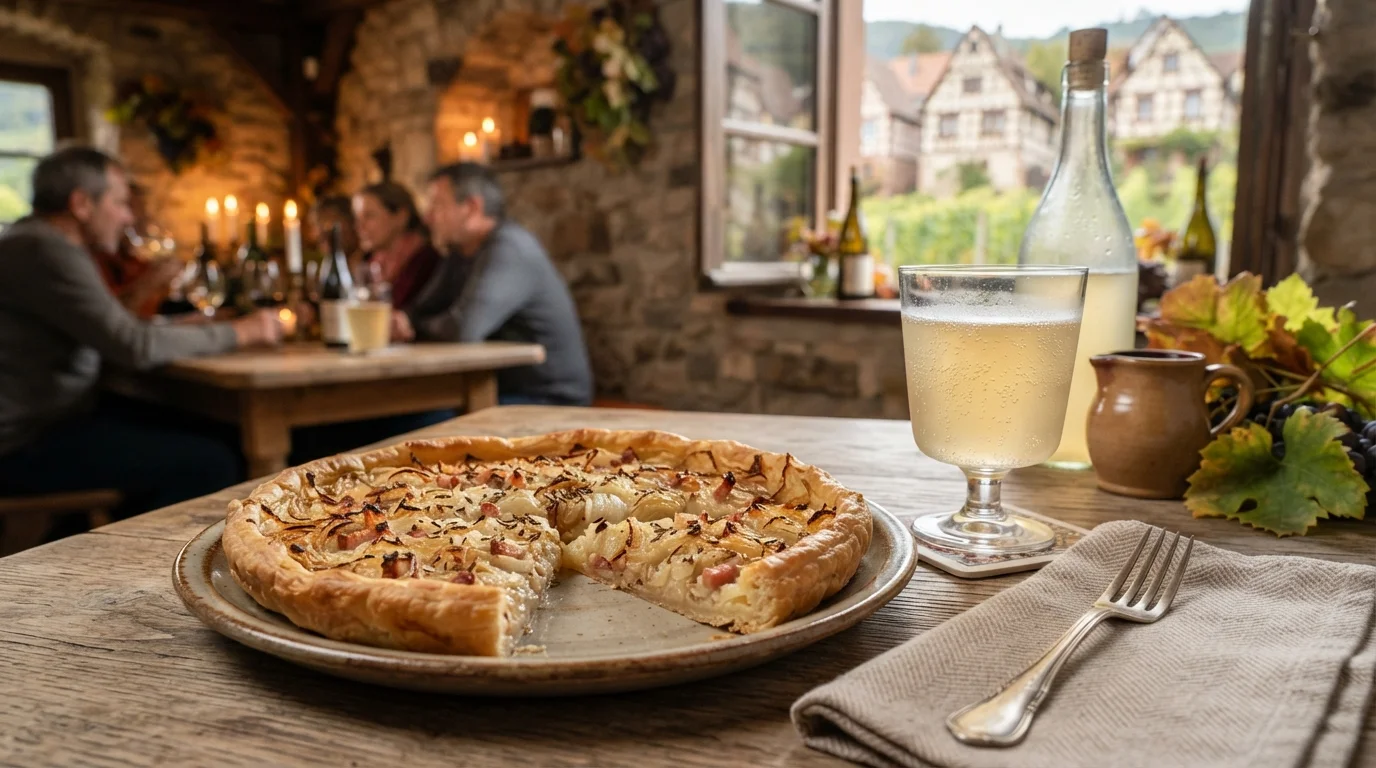
September in Germany has a flavor: slightly sweet, gently sparkling Federweißer served with a warm slice of savory Zwiebelkuchen. This seasonal pairing marks the beginning of the grape harvest and brings together vineyards, village festivals, family kitchens, and long conversations around the table. For language learners and expats, it is also an ideal way to understand German culture through food.
Unlike many dishes available throughout the year, Federweißer and Zwiebelkuchen belong to a short and special period. You may encounter them at a Weinfest, a farmers’ market, a restaurant in a wine-growing region, or a neighbor’s kitchen. Knowing what to order, how to behave, and what vocabulary to use can turn a simple meal into a memorable cultural experience.
In this guide, you will learn what Federweißer and Zwiebelkuchen are, where the tradition comes from, how to enjoy the pairing safely, and which German phrases will help you feel confident. You will also discover practical tips for September travel and integration-exam conversations about German food, seasons, and customs.
Federweißer is young wine made from freshly pressed grape juice that is still fermenting. Because fermentation has begun but is not complete, the drink is cloudy, lightly alcoholic, and often pleasantly sweet. Its name is usually connected with the white yeast particles that float in the drink like tiny feathers. The word Federweißer literally suggests something feather-white.
The drink is also known by regional names. In some parts of Germany, you may hear Federroter when the young wine is made from red grapes. In Austria, a similar drink is often called Sturm. Regional vocabulary is common in German food culture, so do not worry if the label changes from one place to another.
Federweißer is usually available from late summer through autumn, especially during September and October. The exact timing depends on the grape harvest, weather, and region. Important wine-growing areas include the Moselle, Rhine, Palatinate, Baden, Franconia, and the Rheinhessen. At local wine festivals, you may see bottles or glasses labeled neuer Wein, another useful expression meaning new wine.
Fermentation continues after the drink has been bottled. Carbon dioxide develops inside, and the bottle must be able to release pressure. For this reason, Federweißer is often sold in bottles that are not completely sealed or are stored upright. If you buy a bottle to take home, keep it upright and follow the seller’s storage instructions. Do not shake it, and do not transport it carelessly in a warm car.
Federweißer can change quickly. It may taste sweet and fruity at first, then become drier and more wine-like as fermentation continues. It is also easy to drink because of its refreshing taste, but it still contains alcohol. Drink slowly, eat something with it, and remember that the alcohol content can vary.
For additional regional context, explore this guide to September wine festivals and useful tasting phrases. The vocabulary you learn there is helpful when visiting a vineyard or ordering Federweißer at a festival.
Zwiebelkuchen is a traditional German onion tart or onion cake. Despite the word Kuchen, it is generally savory rather than sweet. The base may be made from yeast dough, shortcrust pastry, or a bread-like dough. It is topped with onions, cream or sour cream, eggs, and often diced bacon called Speck.
Recipes vary by region and family. Some versions are thick and soft, while others have a thin, crisp crust. The onions may be gently fried before they are added, which gives them a sweet, rich flavor. Caraway seeds, nutmeg, pepper, and salt are common seasonings. Vegetarian versions may leave out the bacon while keeping the creamy onion filling.
Zwiebelkuchen is strongly associated with wine-growing regions, particularly southwestern and central Germany. It is often prepared when the new wine arrives, making the combination of Federweißer and Zwiebelkuchen a seasonal event rather than an ordinary lunch. The warm onions and pastry balance the cool, sweet, slightly fizzy drink.
Learning these words in context is more effective than memorizing an isolated list. When you see Zwiebelkuchen on a menu, describe it aloud: Das ist ein herzhafter Kuchen mit Zwiebeln, Eiern und Speck. This means, It is a savory cake with onions, eggs, and bacon.
September is a month of transition in Germany. Summer warmth may continue during the day, while evenings become cooler and the first autumn colors appear. The grape harvest begins in many regions, and vineyards become busy with workers collecting ripe grapes. Food traditions reflect this seasonal change: meals become warmer and more substantial, but outdoor celebrations are still possible.
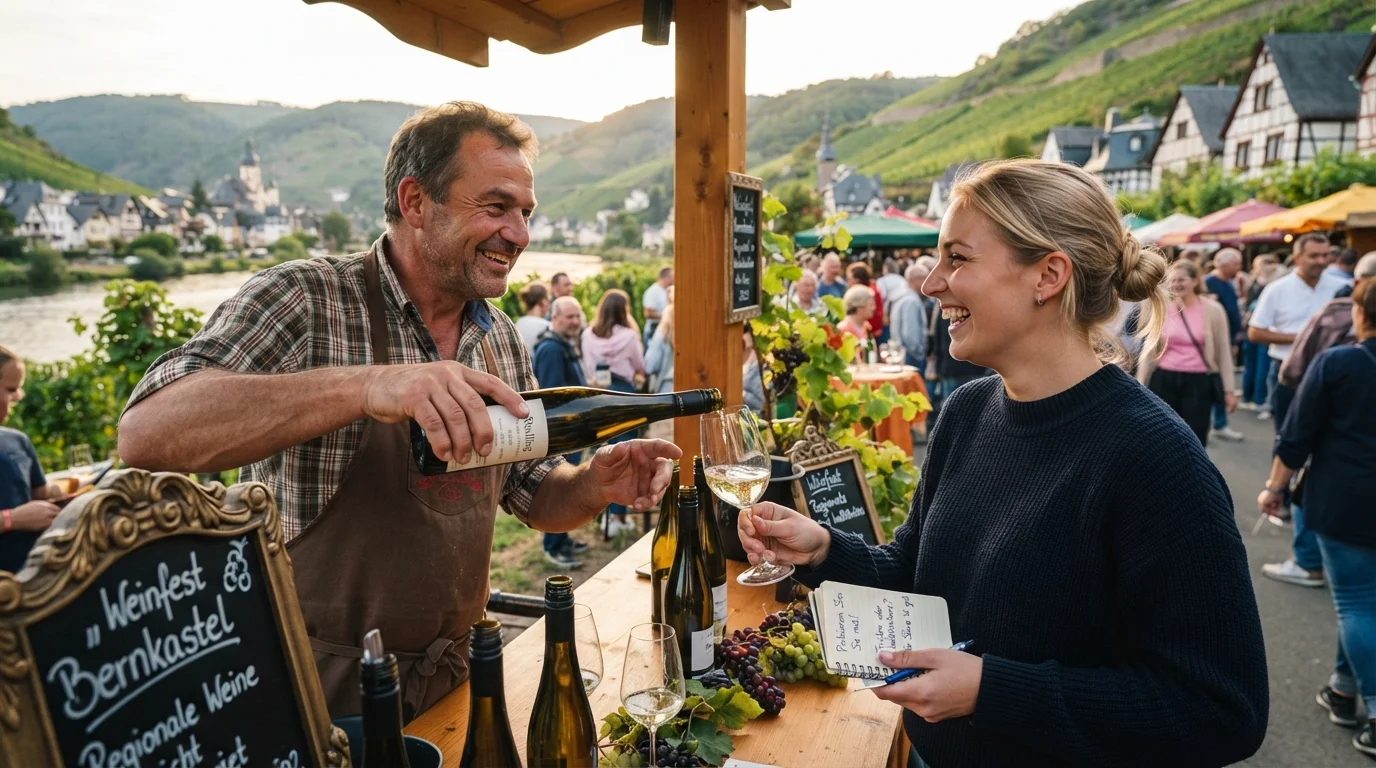
A Federweißer evening often feels informal and communal. People may sit at long tables outside a winery, listen to music, and share regional dishes. The atmosphere is usually more relaxed than a formal wine tasting. You do not need to be a wine expert. Showing curiosity and asking simple questions is enough.
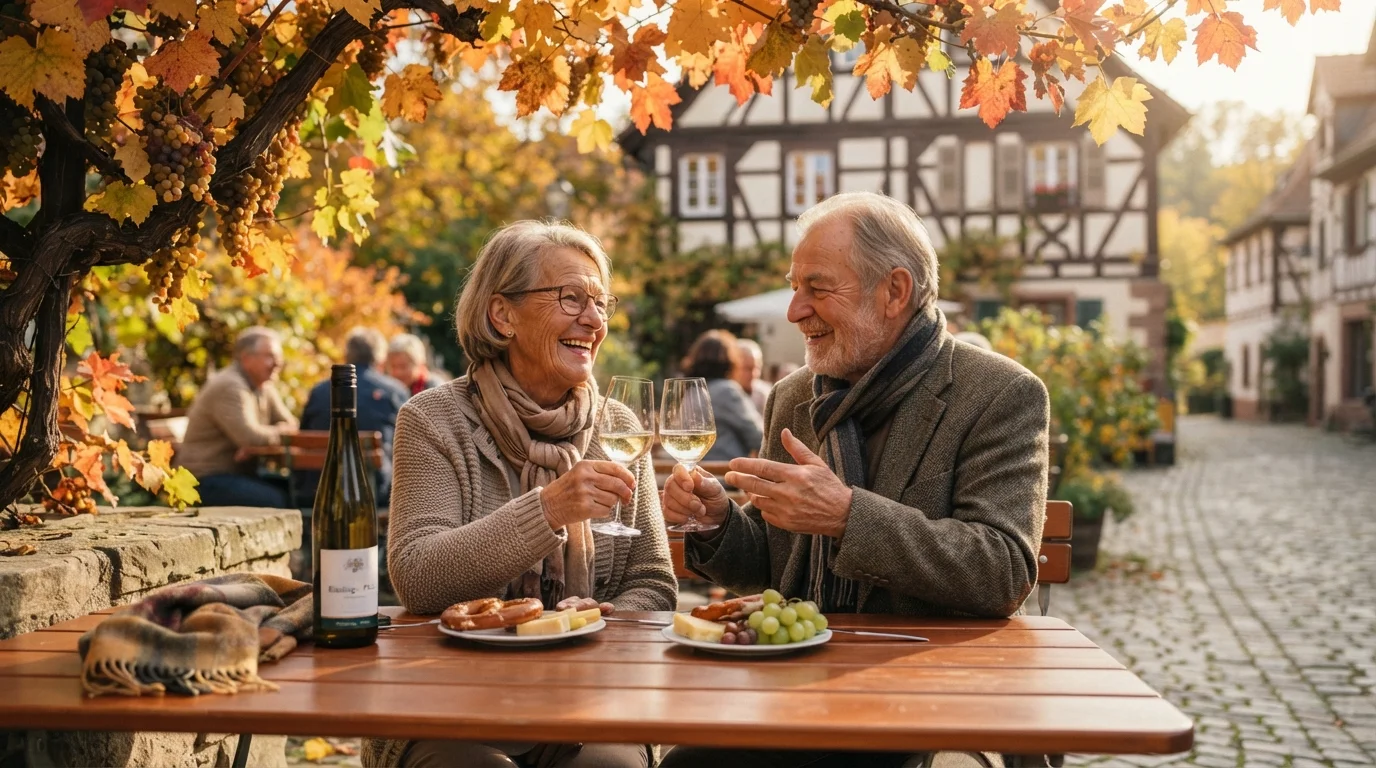
September also offers other opportunities to connect seasonal language with everyday life. You can practice words for changing weather, harvests, and outdoor activities through the German tradition of Altweibersommer. In a conversation, you might say: Im September ist es tagsüber noch warm, aber abends wird es kühler. This means, In September it is still warm during the day, but it gets cooler in the evening.
For newcomers to Germany, these small seasonal customs can be valuable social opportunities. A colleague may invite you to a village wine festival, or a neighbor may recommend a local bakery. Accepting such invitations helps you practice informal German and learn how people spend time together outside work and official appointments.
At a restaurant, you can say:
Notice the form Federweißen in the first sentence. After ein Glas, the name is commonly used in the genitive form. In everyday speech, however, you may hear people use the name more loosely. Do not let one unfamiliar ending prevent you from ordering.
German wine festivals are usually friendly, but a few habits make the experience smoother. First, check whether seating is communal. At long tables, it is polite to ask, Ist hier noch frei? before sitting down. This means, Is this seat still free? When someone joins your table, a simple Prost! is appropriate before drinking.
Federweißer is often served chilled, but not necessarily as cold as finished white wine. The cloudy appearance is normal. Do not assume that sediment means the drink has gone bad. However, if it smells strongly unpleasant or tastes unusually sour, ask the seller for advice.
Because fermentation continues, Federweißer is not ideal for long-distance travel. If you buy it, keep the bottle upright, cool, and loosely closed according to the instructions. Never place a tightly sealed bottle in a warm location. When in doubt, buy only as much as you can enjoy soon.
At a festival, carry cash because smaller stands may not accept cards. Check whether the price includes a deposit for the glass or bottle. This deposit is called Pfand. You may be asked to return the container at a collection point to receive your money back.
Cooking Zwiebelkuchen is a practical way to combine language learning with cultural immersion. Begin with a pastry or yeast-dough base. Slice several onions thinly and cook them slowly in butter or oil until soft. Avoid browning them too aggressively, because the filling should remain creamy and balanced.
For the filling, mix eggs with sour cream, crème fraîche, or cream. Add pepper, salt, and optional caraway seeds. Stir in the softened onions and bacon if desired. Spread the mixture over the dough and bake until the center is firm and the edges are golden. Serve it warm, traditionally with Federweißer or a nonalcoholic sparkling grape drink.
Use cooking instructions to practice imperative verbs:
If you are vegetarian, replace bacon with smoked tofu, mushrooms, or simply extra onions. If you avoid dairy, plant-based cream alternatives can work, although the texture may differ. The important feature is the contrast between a tender savory filling and a crisp or soft base.
Food is a frequent topic in German conversations and integration exams. You may be asked about your favorite meal, a local tradition, shopping habits, or how you celebrate a season. Federweißer and Zwiebelkuchen provide useful material for all these subjects.
Try answering these questions in German:
A useful answer might be: Im September esse ich gern Zwiebelkuchen. Er ist herzhaft und passt gut zu Federweißer. Wenn ich keinen Alkohol trinken möchte, wähle ich Traubensaft oder Wasser. This answer demonstrates seasonal vocabulary, reasons, preferences, and responsible choices.
For more autumn food etiquette, you can also review German Kaffee und Kuchen customs. Although coffee and cake follows a different tradition, both experiences teach you how Germans order, share food, and use polite conversation at the table.
Bretzi can support this kind of preparation with AI-powered conversation practice, personalized learning plans, and grammar lessons from A0 to C1. You can rehearse ordering Zwiebelkuchen, asking about ingredients, or explaining a regional tradition before trying the conversation in real life.
Federweißer is not grape juice. Since fermentation is active, the alcohol level may increase over time, and the sweetness can make the drink seem lighter than it is. If you are driving, pregnant, taking medication, under the legal drinking age, or simply avoiding alcohol, choose a nonalcoholic alternative such as Traubensaft, grape juice, or sparkling apple juice.
It is perfectly acceptable to say Ich trinke keinen Alkohol, meaning I do not drink alcohol. You can add Ich nehme lieber Wasser, bitte, or I would prefer water, please. Good hosts and servers should respect this choice. Eating Zwiebelkuchen without Federweißer is still a delicious and authentic seasonal experience.
People with food allergies should ask specifically about wheat, eggs, milk, and bacon. Useful phrases include Ich habe eine Laktoseintoleranz, I am lactose intolerant, and Ich bin allergisch gegen Eier, I am allergic to eggs. When buying prepared food, read the ingredient list and ask staff if anything is unclear.
The best places to try Federweißer and Zwiebelkuchen are wine-growing areas during the grape harvest. Look for small wine taverns called Straußwirtschaften or Heckenwirtschaften. These temporary establishments are often connected to wineries and may open only during certain seasons. Their menus can be simple, local, and highly seasonal.
Farmers’ markets, wine villages, and autumn festivals are also good choices. Search local tourism websites for terms such as Federweißerfest, Zwiebelkuchenfest, Weinlese, or neuer Wein. The official German Wine Institute offers information about German wine regions and grape varieties. You can also read the general background on Federweißer before traveling.
Do not limit yourself to famous destinations. A smaller local celebration may provide more opportunities to speak with residents. Ask where the onions were grown, which grape variety is used, or whether the recipe is typical of the area. Even a short exchange can improve your confidence.
Make the tradition part of a seven-day learning challenge. On day one, learn the vocabulary for onions, grapes, pastry, harvest, and autumn. On day two, listen to a German recipe and write down the imperative verbs. On day three, practice ordering politely. On day four, compare Federweißer with another drink in German. On day five, describe a meal using three adjectives. On day six, role-play a conversation at a wine festival. On day seven, write five sentences about a seasonal food tradition in your own country.
Bretzi’s vocabulary practice with spaced repetition and interactive dialogue games can help you retain the words while applying them in practical scenarios. Pronunciation training with instant feedback is especially useful for terms such as Zwiebelkuchen, Weinlese, and Federweißer. The goal is not perfect pronunciation on the first attempt; it is steady improvement and confidence in real conversations.
Federweißer and Zwiebelkuchen represent much more than a drink and a savory tart. Together, they tell the story of Germany’s grape harvest, regional cooking, changing seasons, and social life. They offer language learners a natural way to practice ordering food, discussing ingredients, describing preferences, and participating in local traditions.
This September, look for a nearby wine festival, farmers’ market, or seasonal restaurant. Learn a few phrases, ask respectful questions, and try the pairing at your own pace. If you do not drink alcohol, choose grape juice and enjoy the Zwiebelkuchen anyway. Then use your experience as a German conversation topic and keep building your vocabulary with Bretzi. Your next language lesson might begin with a slice of onion tart.
Share this article:
Have you ever experienced a warm, golden autumn day in Germany when summer seems to return for one last visit? Germans have a beautiful word for this...
Read moreAs summer winds down and the morning air turns crisp, Germany undergoes a golden transformation. While millions of tourists flock to Bavaria for...
Read moreEvery autumn, millions of visitors from across the globe descend upon Munich's Theresienwiese for the world's largest folk festival: Oktoberfest....
Read more