
Ruhezeit in Germany: Sunday Quiet Hours & House Rules Guide
You have just finished completing your Anmeldung, unpacked the last moving boxes on a sunny Sunday afternoon, and decided it is the perfect time to...
Read more
This article was written by AI and published by Bretzi.
AI can get things wrong. For anything official, check the source it points to.
AI-generated image
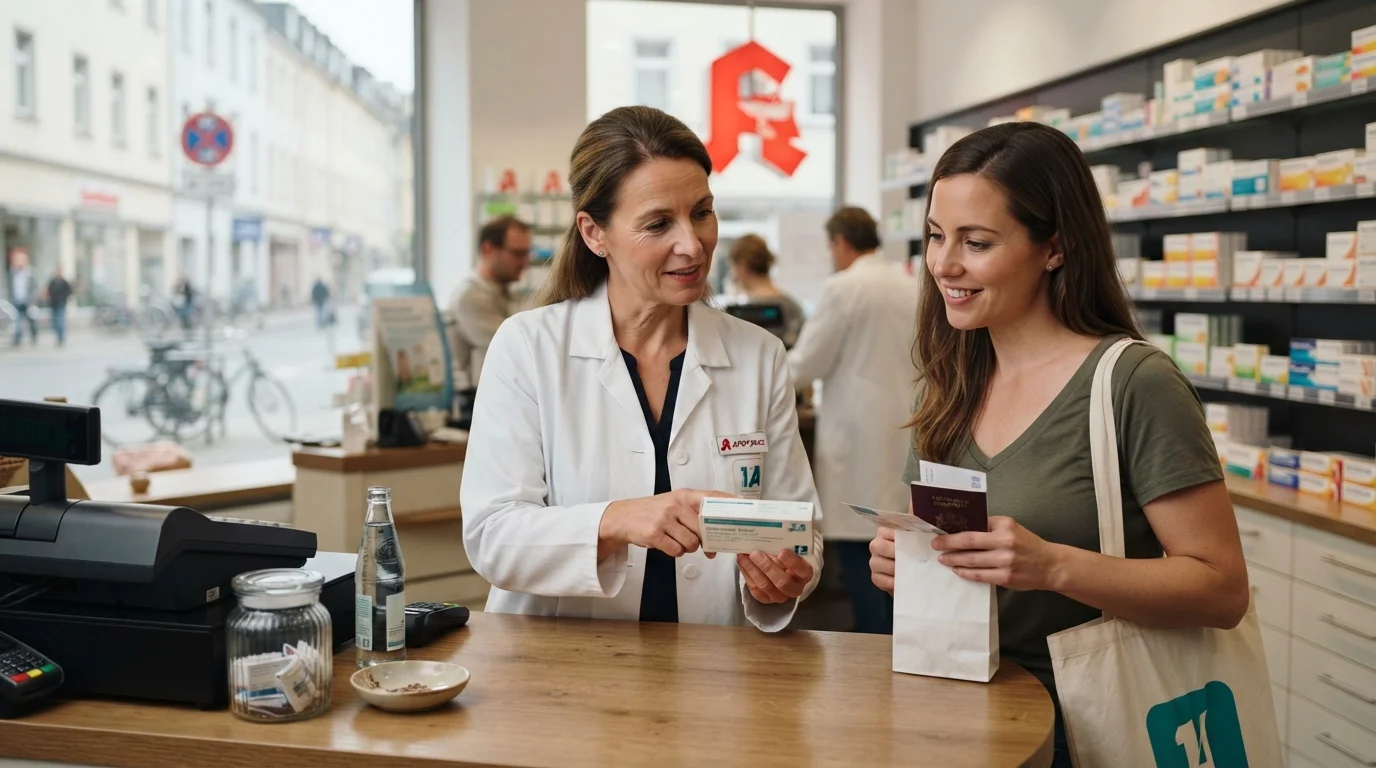
Moving to a new country involves learning many unwritten cultural rules and navigating complex administrative systems. You might have already conquered administrative hurdles like getting your tax documents sorted or completing your Ummeldung address registration. However, one of the most surprising culture shocks for expats in Germany often happens during a simple errand: trying to buy a pack of painkillers for a sudden headache.
If you head to the local supermarket or drugstore expecting to find ibuprofen, paracetamol, or cold medicine on the shelves, you will come up empty-handed. In Germany, medication distribution is tightly controlled, highly professionalized, and centered around the local pharmacy, known as the Apotheke.
Whether you need a daily prescription filled, are dealing with a seasonal flu, or need late-night relief from a fever, understanding how German pharmacies operate is essential for every expat. This comprehensive guide covers everything you need to know about German pharmacy rules, prescription types, emergency services, costs, and essential language tips to help you get the care you need.
One of the first distinctions expats need to understand in Germany is the strict division between a Drogerie (drugstore, such as dm, Rossmann, or Müller) and an Apotheke (pharmacy).
In many countries like the United States, the UK, or Australia, large drugstores combine retail shopping with a pharmacy counter, selling over-the-counter (OTC) medications alongside cosmetics, snacks, and household items. In Germany, these functions are legally separated.
Medications in Germany are categorized into three main levels of availability:
When a doctor in Germany gives you a prescription, you will notice that paper prescriptions come in different colors. Each color signifies who pays for the medication, how long the prescription remains valid, and the type of drug prescribed.
This is the standard prescription form for individuals covered by German public health insurance (Gesetzliche Krankenversicherung - GKV). When you bring a red/pink prescription to the pharmacy, your public health insurance covers most of the cost. You will typically pay a small statutory copayment (Zuzahlung), usually between €5 and €10 per item.
Validity: Generally valid for 28 days from the date of issue.
The blue prescription is issued to patients with private health insurance (Private Krankenversicherung - PKV) or public insurance patients who receive treatments not covered by public plans. When presenting a blue prescription, you pay the full retail price of the medication upfront at the counter. You then submit the stamped receipt and prescription to your private insurance provider for reimbursement.
Validity: Usually valid for 3 months unless specified otherwise by the doctor.
A green prescription is an official recommendation from your doctor for an over-the-counter medication that is non-prescription but recommended for your treatment (e.g., herbal cough remedies, specific skin ointments). Because it is not an officially mandated drug under public coverage, you must pay the full price yourself. Some supplemental insurances or specific public health funds reimburse these costs, so hold onto your receipt!
Validity: Unlimited validity, though pharmacies prefer fulfilling them within a reasonable timeframe.
The yellow prescription is strictly reserved for controlled substances and narcotics (Betäubungsmittel), such as heavy pain medications or ADHD treatments. These prescriptions are subject to strict legal oversight.
Validity: Extremely strict—valid for only 7 days from the date of issuance.
Germany has modernized its healthcare infrastructure. Today, paper red prescriptions are largely replaced by the E-Rezept (electronic prescription). When your doctor prescribes medication, it is linked digitally to your health insurance card (Gesundheitskarte). To collect your medicine, simply take your health insurance card to any pharmacy and hand it to the staff. They insert the card into their terminal, retrieve your electronic prescription, and hand over your medication seamlessly.
Standard operating hours for German pharmacies usually align with general retail hours. Most neighborhood pharmacies are open Monday through Friday from 8:30 AM to 6:30 PM or 7:00 PM, and on Saturdays from 8:30 AM until 1:00 PM or 4:00 PM. Like most retail establishments in Germany, pharmacies are generally closed on Sundays and public holidays.
However, medical emergencies and illnesses do not stop for weekends or late evenings. Germany ensures continuous pharmaceutical access through a mandatory rotation system called Apotheken-Notdienst (Emergency Pharmacy Service).
At any time, day or night, at least one pharmacy in every designated district is open 24/7 to handle emergency needs. You can find the nearest open emergency pharmacy through several methods:
When using an emergency pharmacy outside regular business hours (typically between 8:00 PM and 6:00 AM, as well as all day on Sundays and public holidays), a flat emergency surcharge (Notdienstgebühr) of €2.50 is added to your total bill. If your prescription is marked with the word 'noctu' (Latin for night) by a doctor, it signifies a genuine medical emergency, and your health insurance covers this surcharge.
Navigating medical costs in Germany can sometimes feel confusing, whether you are finding medical care as an expat or simply purchasing standard medicine.
Here is a detailed breakdown of how copayments (Zuzahlung) work for public health insurance policyholders at the pharmacy:
While many pharmacists in major cities like Berlin, Munich, or Frankfurt speak good English, staff in smaller towns or neighborhood pharmacies may prefer communicating in German. Having the right medical vocabulary ensures you receive the correct treatment and understand dosage instructions.
Here is a list of practical vocabulary and common terms you will encounter at the counter:
When walking up to the pharmacy counter (Bedientheke), these practical German sentences will help you explain your symptoms clearly:
If you want to feel completely confident handling real-life everyday encounters like pharmacy visits, practicing spoken dialogue is key. This is where Bretzi comes in handy. Bretzi is an AI-powered German learning app designed to prepare expats for practical situations in Germany. With interactive dialogue games, AI conversation practice, and targeted vocabulary units, Bretzi lets you simulate visits to doctors and pharmacies in a pressure-free environment before you step up to the counter.
To ensure a smooth experience, keep these practical tips in mind:
Navigating the German pharmacy system is a crucial milestone in settling into life in Germany. Once you understand prescription colors, emergency services, and basic terminology, taking care of your health becomes second nature.
Language barriers shouldn't hold you back when you need medical care. With Bretzi, you can build conversational confidence fast. Bretzi features personalized AI learning plans, real-life scenario training, instant pronunciation feedback, and vocabulary building with spaced repetition covering levels from A0 to C1. Start practicing real German situations today with Bretzi and navigate life in Germany with complete peace of mind!
Share this article:
You have just finished completing your Anmeldung, unpacked the last moving boxes on a sunny Sunday afternoon, and decided it is the perfect time to...
Read moreSigning a contract in Germany is notoriously easy—whether you are picking up a shiny new smartphone plan or joining a local fitness club. But when...
Read moreIf you have recently moved to Germany, your first trip to a local grocery store might feel less like a routine errand and more like an Olympic sport....
Read more