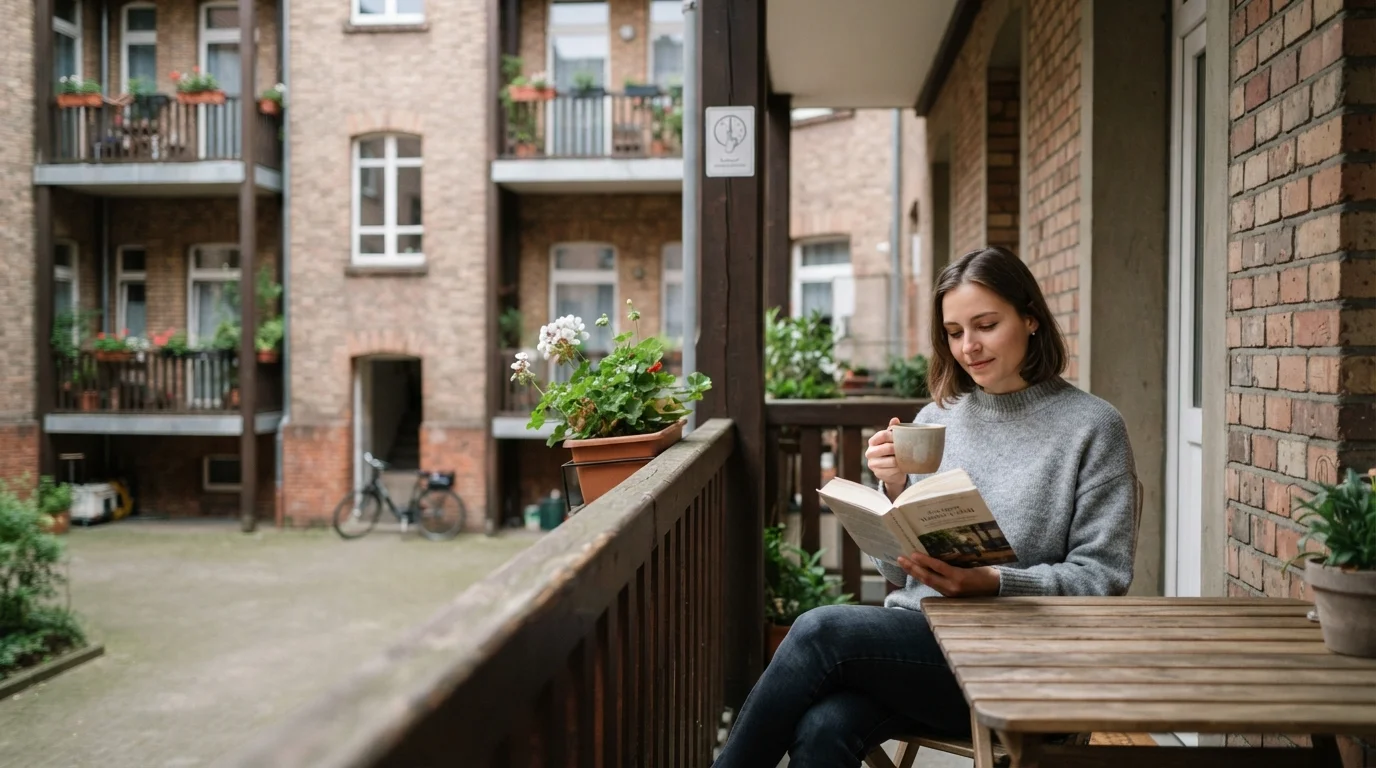
Ruhezeit in Germany: Sunday Quiet Hours & House Rules Guide
You have just finished completing your Anmeldung, unpacked the last moving boxes on a sunny Sunday afternoon, and decided it is the perfect time to...
Read more
This article was written by AI and published by Bretzi.
AI can get things wrong. For anything official, check the source it points to.
Moving to a new home in Germany is exciting, but one administrative task should be at the top of your checklist: registering your new address, known in German as Ummeldung. Whether you have moved to Berlin, Munich, Hamburg, Cologne, or a smaller town, registering on time is essential for receiving official mail, handling taxes, opening accounts, and keeping your residence documents in order.
This guide explains how to complete your Ummeldung in Germany in 2026, which documents you need, how to book an appointment, what happens if you miss the deadline, and which German words will make the process easier. It is written for expats, international students, families, workers, and German learners preparing for everyday life or an integration exam.
Ummeldung means registering a change of address with the local registration authority. The official office is usually called the Bürgeramt, Bürgerbüro, or Meldebehörde. If you move within Germany, you normally deregister your old address and register the new one as part of the same process. This is why people often use the words Ummeldung and Anmeldung together.
Anmeldung generally means registering an address for the first time, such as when you arrive in Germany from another country. Ummeldung means updating your registration after moving to another apartment or municipality. If you leave Germany permanently, the relevant term is Abmeldung.
Your registered address is used by many public authorities and organisations. It may affect your tax office, residence permit correspondence, vehicle registration, broadcasting fee notices, voting information, school administration, and official letters. An accurate registration also helps prove where you live when dealing with banks, employers, landlords, and insurance providers.
Under Germany's registration rules, you should register your new residence within two weeks of moving in. The important date is usually the date you actually move into the home, not necessarily the date you signed the rental contract. You should not complete an Anmeldung or Ummeldung before you have moved in.
The two-week period can be difficult when appointments are fully booked. If your local Bürgeramt has no available appointment before the deadline, book the earliest appointment you can and keep the confirmation email or booking reference. Some municipalities allow online registration, while others accept walk-ins or provide emergency appointments. Check your city's official website for the current 2026 procedure.
There are limited exceptions for temporary stays. For example, people who are already registered elsewhere in Germany and stay in another accommodation for no more than six months may not always need to register the temporary address. Rules can depend on your circumstances, so ask the local registration office rather than relying on informal advice.
Search for your municipality's official website using terms such as Bürgeramt Ummeldung, Wohnsitz anmelden, or Wohnsitz ummelden. Be careful with private websites that charge unnecessary fees. The responsible office is usually determined by the address of your new home.
Useful German search phrases include:
Many Bürgerämter require an appointment, especially in large cities. Appointment portals may release new slots at specific times or allow you to join a cancellation list. If you are moving with a spouse, partner, or children, check whether each person needs to be included in the booking.
Some offices let one adult register the entire household if that person brings the required documents and written authorisation. Other offices require everyone to attend. Read the appointment instructions carefully and take a screenshot or print the confirmation.
The exact requirements vary slightly by municipality, but most applicants need the following:
Bring originals whenever possible. It is also sensible to carry photocopies, although many offices do not require them. If your documents are not in German, the authority may ask for certified translations. Do not assume that an ordinary translation or an English-language document will always be accepted.
The Wohnungsgeberbestätigung is one of the most important documents in the Ummeldung process. It confirms that you have moved into the address. It normally includes the landlord's or housing provider's name and address, the address of the property, the names of the people moving in, and the move-in date.
A rental contract is usually not a substitute for this confirmation. Ask your landlord, property manager, or main tenant for the form before your appointment. If you live in a shared apartment, clarify whether the main tenant or the property owner must provide it according to your municipality's instructions.
A landlord should not charge you simply for issuing the confirmation. If the housing provider refuses to provide it, contact the Bürgeramt for guidance. Providing false information or using an incorrect confirmation can create serious administrative problems.
At the appointment, an official will check your documents and enter your information into the population register. You may be asked to confirm your address, move-in date, marital status, and the names of household members. The process is often short when your paperwork is complete.
Ask for a Meldebescheinigung after registration. This certificate proves your current registered address and may be needed for an employer, bank, immigration office, school, or other official process. Some offices issue it automatically; others require a separate request and fee.
In 2026, certain municipalities may offer digital registration using an electronic identity function, an online identification document, or a compatible app. Availability and technical requirements differ, so use only the official city or municipal portal. If you are unsure whether online registration is possible, telephone the Bürgeramt.
In many German municipalities, registering or changing your address is free of charge. However, requesting extra certificates, copies, or certain related services may cost a small administrative fee. The fee structure can vary by city and federal state.
Before your appointment, check the official fee information. If you need several Meldebescheinigungen, ask whether ordering them together is easier or cheaper. Keep any receipt because it may be useful for your records.
Failing to register within two weeks can lead to a fine under the Federal Registration Act. In practice, authorities may take your explanation and circumstances into account, particularly when appointment availability caused the delay. Nevertheless, you should not wait until you have found a perfect appointment.
Book the earliest available slot, save evidence of your attempts, and contact the office if the first appointment is far beyond the deadline. A polite German message can help:
Guten Tag, ich bin am [Datum] umgezogen und möchte meinen Wohnsitz ummelden. Leider ist der früheste Termin erst am [Datum]. Gibt es eine frühere Möglichkeit oder eine Warteliste?
This means: Hello, I moved on [date] and would like to register my new address. Unfortunately, the earliest appointment is only on [date]. Is there an earlier option or a waiting list?
Address registration is only the first step. After receiving your confirmation, create a list of organisations that need your new address. Important updates may include:
Moving often creates additional paperwork. For example, compare your new rental costs carefully by reviewing this practical guide to Kaltmiete and Warmmiete. Later, check your first annual utility statement against an expat guide to Nebenkostenabrechnung so that you understand which costs belong to your household.
Also update your postal address and consider a forwarding order with Deutsche Post. Forwarding is useful, but it does not replace updating each organisation directly. Official mail may contain deadlines, so check your previous mailbox for several weeks after moving if possible.
Learning a few key terms can make your appointment less stressful and supports the vocabulary needed for integration exams:
At the office, you might hear: Haben Sie die Wohnungsgeberbestätigung dabei? This means, Do you have the landlord's confirmation with you? You can answer: Ja, hier ist sie. If you do not understand, say Könnten Sie das bitte wiederholen? or Könnten Sie bitte langsamer sprechen?
Bretzi can help you practise these real-life exchanges through AI conversation practice and interactive dialogue scenarios before your appointment. Its personalised learning plans also let you focus on A1-B1 administrative vocabulary or grammar that commonly appears in everyday official conversations.
Check the portal at different times of day, look at nearby offices if your municipality permits it, and ask about cancellations. Keep proof that you tried to book within the required period.
Request the document in writing and explain that it is needed for legal address registration. If the landlord continues to refuse, contact the Bürgeramt instead of submitting a rental contract as a replacement without permission.
Ask who is authorised to issue the Wohnungsgeberbestätigung. In many cases, the main tenant or owner can provide it, but local requirements differ. Bring your sublease agreement as additional supporting evidence.
Put your surname on the mailbox and doorbell, particularly if you are expecting a residence-permit letter, tax notice, or bank card. Missing official mail can cause avoidable delays.
Notify the relevant Ausländerbehörde promptly and include your new registration certificate if requested. Keep copies of every form, email, appointment confirmation, and official response.
Procedures can change between cities, so always confirm the 2026 requirements with your local authority. The German federal portal provides information about government services and can help you find the correct service: Federal government services portal. You can also consult the official Federal Registration Act for the legal framework.
Do not pay a commercial intermediary unless you deliberately want assistance. Most people can complete Ummeldung directly through the local Bürgeramt. If you need help with another move-related task, such as ending an old internet or energy contract, review this guide to writing a proper Kündigung.
Registering a new address in Germany is a routine process, but it becomes much easier when you prepare the right document and act within the two-week period. The most important items are your identity document, a correctly completed form, and the Wohnungsgeberbestätigung. Book early, use your municipality's official information, and keep written proof of your appointment attempts.
For German learners, Ummeldung is also a useful opportunity to practise practical language: dates, addresses, forms, official questions, and polite requests. Use Bretzi's pronunciation training for instant feedback on words such as Wohnungsgeberbestätigung and Meldebescheinigung, then maintain a daily streak while reviewing the vocabulary with spaced repetition. Once your appointment is complete, you will have handled one of the most important steps in settling into life in Germany.
Share this article:
You have just finished completing your Anmeldung, unpacked the last moving boxes on a sunny Sunday afternoon, and decided it is the perfect time to...
Read moreSigning a contract in Germany is notoriously easy—whether you are picking up a shiny new smartphone plan or joining a local fitness club. But when...
Read moreIf you have recently moved to Germany, your first trip to a local grocery store might feel less like a routine errand and more like an Olympic sport....
Read more