Ruhezeit in Germany: Sunday Quiet Hours & House Rules Guide
You have just finished completing your Anmeldung, unpacked the last moving boxes on a sunny Sunday afternoon, and decided it is the perfect time to...
Read more
This article was drafted by AI and edited by a person before it was published.
AI can get things wrong. For anything official, check the source it points to.
AI-generated image
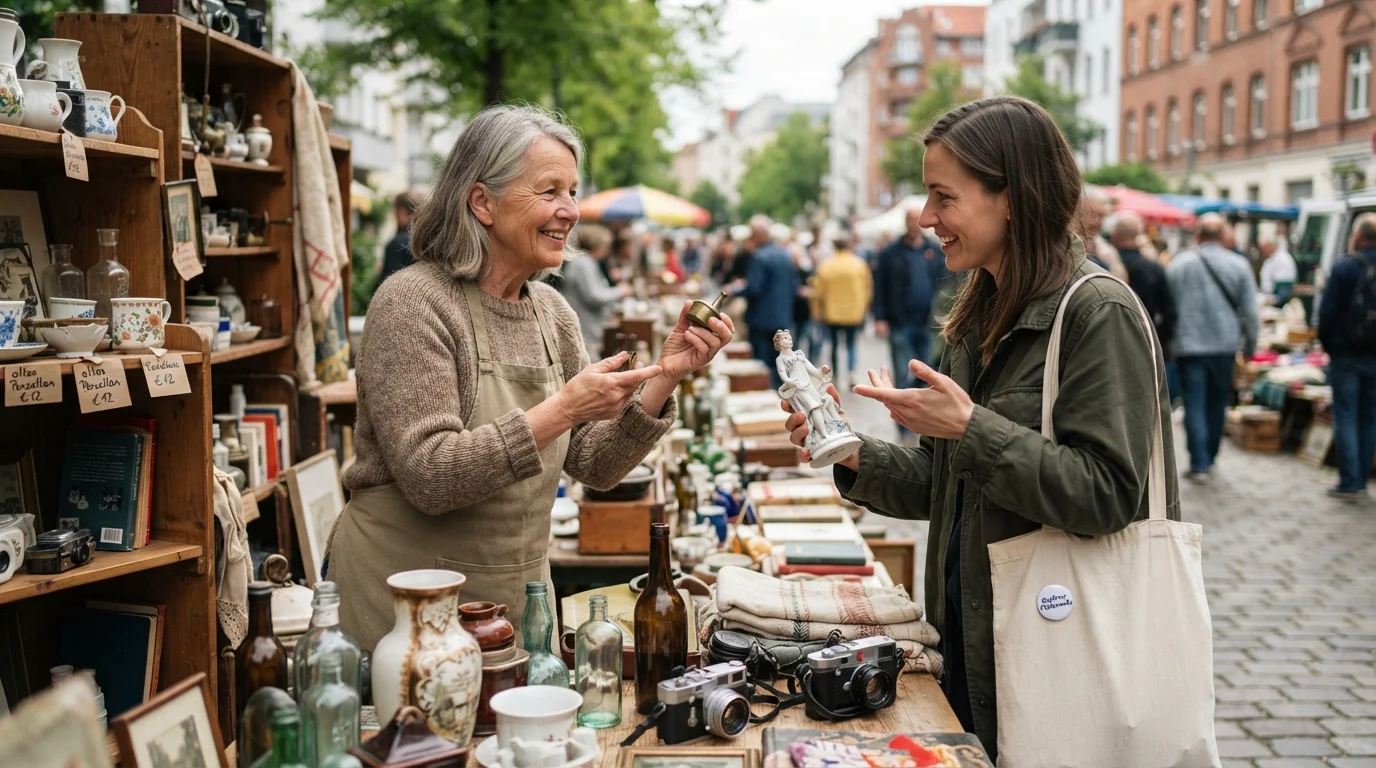
Picture a crisp Sunday morning in Germany. The streets are unusually quiet, but as you approach a local park or public square, you hear the gentle hum of chatter, the clinking of porcelain, and the aroma of fresh coffee and grilled sausages. You have stumbled upon a Flohmarkt (flea market)—one of Germany's most beloved weekend traditions.
For expats, international students, and travelers, visiting a German flea market is more than just a way to decorate an apartment on a budget. It is a vibrant cultural ritual, a lesson in sustainability, and a fantastic opportunity to practice your German in a real-world setting. Whether you are searching for vintage vinyl records, mid-century furniture, quirky home decor, or retro clothing, the Flohmarkt offers an unparalleled window into German daily life.
However, stepping into a bustling market can be intimidating if you do not know the local customs or how to negotiate in German. In this comprehensive guide, we will walk you through the unique culture of German flea markets, explain the unwritten rules of etiquette, share essential German bargaining phrases, and show you how to score the best deals like a local.
To understand the appeal of the German flea market, it helps to understand a bit about German lifestyle and laws. In Germany, the Ladenschlussgesetz (shop closing law) ensures that almost all retail stores are closed on Sundays. This makes Sunday the ultimate day for outdoor recreation, family strolls, and community activities. When the weather warms up, locals flock to parks, lakes, and open-air markets. If you are exploring the outdoors on a hot day, keeping some essential summer vocabulary in mind can help you navigate the warm weather comfortably while browsing the stalls.
Furthermore, German culture highly values Nachhaltigkeit (sustainability) and the circular economy. Reusing, repairing, and recycling are deeply ingrained habits. Selling unused household items at a flea market is considered far better than throwing them away. This environmental consciousness means that the quality of goods at German flea markets is often exceptionally high; Germans take excellent care of their belongings, meaning you can find vintage items in pristine condition.
Not all flea markets in Germany are created equal. Depending on what you are looking for, you might want to seek out specific types of markets:
Before you start bargaining, it is crucial to understand the social norms of the German Flohmarkt. Germans value order, respect, and politeness, even in a casual market setting. Observing these unwritten rules will ensure you have a pleasant experience and get better deals from the sellers.
In Germany, cash remains highly preferred in daily life, and at flea markets, it is absolutely mandatory. You will not find a single private seller accepting credit cards or mobile payments. Always carry plenty of cash, preferably in small denominations (5, 10, and 20 Euro bills) and coins. If you try to buy a 3-Euro book with a 50-Euro bill, the seller might not have enough change, and you could lose the deal.
If you are hunting for rare collectibles, high-value antiques, or popular vintage fashion brands, you need to arrive early. Many serious collectors show up at dawn, just as the sellers are unpacking their boxes. However, if you are looking for the absolute lowest prices, the best strategy is to arrive during the last hour of the market. Sellers are often tired and do not want to pack up and carry their heavy items back home, making them highly receptive to massive discounts.
Always greet the seller with a friendly "Guten Tag" or "Hallo" before you start handling their items. Handle fragile objects with care, and if you pick something up, place it back exactly where you found it. Just like adhering to German outdoor etiquette rules when sharing public spaces, showing mutual respect at a flea market goes a long way in making the interaction smooth and positive.
While bargaining (known as feilschen) is expected, there are limits. Do not try to negotiate on items that are already priced incredibly low, such as a book marked for 50 cents. Additionally, avoid aggressive or insulting counter-offers. Offering 1 Euro for a beautifully preserved vintage leather jacket priced at 30 Euros is considered rude and will likely end the conversation immediately.
To successfully navigate a German flea market, you need a solid toolkit of vocabulary and phrases. Speaking even a little German shows the seller that you respect the local culture, which often makes them much more generous with their prices.
Start your interaction with a polite greeting, followed by a simple question about the price of an item:
Once the seller names their price, you can begin the negotiation process using these polite yet effective phrases:
Once you reach an agreement, or if the price is simply too high, conclude the transaction politely:
Negotiating in a foreign language can feel daunting, but bargaining at a flea market is actually a structured social game. Here is how to play it successfully:
Step 1: The Casual Approach. Never show too much excitement about an item. If you gasp, pick it up immediately, and hold it close to your chest, the seller knows you are desperate to have it, and your bargaining power drops. Instead, browse casually, look at a few other items first, and then pick up the item you actually want with a neutral expression.
Step 2: The Soft Probe. Ask the price using one of our phrases above. Let the seller speak first. Once they name the price, pause for a moment. A brief, thoughtful silence often prompts the seller to immediately lower their offer without you even saying a word.
Step 3: The Counter-Offer. If you want to negotiate, offer a price that is about 20% to 30% lower than their starting price. For example, if they ask for 15 Euros, suggest 10 Euros. This leaves comfortable room for both of you to meet in the middle at 12 Euros.
Step 4: The Bundle. One of the most effective bargaining techniques in Germany is bundling. If you find multiple items at the same stall, group them together and ask for a Paketpreis (package price). Sellers love this because it helps them clear out their inventory faster.
If you want to build the confidence to negotiate like a native German speaker, practicing beforehand is key. The fast-paced environment of a busy flea market requires quick thinking and clear pronunciation.
This is where the Bretzi app can help you prepare. With Bretzi’s real-life German conversation practice with AI, you can simulate realistic marketplace scenarios from the comfort of your home. You can practice asking for discounts, negotiating prices with a virtual seller, and perfecting your pronunciation with instant feedback. Bretzi's interactive dialogue games put you in practical, everyday situations, so that when Sunday morning rolls around, you can step up to the flea market stalls with more confidence.
Every German city has its own unique flea market scene. Here are three legendary markets that are absolutely worth a visit:
Visiting a German flea market is a wonderful way to spend a leisurely Sunday, discover unique treasures, and immerse yourself in the local culture. By mastering a few key German phrases and understanding the unwritten rules of feilschen, you will not only save money but also build valuable connections with the people in your community.
Do not let language barriers hold you back from exploring these cultural gems. Download the Bretzi app today to unlock personalized learning plans, practice realistic conversations, and build the vocabulary you need to navigate German life with ease. Happy hunting, or as they say in Germany: Viel Spaß beim Trödeln!
Share this article:
You have just finished completing your Anmeldung, unpacked the last moving boxes on a sunny Sunday afternoon, and decided it is the perfect time to...
Read moreSigning a contract in Germany is notoriously easy—whether you are picking up a shiny new smartphone plan or joining a local fitness club. But when...
Read moreIf you have recently moved to Germany, your first trip to a local grocery store might feel less like a routine errand and more like an Olympic sport....
Read more