How to Ace the Oral Picture Description in the DTZ B1 German Exam
Standing outside the exam room, heart thumping, waiting for the oral portion of the Deutsch-Test für Zuwanderer (DTZ) is an experience thousands of...
Read more
This article was drafted by AI and edited by a person before it was published.
AI can get things wrong. For anything official, check the source it points to.
AI-generated image
Imagine this: you have lived in Germany for years, navigated the complex labyrinth of German bureaucracy, sorted your household waste like a local, and finally, the ultimate milestone is within reach—the Niederlassungserlaubnis (German Permanent Residency). This powerful document grants you the right to live and work in Germany indefinitely, freeing you from the stressful cycle of temporary visa renewals.
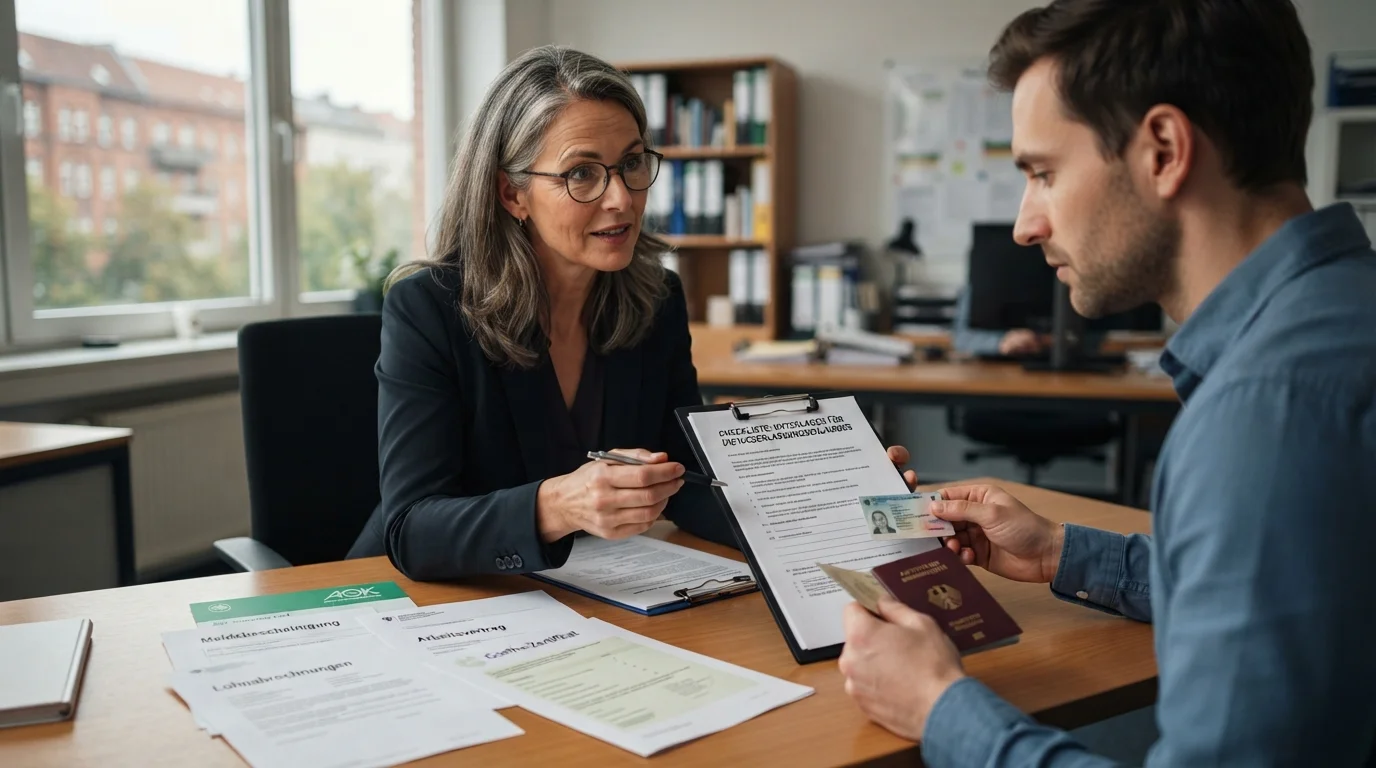
But before you can hold that plastic residency card in your hand, there is one final hurdle: the appointment at the Ausländerbehörde (Immigration Office), often referred to by expats as the "Permanent Residency Interview."
While this is technically a document-checking appointment (a Termin), the case officer (Sachbearbeiter) will use this face-to-face meeting to evaluate your German language skills, your integration into German society, and your overall eligibility. Walking into this meeting unprepared can lead to delays, requests for additional paperwork, or even a rejection.
To ensure you sail through this final step with absolute confidence, we have put together the ultimate checklist and preparation guide for your German Permanent Residency interview.
First, let’s demystify the term "interview." Unlike a job interview or a grilling interrogation, the appointment for your permanent residency is primarily administrative. However, it is a dual-purpose meeting. The case officer is not just checking if your paperwork matches their checklist; they are actively assessing your spoken German and your general conduct.
In Germany, integration is highly valued. The law states that to obtain permanent residency, you must be able to communicate in German at a basic or intermediate level (typically B1). The moment you step into the room, your "interview" begins. How you greet the officer, how you answer simple questions about your job, and your ability to follow instructions in German are all part of the evaluation.
According to the official Make it in Germany portal, demonstrating stable economic integration and language proficiency are the twin pillars of a successful application. Therefore, treating this appointment as an interview is the best mindset to adopt to ensure you put your best foot forward.
The cornerstone of a successful appointment is an organized document folder (preferably a neat, structured German Ordner). If you show up with loose sheets of paper scattered in your bag, you will immediately make a poor impression. Here is the checklist of essential documents you must bring:
To secure your permanent residency, proving your integration into German life is mandatory. This is evaluated through two main components: your language skills and your civic knowledge.
For most standard paths to permanent residency, you must prove B1-level German proficiency. The case officer will test this implicitly during your conversation. If you struggle to understand basic questions or cannot reply in German, they may question the validity of your language certificate.
This is where daily practice pays off. To build your spoken confidence, using an interactive tool like the Bretzi app can be a game-changer. Bretzi offers AI-powered personalized learning plans and real-life German conversation practice. Its interactive dialogue games simulate practical scenarios—such as dealing with German authorities—while its pronunciation training with instant feedback helps you practice sounding clear before your interview.
You must also demonstrate a basic understanding of Germany’s legal and social order. To fulfill this, you will typically need to pass the "Leben in Deutschland" test. You can read more about understanding the 'Leben in Deutschland' test to ensure you are fully prepared. Alternatively, some applicants opt for the citizenship test; find out what score you need on the Einbürgerungstest to see how it fits your path.
During your appointment, the case officer will ask you several questions while they input your data. These questions are usually straightforward, but you should be ready to answer them in German. Here are some of the most common questions and how you can prepare for them:
Success on the day of your appointment is all about preparation, punctuality, and politeness. Follow this step-by-step checklist to ensure everything goes smoothly:
German punctuality is legendary. Aim to arrive at the Ausländerbehörde about 10-15 minutes before your scheduled appointment. Arriving late is a major red flag, while arriving an hour early will just leave you waiting outside in the elements.
Use a plastic sleeve folder or a binder. Arrange your documents in the exact order they were requested in your invitation letter. Keep originals and copies separated but easily accessible. When the officer asks for a document, you should be able to hand it over within three seconds.
You do not need to wear a three-piece suit, but dressing business-casual shows respect for the office and the process. Clean, neat clothing makes a positive impression.
Even if the case officer speaks perfect English, do not default to English unless absolutely necessary. Making an effort to speak German—even with minor grammatical mistakes—shows a strong commitment to integration. Use polite phrases like "Guten Tag", "Bitte sehr", and "Vielen Dank".
If your German is still a bit shaky and you are nervous, you are legally allowed to bring a translator or a German-speaking friend (a Beistand) with you. This can ease the pressure and ensure no misunderstandings occur.
Once the case officer has verified all your documents and is satisfied with your German skills, they will ask you to pay the application fee (usually between €113 and €147, depending on your current status). You can typically pay this at a payment machine (Kassenautomat) in the building using an EC card or cash.
After payment, the officer will submit your application to the Federal Printing Office (Bundesdruckerei) in Berlin to print your new card. This process usually takes between 4 to 8 weeks. You will receive a letter in the mail (the PIN-Brief) when your card is ready for pickup.
For official and up-to-date fee structures, always refer to the Federal Office for Migration and Refugees (BAMF) website.
Obtaining your Niederlassungserlaubnis is a life-changing milestone. It grants you peace of mind, professional freedom, and a permanent home in Europe. While the appointment at the Ausländerbehörde can feel intimidating, thorough preparation of your documents and a confident, polite attitude in German will guarantee your success.
The secret to overcoming the interview anxiety is practicing your German beforehand. Start preparing today by practicing real-life conversations, mastering B1 grammar, and perfecting your pronunciation with the Bretzi app. Download Bretzi now and take the next step toward your permanent future in Germany!
Share this article:
Standing outside the exam room, heart thumping, waiting for the oral portion of the Deutsch-Test für Zuwanderer (DTZ) is an experience thousands of...
Read moreGermany's modernized citizenship law has transformed how long-term foreign residents build their futures in the country. Following landmark updates...
Read moreSecuring a German B1 language certificate is one of the most critical milestones for anyone building a life in Germany. Whether you are aiming for a...
Read more