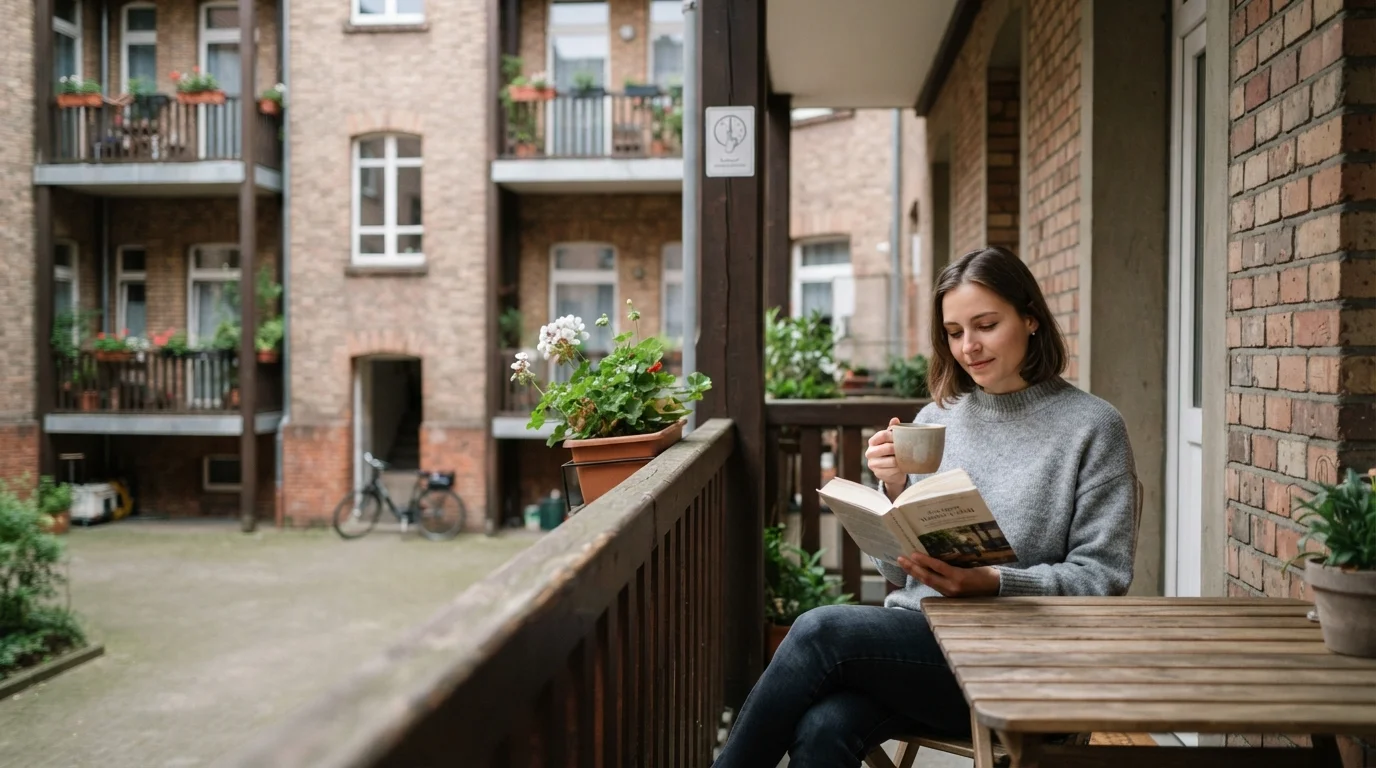
Ruhezeit in Germany: Sunday Quiet Hours & House Rules Guide
You have just finished completing your Anmeldung, unpacked the last moving boxes on a sunny Sunday afternoon, and decided it is the perfect time to...
Read more
This article was written by AI and published by Bretzi.
AI can get things wrong. For anything official, check the source it points to.
Moving to Germany often means learning a new vocabulary for everyday administration: Anmeldung, Steuer-ID, Krankenversicherung and, sooner or later, Rundfunkbeitrag. For many expats, the German broadcasting contribution is confusing because it is charged per household rather than per television, and because exemptions are available only in specific situations. Ignoring official letters can lead to arrears, reminders and enforcement procedures.
This guide explains the German Rundfunkbeitrag exemption rules for expats in clear English. You will learn who must pay, who may qualify for a full exemption or reduction, how students and asylum seekers are treated, which documents are required, and how to submit an application correctly. It also includes practical German phrases to help you deal with the Beitragsservice.
The Rundfunkbeitrag is Germany's statutory public broadcasting contribution. It helps finance public-service broadcasters such as ARD, ZDF and Deutschlandradio. The contribution is administered by the ARD ZDF Deutschlandradio Beitragsservice, commonly called the Beitragsservice.
The key principle is simple: one contribution is normally due for each private dwelling, regardless of how many people live there or whether anyone owns a television or radio. The same household contribution generally covers all residents and devices. A shared flat, or Wohngemeinschaft, therefore usually pays one contribution for the apartment rather than one contribution per roommate.
For the current amount and official application forms, consult the official Rundfunkbeitrag website. Rates and administrative procedures can change, so it is sensible to check the official source instead of relying on old forum posts or advice from other expats.
In a private home, the contribution is assigned to an adult resident. If several adults share the same address, only one person needs to register and pay. The other residents should provide the contributor's account number if the Beitragsservice contacts them, so the household is not accidentally charged more than once.
Being new to Germany does not automatically create an exemption. In most cases, a person who registers a dwelling and receives mail from the Beitragsservice must clarify their situation, even if they do not speak German well, do not watch German television or spend much of the year abroad.
A full exemption is not granted simply because someone is an expat, has limited German, is unemployed, or does not use broadcasting services. The most important route is receiving certain social benefits or having a legally recognized financial hardship connected with those benefits.
You may qualify for a Befreiung, or full exemption, if you receive certain eligible benefits. Depending on your circumstances, these can include:
Eligibility depends on the exact benefit, the decision notice and your living arrangement. Receiving one form of financial assistance does not automatically guarantee an exemption. For example, some benefits that sound similar in English may have different legal treatment in Germany.
People with certain severe disabilities may qualify for a full exemption if they receive a valid disability-related benefit or belong to a legally defined category. A common example is a person who receives assistance for blind or deaf-blind people or certain forms of assistance for people with severe hearing impairment.
Not every disability certificate leads to a full exemption. The Merkzeichen RF in a German severely disabled person's pass may in many cases support a reduction rather than an exemption, depending on the person's situation. Always check the current official requirements and submit the relevant evidence.
Some people qualify for a reduced contribution rather than paying nothing. The most frequently discussed example is a person with a qualifying severe disability. The reduction is usually linked to a specific official marker or legal condition, not simply to having a disability pass.
Use the correct German term when communicating: Ermäßigung means a reduction, while Befreiung means an exemption. Confusing these terms can result in the wrong form or incomplete documentation.
Being enrolled at a university does not automatically exempt you from the Rundfunkbeitrag. However, students who receive qualifying BAföG and meet the residence requirements may apply for an exemption. You generally need a current BAföG decision notice, known as a BAföG-Bescheid.
International students should not assume that a scholarship, part-time job or university enrollment has the same effect as BAföG. A private scholarship usually does not itself create a broadcasting exemption. If you live in a dormitory, ask whether your room is treated as part of a private dwelling or a special accommodation arrangement; the answer can depend on the building and its legal structure.
Trainees may be eligible when they receive a qualifying training benefit, but an apprenticeship salary by itself does not normally create an exemption. Keep the official benefit notice, not only your employment contract, because the Beitragsservice normally needs evidence of the specific qualifying payment.
People receiving benefits under the Asylum Seekers Benefits Act may be able to apply for an exemption. The application usually requires the relevant benefits notice. Residence status alone is not enough: the decisive factor is often the benefit being received and the period covered by the official decision.
If you are staying in accommodation where broadcasting charges are handled by the operator, do not guess whether you personally owe a contribution. Ask the accommodation administration or a recognized advice center for written clarification. This is especially important when moving from collective accommodation into a private apartment.
Understanding the exclusions is just as important as understanding the exemptions. The following situations generally do not create an automatic exemption:
There may be a hardship route called Härtefall in limited circumstances. This is not a general low-income exemption. It normally requires a specific legal situation, supporting evidence and a careful explanation of why payment would create an exceptional hardship. A rejection of a social-benefit application alone may not be enough.
The application process is manageable if you prepare the documents carefully. Follow these steps:
Find your Beitragsnummer on letters from the Beitragsservice. If you have not yet registered, identify the dwelling address, your move-in date and the name of the person responsible for payment. If another adult in your household already pays, obtain their contribution number before responding.
Use the official form for a Befreiung or Ermäßigung. Forms are available through the Beitragsservice website. Avoid sending sensitive documents to unofficial websites that promise to handle the process for a fee unless you have independently verified the service.
Usually, you must provide a copy of the official decision showing your name, address, benefit type and the period of approval. A bank statement or a letter saying that you applied for benefits may not be sufficient. If the notice contains several pages, include all pages that establish eligibility.
An exemption is not always granted automatically from the day you began receiving benefits. In many cases, the Beitragsservice can apply the exemption from the month in which the qualifying benefit began, provided the application is submitted within the relevant period. Late applications may be limited to a shorter retroactive period.
Because deadlines can be decisive, submit the form promptly and keep proof of delivery. Save a PDF, take a screenshot of online confirmation, or send documents by a trackable method when appropriate.
Do not assume that sending an application stops every payment obligation. Continue checking your account and correspondence until you receive a written decision. If the exemption is approved, keep the confirmation with your personal records. If it is rejected, read the reason and note the deadline for any objection, called a Widerspruch.
Many expats first encounter the Rundfunkbeitrag after moving into a WG. The practical rule is that one contribution normally covers one dwelling. Ask your roommates: Wer zahlt den Rundfunkbeitrag? If someone pays, provide that person's name and Beitragsnummer to the Beitragsservice when requested.
When you move, update your address promptly. A change of address is separate from the broadcasting registration process, even though both may follow your municipal registration. Our guide to changing your address after moving in Germany explains the broader relocation paperwork.
Do not confuse a private apartment with a hotel room or certain forms of temporary accommodation. The legal treatment can differ. If you rent a furnished apartment, the landlord's furniture or internet connection does not usually determine who owes the contribution. The relevant question is generally whether the space is a dwelling and who resides there.
Housing costs can also make the contribution feel unexpected. If you are comparing rental offers, review our explanation of Kaltmiete and Warmmiete for expats, while remembering that the Rundfunkbeitrag is normally separate from rent and utilities.
Learning a few key words can make official communication less intimidating:
Useful phrases include:
For learners preparing for an integration exam, this topic is useful because it combines administrative vocabulary, housing language and formal letter conventions. Bretzi can reinforce this vocabulary with spaced repetition and practical dialogue exercises, helping you practice how to explain your situation in German rather than memorizing isolated words.
A letter from the Beitragsservice is not junk mail. Even if you believe you qualify for an exemption, respond and submit evidence. Ignoring correspondence can lead to a payment assessment based on available information.
The contribution is linked to the dwelling, not personal media consumption. Saying that you only use streaming services or do not understand German television generally does not cancel the obligation.
A residence permit, student ID or employment contract may not prove eligibility. Attach the specific benefit notice or disability documentation requested by the official form.
If your former roommate paid and you move to a new apartment, their contribution number does not automatically cover your new dwelling. Likewise, if you leave Germany permanently, complete the relevant deregistration process and retain confirmation.
English explanations are helpful, but the German form and official decision control the process. If your case involves disputed arrears, an unusual residence arrangement or a rejected application, contact a migrant advice center, consumer advice organization or qualified legal adviser.
If formal German is your main obstacle, practice the relevant conversation before calling. Bretzi's AI conversation practice can simulate an administrative phone call, while pronunciation feedback helps you say terms such as Rundfunkbeitrag, Befreiung and Leistungsbescheid more confidently.
Rules and contribution amounts can change, so use the official exemption and reduction information from the Beitragsservice as your primary source. For broader questions about German administrative law, the federal legal information portal at Gesetze im Internet provides access to German legislation. When an official page conflicts with an old blog, social-media post or forum comment, rely on the current official guidance.
The German Rundfunkbeitrag is usually a household obligation, but qualifying expats may receive a full exemption or reduced contribution. The most important steps are to identify the responsible household member, check whether you receive an eligible benefit, submit the correct form with complete evidence and keep written confirmation.
Do not wait until reminders arrive. Gather your documents, learn the key German terms and contact the Beitragsservice or a trusted advice organization if your situation is unusual. With the right paperwork and timely action, understanding the Rundfunkbeitrag exemption rules becomes a manageable part of settling into life in Germany.
Share this article:
You have just finished completing your Anmeldung, unpacked the last moving boxes on a sunny Sunday afternoon, and decided it is the perfect time to...
Read moreSigning a contract in Germany is notoriously easy—whether you are picking up a shiny new smartphone plan or joining a local fitness club. But when...
Read moreIf you have recently moved to Germany, your first trip to a local grocery store might feel less like a routine errand and more like an Olympic sport....
Read more