Federweißer and Zwiebelkuchen: Germany’s September Taste
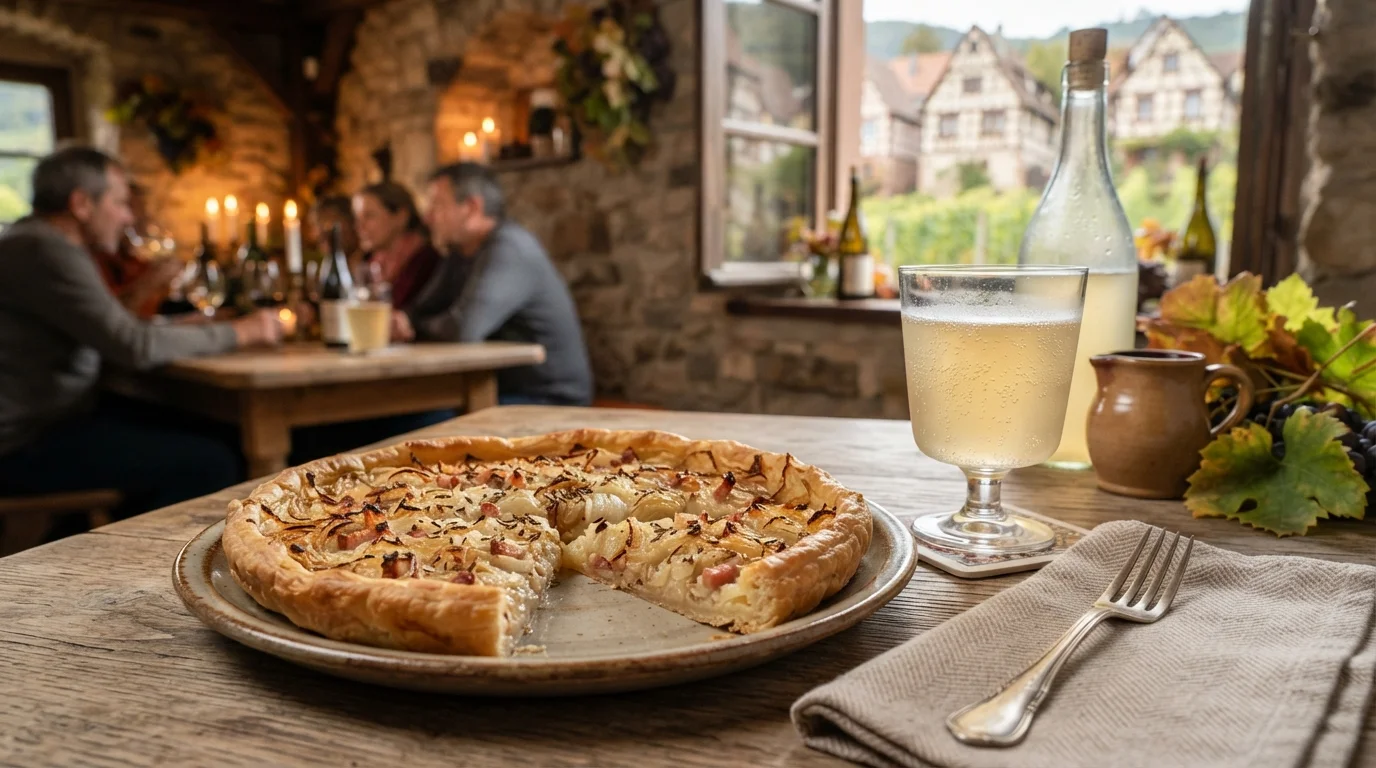
September in Germany has a flavor: slightly sweet, gently sparkling Federweißer served with a warm slice of savory Zwiebelkuchen. This seasonal...
Read more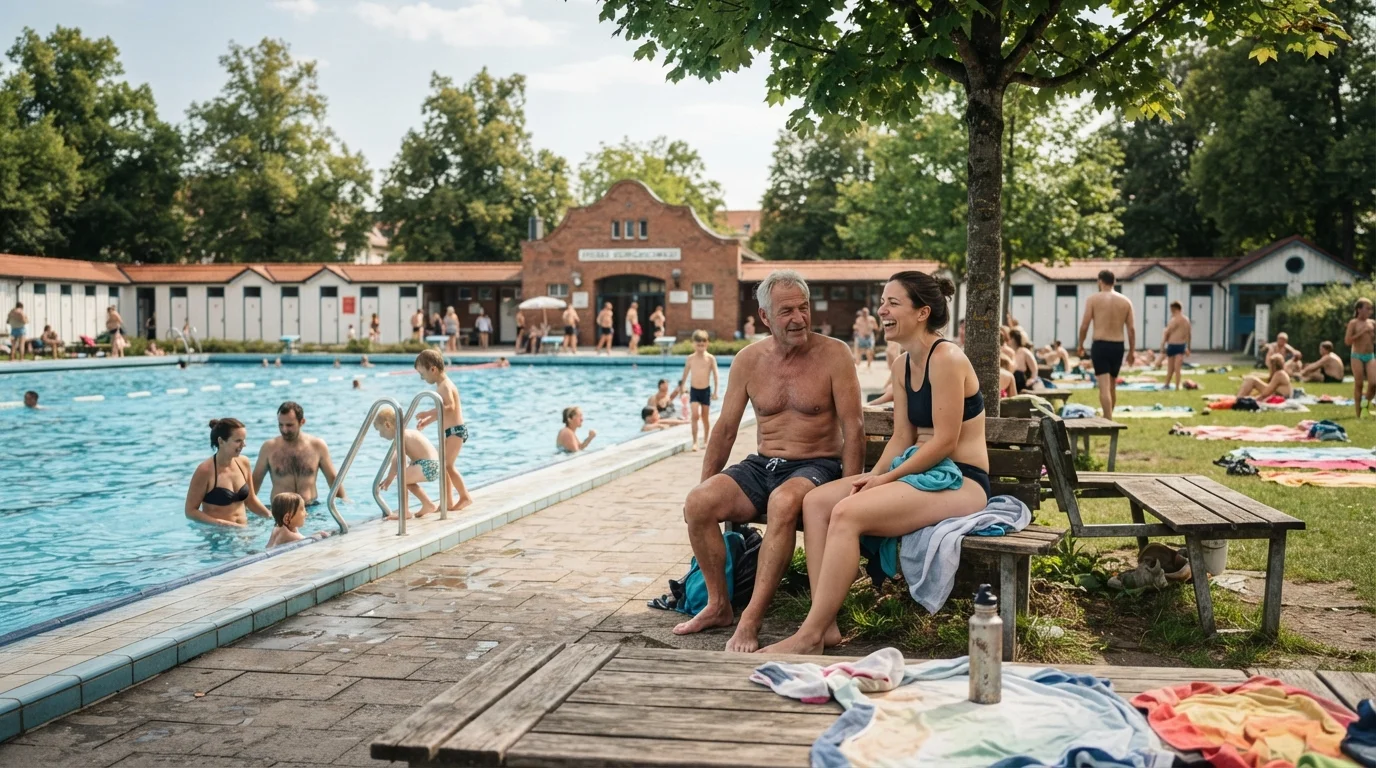
Ask any German to describe the smell of summer, and they will likely give you a highly specific answer: a mixture of chlorine, sunscreen, freshly cut grass, and deep-fried potatoes. This sensory cocktail belongs to one of Germany's most sacred cultural institutions: the Freibad (outdoor public pool).
For expats, international students, and anyone preparing to integrate into German society, the local Freibad is much more than just a place to swim. It is a cultural microcosm, a democratic sanctuary, and a living museum of German social history. To truly understand Germany and its people, you must understand the Freibad. In this comprehensive guide, we will dive deep into the fascinating history of German outdoor pool culture, explore the unwritten rules of pool etiquette, and equip you with the essential German vocabulary you need to make a splash this summer.
The story of the German public pool does not begin with leisure and sunbathing; it begins with industrialization, public health, and social reform. In the 19th century, as industrial cities grew rapidly, overcrowding and poor sanitation led to widespread disease. Most working-class homes lacked private bathing facilities, making public hygiene a critical issue.
To combat this, municipal authorities and progressive reformers began establishing public baths. The earliest versions were Flussbäder (river baths)—wooden structures built directly into rivers like the Spree in Berlin or the Elbe in Hamburg. These early baths were strictly segregated by gender and focused entirely on cleanliness rather than recreation. You can read more about the early history of public bathing to see how this trend swept across Europe.
By the late 19th and early 20th centuries, the concept of Lebensreform (life reform) emerged. This social movement advocated for a return to nature, physical fitness, fresh air, and sunshine. It was during this era that the first true Licht- und Luftbäder (light and air baths) were established. These facilities encouraged Germans to step out of their dark, smoky apartments and embrace the healing power of the outdoors. Swimming transitioned from a purely hygienic necessity to a celebrated athletic and recreational pursuit.
Following the devastation of World War II, Germany underwent a massive reconstruction period. During the Wirtschaftswunder (economic miracle) of the 1950s and 1960s, local municipalities invested heavily in public infrastructure. Building a modern, state-of-the-art Freibad became a point of pride for almost every German town and city district.
These post-war pools were designed to be democratic spaces. In a country rebuilding its identity, the Freibad served as a great social leveler. Once you pass through the turnstile and strip down to your swimwear, social status, wealth, and background disappear. The local politician, the factory worker, the university professor, and the newly arrived immigrant all share the same patch of grass, swim in the same water, and line up for the same snacks.
This radical egalitarianism remains a core feature of the Freibad today. It is a space where community cohesion is actively practiced, making it a highly relevant topic for those who want to prepare for German integration exams. Understanding the role of municipal institutions like the public pool is key to understanding the German concept of *Daseinsvorsorge* (the state's responsibility to provide essential public services).
To the untrained eye, a day at a German outdoor pool might look like chaotic fun. However, this is Germany, which means there is a highly structured set of rules—both written and unwritten—that govern the experience. To avoid getting a stern look (or a whistle blow) from the lifeguard, you must master the *Freibad* code.
The Liegewiese is the sprawling grassy area surrounding the pools. Finding the perfect spot is an art form. Germans value their personal space, so when claiming your territory with a towel, ensure you leave a respectful buffer zone between yourself and your neighbors. Once a towel is laid down, that space is considered legally and culturally yours for the day.
No trip to the pool is complete without visiting the *Kiosk*. The ultimate *Freibad* culinary experience is Pommes rot-weiß (french fries with ketchup and mayonnaise), affectionately referred to as Pommes Schranke (literally "barrier fries," named after the red-and-white striped railway crossing gates). For many Germans, these pool-side fries taste better than those from any Michelin-starred restaurant. To wash them down, locals often opt for refreshing German summer drinks like Schorle, the perfect bubbly companion to a hot afternoon under the sun.
The Bademeister (lifeguard) is the undisputed ruler of the pool. Armed with a whistle and an intimate knowledge of the Hausordnung (house rules), their authority is absolute. If they blow their whistle and point at you, stop whatever you are doing immediately. Common offenses include running near the pool edge, jumping in from the sides where it is prohibited, or staying in the water during a thunderstorm.
If you are learning German, the Freibad is a goldmine for practical language practice and cultural immersion. It is a low-pressure environment where you can observe natural, everyday German interactions. You will hear parents guiding their children, teenagers gossiping on the lawn, and locals ordering snacks at the kiosk.
Using an app like Bretzi can help you prepare for these real-world scenarios. With Bretzi's AI-powered personalized learning plans and interactive dialogue games, you can practice ordering food at a German kiosk or asking a neighbor if a spot on the grass is free. By building your confidence with Bretzi's pronunciation training at home, you will feel completely natural when it is time to converse with locals at the pool.
If you are planning to spend your summer days lounging by the water, you can also check out some of the offline German learning apps for summer vacation to keep your study streak alive even when you do not have a strong cellular signal on the *Liegewiese*.
To help you navigate your first visit like a local, here is a list of essential vocabulary words. Try practicing these terms before you pack your swim bag!
Ready to experience this cultural phenomenon for yourself? Here are a few practical tips to ensure your day goes smoothly:
The German *Freibad* is far more than just a place to cool off on a hot July afternoon. It is a living testament to Germany's commitment to public health, social equality, and community life. By visiting your local pool, observing the rituals, and enjoying a plate of *Pommes Schranke*, you are participating in a cherished cultural tradition that spans generations.
Before you pack your towel and sunscreen, make sure your German skills are ready for the challenge. Download the Bretzi app today to practice real-life German conversations, master essential vocabulary with spaced repetition, and build the confidence you need to integrate seamlessly into German life. Have fun, stay cool, and enjoy your summer at the *Freibad*! *Viel Spaß im kühlen Nass!*
Share this article:
September in Germany has a flavor: slightly sweet, gently sparkling Federweißer served with a warm slice of savory Zwiebelkuchen. This seasonal...
Read moreHave you ever experienced a warm, golden autumn day in Germany when summer seems to return for one last visit? Germans have a beautiful word for this...
Read moreAs summer winds down and the morning air turns crisp, Germany undergoes a golden transformation. While millions of tourists flock to Bavaria for...
Read more